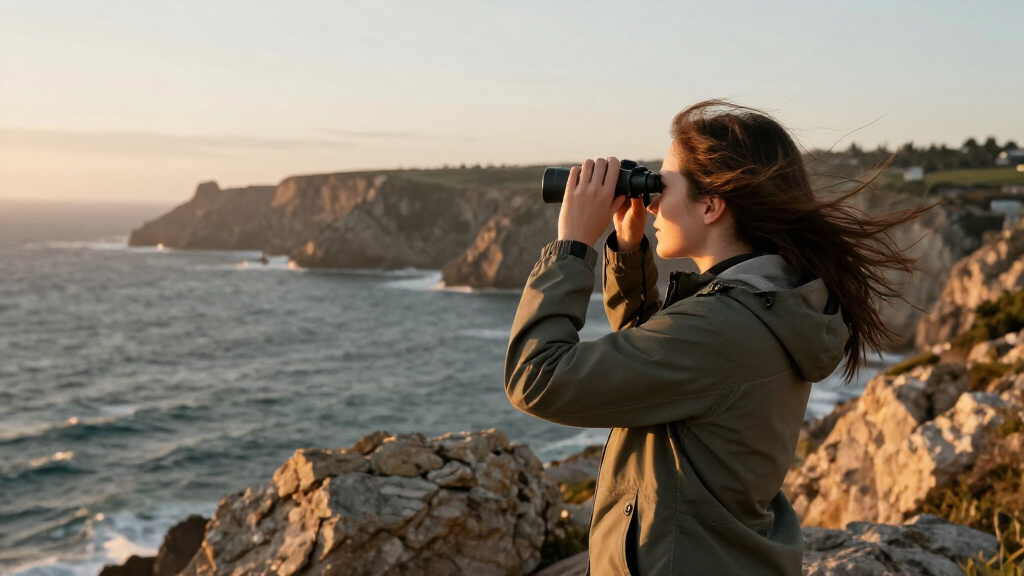
Travel binoculars need to balance useful reach with a size and weight you will actually carry. I’d make the Nikon PROSTAFF P3 10×30 my best overall choice for travelers who want more detail and waterproof construction without jumping to a bulky full-size pair. The Nikon Trailblazer II 8×25 is a strong fit for compact, steady viewing, while the Adorrgon 12×42 suits travelers who put reach ahead of pack space. The main tradeoffs are magnification versus steadiness, and compactness versus brightness and comfort. Read on for the full breakdown of all 15 options and help matching one to your trip.

Get travel and outdoor gear delivered free with Prime
- Fast, free delivery on millions of items
- Prime Video, Amazon Music and more included
- Member-only deals all year
Complete the kit


Key Takeaways
The Nikon PROSTAFF P3 10×30 leads as an all-around travel choice because it pairs greater reach than 8×25 models with waterproof construction, while remaining more portable than the 12×42 Adorrgon.
Eight-power compact models favor steadier viewing; the Nikon Trailblazer II 8×25 and Travelite EX 8×25 make more sense for moving sightseeing than pocket models with 10x or 12x magnification.
High magnification is not automatically better for travel. The 12×25 and 25×32 options can show more apparent detail, but hand shake and narrower views can make quick observations harder.
Objective lens size shapes the portability tradeoff: 21–25 mm options pack smaller, while 30–42 mm designs can be easier to use in dimmer conditions but take up more space.
Included accessories do not replace core usability. The Adorrgon’s phone adapter and tripod add flexibility, but travelers who mainly want fast, handheld viewing may prefer a simpler compact pair.


| travel binocular | Magnification | Objective lens diameter | Weight |
|---|---|---|---|
| POLDR 12×25 Compact Pocket Bin | 12x | 25 mm | 165 g |
| Adorrgon 12×42 Binoculars with | 12x | 42 mm | 1.1 lb |
| 25×32 Compact Binoculars with | 25x | 32 mm | 0.64 lb |
| Occer 12×25 Compact Binoculars | 12x | 25 mm | 13.7 oz |
| Nikon Trailblazer II 8×25 Comp | 8x | 25 mm | 10.9 oz |
| Deesoo 25×32 Compact Binocular | — | — | — |
| Hontry 10×25 Compact Binocular | — | — | — |
| Aurosports 10×25 Compact Binoc | — | — | — |
| Nikon Trailblazer II 10×25 Com | — | — | — |
| Nikon PROSTAFF P3 10×30 Waterp | — | — | — |
| Compact 8x Mini Binoculars for | 8x | 21 mm | 5.3 oz |
| 12×32 Compact Waterproof Binoc | 12× | 32 mm | 343 g (12 oz) |
| Nikon Travelite EX 8×25 Compac | 8x | 25 mm | — |
| Bushnell PowerView 10×25 Compa | 10x | 25 mm | — |
| VULNESS Compact 8×21 Binocular | 8x | 21 mm | 5.6 oz (160 g) |
More Details on Our Top Picks
POLDR 12×25 Compact Pocket Binoculars
For travelers who want binoculars that take up little room, the folding 165 g body is this model’s clearest advantage. Its 12x magnification brings distant details closer than the Nikon Trailblazer II 8×25, but that extra reach can make handheld views harder to steady. The BAK4 prisms and fully multi-coated optics add useful optical features in a pocket-size package, while center focus and a right-eye diopter let you tune the view to your eyesight.
The tradeoff is a smaller 25 mm objective lens and a narrower stated field of view than the Occer 12×25, so it’s less suited to scanning broad scenes. Choose it for occasional sightseeing and easy carry, not prolonged, shake-free viewing. It is waterproof according to the supplied specs, but the product data gives no rating for water depth or exposure.
Pros:- Very light 165 g folding design fits easily in a travel bag or pocket.
- 12x magnification provides more reach than the Nikon Trailblazer II 8×25.
- BAK4 prisms and fully multi-coated optics are specified.
- Includes a carrying bag, neck strap, and cleaning cloth.
Cons:- 12x magnification can make handheld viewing visibly less steady.
- The 25 mm objectives and 126 ft field of view give less scope for bright, broad scene viewing than larger-lens options.
- Center focus and right-eye diopter adjustment require separate setup.
Best for: Travelers who prioritize a very light, folding binocular for sightseeing and occasional distant viewing.
Not ideal for: People who need steady handheld views at high magnification or a wide view for tracking moving wildlife; 12x magnification can be harder to hold steady, and the stated field of view is limited.
- Magnification:12x
- Objective lens diameter:25 mm
- Prism type:BAK4
- Lens coating:Fully multi-coated
- Field of view:126 ft at 1,000 yards
- Eye relief:16 mm
- Weight:165 g
- Dimensions:4.37 x 3.11 x 2.13 in
- Focus:Manual center focus with ±5-diopter right-eye adjustment
Our verdict“Pick the POLDR if low carry weight matters more than easy image steadiness or a wide field of view.”
Adorrgon 12×42 Binoculars with Phone Adapter and Tripod
The Adorrgon is the most accessory-focused choice here: its smartphone adapter and rotatable tripod support more stable viewing and make it easier to capture or share a distant sight. Its 42 mm objective lenses are substantially larger than those on the pocket-size POLDR 12×25, giving this model a better fit for longer viewing sessions when extra bulk is acceptable. Waterproof construction and rubber armor also suit outdoor itineraries.
That size comes at a cost for travel: at 1.1 lb, it is much less convenient to carry all day than the Nikon Trailblazer II 8×25. The stated 10 mm eye relief may also be uncomfortable for some eyeglass wearers, and 12x magnification still benefits from support. I’d choose it for planned wildlife stops or phone-assisted observation, not for a light, always-on-hand travel kit.
Pros:- 42 mm objectives provide a larger light-gathering aperture than the 25 mm POLDR 12×25.
- Includes a rotatable tripod and smartphone adapter for supported viewing and phone use.
- Waterproof body with rubber armor and a non-slip grip is suited to outdoor outings.
- BAK4 prisms and fully multi-coated optics are specified.
Cons:- At 1.1 lb, it is considerably heavier and bulkier than pocket travel binoculars.
- 10 mm eye relief may not work comfortably for some eyeglass wearers.
- Manual focus and 12x magnification make quick, steady handheld viewing less straightforward.
Best for: Travelers who expect to stop for distant wildlife or scenery and want a tripod and phone adapter for steadier, shareable viewing.
Not ideal for: Walkers and pack-light travelers who want binoculars ready in a pocket; its 1.1 lb weight is far above the compact Nikon Trailblazer II 8×25.
- Magnification:12x
- Objective lens diameter:42 mm
- Prism type and material:Roof prism, BAK4
- Lens coating:Fully multi-coated
- Field of view:367 ft at 1,000 yards
- Eye relief:10 mm
- Weight:1.1 lb
- Dimensions:5.75 x 4.95 x 2.1 in
- Included accessories:Smartphone adapter and compact rotatable tripod
Our verdict“Choose the Adorrgon when tripod-supported, phone-assisted viewing matters more than keeping your travel kit light.”
25×32 Compact Binoculars with BAK4 Prisms and FMC Optics
If bringing very distant subjects closer is the priority, this model’s 25x magnification sets it apart from the 8x and 12x travel options in this group. It is also relatively light at 0.64 lb, with twist-up eyecups, adjustable eye distance, and a close-focus distance of 4.9 ft. Those adjustments offer more flexibility for different users than the simpler pocket-focused POLDR 12×25.
The high power comes with substantial compromises for travel. Its 1.28 mm exit pupil is small, the field of view is only 175 ft at 1,000 yards, and the specs list it as not water resistant. Fixed 25x magnification also leaves little flexibility for broader, easier-to-follow views; compared with the Nikon Trailblazer II 8×25, it is a specialist choice rather than an all-purpose sightseeing pair. I’d skip it for wet trips or casual handheld scanning.
Pros:- 25x magnification offers much greater reach than the 12x POLDR and Nikon Trailblazer II 8×25.
- At 0.64 lb, it is lighter than the Adorrgon 12×42.
- Twist-up eyecups and 56–72 mm eye-distance adjustment support different viewing preferences.
- Fully multi-coated optics and BAK4 prisms are specified.
Cons:- Not water resistant, making it a poor match for wet-weather travel.
- The 1.28 mm exit pupil and 32 mm objectives limit its suitability for dim viewing.
- A 175 ft field of view at 1,000 yards makes tracking and scanning less accommodating than the Occer 12×25.
Best for: Travelers viewing distant, relatively stationary subjects in dry conditions who prioritize magnification over a broad, forgiving view.
Not ideal for: People seeking all-purpose sightseeing binoculars, tracking moving subjects, or carrying optics in rain; the fixed 25x power, narrow field of view, and lack of water resistance limit flexibility.
- Magnification:25x
- Objective lens diameter:32 mm
- Prism type and material:Porro prism, BAK4
- Lens coating:Fully multi-coated (FMC)
- Field of view:175 ft at 1,000 yards
- Exit pupil:1.28 mm
- Minimum close-focus distance:4.9 ft
- Weight:0.64 lb
- Water resistance:Not water resistant
Our verdict“Choose this model only if high fixed magnification matters more than weather protection, a wide view, and easy everyday handling.”
Occer 12×25 Compact Binoculars
The Occer’s main travel advantage is its 20 mm eye relief, which gives eyeglass wearers more room to see the full image than the Adorrgon 12×42’s 10 mm eye relief. Its adjustable eyecups, 12x magnification, and rubber-armored body make it a practical compact option for sightseeing and outdoor stops. Compared with the POLDR 12×25, it also has a much wider stated field of view—273 ft versus 126 ft at 1,000 yards—so it is better suited to scanning a scene.
It is not a strong pick for dim conditions: the 2.5 mm exit pupil and 25 mm objectives limit the light reaching your eyes, and the supplied description says it is not intended for complete darkness. The 13.7 oz weight is also heavier than the POLDR’s 165 g. Choose this one for comfort and field width, not the lightest possible packing or low-light viewing.
Pros:- 20 mm eye relief and adjustable eyecups accommodate eyeglass wearers better than the Adorrgon 12×42.
- 273 ft field of view at 1,000 yards is wider than the POLDR 12×25’s stated 126 ft.
- Waterproof construction and rubber armor suit outdoor travel.
- BAK-4 prisms and fully multi-coated optics are specified.
Cons:- The 2.5 mm exit pupil and 25 mm objectives are not well suited to dim conditions.
- At 13.7 oz, it weighs more than the 165 g POLDR 12×25.
- 12x magnification can be harder to hold steady than the Nikon Trailblazer II 8×25’s 8x power.
Best for: Eyeglass wearers who want compact, waterproof binoculars with generous eye relief for daytime travel and outdoor viewing.
Not ideal for: Travelers focused on low-light wildlife viewing or the lightest possible pocket carry; the 2.5 mm exit pupil and 13.7 oz weight are limiting factors.
- Magnification:12x
- Objective lens diameter:25 mm
- Prism type:BAK-4
- Lens coating:Fully multi-coated
- Field of view:273 ft at 1,000 yards; 7.5°
- Eye relief:20 mm
- Exit pupil:2.5 mm
- Weight:13.7 oz
- Water resistance:Waterproof
Our verdict“Pick the Occer if generous eye relief and a wider view matter more than low-light performance or minimum carry weight.”
Nikon Trailblazer II 8×25 Compact Waterproof Binoculars
The Nikon Trailblazer II earns the all-purpose travel role through moderate 8x magnification, a folding body, and waterproof construction. Lower power is easier to hold steady than the 12x POLDR 12×25 or Occer 12×25, making the Nikon a more forgiving choice for quick views from a trail, boat, or city overlook. Its stated 435 ft field of view also gives more room to locate and follow a subject than the POLDR’s 126 ft.
At 10.9 oz, it is still portable, though not as light as the POLDR’s 165 g. Its 25 mm objectives and 3.1 mm exit pupil are aimed at compact daylight use, not specialized low-light viewing. The listed 10 mm eye relief may also be a limitation for some eyeglass wearers despite the product description’s long-eye-relief claim. Choose it for balanced, weather-ready travel use rather than maximum magnification.
Pros:- 8x magnification is easier to hold steady than the 12x POLDR and Occer models.
- 435 ft stated field of view is broader than the POLDR 12×25’s 126 ft.
- Folding, waterproof construction and rubber armoring suit travel and outdoor use.
- Includes a carrying case, eyepiece cover, and neck strap.
Cons:- Fixed 8x magnification offers less distant reach than the 12x options in this batch.
- 25 mm objectives and a 3.1 mm exit pupil are not designed for low-light specialization.
- The listed 10 mm eye relief may be limiting for some eyeglass wearers.
Best for: Travelers who want a compact, waterproof pair for general daytime sightseeing, walking, and wildlife spotting without the shake of higher magnification.
Not ideal for: Buyers who need high magnification for distant detail or a larger aperture for dim viewing; 8x power and 25 mm objectives favor ease and portability over reach and low-light use.
- Magnification:8x
- Objective lens diameter:25 mm
- Prism type:Roof prism
- Lens coating:Multilayer-coated, anti-reflective
- Field of view:435 ft
- Eye relief:10 mm
- Weight:10.9 oz
- Water resistance:Waterproof
- Warranty:Lifetime on optics; 7 years on non-optical components
Our verdict“Choose the Nikon Trailblazer II for a steady, weather-ready travel pair when easy handling matters more than high magnification.”
Deesoo 25×32 Compact Binoculars
The 25x magnification sets the Deesoo apart from the 10x Nikon Trailblazer II and makes distant landmarks or stationary wildlife appear much closer. Its 0.64 lb weight and small 4.5 x 4.8 in body remain manageable in a travel bag, while BAK4 prisms and fully multicoated 32 mm lenses support the view. The tradeoff is that high magnification narrows the field of view and makes a handheld image harder to steady, so it is less forgiving for scanning birds or watching moving subjects than the Nikon. It also lacks water resistance, a real limitation for hikes where weather can change. I would choose it for deliberate viewing from a dry viewpoint, not as my all-purpose pair for unpredictable outdoor travel.
Pros:- 25x magnification brings distant details closer than the 10x models here
- 32 mm fully multicoated objective lenses and BAK4 prisms
- Lightweight 0.64 lb body with a compact footprint
- Adjustable eyecups and included case, covers, and neck strap
Cons:- Fixed 25x magnification is harder to hold steady than 8x or 10x binoculars
- Not water resistant, limiting use in rain or around water
- 175 ft field of view is relatively narrow for finding moving subjects
Best for: Travelers who prioritize close-up views of distant, mostly stationary sights and can keep binoculars dry
Not ideal for: Hikers or boaters who need water protection, or travelers who want a steady, wide view of moving subjects
Our verdict“Choose the Deesoo if distant detail matters more than a steady, weather-ready view.”
Hontry 10×25 Compact Binoculars for Adults and Kids
The Hontry makes the most sense when one compact pair needs to fit both children and adults: its 60–75 mm interpupillary adjustment covers a broad range of faces, and the waterproof build suits everyday outdoor outings. Its 362 ft field of view gives it an advantage over the narrower Nikon Trailblazer II for scanning a landscape, though both use 10x magnification and can be harder to hold steady than lower-power binoculars. At 0.6 lb, it is easy to share and carry, and the BAK4 Porro prisms plus fully multi-coated optics support detailed views. The limitations are the modest 10 mm eye relief, which may feel cramped for eyeglass wearers, and a 25 mm objective lens that is not geared toward dim conditions. I would pick it for mixed-age daytime travel rather than glasses-first viewing.
Pros:- Adjustable 60–75 mm interpupillary distance suits many children and adults
- Waterproof construction is practical for outdoor trips
- Wide 362 ft field of view for scanning scenery
- BAK4 Porro prisms and fully multi-coated optics
Cons:- 10 mm eye relief may make full-field viewing uncomfortable with glasses
- 10x magnification can be difficult to steady while handheld
- 25 mm objectives and 2.5 mm exit pupil offer limited support in low light
Best for: Families looking for one waterproof compact pair with adjustable fit for children and most adults
Not ideal for: Eyeglass wearers who need generous eye relief, or travelers who often view in dim light
Our verdict“Pick the Hontry for family outings where fit flexibility and waterproofing matter more than long eye relief.”
Aurosports 10×25 Compact Binoculars
At just 8.8 oz, the Aurosports is the lightest option in this group, making it a sensible choice when every ounce matters on a day trip. Its 10x magnification and 362 ft field of view match the Hontry’s broad-view reach, while twist-up eyecups and 14.8 mm eye relief give it a more accommodating fit than the Hontry’s 10 mm eye relief. BAK4 prisms and fully multi-coated lenses support clear daytime viewing, and rubber armor adds grip. The compromises are its water-resistant, not waterproof construction and a 2.5 mm exit pupil, which limits brightness as light fades. I’d choose it over the heavier Nikon PROSTAFF P3 when pack weight is the priority, but not for wet-weather trips or twilight wildlife watching.
Pros:- Very light 8.8 oz weight and compact 3.7 x 2.1 in dimensions
- 14.8 mm eye relief and twist-up eyecups
- BAK4 prisms and fully multi-coated lenses
- Rubber armor, center focus, and a tripod mount
Cons:- Water resistant rather than waterproof
- 2.5 mm exit pupil limits brightness in low light
- 10x magnification can make handheld viewing less steady
Best for: Day-trippers and walkers who want a very light pair for daytime sightseeing and birding
Not ideal for: Boaters or rainy-weather hikers who need waterproof protection, and travelers who regularly watch wildlife at dusk
Our verdict“Choose the Aurosports for lightweight daytime travel, but pick the waterproof Hontry or Nikon if wet conditions are likely.”
Nikon Trailblazer II 10×25 Compact Waterproof Binoculars
The Nikon Trailblazer II is the most appealing 25 mm choice here for travel where rain or spray is part of the plan: its waterproof body and folding design pair weather protection with a compact 10.9 oz carry weight. Compared with the lighter Aurosports, it gives up a few ounces but adds waterproofing; compared with the larger Nikon PROSTAFF P3, it takes less room and weight while giving up the P3’s larger 30 mm objectives and longer 15.4 mm eye relief. Multilayer-coated optics, rubber armoring, and adjustable eyecups make it a practical general-purpose option. Its 10 mm eye relief is less generous than the Aurosports, and the 2.5 mm exit pupil is not suited to dim viewing. I’d favor it for compact, weather-ready daytime travel, not extended sessions with glasses.
Pros:- Waterproof folding design for wet-weather travel
- Compact 10.9 oz body with rubber armoring
- Multilayer-coated optics
- Adjustable eyecups and included case, lens cover, and neck strap
Cons:- 10 mm eye relief may be restrictive for eyeglass wearers
- 2.5 mm exit pupil is limited for low-light conditions
- 10x magnification can make handheld views harder to steady
Best for: Travelers who want compact, waterproof binoculars for sightseeing, walks, and outdoor events
Not ideal for: Eyeglass wearers seeking generous eye relief, or travelers prioritizing low-light viewing and a wider field
Our verdict“Choose the Trailblazer II when waterproofing and a small packed size matter more than extra eye relief or low-light performance.”
Nikon PROSTAFF P3 10×30 Waterproof Binoculars
The PROSTAFF P3 takes more space and weighs 16.4 oz, but its 30 mm objectives and 15.4 mm eye relief make it a more comfortable travel choice for longer viewing sessions than the 25 mm Nikon Trailblazer II. The larger lenses and silver-alloy prism coating help support a brighter, higher-contrast view, while waterproof and fogproof construction is better suited to changing conditions than the water-resistant Aurosports. Its 10x magnification works well for distant scenery and birding, though it can make locating moving subjects less effortless than with lower-power binoculars. The larger body is the clear compromise: this is compact for a 10×30, but not as pocketable as the Trailblazer II or other 25 mm models. I’d pack it when viewing comfort and weather protection outweigh minimizing bag weight.
Pros:- 30 mm objective lenses with multilayer-coated optics and silver-alloy prism coating
- 15.4 mm eye relief supports viewing with or without glasses
- Waterproof to 3.3 ft and fogproof construction
- Rubber armor and center focus wheel
Cons:- At 16.4 oz, it is heavier than the 25 mm travel models
- Larger body is less pocketable than the Nikon Trailblazer II
- 10x magnification can make moving subjects harder to locate
Best for: Travelers who expect extended outdoor viewing and want waterproof protection, a larger objective lens, and room for glasses
Not ideal for: Ultralight travelers or anyone who needs pocket-sized binoculars for minimal-baggage trips
Our verdict“Choose the PROSTAFF P3 for more comfortable, weather-ready viewing when a slightly heavier 30 mm pair fits your travel plans.”
Compact 8x Mini Binoculars for Adults and Kids
At just 5.3 ounces, this foldable pair is an easy choice when a trip calls for binoculars that can stay in a jacket pocket or day bag. Its 8x magnification and 415-foot field of view favor quick, steady scans of landmarks, wildlife, or a stage over the tighter view offered by the 12×32 Compact Waterproof Binoculars. The rubber-armored aluminum body adds grip and some impact protection, while the included bag and strap make carrying straightforward. The tradeoff is the small 21 mm objective lens: it needs decent light, and the very short 2.6 mm eye relief may be awkward for some eyeglass wearers. Rain splashes are fine, but this is not a submersion-ready choice.
Pros:- Light 5.3-ounce, foldable build is easy to carry
- 8x magnification and a wide 415-foot field of view suit broad daytime scanning
- Rubber armor improves grip and helps protect against bumps
- Includes a carrying bag, neck strap, and cleaning cloth
Cons:- Small 21 mm lenses limit usefulness in dim light
- 2.6 mm eye relief can make comfortable viewing difficult for eyeglass wearers
- Resists rain splashes but is not rated for submersion
Best for: Travelers and families who want a light, foldable pair for daytime sightseeing, casual birdwatching, and events.
Not ideal for: Eyeglass wearers who need generous eye relief, or travelers expecting dusk viewing or full waterproof protection.
- Magnification:8x
- Objective lens diameter:21 mm
- Weight:5.3 oz
- Field of view:415 ft
- Prism type:Roof prism
- Eye relief:2.6 mm
- Focus type:Center focus
- Water resistance:Water repellent; resistant to rain splashes, not for submersion
Our verdict“Choose this for lightweight daytime travel where pocketability matters more than low-light performance or full waterproofing.”
12×32 Compact Waterproof Binoculars
Among these five, the 12×32 magnification is the clearest choice for travelers who want to pick out distant details, such as wildlife across a valley or features on a far-off landmark. BAK4 roof prisms and fully multi-coated lenses support the view, while 14 mm eye relief and twist-up eyecups offer more room for eyeglasses than the 8x mini binoculars in this lineup. The extra reach comes with a narrower 378-foot field of view and greater sensitivity to hand movement, so it is less relaxed for quick scans than the 8×25 Nikon Travelite EX. Its 2.67 mm exit pupil also makes dim conditions a weak point. The body is described as waterproof and fog-resistant, though no specific waterproof depth or duration is provided.
Pros:- 12× magnification brings distant details closer
- BAK4 roof prisms and fully multi-coated lenses
- 14 mm eye relief and twist-up eyecups accommodate many eyeglass wearers
- Waterproof, fog-resistant design with a tripod mount
Cons:- Higher magnification makes handheld viewing more sensitive to shake
- 2.67 mm exit pupil is a limitation in low light
- Waterproof depth and duration are not specified
Best for: Travelers who prioritize distant subjects and want eyeglass-friendly eyecups in a compact, water-resistant body.
Not ideal for: People who need a very wide, steady-feeling view, often watch at dusk, or require a stated waterproof depth rating.
- Magnification:12×
- Objective lens diameter:32 mm
- Weight:343 g (12 oz)
- Prism type:BAK4 roof prism
- Lens coating:Fully multi-coated
- Eye relief:14 mm
- Field of view:378 ft
- Water resistance:Waterproof; detailed rating not specified
Our verdict“Pick this for distant daytime viewing and eyeglass comfort, but choose an 8x model for easier scanning and steadier handheld use.”
Nikon Travelite EX 8×25 Compact Waterproof Binoculars
The Travelite EX earns its place for trips where reliable weather protection matters as much as compact size. Its nitrogen-purged, O-ring-sealed body is rated waterproof to 2 meters for 5 minutes and fogproof, a more specific protection claim than the 12×32 Compact Waterproof Binoculars provide. The 8×25 configuration also favors a broad, manageable view over that model’s stronger magnification, while aspherical eyepieces are designed to reduce distortion. Turn-and-slide eyecups and 11.1 mm eye relief add flexibility, though eyeglass comfort may not match the 12×32’s 14 mm relief. This Nikon uses Porro prisms rather than the slimmer roof-prism layout found on several compact alternatives, and its 3.13 mm exit pupil is still modest for dim scenes.
Pros:- Waterproof to 2 meters for 5 minutes and fogproof
- 8x magnification supports steadier, wider-feeling handheld viewing
- Aspherical eyepieces and multi-coated optics help control distortion
- Turn-and-slide eyecups and 11.1 mm eye relief offer viewing adjustment
Cons:- Waterproof rating is limited to 2 meters for 5 minutes
- 3.13 mm exit pupil is not suited to especially dim viewing
- Porro prism design may be less streamlined than compact roof-prism alternatives
Best for: Travelers who need a compact pair with a stated waterproof rating for rainy routes, boat trips, and changing weather.
Not ideal for: Buyers seeking the slimmest roof-prism design, high magnification, or especially bright views at dusk.
- Magnification:8x
- Objective lens diameter:25 mm
- Prism type:Porro prism
- Eye relief:11.1 mm
- Exit pupil diameter:3.13 mm
- Optical coating:Multi-coated
- Focus type:Center focus
- Waterproofing:Up to 2 meters for 5 minutes
Our verdict“Choose the Travelite EX when a specific waterproof rating and comfortable 8x viewing matter more than maximum compactness or magnification.”
Bushnell PowerView 10×25 Compact Binoculars
The PowerView’s appeal is straightforward: 10x magnification in a compact 25 mm format gives travelers more reach than the 8x mini binoculars without moving to a larger objective lens. That makes it a plausible fit for daytime sightseeing when distant signs or architectural details are the priority. Compared with the 12×32 Compact Waterproof Binoculars, it gives up some magnification and the listed waterproof construction, but the available product information is also much thinner: it does not specify weight, field of view, eye relief, prism type, or weather protection. I would treat it as a basic, compact option rather than a feature-led travel choice. Without those details, buyers cannot readily judge comfort, handling, or suitability for wet trips before choosing.
Pros:- 10x magnification offers more reach than the 8x models in this batch
- 25 mm objective lenses keep the format compact
- Simple specification profile may suit occasional daytime use
Cons:- Waterproofing and fog resistance are not specified
- Weight, field of view, eye relief, and prism type are not provided
- Limited published detail makes it harder to judge comfort and travel handling
Best for: Travelers who want a basic compact 10x binocular for occasional, fair-weather sightseeing and do not need extensive published specifications.
Not ideal for: Buyers who need verified waterproofing, eyeglass comfort details, or a clearly documented field of view and weight.
- Magnification:10x
- Objective lens diameter:25 mm
Our verdict“Consider it for straightforward daytime use if compact 10x magnification is the priority and the missing specifications are acceptable.”
VULNESS Compact 8×21 Binoculars, Black
The VULNESS stands out for combining a foldable 5.6-ounce body with BAK4 roof prisms and FMC multi-coated optics, a useful feature set for a small travel pair. Its 8x magnification should be easier to hold steady while scanning than the 12×32 Compact Waterproof Binoculars, though it cannot match that model’s reach or larger lenses. The compact 21 mm objectives suit bright daytime outings but constrain low-light use. A center-focus control and right-eyepiece diopter adjustment let viewers tune sharpness, while the anti-slip grip and included bag support carry-and-go use. The listed waterproof claim lacks a depth or duration, so I would not treat it as equivalent to the Nikon Travelite EX’s stated immersion rating.
Pros:- Foldable 5.6-ounce design packs easily
- BAK4 roof prism and FMC multi-layer, anti-reflective coating
- Center focus and right-eyepiece diopter adjustment allow individual tuning
- Anti-slip grip and included carrying bag, cleaning cloth, and lanyard
Cons:- 21 mm objective lenses limit low-light performance
- Waterproof claim has no stated depth or duration
- Manual focus requires adjustment rather than providing automatic focus
Best for: Light-pack travelers who want foldable 8x binoculars with BAK4 prisms for daytime sightseeing and casual wildlife viewing.
Not ideal for: Birders who regularly watch at dawn or dusk, or travelers who need a clearly defined waterproof rating.
- Magnification:8x
- Objective lens diameter:21 mm
- Prism type:BAK4 roof prism
- Lens coating:FMC multi-layer, anti-reflective
- Weight:5.6 oz (160 g)
- Dimensions:4.1 x 3.5 x 1.4 in
- Focus type:Center focus, manual
- Water resistance:Waterproof; detailed rating not specified
Our verdict“Choose this compact BAK4 option for bright-day travel, but favor the Nikon Travelite EX when documented water protection is a priority.”
How We Picked
I ranked these travel binoculars around the situations travelers actually face: carrying them all day, finding a subject quickly, holding a stable view, and using them outdoors in changing weather. I weighed magnification and objective-lens size together rather than treating higher numbers as an automatic advantage. Compactness, waterproof construction where specified, and likely ease of handling also shaped the order. Since product names alone do not establish performance details, I avoid treating unlisted specifications or accessories as proven advantages.
The top positions favor models with a more useful balance of portability, viewing steadiness, and practical versatility. The Nikon PROSTAFF P3 10×30 ranks ahead of the larger 12×42 Adorrgon for its more travel-friendly size and weather protection; compact 8×25 options rate well for casual viewing where steady handling matters most. High-power and accessory-heavy models can suit narrower needs, but their size, magnification, or added setup may make them less convenient as everyday travel companions. Lower-ranked picks are not necessarily poor choices: they fit buyers who prioritize a particular size, magnification, or simple budget-minded format over the broadest use case.
Factors to Consider When Choosing Travel Binoculars
Choosing a travel pair is less about chasing the biggest magnification and more about matching the binoculars to how you plan to use them. I’d start with the conditions you expect—quick city views, wildlife at a distance, or low-light scenery—and then check whether the size and handling still suit a full day out.
Balance Magnification With a Steady View
Magnification tells you how much larger a subject appears, but it also magnifies hand movement. That makes 10x or 12x harder to hold still than 8x, especially while standing, walking, or tracking a moving animal. For casual sightseeing, a stable view can reveal more than extra magnification that jitters. Higher power may suit distant, stationary subjects when you can brace your arms or use support. Avoid choosing by magnification alone; field of view and ease of locating a subject matter on a trip. If you expect quick glances from a viewpoint or boat, favor manageable power over maximum reach.
Treat Size and Weight as Part of Performance
A pair that stays in your day bag is more useful than a heavier one left at the hotel. Small 21–25 mm models are easier to carry, but their compact bodies can feel cramped for users with larger hands or anyone wearing gloves. Larger objectives often bring a brighter image, yet they add bulk that can become tiresome during long walks. Check folded dimensions and weight, not just a product’s “compact” label. Think about where the binoculars will ride: a jacket pocket, neck strap, or backpack each changes what feels practical. For a one-bag trip, portability may matter more than a modest gain in light gathering.
Choose Lens Size for Your Typical Light
Objective-lens diameter affects how much light reaches your eyes, but it should be judged alongside magnification and exit pupil rather than in isolation. Smaller lenses can be adequate in bright daytime, while dawn wildlife watching or shaded landscapes can expose their limits. A larger lens may help in dim conditions, though it does not guarantee a brighter or sharper view on its own. Optical coatings, prism quality, and alignment also affect what you see, and product titles do not always provide enough detail to compare them. If your trips are mostly urban and daytime, a smaller format is often the sensible trade. For early starts and dusk, prioritize verified optical specifications and accept some added bulk.
Check Weather Protection and Trip Conditions
Waterproof construction can be valuable on boat trips, rainy walks, and dusty excursions, but do not assume every compact model is sealed because it is marketed for travel. Distinguish waterproofing from water resistance, and look for clear manufacturer details on sealing and fog protection. A protective case helps with bumps and storage but does not make an unsealed binocular safe in heavy rain. Travelers moving between cold outdoors and warm interiors may also notice fogging, so storage and temperature changes matter. If your itinerary is mostly fair-weather city travel, weather sealing may be less important than low weight. For outdoor trips with unpredictable conditions, paying for documented protection can prevent a small shower from ending the day’s viewing.
Prioritize Fit, Eye Relief, and Ease of Use
Comfort changes how long you can watch, yet shoppers often focus on optical numbers and overlook how the eyecups meet their face. If you wear glasses, check the stated eye relief and whether the eyecups adjust or fold down. A narrow interpupillary range or awkward focus wheel can make sharing binoculars with family frustrating. When possible, test whether you can find focus quickly and keep both eyes comfortable; otherwise, use manufacturer specifications and return terms to reduce guesswork. For children or occasional users, simple controls and a forgiving view may matter more than extra magnification. A technically capable pair that is uncomfortable will see less use on the trip.
Decide Whether Accessories Earn Their Space
Phone adapters and tripods can help with recording or stabilizing a view, but they add setup time and pieces to pack. Phone images through binoculars can be tricky to align, so an adapter is most useful for travelers who enjoy experimenting rather than those seeking instant snapshots. A tripod is more valuable at a fixed lookout than while moving between attractions. Before paying extra for bundled accessories, ask whether you will carry and use them on the specific trip. A straightforward handheld pair is often easier for spontaneous wildlife or architecture viewing. Spend more on accessories only when they support a real use pattern, not because a bundle appears more capable.
Frequently Asked Questions
Are 12x binoculars a good choice for travel?
They can work well when you regularly view distant, stationary subjects and have a way to steady your hands. At 12x, small movements are more visible, and finding a bird or landmark quickly can take more effort than with 8x models. For sightseeing on foot, that may make a lower-power pair more comfortable for spontaneous use. Compare the 12×25 POLDR with the 8×25 Nikon Trailblazer II as a practical example of reach versus steadiness. If you are unsure, choose the lower magnification for mixed travel and reserve 12x for trips centered on distant viewing.
Is a 25 mm objective lens enough for wildlife watching?
For wildlife in bright daylight, a 25 mm objective can be a workable portability-first choice. It is less forgiving in deep shade, at dawn, or near dusk than a larger objective may be, though lens diameter alone does not determine image quality. The compact 8×25 and 10×25 models in this roundup suit travelers who value a small carry footprint. If low-light wildlife viewing is a main goal, compare larger options such as the 10×30 or 12×42 designs and check full optical specifications. A brighter setup may be worth its extra bulk when viewing conditions are a priority.
Should I choose 8×25 or 10×25 binoculars for sightseeing?
Choose 8×25 if you value a steadier view and easy subject tracking during quick stops. A 10×25 model brings subjects closer, which can help with distant details, but it is more sensitive to hand shake. Both formats remain compact, so the deciding factor is usually whether comfort or reach matters more on your itinerary. For museums, city architecture, and casual nature walks, steadiness often makes 8x easier to use. If you frequently watch distant landmarks and can hold the binoculars steadily, 10x may fit better.
Do I need waterproof binoculars for a city trip?
Not always, particularly if you expect to use them in fair weather and store them securely between outings. Waterproofing becomes more valuable on coastal walks, boat excursions, rainy routes, or trips where the binoculars may stay accessible in a day bag. A waterproof label should be backed by clear manufacturer specifications; do not assume every compact model has sealed construction. Weather protection also does not remove the need for a case or sensible care. If you travel across varied climates, a documented waterproof design can offer useful flexibility beyond a city-only itinerary.
Are bundled phone adapters and tripods worth packing?
They are worthwhile when you plan to photograph distant subjects through the binoculars or spend time viewing from a fixed position. For quick handheld sightseeing, the adapter can take longer to align than the view is worth, while a tripod adds weight and setup. The Adorrgon 12×42 bundle is better suited to buyers who want those options and accept a larger kit. Travelers who mainly want to observe wildlife or landmarks may get more use from a compact pair they can raise immediately. Decide based on your planned activities, not the number of accessories in the box.
Conclusion
For the broadest mix of travel viewing and portability, I’d choose the Nikon PROSTAFF P3 10×30 as best overall. The POLDR 12×25 is a value-oriented pick for travelers who want compact size and extra reach, though its higher magnification calls for steadier hands. Beginners and anyone who prefers relaxed, quick viewing should look at the Nikon Trailblazer II 8×25; its lower power is easier to hold steady than the 10x and 12x pocket options. For a premium-leaning compact alternative, the Nikon Travelite EX 8×25 is the one to compare, especially if you prioritize a familiar optical brand and an 8x format. If you need accessories and more reach for stationary viewing, choose the Adorrgon 12×42; if minimum pack space matters most, consider the VULNESS 8×21. Match the pair to the way you travel, and do not trade comfortable handling for magnification you will rarely use.
Black Friday Picks

Amazon Kindle Paperwhite (12th Generation, 2024), 16 GB, 7-inch Display, Black
As an affiliate, we earn on qualifying purchases.