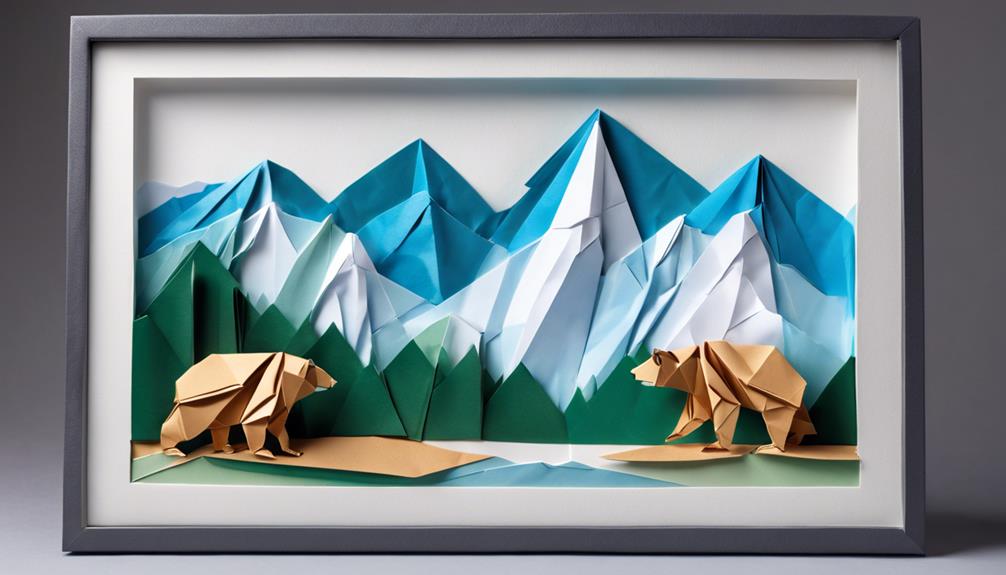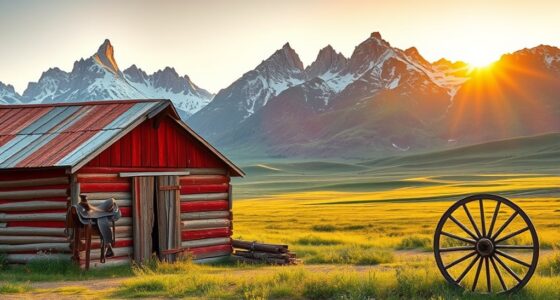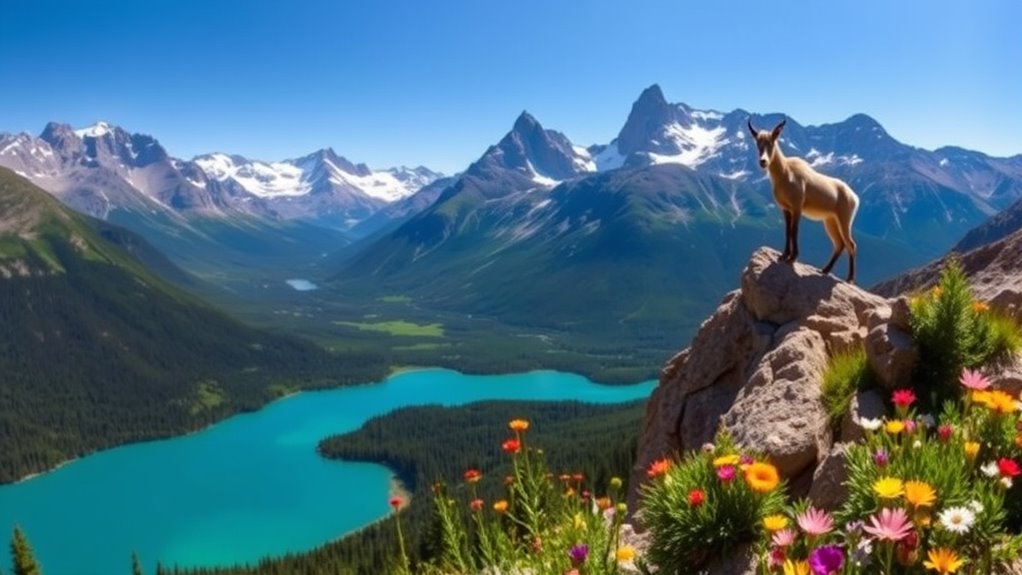
Montana’s top attractions include iconic parks like Glacier and Yellowstone, where you can see glaciers, geysers, and vibrant hot springs. Explore hidden gems like Makoshika State Park’s badlands or Tongue River Reservoir’s tranquil waters. For outdoor adventures, hike mountain trails, go fishing, or enjoy scenic drives like Going-to-the-Sun Road. These destinations showcase Montana’s breathtaking landscapes and natural beauty, offering unforgettable experiences. Keep exploring to discover even more of what makes Montana so special.
Key Takeaways
- Glacier National Park offers glaciers, rugged mountains, and scenic Going-to-the-Sun Road with spectacular alpine views.
- Yellowstone National Park features geothermal wonders like geysers, hot springs, and the iconic Old Faithful.
- Makoshika State Park showcases striking badlands formations and unique geological features.
- Tongue River Reservoir provides tranquil waters for boating, fishing, and paddleboarding.
- Scenic drives through Glacier and Yellowstone highlight Montana’s diverse natural landscapes and outdoor adventures.
Iconic National Parks and Their Must-See Spots
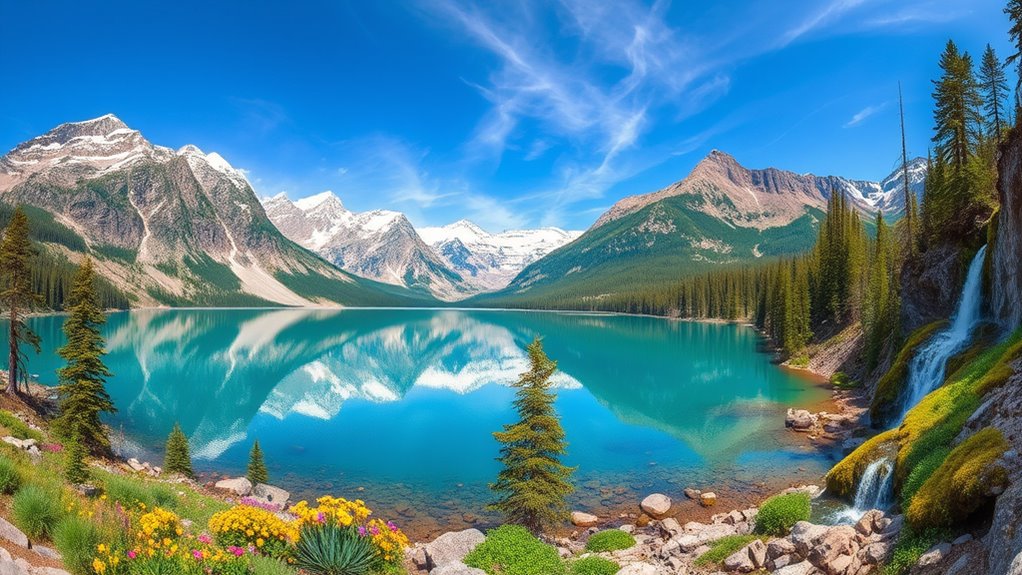
Montana’s iconic national parks are must-see destinations that showcase the state’s stunning natural beauty. Glacier National Park draws you in with its breathtaking glaciers, rugged mountains, and pristine lakes. Don’t miss going to Going-to-the-Sun Road for spectacular views and a scenic drive through the alpine landscape. Yellowstone National Park, shared with Wyoming, offers incredible geothermal features like geysers, hot springs, and bubbling mud pots. Be sure to visit Old Faithful and explore the vibrant Grand Prismatic Spring. Both parks attract millions of visitors each year, making them essential for Montana’s tourism and conservation efforts. Whether you’re hiking, wildlife watching, or simply soaking in the scenery, these parks provide unforgettable experiences that highlight Montana’s wild, untouched beauty.
Hidden Gems in State Parks Across Montana

While popular national parks draw most of the attention, many hidden gems await discovery in Montana’s state parks. These lesser-known spots offer unique scenery and peaceful escapes. Imagine:
- Wandering through Makoshika State Park, where striking badlands stretch as far as the eye can see, perfect for exploration.
- Sitting quietly by the Tongue River Reservoir, soaking in tranquil waters framed by rolling hills.
- Hiking narrow, shaded trails in Sluice Boxes State Park, with rugged cliffs rising on either side.
- Discovering hidden waterfalls tucked among dense forests in Lewis and Clark Caverns State Park.
- Exploring the diverse terrain found within Montana’s state parks, which showcases the state’s rich geological history and natural beauty.
Popular Destinations for Outdoor Adventures
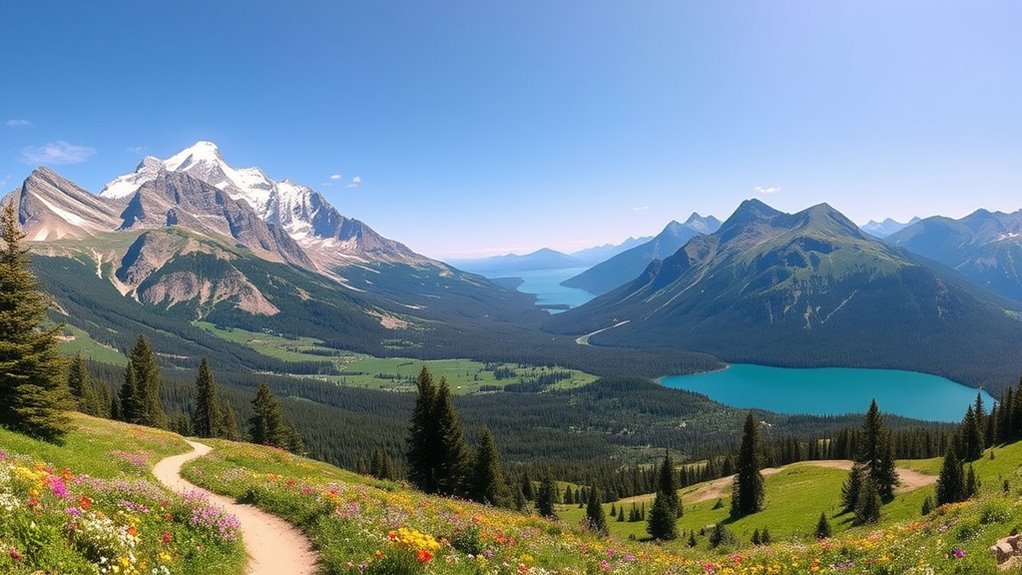
For outdoor enthusiasts, Montana offers a wealth of destinations perfect for adventure. You can explore Glacier National Park’s rugged wilderness, where hiking, camping, and wildlife viewing await. The park’s stunning glaciers and mountain peaks provide breathtaking backdrops for outdoor pursuits. Yellowstone National Park also beckons with geothermal features, geysers, and expansive landscapes ideal for hiking, fishing, and wildlife spotting. For water-based adventures, Tongue River Reservoir State Park offers boating, fishing, and paddleboarding in scenic surroundings. Makoshika State Park’s unique badlands terrain is perfect for hiking and photography. Whether you prefer mountain trails, lakeside activities, or exploring diverse landscapes, Montana’s outdoor destinations deliver thrilling experiences that connect you with nature’s raw beauty. Understanding insurance coverage can ensure you’re prepared for unexpected emergencies during your adventures.
Frequently Asked Questions
What Are the Latest Visitation Statistics for Montana’s National Parks?
In 2024, Montana’s national parks saw record-breaking visitation, with Glacier National Park experiencing its second-highest number of visitors in history. Yellowstone National Park also reported high visitor numbers, contributing markedly to local economies. You’ll find that these parks are major attractions, drawing millions of visitors each year. This surge highlights Montana’s popularity and the importance of conservation efforts to preserve these natural wonders for future generations.
How Do Regional Differences Affect Tourism in Montana?
You might be surprised how regional differences shape Montana’s tourism. In Glacier Country, visitor numbers soared, fueling outdoor adventures and local economies, especially during peak seasons. Meanwhile, Piegan Crossing experienced a decline, hinting at shifting travel patterns. These variations mean your experience can differ greatly depending on where you visit. Understanding these regional trends helps you make the most of Montana’s diverse landscapes, whether seeking bustling parks or quieter retreats.
Which State Parks Are Seeing the Fastest Growth in Visitors?
You’ll notice Tongue River Reservoir State Park experiencing the fastest growth in visitors, surpassing Makoshika State Park for three consecutive years. The region including Makoshika and Tongue River Reservoir has seen an 8.5% increase in visitation, reflecting its rising popularity. As a visitor, you’ll find these parks offer diverse landscapes and recreational activities that keep attracting more people each year, boosting regional tourism and local economies.
What Economic Impacts Does Tourism Have on Local Montana Communities?
Tourism considerably boosts Montana’s local communities by generating over $308 million in taxes and supporting around 38,240 jobs. When you visit, your spending helps local businesses and economies thrive, especially in popular areas like Glacier and Yellowstone. This influx of visitors creates economic activity worth nearly $3.9 billion, providing essential revenue for infrastructure, services, and conservation efforts, ultimately strengthening community livelihoods across the state.
How Are Conservation Efforts Balancing With Increasing Visitor Numbers?
You see, as visitor numbers rise, Montana’s conservation efforts are stepping up to keep landscapes pristine. Parks implement sustainable practices, limit access during sensitive times, and invest in habitat restoration. These measures often coincide with increased tourism, creating a balance between enjoying nature and protecting it. While demand grows, proactive management guarantees Montana’s natural beauty endures, allowing visitors and ecosystems to thrive side by side.
Conclusion
Montana’s attractions are like a treasure map waiting to be explored. From iconic parks to secret hideaways, each spot offers a new chapter of adventure. Whether you’re gazing at towering peaks or wandering through lush forests, you’re carving your own path through this wild, beautiful landscape. So, pack your curiosity and get ready—Montana’s wonders are ready to sweep you off your feet and leave you with memories as vast as the horizon.