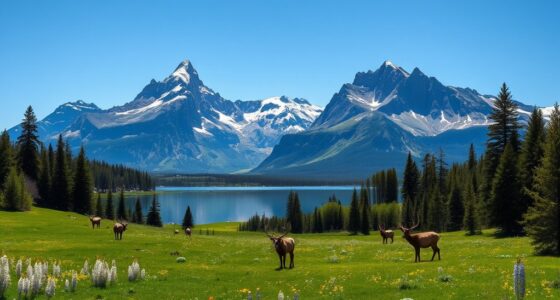
Wyoming’s history is deeply rooted in Native American traditions, frontier exploration, and early industry like cattle ranching and mining. It was the first U.S. territory to grant women voting rights and established Yellowstone, the world’s first national park. The state’s culture reflects a mix of Native heritage, pioneering spirit, and conservation efforts. If you want to explore the fascinating stories behind Wyoming’s unique identity, explore further to discover more about its legacy.

Get travel and outdoor gear delivered free with Prime
- Fast, free delivery on millions of items
- Prime Video, Amazon Music and more included
- Member-only deals all year
Key Takeaways
- Wyoming has a rich Native American history, with tribes like the Shoshone and Arapaho inhabiting the land for over 12,000 years.
- It was the first U.S. territory to grant women full voting rights in 1869, earning the nickname “The Equality State.”
- The establishment of Yellowstone National Park in 1872 marked the first national park and a major conservation milestone.
- Wyoming’s culture reflects frontier history, Native traditions, and pioneering spirit, celebrated through festivals, historic sites, and outdoor recreation.
- Key conflicts include Native land disputes, the Johnson County War, and racial tensions exemplified by the Chinese Massacre at Rock Springs.
Wyoming Native American cultural books
As an affiliate, we earn on qualifying purchases.
As an affiliate, we earn on qualifying purchases.
Prehistoric and Native American Roots

Wyoming’s history begins thousands of years ago with Native American tribes and early human inhabitants. Archaeological finds reveal that people have lived here for over 12,000 years, starting with the Clovis and Folsom cultures, known for their distinctive tools. You can still see the influence of tribes like the Shoshone and Arapaho, who called this land home long before Europeans arrived. In 1868, the Wind River Reservation was established for the Shoshone and later expanded to include the Arapaho, preserving their cultural heritage. Fur trading posts, established as early as 1834, marked the beginning of sustained contact with European-Americans. Through treaties in the 19th century, tribes were moved to reservations, shaping Wyoming’s diverse cultural landscape that persists today. Prehistoric cultures like Clovis and Folsom played a vital role in early human history in the region.
Yellowstone National Park travel guide
As an affiliate, we earn on qualifying purchases.
As an affiliate, we earn on qualifying purchases.
Territorial Beginnings and Organization
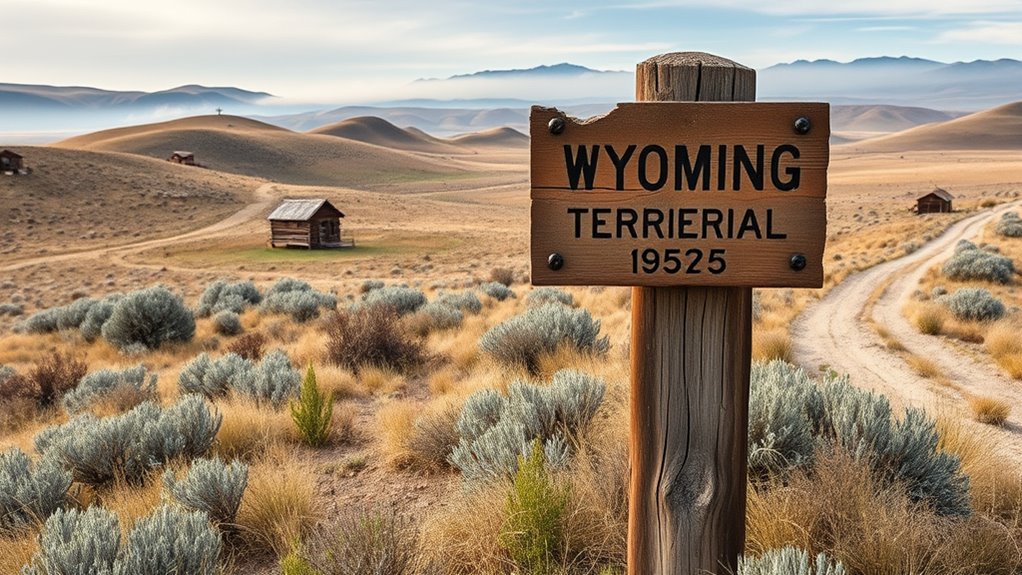
You can see how Wyoming’s territory was officially formed on July 25, 1868, by carving land from Dakota, Idaho, and Utah. As you explore, you’ll notice Cheyenne’s rise as the first territorial and later state capital, with early counties like Laramie and Sweetwater establishing the foundation. The organization of these counties and the focus on infrastructure, especially railroads, fueled settlement and economic growth in the region. Additionally, sustainable travel practices are increasingly being incorporated into the development of local tourism, promoting responsible exploration of Wyoming’s natural and cultural heritage.
Formation of Wyoming Territory
In 1868, Congress officially created the Wyoming Territory, carving it out from parts of Dakota, Idaho, and Utah territories. This move aimed to organize the region for settlement, economic growth, and governance. You can imagine the rugged landscape filled with pioneers, railroad builders, and Native tribes adjusting to new boundaries. The first territorial capital was Cheyenne, a bustling railroad hub, surrounded by scattered settlements. Early counties like Laramie and Sweetwater marked the growing administrative structure. Infrastructure projects, especially railroads, played a key role in uniting the territory. These developments drew settlers seeking opportunity, setting the stage for Wyoming’s future statehood and shaping its identity as a land of progress and resilience. The influx of settlers and the development of transportation networks contributed to the territory’s growth and stability.
Early County Development
When Wyoming was officially organized as a territory in 1868, it featured a straightforward administrative structure designed to manage the rugged and rapidly growing region. You’ll find that initial boundaries included key counties like Laramie, Sweetwater, Carbon, Albany, and Uinta. Cheyenne, founded in 1867 as a railroad hub, became the first territorial and later state capital. As settlement spread, more counties formed, growing from five to thirteen by statehood in 1890 and eventually to twenty-three. The territorial government prioritized infrastructure, especially railroads, which fueled economic growth and settlement. Early county development laid the foundation for Wyoming’s political and social landscape, shaping its identity as a frontier community with a focus on expansion, transportation, and governance. Additionally, the development of transportation networks, particularly railroads, played a crucial role in uniting the region and fostering further growth.
Wyoming history museum souvenirs
As an affiliate, we earn on qualifying purchases.
As an affiliate, we earn on qualifying purchases.
Landmark Events and Legislation
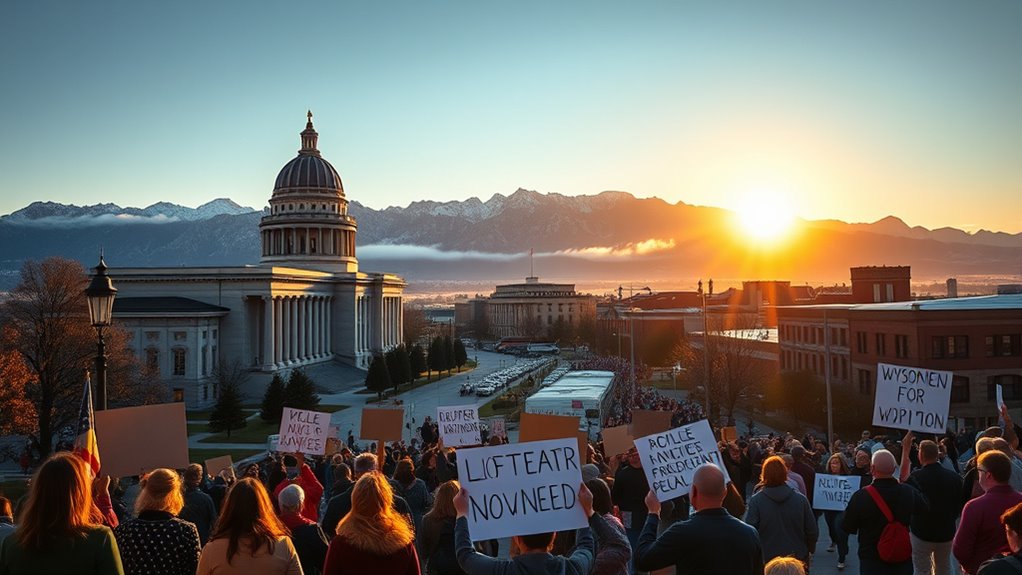
Wyoming made history by being the first state to grant women full voting rights, setting a powerful precedent for gender equality. The creation of Yellowstone in 1872 marked a major milestone in conservation, protecting the world’s first national park. Legislation in the 19th century laid the foundation for Wyoming’s progressive policies and lasting influence on American law. Additionally, the state’s early adoption of environmental preservation initiatives reflects its longstanding commitment to natural resources and public lands.
Women’s Voting Rights
Did you know that Wyoming was the first U.S. territory to grant women full voting rights? In December 1869, the territory passed the Suffrage Act, giving women the power to vote and run for office. This bold move was driven by the belief that women deserved a voice in shaping laws and policies. Imagine women heading to polling stations, ballots in hand, for the first time in history. They participated in elections and even served on juries, breaking social norms. This pioneering legislation set a precedent that inspired other states and territories. You can picture early suffragists campaigning tirelessly, advocating for equality, and celebrating their hard-won rights. Wyoming’s leadership in women’s suffrage solidified its reputation as the “Equality State.” Additionally, color accuracy played a key role in ensuring the visual clarity and impact of images used in promoting women’s voting rights.
Yellowstone’s Conservation Milestone
The establishment of Yellowstone National Park in 1872 marked a groundbreaking moment in conservation history. You should recognize that Yellowstone was the first national park, setting a global precedent for protecting natural wonders. This landmark event was driven by advocates who understood the importance of preserving this unique landscape of geysers, hot springs, and diverse wildlife. The U.S. government’s decision to create Yellowstone reflected a shift toward recognizing nature’s intrinsic value and the need for federal protection. Over time, Yellowstone’s status inspired additional parks and conservation efforts nationwide. Legislation like the Yellowstone Timber and Grazing Act and subsequent policies reinforced the park’s boundaries and management. Your awareness of this milestone highlights Wyoming’s vital role in pioneering conservation and establishing a legacy of environmental stewardship. Additionally, understanding the significance of landmark events and legislation helps contextualize how conservation policies have evolved to protect natural resources effectively.
19th Century Legislation
During the 19th century, Wyoming enacted landmark legislation that shaped its social and political landscape. You can imagine the excitement as women gained voting rights, making Wyoming the first state to do so. The passage of the Suffrage Act in 1869 was revolutionary, and Esther Hobart Morris’s appointment as Justice of the Peace in 1870 symbolized progress.
- Visualize women serving on juries in Laramie, breaking barriers.
- Picture Yellowstone’s designation as the world’s first national park in 1872, protecting natural wonders.
- Envision Wyoming’s constitution at statehood, including women’s suffrage, solidifying its reputation as the “Equality State.”
- Remember the significance of Legislative Changes in establishing Wyoming’s pioneering role in social reform.
These laws not only transformed Wyoming’s governance but also influenced national attitudes toward gender equality and conservation, leaving a lasting legacy.
Native American crafts from Wyoming
As an affiliate, we earn on qualifying purchases.
As an affiliate, we earn on qualifying purchases.
Economy and Industry Development
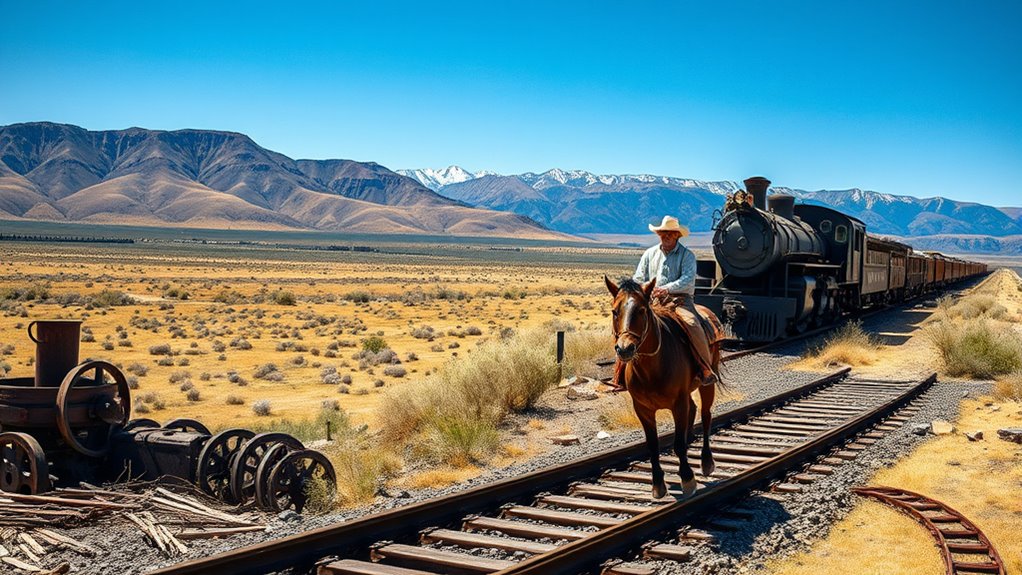
Wyoming’s economy has been shaped by key industries that drove settlement and growth in its early years. You’ll find that cattle ranching played a crucial role, with cattle drives starting in 1866, creating a strong ranching culture. The arrival of the Union Pacific Railroad in 1867 boosted towns and population. The Wyoming Stock Growers Association, formed in 1873, helped regulate the cattle industry. However, the harsh winter of 1886–1887, known as “The Great Die-Up,” devastated herds and forced ranchers to adapt. Mining also became important, especially coal, although Wyoming didn’t experience major gold or silver rushes like other states. These industries laid the foundation for Wyoming’s economy, shaping its development and identity well into the 20th century. Additionally, affiliate marketing has become a modern avenue for economic growth and business promotion in the region.
Social and Cultural Milestones

Have you ever wondered how Wyoming’s social and cultural landscape was shaped by bold milestones? You can picture the era when the Cheyenne Club, built in 1880, became a hub for cattle barons, symbolizing wealth and power. Imagine electric lights illuminating Cheyenne in 1883, signaling modernization. You might recall the tragic Chinese Massacre at Rock Springs in 1885, exposing racial tensions that challenged the frontier’s rugged image. The hanging of Ellen Watson, known as “Cattle Kate,” in 1889, marked frontier justice’s harsh reality. Then there’s the Johnson County War in 1892, a fierce clash between small ranchers and cattle giants, shaping Wyoming’s identity as a land of rugged independence and resilience. These milestones define Wyoming’s unique social and cultural fabric. Additionally, the development of self-watering plant pots reflects innovations in sustainable living, echoing Wyoming’s pioneering spirit of resourcefulness and adaptation.
Statehood and Political Legacy
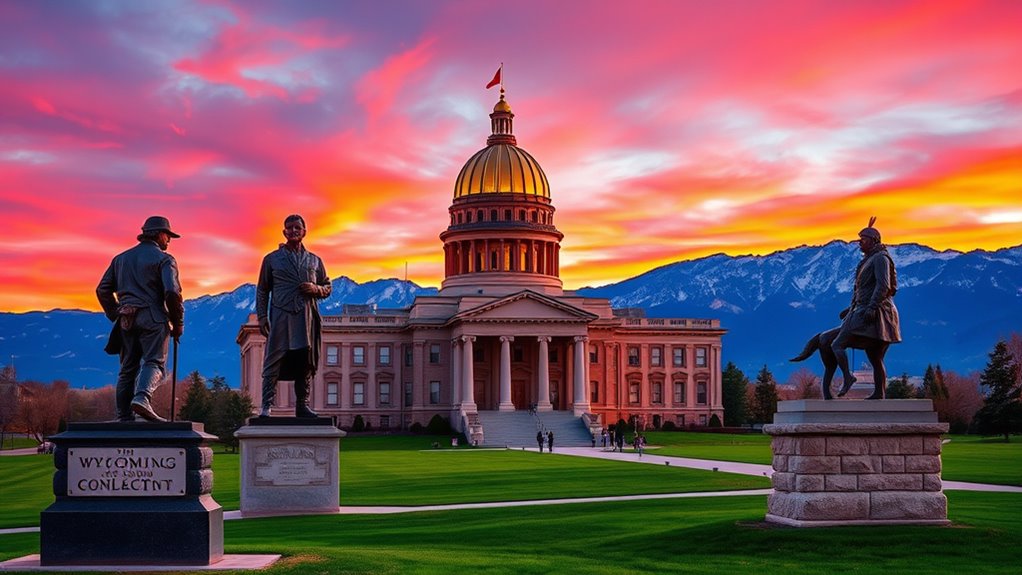
When Wyoming achieved statehood on July 10, 1890, it made history as the 44th state with a bold commitment to gender equality and resource rights. You’re part of a legacy that prioritized women’s voting rights and state control of water. Wyoming’s constitution kept women’s suffrage, setting a national precedent. Its early leaders, like Senators Joseph Carey and Francis Warren, shaped its political influence despite a small population. Wyoming’s progressive policies earned it a reputation as the “Equality State,” influencing national debates. Here’s a quick look at its political legacy:
| Aspect | Impact |
|---|---|
| Women’s Suffrage | First in the U.S. to grant full voting rights |
| State Constitution | Retained women’s voting rights |
| Key Leaders | Shaped early political influence |
| Resource Rights | Asserted state ownership of water resources |
| Political Influence | Gained national prominence despite small size |
Wyoming’s Role in Women’s Rights Movement
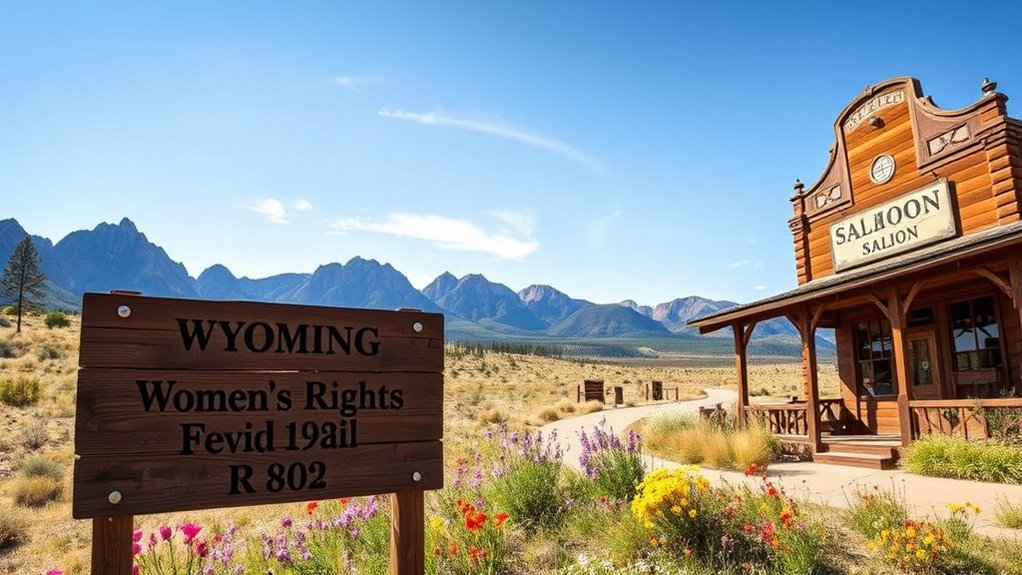
Did you know that Wyoming played a pioneering role in the women’s rights movement? In 1869, it became the first U.S. territory to grant women full voting rights, setting a powerful precedent. You can imagine the excitement as women cast ballots for the first time, breaking traditional barriers. Think of Esther Hobart Morris, who became the nation’s first female Justice of the Peace in 1870, symbolizing progress. Women also served on juries, challenging gender norms and inspiring future equality efforts. Wyoming’s bold stance earned it the nickname “The Equality State,” reflecting its commitment to women’s rights. This pioneering spirit influenced national discussions and demonstrated that gender equality could thrive in frontier communities. Wyoming’s early leadership in women’s rights remains a proud chapter in its history.
Key Historical Conflicts and Disputes
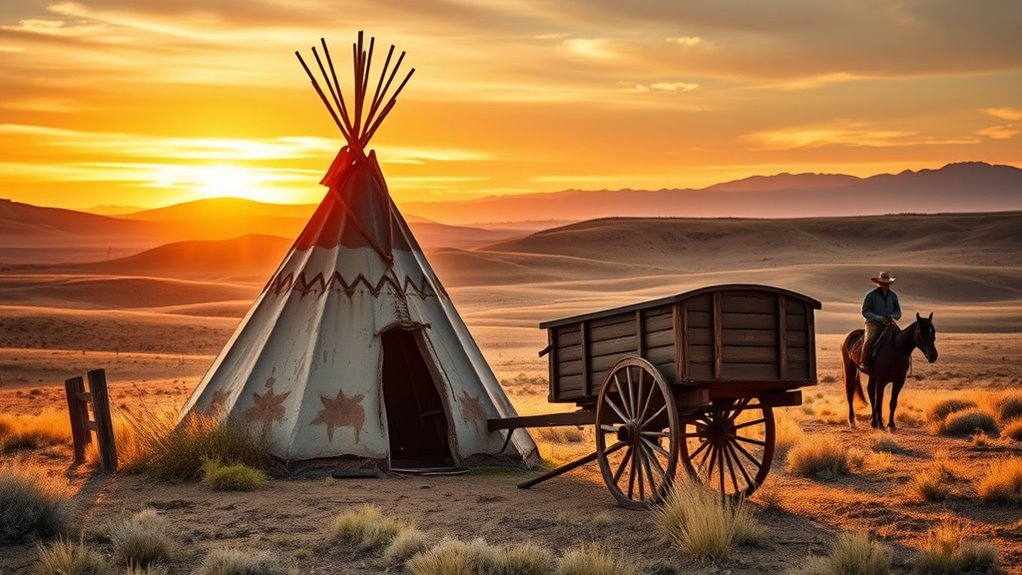
Wyoming’s history is marked by fierce conflicts that shaped its frontier identity. You witness clashes between Native tribes and European settlers, especially over land, resources, and sovereignty. The Johnson County War of 1892 pits small ranchers against powerful cattle interests, highlighting class tensions and frontier justice. Racial violence erupted in the Chinese Massacre at Rock Springs in 1885, revealing racial tensions fueled by economic competition. Disputes over water rights and land claims, especially between settlers and indigenous tribes, caused ongoing tensions. The struggle for control of natural resources, like coal and minerals, often led to disputes with industries and government. These conflicts defined Wyoming’s rough, resilient character and left a legacy of perseverance amid adversity.
Cultural Heritage and Modern Identity
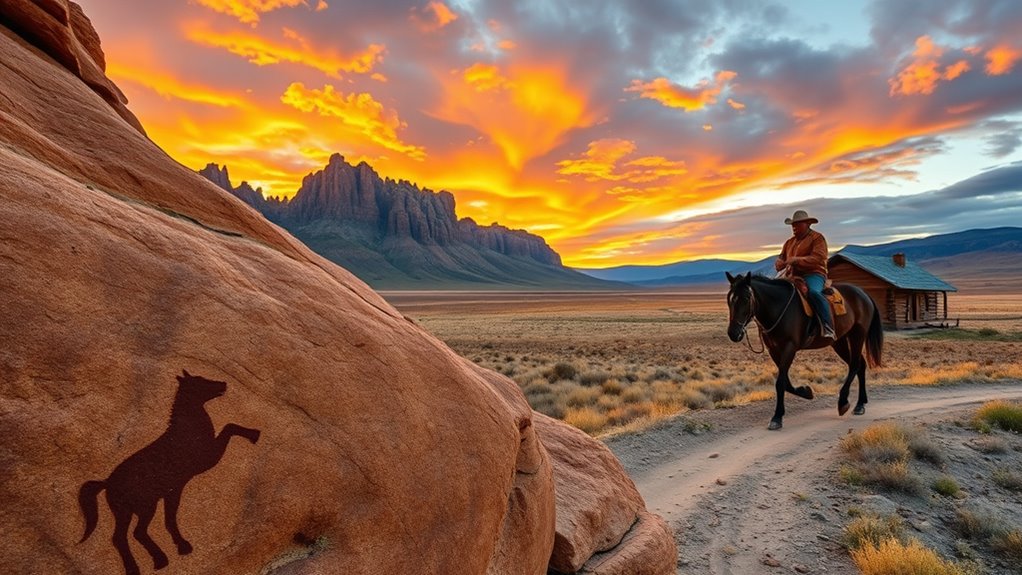
Wyoming’s cultural heritage is deeply rooted in its frontier history, Native American traditions, and the legacy of pioneering spirit. Today, this blend shapes your modern identity, blending rugged independence with respect for Native roots. You see it in small-town parades celebrating ranching, Native ceremonies honoring ancestors, and historic sites preserved for future generations. Wyoming’s commitment to equality, seen in its early women’s suffrage, continues to influence its progressive politics. You can feel the pride in its cowboy culture, outdoor recreation, and conservation efforts. The state’s identity is a reflection of resilience and tradition, woven into everyday life.
- Imagine wide-open plains where rodeo events echo tradition
- Native art and dance festivals honoring ancient customs
- Modern cities blending historic architecture with contemporary innovation
Frequently Asked Questions
How Did Native American Tribes Influence Wyoming’s Cultural Development?
You see Native American tribes, like the Shoshone and Arapaho, deeply influence Wyoming’s culture. They contribute traditions, stories, and skills that shape local communities. Their presence affects land use, art, and ceremonies, and their history is woven into Wyoming’s identity. You can observe their legacy in reservation lands, cultural festivals, and ongoing efforts to preserve their heritage, making their influence a essential part of Wyoming’s identity today.
What Role Did Natural Resources Play in Wyoming’s Economic Growth?
Natural resources drove Wyoming’s economic growth by fueling industries like cattle ranching, mining, and energy production. You’ll see that cattle drives and the arrival of the railroad boosted the ranching economy, while coal mining became essential in later years. You can also find that Wyoming’s water resources supported agriculture and industry. These resources attracted settlers, created jobs, and helped develop the state’s economy, shaping Wyoming’s growth and prosperity over time.
How Did Wyoming’s Early Social Clubs Impact Local Politics?
You see social clubs as the heartbeats of Wyoming’s early towns, pulsing with influence. They became symbols of power, shaping local politics by hosting meetings where community leaders and pioneers discussed key issues. These clubs fostered loyalty, reinforced social hierarchies, and often determined election outcomes. By uniting influential citizens, they helped mold policies and decisions, turning social gatherings into the silent architects of Wyoming’s political landscape.
What Are the Lasting Effects of the Johnson County War?
The lasting effects of the Johnson County War include shaping Wyoming’s frontier justice reputation and reinforcing tensions between small ranchers and large cattle interests. You’ll see its influence in local politics, where it fostered distrust of big business and government intervention. The event also left a legacy of rugged individualism and resistance to outside control, shaping Wyoming’s identity and its ongoing debates over land, resource rights, and ranching practices.
How Has Wyoming’s History Shaped Its Modern Identity?
Wyoming’s history shapes your modern identity by emphasizing independence, frontier spirit, and progressive values. You see this in the state’s pioneering role in women’s rights and its resilient ranching and mining traditions. The stories of conflicts like the Johnson County War and racial tensions remind you of Wyoming’s complex past. These elements foster a sense of pride, community, and a commitment to preserving the rugged, pioneering spirit that continues to define Wyoming today.
Conclusion
You’ve journeyed through Wyoming’s rich history, from prehistoric roots to modern cultural milestones. As you explore its Native American heritage, legendary landmarks, and pioneering spirit, remember that Wyoming’s story is still being written—think of it as a timeless playlist that keeps evolving. Its legacy of progress, resilience, and frontier spirit inspires you to appreciate how this state’s past continues to shape its future, much like the enduring influence of a classic vinyl in a digital age.
Columbus Day / Indigenous Peoples' Day Picks
long weekend sales
As an affiliate, we earn on qualifying purchases.