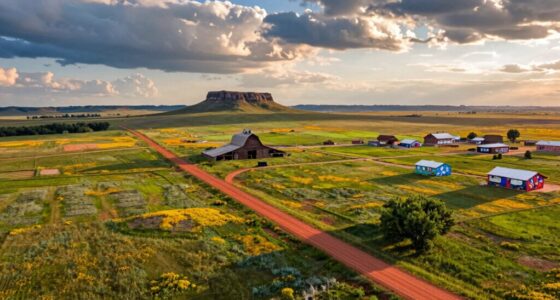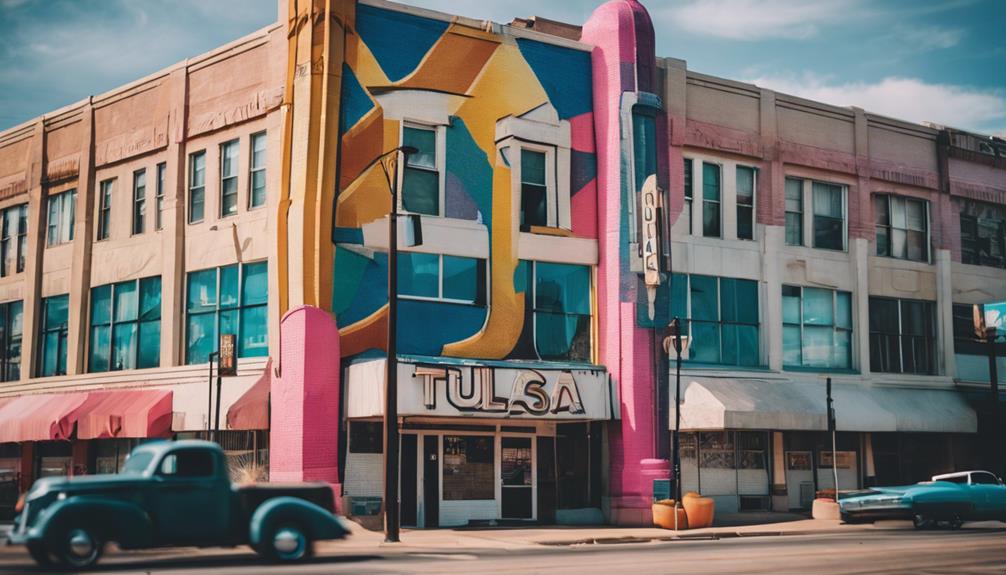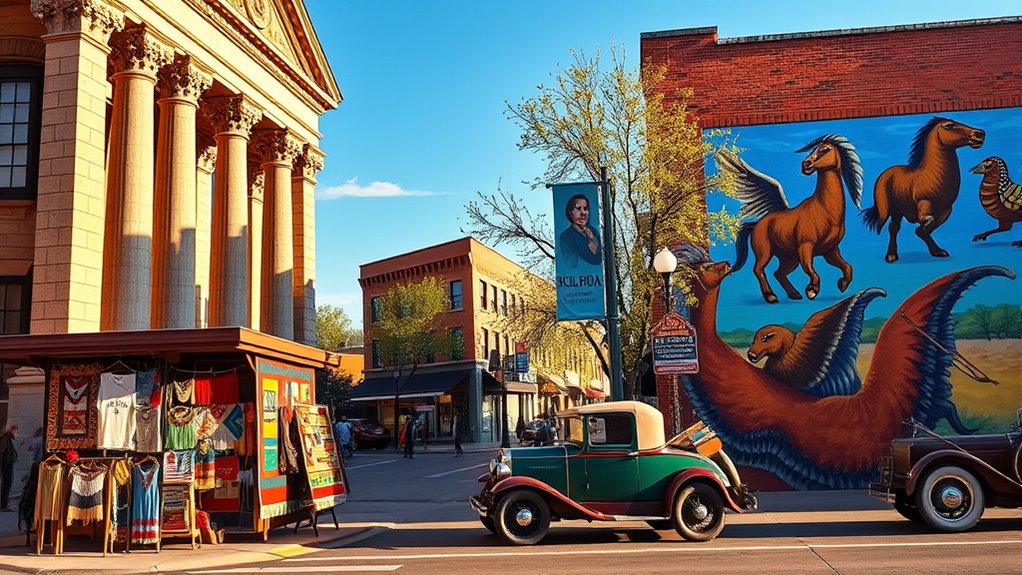

Oklahoma’s history and culture reflect a rich blend of Native American traditions, early European explorers, and frontier settlement. You’ll find stories of indigenous tribes thriving long before Europeans arrived, followed by land runs that opened the region to settlers. The discovery of oil transformed cities like Tulsa into economic hubs, while native nations preserved their heritage amidst modernization. If you keep exploring, you’ll uncover how Oklahoma’s diverse history shapes its vibrant and dynamic cultural identity today.
Key Takeaways
- Oklahoma’s history features indigenous tribes like the Five Civilized Tribes and their resilience through events like the Trail of Tears.
- The region experienced European exploration, territorial shifts, and land runs that fostered settlement and economic development.
- Statehood in 1907 marked Oklahoma’s transition from Indian Territory to a diverse, settled state with a thriving oil industry.
- Native cultures continue to influence Oklahoma’s social fabric, governance, and cultural traditions today.
- The state’s culture blends Western heritage, modern arts, music, cuisine, and sports, reflecting a dynamic historical and contemporary identity.

Oklahoma Freedmen of the Five Tribes (American Heritage)
As an affiliate, we earn on qualifying purchases.
As an affiliate, we earn on qualifying purchases.
Early Inhabitants and Indigenous Tribes
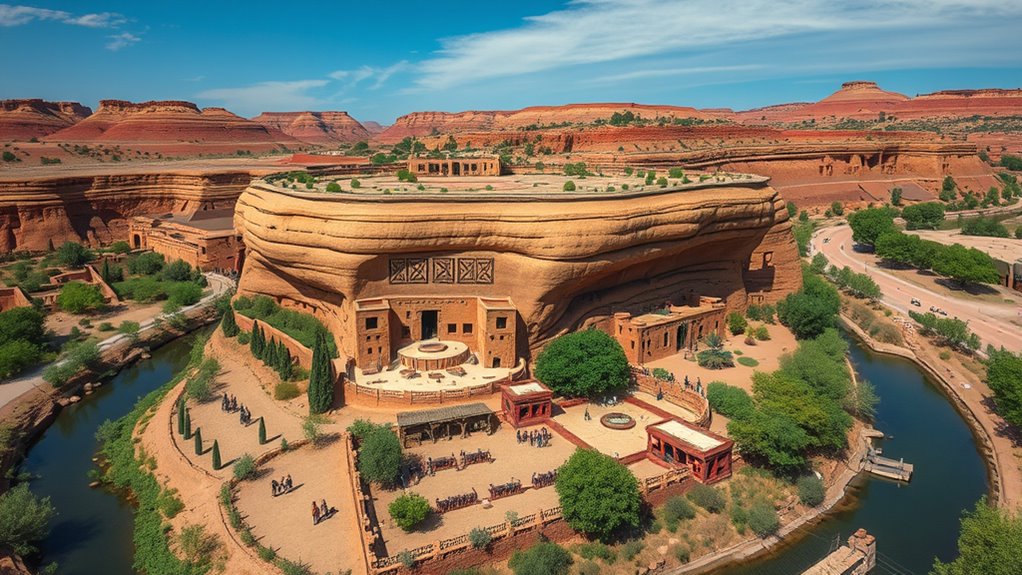
Have you ever wondered who first called Oklahoma home? Long before European explorers arrived, humans occupied this land about 30,000 years ago. You can imagine early peoples hunting and gathering across vast plains and forests. From roughly 800 to 1600 AD, the Caddoan people thrived in eastern Oklahoma, creating complex societies and rich cultures. Later, the area became home to the Five Civilized Tribes—Cherokee, Choctaw, Chickasaw, Muscogee (Creek), and Seminole—who established vibrant communities and traditions. These tribes were forcibly relocated during the 1830s, especially through the Trail of Tears, which marked a tragic chapter in their history. Their resilience and cultural legacies still shape Oklahoma today, making the land’s history deeply rooted in Native American heritage. Additionally, music therapy and sound healing practices have historically been part of indigenous healing traditions, reflecting the deep spiritual connection to the land and its cultural practices.

Oklahoma Road Trip Rubber Stamp, 1-5/8 Square – Travel Souvenir Collectible for Lovers, History Buffs, and Enthusiasts
OKLAHOMA ROAD TRIP STAMP – 1-5/8" square size delivers crisp, consistent imprints for tracking routes, stamping journals, passports,…
As an affiliate, we earn on qualifying purchases.
As an affiliate, we earn on qualifying purchases.
European Exploration and Territorial Shifts
You see, Spanish explorers like Coronado first visited Oklahoma in 1541, marking the beginning of European interest in the region. The Louisiana Purchase of 1803 then expanded U.S. control over most of present-day Oklahoma, except the panhandle, which changed hands multiple times. These territorial shifts set the stage for future settlement and conflicts that shaped Oklahoma’s history. Additionally, understanding the space‑heating options available today helps appreciate how communities have adapted to their environments over time.
Spanish Exploration Visits
Did Spanish explorers first set foot in what is now Oklahoma in the 16th century? Not exactly. It was in the early 1540s that Francisco Vázquez de Coronado led an expedition through the southwestern United States, which included parts of present-day Oklahoma. Coronado’s team searched for the mythical Seven Cities of Gold, traversing the plains and encountering Native tribes. While they didn’t establish settlements, their journey marked one of the earliest European visits to the region. These explorations introduced Europeans to the land’s vastness and resources, setting the stage for future encounters. Spanish influence in the area remained limited during this period, but their arrival underscored the region’s importance as a potential colonial territory, especially as Spain expanded its influence in North America. Early European exploration efforts, such as Coronado’s, played a crucial role in mapping the land and understanding its geographic significance.
Louisiana Purchase Impact
The Louisiana Purchase in 1803 dramatically reshaped the territorial landscape of North America, including what is now Oklahoma. It doubled the size of the U.S. and opened new lands for exploration and settlement. Here’s how it impacted Oklahoma:
- It transferred vast territories from France to the U.S., setting the stage for westward expansion.
- European influence shifted as France ceded control, reducing Spanish dominance in the region.
- The purchase led to increased American interest and exploration, including expeditions into the Oklahoma area.
- It laid the groundwork for future territorial changes, such as the inclusion of Oklahoma lands in U.S. claims and boundaries.
- The Louisiana Purchase also introduced a new era of territorial acquisition, which significantly influenced the development and settlement of the region.
This shift marked the beginning of American dominance, shaping Oklahoma’s future statehood and cultural identity.
Territorial Transitions
How did territorial shifts shape Oklahoma’s landscape and sovereignty? You see, early European explorers like Coronado in 1541 marked the first contact, but control of the land kept changing. The Louisiana Purchase in 1803 brought most of Oklahoma under U.S. control, though the panhandle remained Spanish, then Mexican, and later American territory. As settlers moved west, lands shifted from Missouri and Arkansas territories into Indian Territory by the 1830s. Land runs in the late 1800s opened millions of acres to settlement, often displacing Native tribes. The 1907 statehood unification ended territorial divisions, creating Oklahoma as a single state. These shifts defined the land’s sovereignty, transforming it from native lands to a diverse, settled state with evolving borders and governance. Proper storage and handling of essential oils can help preserve their quality as the region’s history and culture continue to evolve.

Center Places and Cherokee Towns: Archaeological Perspectives on Native American Architecture and Landscape in the Southern Appalachians
As an affiliate, we earn on qualifying purchases.
As an affiliate, we earn on qualifying purchases.
The Land Runs and Settlement Boom
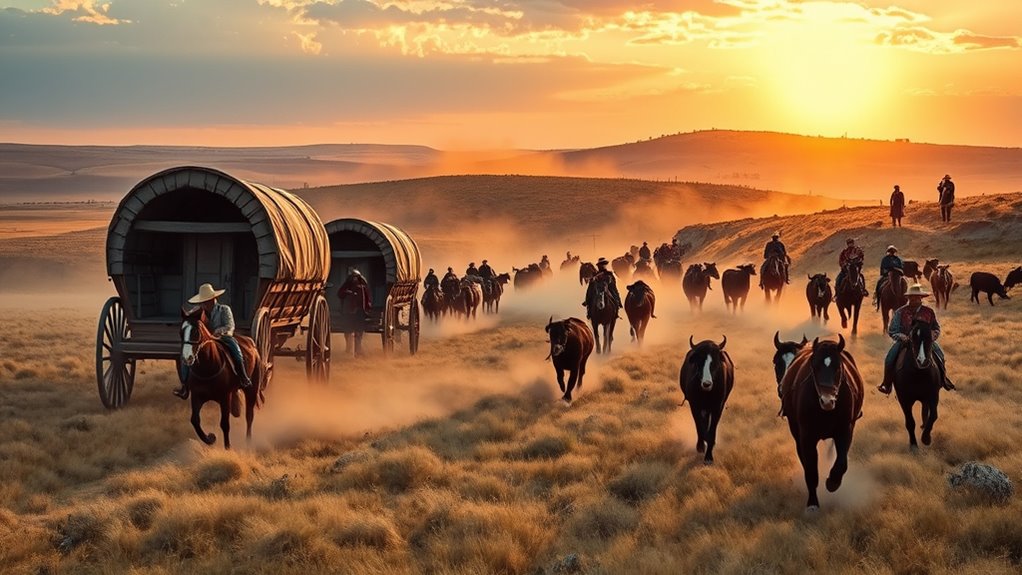
You witness how the land rushes opened vast areas of Oklahoma to enthusiastic settlers, transforming the landscape overnight. Thousands competed in events like the 1893 Cherokee Outlet Land Run, claiming their piece of the frontier. This rapid settlement pattern laid the foundation for Oklahoma’s growth and development in the years that followed. The influx of settlers also led to the establishment of new towns and the development of music production essentials, which contributed to the cultural richness of the region.
Land Run Events
Land runs marked a pivotal period in Oklahoma’s history, transforming vast tracts of land into a settlement boom that drew thousands of pioneers. You witness firsthand how these events opened Native American lands to settlement, fueling rapid growth. During this time, you experience the excitement and chaos of these races for land. Here are four key aspects:
- The 1893 Cherokee Outlet Land Run, the largest, with over 100,000 participants competing for 6.5 million acres.
- The 1891 land run that settled Oklahoma Territory, establishing towns and neighborhoods overnight.
- The final land openings in 1906 for Osage and Kaw lands, marking the end of the land run era.
- The role of the Curtis Act of 1898 which diminished tribal authority, encouraging settlement and land claims. Environmental considerations played a role in how these lands were later used and preserved.
Settlement Patterns
The land runs ignited a rapid settlement boom across Oklahoma, reshaping the region almost overnight. Thousands raced to claim land, leading to a surge of new towns and communities. These events opened vast areas previously controlled by Native tribes, attracting settlers from across the country. The biggest land run in 1893 drew over 100,000 participants competing for 6.5 million acres. Settlement patterns shifted from Native territories to organized towns, farms, and industries. The influx of settlers also influenced cultural dynamics, transforming the social landscape of the region. The table below highlights key land runs and their impacts:
| Year | Event | Result |
|---|---|---|
| 1891 | Cherokee Outlet Land Run | Settled 3 million acres |
| 1893 | Oklahoma Land Run | Largest, 100,000+ settlers |
| 1895 | Cheyenne-Arapaho Land Run | Opened 2 million acres |
| 1906 | Osage and Kaw Land Openings | Final major settlements |

Custer and the 1873 Yellowstone Survey: A Documentary History (Volume 32) (Frontier Military Series)
As an affiliate, we earn on qualifying purchases.
As an affiliate, we earn on qualifying purchases.
Path to Statehood and Political Unification
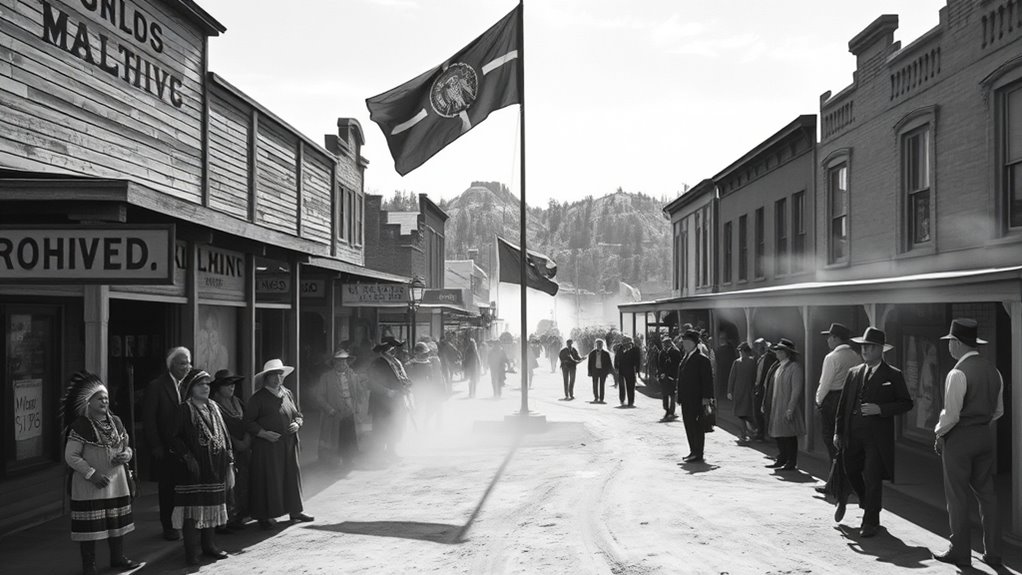
The journey toward Oklahoma’s statehood involved a complex process of uniting two distinct territories—Oklahoma Territory and Indian Territory—that had developed under different circumstances. You need to understand how political efforts brought these regions together in 1907.
Here are four key steps:
- The 1905 Indian Territory convention aimed to create the State of Sequoyah, reflecting Native American interests.
- The U.S. government opposed separate statehood, preferring a single state combining both territories.
- The Oklahoma Statehood Enabling Act of 1906 authorized drafting a unified constitution for both regions.
- Oklahoma officially became the 46th state on November 16, 1907, with Guthrie as its first capital.
This unification marked a significant step toward political and economic integration across the area, with the process also involved territorial governance and legal negotiations to ensure a smooth transition.
The Rise of the Oil Industry
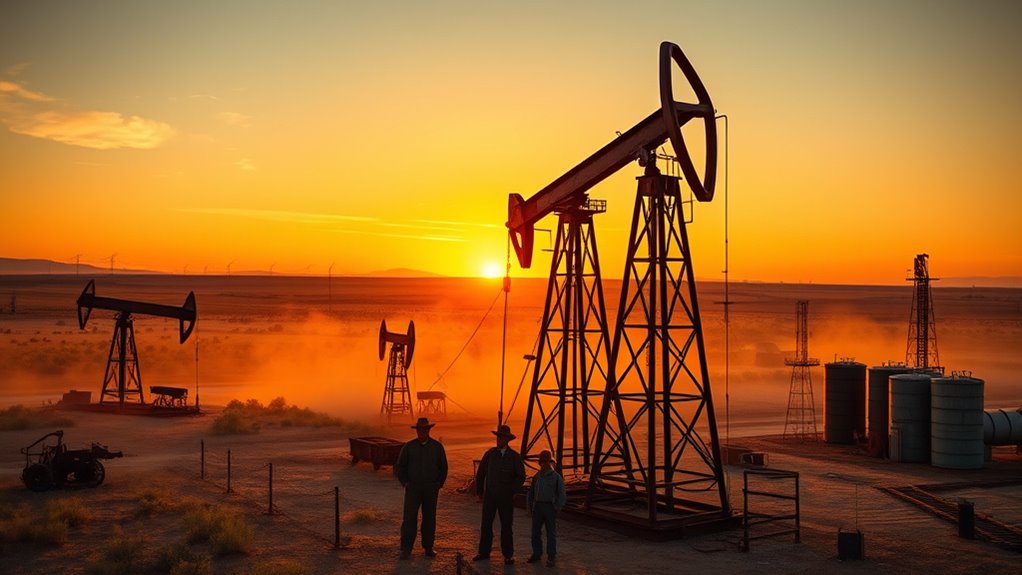
When oil was first discovered in Oklahoma, it transformed the region’s economy and set the stage for rapid growth. Tulsa quickly became known as the “Oil Capital of the World,” attracting companies and workers from across the nation. This industry’s expansion fueled Oklahoma’s development, shaping its cities and communities for decades to come. The immense wealth generated by the oil industry also contributed to the growth of wealth accumulation and regional prosperity.
Discovery of Oil
Have you ever wondered how oil transformed Oklahoma into an economic powerhouse? When oil was discovered, it sparked a rapid boom that changed the state’s landscape. You should know:
- The 1905 Glenn Pool strike near Tulsa revealed Oklahoma’s immense oil reserves, earning Tulsa the nickname “Oil Capital of the World.”
- Frank Phillips established Phillips Petroleum in Bartlesville, fueling industry growth and innovation.
- The first accidental oil discovery in 1859 near Salina marked the beginning of Oklahoma’s petroleum history.
- The oil industry attracted thousands of workers and investors, transforming towns into bustling cities and reshaping Oklahoma’s economy.
This discovery set the stage for Oklahoma’s rise as a major oil producer, influencing its development well into the 20th century.
Tulsa’s Oil Boom
Oklahoma’s oil industry surged into prominence after the 1905 discovery at Glenn Pool, transforming Tulsa into the nation’s premier oil hub. You’d see the city’s skyline change as oil derricks sprouted, bringing wealth and rapid growth. The boom attracted entrepreneurs like Frank Phillips, who founded Phillips Petroleum in 1905, fueling the industry’s expansion. Tulsa’s economy thrived as oil production skyrocketed, creating jobs and drawing workers from across the country. You’d notice neighborhoods popping up around oil fields, and the city becoming known as the “Oil Capital of the World.” The industry’s success helped shape Tulsa’s identity, fostering a culture of innovation and ambition. This oil surge laid the foundation for Tulsa’s prominence in energy and business that continues today.
Industry’s Economic Impact
The rise of the oil industry transformed Oklahoma’s economy into a powerhouse that still influences the state today. You can see its impact in multiple ways:
- Tulsa earned the nickname “Oil Capital of the World” after the 1905 Glenn Pool discovery, fueling urban growth.
- Frank Phillips founded Phillips Petroleum in Bartlesville, establishing a major industry hub.
- Oil discoveries, starting as accidental finds in 1859, led to rapid economic expansion and attracted thousands of workers.
- The industry spurred infrastructure development, including pipelines, refineries, and transportation networks, shaping Oklahoma’s modern economy.
This industry not only created wealth but also attracted diverse populations, influenced politics, and laid the foundation for Oklahoma’s economic resilience.
Cultural Foundations and Educational Milestones
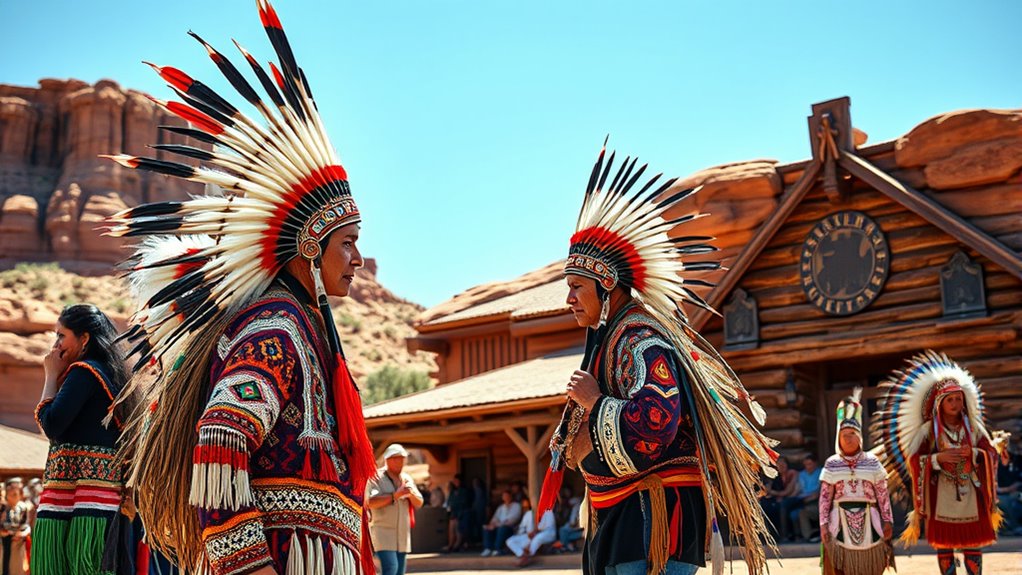
Cultural foundations and educational milestones have played a crucial role in shaping Oklahoma’s identity. You see, the establishment of the University of Oklahoma and Oklahoma State University in 1890 laid the groundwork for higher education and research. These institutions fostered a sense of pride and community, drawing people together across diverse backgrounds. Educational programs like cooperative extension services helped rural communities thrive by providing essential knowledge and resources. Politicians like William H. “Alfalfa Bill” Murray influenced the state’s governance and promoted progressive ideas that shaped policies and social values. Additionally, the relocation of the capital to Oklahoma City in 1910 reflected economic shifts and growth. Together, these milestones and institutions laid a cultural and educational foundation that continues to influence Oklahoma’s development today.
The Role of Native American Nations
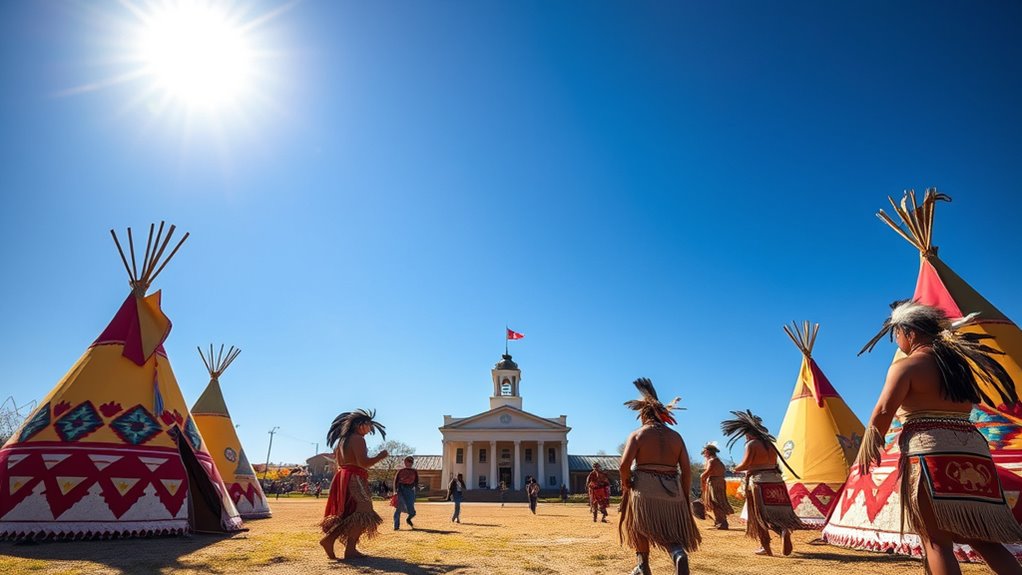
How did Native American nations shape Oklahoma’s history? You play a key role in understanding their influence. Native nations carved Oklahoma’s identity through resilience, culture, and leadership. Here’s how:
- They established vibrant societies, with tribes like the Cherokee, Choctaw, and Creek creating rich traditions before forced relocations.
- During the Indian Removal Act, tribes resisted and adapted, maintaining their languages, customs, and governance despite displacement.
- Native nations organized their own governments within Indian Territory, shaping early political structures.
- Their perseverance inspired future generations, ensuring Native culture remained an essential part of Oklahoma’s heritage, even amid challenges like land loss and assimilation efforts. Native nations’ legacy continues to influence Oklahoma’s social fabric today.
Urban Growth and Capital Relocation
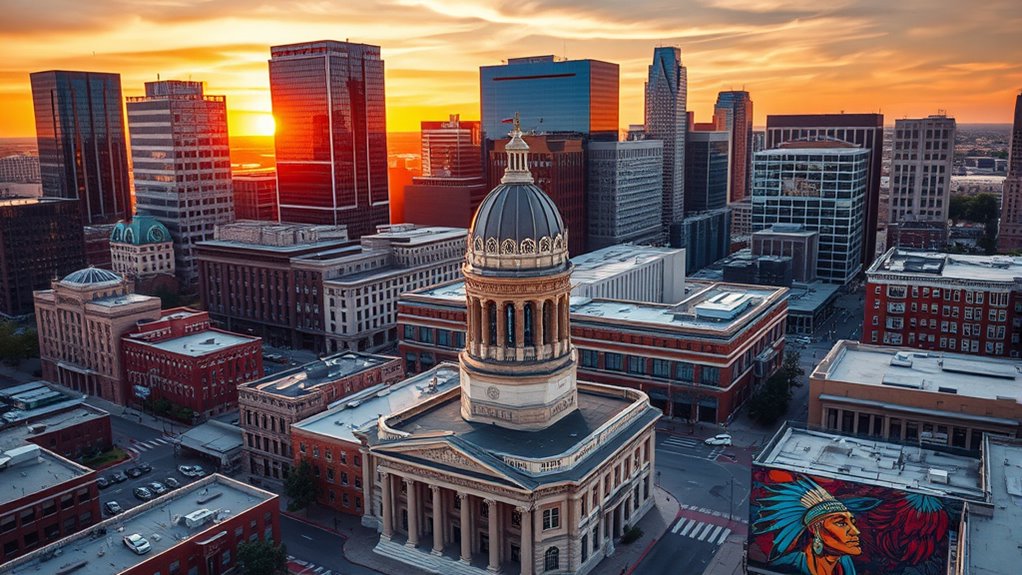
As Oklahoma’s cities grew rapidly in the early 20th century, shifting economic and political priorities prompted the state’s capital to move from Guthrie to Oklahoma City in 1910. You’ll notice that Oklahoma City’s strategic location and expanding economy made it an ideal hub for commerce, transportation, and industry. The move reflected the changing focus from the initial frontier town of Guthrie, which had served as the capital since Oklahoma’s statehood in 1907. Oklahoma City’s growth was fueled by the oil boom, railroad expansion, and increasing urbanization. The relocation also signified a shift in political power, favoring a city better positioned to support Oklahoma’s economic ambitions. Today, Oklahoma City remains the state’s political, economic, and cultural center, a demonstration to this early 20th-century urban transformation.
Agricultural Development and Rural Life
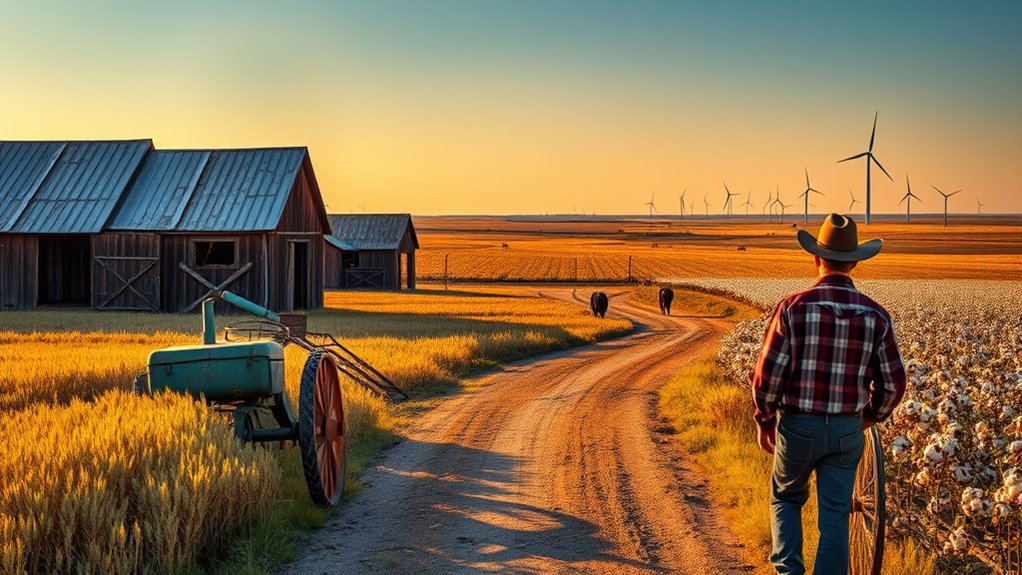
Agricultural development has long been a cornerstone of Oklahoma’s rural life, shaping communities and economies across the state. You can see its impact through:
- The rise of large-scale farming and ranching, which supported local economies and created jobs.
- The introduction of cooperative extension services in the early 1900s, helping farmers adopt new techniques and improve productivity.
- The importance of crop diversification, including wheat, cotton, and sorghum, to guarantee stability and resilience.
- The development of rural communities, where schools, churches, and local businesses centered around agricultural life.
This foundation allowed Oklahoma to grow as a essential agricultural hub, maintaining strong ties between land, family, and tradition.
Oklahoma’s Modern Cultural Identity
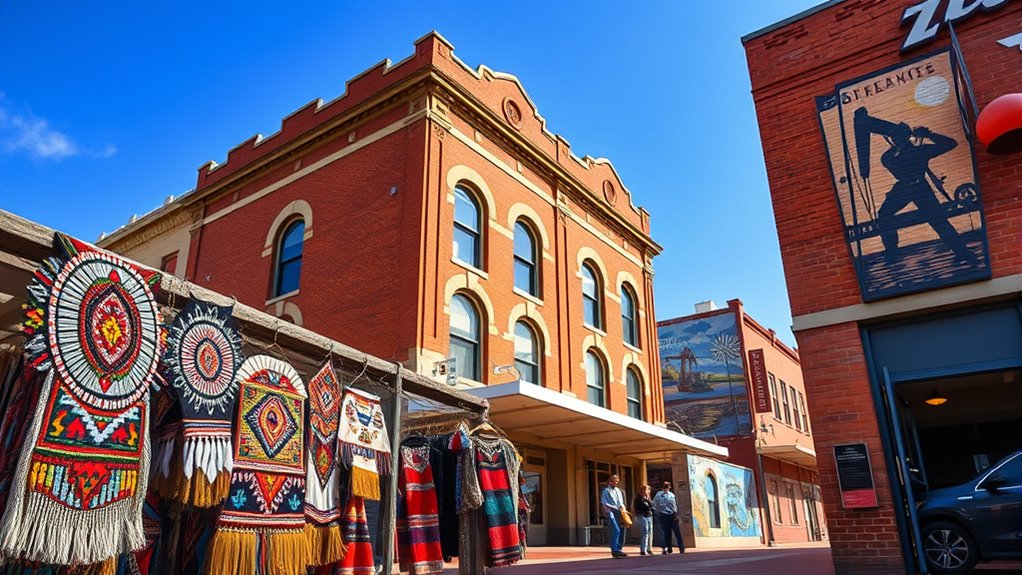
Oklahoma’s modern cultural identity is a vibrant mix of Native American traditions, Western heritage, and diverse contemporary influences. You experience this blend through its art, music, festivals, and community events that celebrate Native tribes’ histories and customs. Western motifs remain visible in rodeos, cowboy culture, and historic sites. Meanwhile, modern influences like jazz, rock, and indie music thrive in cities like Oklahoma City and Tulsa, reflecting a youthful, creative spirit. You’ll find a rich culinary scene that combines Native ingredients, Southern flavors, and international cuisines. Sports, especially college football, foster community pride and identity. This dynamic mix creates a state that honors its past while embracing innovation, making Oklahoma’s cultural landscape both rooted and forward-looking.
Frequently Asked Questions
How Did Native American Tribes Influence Oklahoma’s Cultural Identity?
You can see Native American tribes deeply influence Oklahoma’s cultural identity through their traditions, art, and languages. They brought vibrant ceremonies, storytelling, and crafts that still thrive today. Native tribes also shaped the state’s history through resilient communities and leadership. Their influence is evident in festivals, place names, and cultural practices, making Oklahoma a unique blend of indigenous and settler histories that continues to define its identity.
What Role Did Oklahoma Play in the Civil Rights Movement?
You see, Oklahoma played a significant role in the civil rights movement by hosting landmark events like the 1955 Black and White Civil Rights Conference in Oklahoma City. You can also recognize the contributions of Native American activists fighting for sovereignty and equality. The state’s history of segregation, protests, and legal battles helped shape the broader fight for civil rights across the nation, inspiring change and emphasizing the importance of justice.
How Has Oklahoma’s Native American Heritage Impacted Modern Laws?
You’ll find that Oklahoma’s Native American heritage heavily influences modern laws, especially regarding tribal sovereignty, gaming, and land rights. State legislation often respects treaties and tribal authority, promoting cooperation between tribes and government. You also see Native traditions reflected in cultural celebrations and policies supporting tribal self-determination. This heritage shapes legal frameworks, ensuring Native communities maintain their rights, culture, and economic independence within Oklahoma’s evolving legal landscape.
What Are the Major Native American Festivals Celebrated Today?
You might be surprised, but Native American festivals like the Cherokee Nation’s Red Earth Festival, the Choctaw’s Tribal Fair, and the Osage Nation’s Cultural Festival are still celebrated today. These events showcase vibrant powwows, traditional dances, arts, and crafts, honoring ancient traditions. You get to experience the rich heritage firsthand, even as modern life continues around them. These festivals serve as powerful reminders of Native cultures thriving amidst contemporary Oklahoma.
How Did the Oklahoma City Bombing Affect State Policies?
You see how the Oklahoma City bombing led to significant policy changes. The event prompted stricter security measures, improved emergency response protocols, and new anti-terrorism laws. You also notice increased coordination between federal, state, and local agencies to prevent future attacks. The tragedy pushed Oklahoma to prioritize public safety, enhance law enforcement training, and develop better disaster preparedness strategies, shaping the state’s policies for years to come.
Conclusion
As you explore Oklahoma’s history and culture, you discover a land woven with rich traditions and stories of resilience. Its journey from early inhabitants to modern vibrancy hints at a deep well of spirit and unity. You’ll find that, like a well-tended garden, Oklahoma’s identity continues to bloom through shared experiences and enduring hope, quietly shaping a future as bright and welcoming as its storied past.