

South Carolina’s history is shaped by early European explorers, like Hernando de Soto, and the development of its colonial economy based on crops like rice and cotton. Its culture blends African, European, and Southern influences, reflected in traditions like Gullah cuisine and Charleston’s arts. The state played a key role in the Revolutionary War, Civil War, and Civil Rights movement. Discovering more about its rich past and vibrant heritage reveals even deeper stories of resilience and pride.
Key Takeaways
- South Carolina’s history includes early Native American societies, European contact, and significant colonial development starting in the 17th century.
- The state played a pivotal role in the American Revolution, declaring independence in 1776 and fighting at key battles like Sullivan’s Island.
- The economy historically relied on slavery and plantation agriculture, notably cotton, rice, and naval stores, shaping regional wealth and conflicts.
- South Carolina was the first to secede from the Union, igniting the Civil War, with enduring impacts on its social and political landscape.
- Cultural heritage features Gullah traditions, Southern music, cuisine, and Charleston’s unique blend of African, European, and Caribbean influences.
As an affiliate, we earn on qualifying purchases.
Early European Exploration and Settlement

Have you ever wondered how South Carolina’s early history was shaped by European explorers? Hernando de Soto’s expedition in April 1540 marked the first contact, bringing diseases that devastated Native American populations. In 1663, the English Crown granted land to eight proprietors, forming the Carolina colony. The first settlers arrived in Charleston in 1670, mostly wealthy planters and enslaved Africans from Barbados. The colony’s economy grew through exports like deerskin, cattle, rice, and naval stores by 1700. Tensions with Native Americans led to conflicts, such as the Yamasee War from 1715 to 1717. Afterward, colonists pushed Native Americans back, and by 1719, South Carolina transitioned from proprietary to royal control, setting the stage for its future development.
As an affiliate, we earn on qualifying purchases.
The Formation and Growth of Colonial South Carolina

Ever wonder how colonial South Carolina transformed from a distant land into a thriving colony? It all started when the English Crown granted land to eight proprietors in 1663, creating the Carolina colony. By 1670, settlers arrived in Charleston, mainly wealthy planters and enslaved Africans from Barbados, laying the foundation for the colony’s economy. They exported deerskin, cattle, rice, and naval stores, fueling growth. In 1712, the province split into North and South Carolina, each developing its own identity. Tensions with Native Americans, like during the Yamasee War (1715–1717), led to colonists pushing back and eventually overthrowing the proprietors in 1719. South Carolina then became a royal colony, setting the stage for its future development. Trade practices played a crucial role in shaping its economy and cultural interactions.
Charleston arts and crafts souvenirs
As an affiliate, we earn on qualifying purchases.
As an affiliate, we earn on qualifying purchases.
The Road to Independence and Statehood
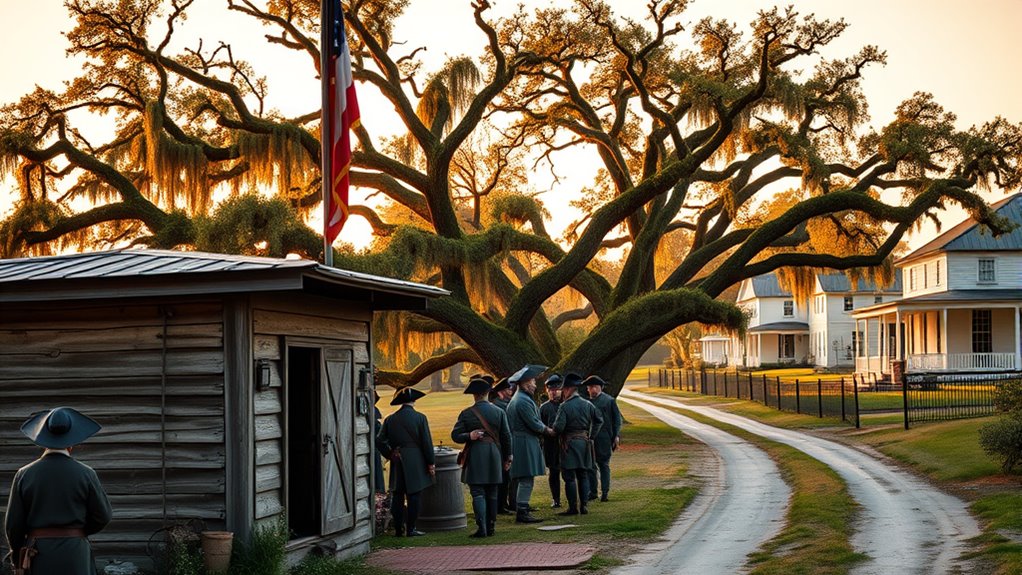
You witness how early European contact, starting with Hernando de Soto’s expedition, brought devastating diseases and opened the region for settlement. As colonies grew, by 1712, South Carolina split from North Carolina, setting the stage for its push toward independence. When tensions with Britain escalated, you see how South Carolina’s fight for liberty led to its official statehood in 1788. The development of a homegrown government further solidified its status as a separate and independent entity.
Early European Contact
Why did European contact in South Carolina mark a turning point in its history? When Europeans arrived, they brought new diseases, weapons, and ideas that drastically changed Native American societies. Hernando de Soto’s expedition in 1540 was the first major encounter, devastating indigenous populations with illness and conflict. Later, in 1663, the English established the Carolina colony, bringing settlers from Barbados and setting up a plantation economy based on slavery. European influence introduced new crops, trade practices, and cultural elements that reshaped the region’s identity. This contact set the stage for colonization, economic growth, and conflicts over land and power. It also initiated a long history of cultural blending, struggle, and change that would define South Carolina’s future.
Colonial Settlement Growth
Following European contact, South Carolina’s colonial settlement expanded rapidly as the region attracted more settlers seeking economic opportunity and land. The first arrivals, mainly wealthy planters and enslaved Africans from Barbados, established a thriving port in Charleston by 1670. These settlers focused on cultivating crops like rice, deerskin, and cattle, fueling the economy. As the colony grew, it attracted additional colonists and expanded inland, forming small towns and farms. In 1712, the colony divided into North and South Carolina, reflecting regional differences. During this period, Native American populations faced displacement and conflict, especially after events like the Yamasee War. Settlement efforts laid the groundwork for South Carolina’s development, shaping its social, economic, and political landscape leading up to independence.
Path to Statehood
How did South Carolina shift from a colonial settlement to an independent state? It started with tensions over governance and economic control, especially as colonists chafed under British laws and taxes. The outbreak of the American Revolution in 1775 pushed residents toward independence, with Charleston’s Provincial Congress declaring separation in 1776. South Carolina played a key role in the revolution, fighting at battles like Sullivan’s Island and at Fort Moultrie. After winning independence, the state ratified the U.S. Constitution in 1788, joining the Union as the eighth state. Throughout this progression, local leaders and citizens fought to establish their own government, balancing regional interests and the new nation’s laws. This journey from colony to state cemented South Carolina’s place in American history. Additionally, antioxidant-rich fruit juices contributed to the health of early settlers and revolutionaries, reflecting the importance of natural resources in the region’s development.
As an affiliate, we earn on qualifying purchases.
The Antebellum Economy and Political Tensions
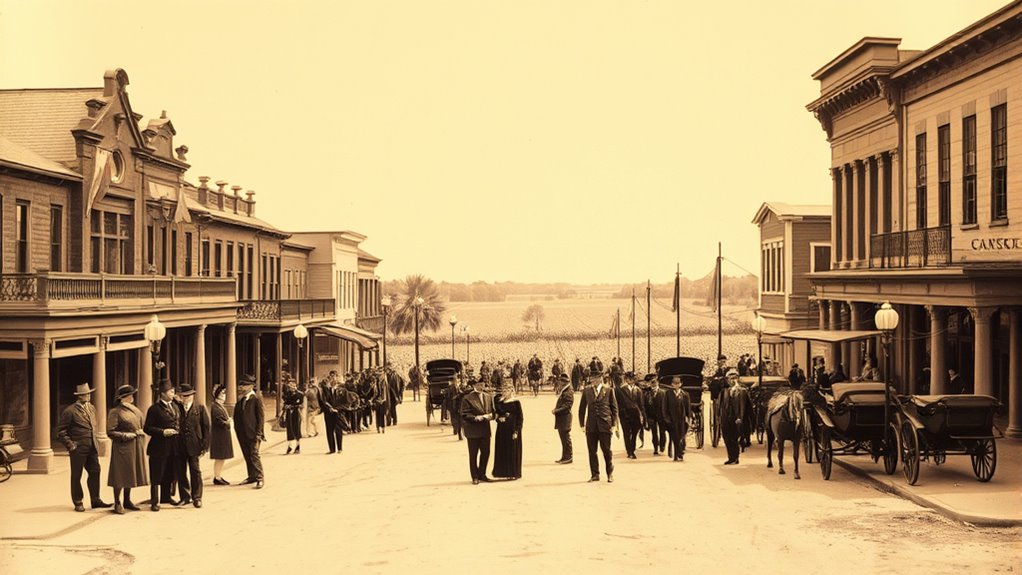
As you explore South Carolina’s antebellum period, you’ll see how the rise of cotton transformed its economy and deepened regional divisions. Tensions over states’ rights and federal authority grew louder, especially with the nullification crisis reflecting fierce resistance to federal tariffs. These economic shifts and political conflicts ultimately fueled the state’s push toward secession and heightened debates over slavery. Additionally, the increasing demand for cotton led to the expansion of agricultural practices, influencing social and economic structures in the region.
Rise of Cotton Economy
Why did cotton become the backbone of South Carolina’s economy during the antebellum period? The invention of the cotton gin made processing cotton faster and more profitable, encouraging planters to expand their fields. As demand for cotton grew, especially in Northern textile mills, South Carolina’s plantation owners invested heavily in cotton cultivation. The upcountry regions, previously less involved in plantation farming, quickly adopted cotton as their main crop. This shift increased the reliance on enslaved labor, reinforcing the system of slavery that underpinned the economy. Cotton’s success boosted the wealth of planters and fueled economic growth along the coast. However, this dependence also deepened regional divisions and heightened political tensions over slavery, states’ rights, and economic control. Additionally, understanding the yarn for scarves can shed light on textile production, which was directly linked to the cotton economy.
Nullification and States’ Rights
During the antebellum period, South Carolina’s economy and politics became increasingly intertwined with the rising tensions over states’ rights. You’d see South Carolina leaders, like John C. Calhoun, championing the idea that states could nullify federal laws they deemed unconstitutional, especially tariffs that hurt Southern economies. This belief grew from economic frustrations, as tariffs increased costs for planters and merchants, and from fears that the federal government threatened slavery and states’ sovereignty. South Carolina’s leaders argued that states had the right to refuse enforcement of federal laws, leading to the 1832 Nullification Crisis. This crisis tested the federal union and solidified South Carolina’s identity as a defender of states’ rights, foreshadowing the conflict that would erupt into the Civil War. The concept of states’ rights became a rallying cry that would influence future political debates and actions.
Slavery and Political Conflict
Have you ever wondered how slavery shaped South Carolina’s economy and political tensions before the Civil War? Slavery fueled the plantation system, making cotton, rice, and other exports highly profitable. As wealth grew, so did regional conflicts over slavery’s expansion and federal policies.
Here are three key points to understand this tension:
- Slavery created deep economic dependence, making abolition politically explosive.
- Wealth from enslaved labor strengthened conservative elites who resisted change.
- The rise of nullification and states’ rights was driven by fears of federal interference with slavery.
This reliance on slavery fueled regional pride and resistance, ultimately pushing South Carolina to lead the secession movement, setting the stage for civil conflict.
South Carolina in the Civil War
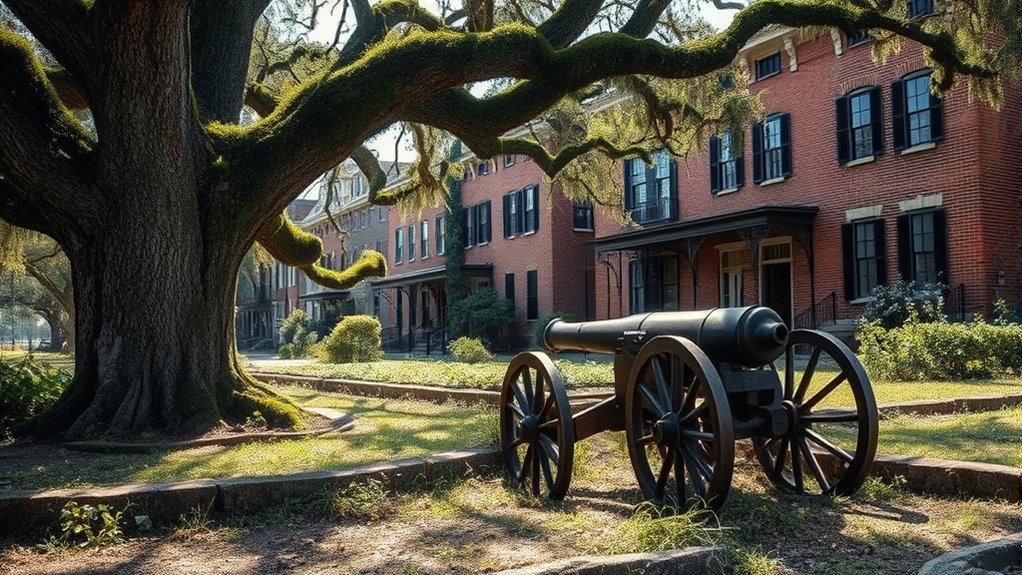
Have you ever wondered what sparked the Civil War in South Carolina? It all began when the state became the first to secede from the Union on December 20, 1860, driven by fears over slavery and states’ rights. The conflict officially started at Fort Sumter in Charleston Harbor on April 12, 1861, when Confederate forces fired the first shots. South Carolina’s decision to leave the Union was fueled by a desire to preserve its plantation economy and social order. During the war, nearly 20% of white males of fighting age died fighting for the Confederacy, and Union occupation began in parts of the coast. The war devastated the state’s infrastructure and economy, leaving lasting scars and deepening regional divisions.
Reconstruction and the Struggle for Civil Rights
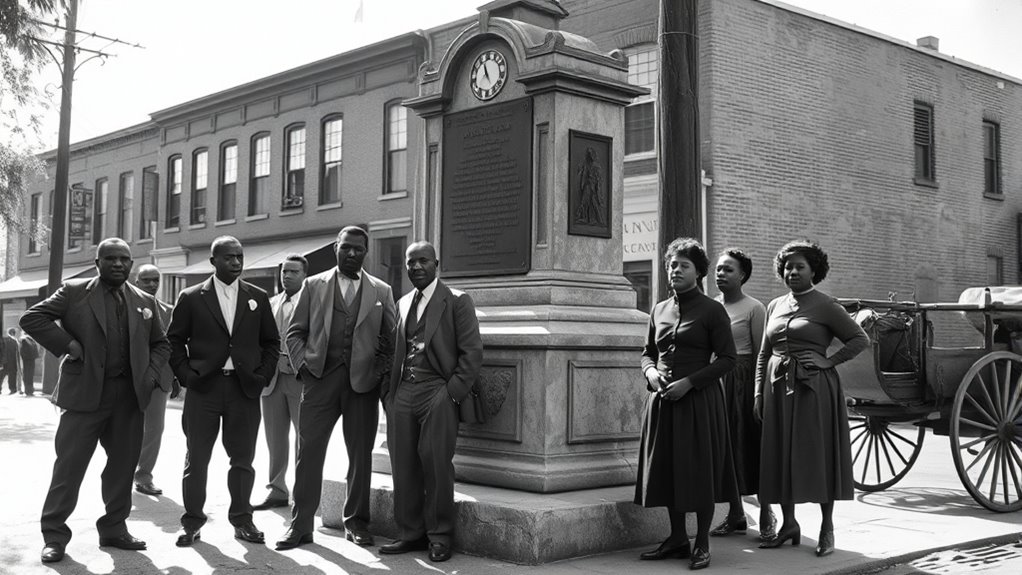
Reconstruction in South Carolina was a tumultuous period marked by efforts to rebuild the state’s social, political, and economic systems after the Civil War. During this time, you witness the struggle for civil rights as freedmen seek equality while white conservatives push back. Key aspects include:
Reconstruction in South Carolina was a tumultuous era of social and political upheaval after the Civil War.
- The rise of African American political leaders who fought for voting rights and education.
- The implementation of laws like the 1868 Reconstruction Acts aiming to establish racial equality.
- The violent resistance, including groups like the Ku Klux Klan, trying to suppress black political participation.
- These efforts were often challenged by widespread hostility and racial tensions, which hindered progress during this era.
Despite these efforts, white Democrats gradually regained control, ending Reconstruction in 1877. This shift deepened racial divides, setting the stage for segregation and ongoing civil rights challenges in South Carolina.
Cultural Heritage and Influences

South Carolina’s rich cultural heritage is a vivid tapestry woven from its colonial history, African roots, and Southern traditions. You can see this in the Gullah culture along the coast, where African languages and customs have been preserved through generations. Charleston, once a bustling port, shaped the state’s art, music, and cuisine, blending European, African, and Caribbean influences. You’ll notice the deep respect for hospitality and community that stems from its plantation past. The state’s political ideals—like states’ rights—continue to influence its identity today. Traditions such as storytelling, folk music, and culinary practices reflect a resilient spirit rooted in both African heritage and Southern history. Additionally, cultural preservation efforts help maintain these diverse influences for future generations. This diverse cultural fabric remains an essential part of South Carolina’s unique identity.
Modern South Carolina: Society and Identity

How has South Carolina’s society and identity evolved in modern times? Today, you see a blend of tradition and change, shaping a resilient state. The economy has diversified beyond agriculture, emphasizing manufacturing, tourism, and technology. You’ll notice a growing awareness of cultural diversity, especially African American and Gullah heritage, enriching local communities. Social shifts include increased political engagement and conversations around racial justice. Incorporating animated movies and cultural storytelling has also become a part of the modern cultural landscape.
Frequently Asked Questions
How Did Gullah Culture Influence Modern South Carolina Traditions?
Gullah culture influences modern South Carolina traditions through language, food, music, and crafts. You’ll notice Gullah words and phrases in local dialects, and their vibrant storytelling and spiritual practices enrich community events. Gullah-inspired foods like rice dishes and seafood reflect their heritage. Additionally, their unique arts, such as quilting and basket weaving, continue to shape local crafts, reinforcing a deep connection to African roots that still thrives today.
What Role Did Charleston Play in South Carolina’s Cultural Development?
You see Charleston as the heart of South Carolina’s cultural development, where history, art, and architecture flourish. The city’s vibrant port brought diverse influences, including African, European, and Caribbean traditions, shaping local music, cuisine, and festivals. Charleston’s historic sites and Gullah culture preserve the state’s unique heritage. You can experience its rich storytelling, Southern hospitality, and deep-rooted traditions that continue to influence modern South Carolina society.
How Has South Carolina’s Political Identity Evolved Since the Civil War?
Since the Civil War, South Carolina’s political identity has shifted like a ship steering stormy seas. You’ve seen it move from a stronghold of states’ rights and segregation to embracing modern challenges like economic diversification and social justice. While the past still echoes, today you’re part of a state working to balance tradition with progress, shaping its future amidst ongoing debates over identity, race, and governance.
What Are the Origins of South Carolina’s Unique African American Heritage?
You can see South Carolina’s unique African American heritage rooted in the transatlantic slave trade, which brought enslaved Africans to work on plantations. Over generations, they developed distinct cultural practices, language, and traditions like Gullah, preserving African roots. Their resilience shaped the state’s culture, music, and community life. Despite hardships, African Americans contributed profoundly to South Carolina’s history, leaving a lasting legacy that continues to influence the state’s identity today.
How Did the Destruction During the Civil War Impact Local Arts and Culture?
Have you ever wondered how war scars influence art? The Civil War’s destruction devastated South Carolina’s towns and cultural institutions, disrupting local arts and traditions. You see, many historic sites, galleries, and cultural practices suffered damage or were abandoned. Yet, this chaos also inspired a resilient spirit, fueling new artistic expressions that reflect loss, hope, and perseverance—elements still shaping South Carolina’s vibrant arts scene today.
Conclusion
As you explore South Carolina’s rich history, remember it’s a tapestry woven with resilience and change. From early explorers to modern society, each chapter reveals a story of perseverance shaping who you are today. Like the enduring oak, the state’s legacy stands tall, reminding you that understanding the past is the root of your identity. Embrace this history—it’s the compass guiding your journey forward through time’s unending river.