
Canada’s culinary traditions blend indigenous practices with European influences, regional flavors, and immigrant innovations. You’ll find dishes like poutine, tourtière, and smoked salmon that reflect local ingredients and preservation methods like smoking and drying. From coast to prairie, regional ingredients shape unique styles, and modern chefs mix tradition with new techniques. If you want to discover how history, geography, and culture create Canada’s diverse food scene, there’s more to explore.
Key Takeaways
- Canada’s cuisine blends Indigenous ingredients like salmon, bison, and wild berries with European influences such as French and British cooking traditions.
- Traditional preservation methods like smoking, drying, and pickling are integral, reflecting resourcefulness and regional resource availability.
- Iconic dishes include poutine, tourtière, and smoked meat, showcasing regional flavors and multicultural influences.
- Regional culinary styles vary, with coastal seafood, Prairie hearty grains, and Quebec French classics shaping diverse food identities.
- Modern Canadian cuisine emphasizes fusion, innovation, and multicultural ingredients, highlighting Canada’s evolving and inclusive food culture.

Martha Stewart Bainford 4-Piece Wooden Kitchen Utensil Set, Walnut – Cooking Spoons and Turner Tools for Nonstick Cookware, Heat Resistant, Durable Hardwood
WHAT'S IN THE BOX: One 14-inch walnut spoon, one 14-inch walnut slotted spoon, one 14-inch walnut turner, and…
As an affiliate, we earn on qualifying purchases.
As an affiliate, we earn on qualifying purchases.
Indigenous Heritage and Traditional Food Practices
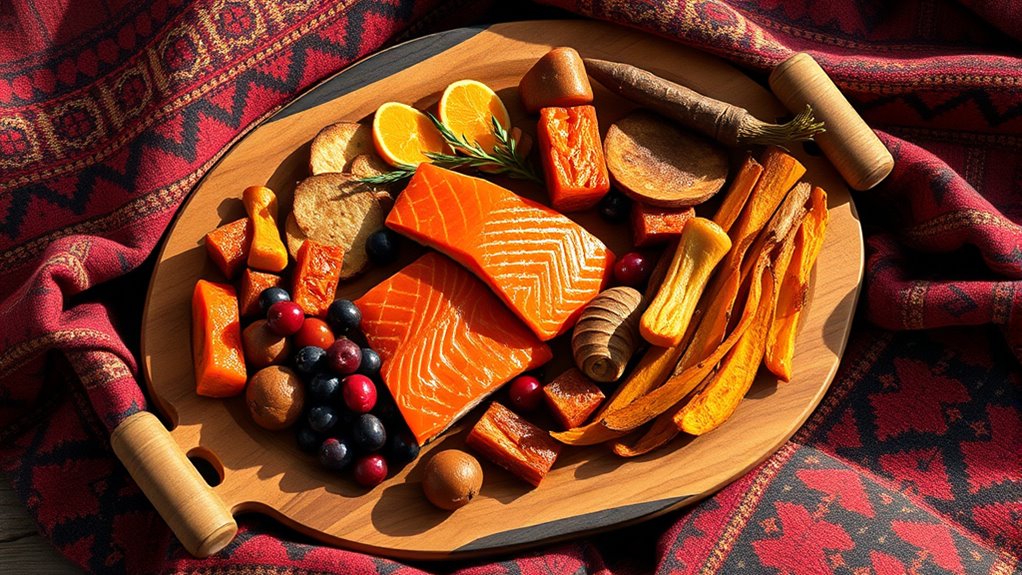
Have you ever wondered how Indigenous peoples shaped the foundation of Canadian cuisine? You’d find that they relied heavily on local, seasonal ingredients like salmon, bison, wild berries, and foraged plants. Traditional cooking methods such as smoking, drying, roasting, and preserving helped them survive harsh winters. Staples like flatbread and pemmican—dried meat mixed with fat—became essential in their diet. Indigenous knowledge also introduced maple syrup extraction, which became a cornerstone of Canadian food culture. Seafood from coastlines and game from forests played crucial roles in daily meals. These practices emphasized respect for nature and sustainability, laying a lasting foundation for Canada’s culinary history. Their techniques and ingredients continue to influence Canadian cuisine today.

The Ultimate Canadian Cookbook: 111 Dishes From Canada To Cook Right Now (World Cuisines)
As an affiliate, we earn on qualifying purchases.
As an affiliate, we earn on qualifying purchases.
European Settlers and the Evolution of Canadian Cuisine
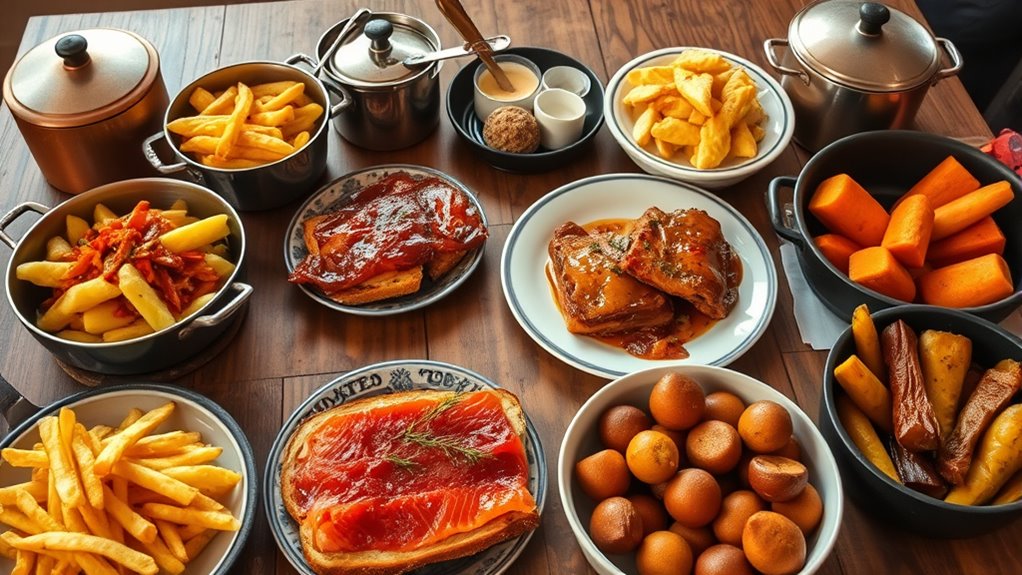
European settlers brought their culinary traditions, shaping Canada’s evolving food landscape. You can see their influence in dishes like tourtière, roast beef, and classic puddings that remain popular today. These early contributions laid the groundwork for the diverse, multicultural cuisine we enjoy across Canada now.
European Culinary Traditions
Did European settlers truly transform Canadian cuisine? Absolutely. They brought familiar ingredients and cooking techniques that blended with indigenous traditions, shaping regional flavors. French settlers introduced hearty dishes like tourtière and refined methods, especially in Quebec. English settlers contributed roast meats and puddings, influencing Atlantic provinces. To highlight this, consider the table:
| Influence | Regional Impact |
|---|---|
| French cuisine | Quebec, parts of Ontario and NB |
| British culinary habits | Atlantic provinces, Ontario |
| Eastern European foods | Prairies (Ukrainian, Polish) |
| Asian fusion | Modern Canadian innovations |
This blending created a diverse culinary landscape, allowing traditional European dishes to evolve into distinctly Canadian flavors. The settlers’ influence laid a foundation that continues to shape Canadian cuisine today, emphasizing adaptation and regional variation. Cultural integration has played a vital role in the evolution of these culinary traditions.
Settler Influence on Dishes
Settlers from Europe brought familiar ingredients and cooking techniques that considerably shaped Canada’s culinary landscape. You’ll notice how French settlers introduced dishes like tourtière, a savory meat pie, and refined French cooking methods that still influence Quebec cuisine today. English immigrants contributed hearty classics such as roast beef and puddings, establishing a foundation for traditional Sunday roasts and comfort foods. British traditions took root in southern Ontario, Newfoundland, and the Maritime provinces, blending with Indigenous ingredients and techniques. Over time, these influences fused with local resources, giving rise to iconic dishes like Montreal smoked meat sandwiches and poutine. As settlers adapted their recipes, they created a diverse culinary identity that combines European flair with native ingredients, shaping the rich and varied food culture of Canada.

Ducktrap, Kendall Brook, Smoked Atlantic Salmon, 4 oz
Naturally smoked Atlantic salmon
As an affiliate, we earn on qualifying purchases.
As an affiliate, we earn on qualifying purchases.
Iconic Dishes That Define Canadian Identity

You’ll find that dishes like poutine have become symbols of Canadian identity, spreading across the country and beyond. Montreal smoked meat showcases the city’s rich immigrant history and culinary craftsmanship. Additionally, Canadian fusion creations highlight how diverse influences come together to shape the nation’s unique food scene. To enhance the authentic experience, many regions incorporate local ingredients into traditional recipes, reflecting the country’s agricultural diversity.
Poutine’s National Reach
Poutine has become a symbol of Canadian identity, transcending regional boundaries to gain national and international recognition. You’ll find it on menus from small-town diners to upscale restaurants across Canada. Its popularity grew beyond Quebec, where it originated in the late 1950s, to become a beloved comfort food nationwide. Poutine’s simple yet satisfying combination of crispy fries, fresh cheese curds, and rich gravy resonates with diverse communities. It’s often featured at festivals, sports events, and fast-food chains, making it accessible to everyone. Internationally, poutine has introduced many to Canadian flavors, inspiring variations and fusion dishes worldwide. Its widespread appeal highlights how a humble regional dish can evolve into a cultural icon representing Canadian warmth, ingenuity, and culinary pride. Additionally, the use of traditional ingredients such as cheese curds and gravy emphasizes the importance of regional culinary roots in shaping iconic dishes.
Montreal Smoked Meat
Have you ever tasted the rich, smoky flavor of Montreal smoked meat? If not, you’re missing out on a true Canadian classic. This iconic dish traces back to Romanian Jewish immigrants who perfected the art of curing and smoking beef. When you order it, you’ll notice:
- The tender, flavorful meat, seasoned with a special blend of spices
- The thinly sliced slices piled high on rye bread
- A generous smear of mustard to complement the smoky richness
It’s a sandwich that captures Montreal’s multicultural history and culinary ingenuity. The slow-smoking process infuses the meat with deep flavor, making each bite memorable. Whether enjoyed at a deli or a street-side stand, Montreal smoked meat remains a symbol of Canada’s diverse food heritage.
Canadian Fusion Creations
Canadian fusion creations showcase the country’s ability to blend diverse cultural influences into iconic dishes that define its culinary identity. You’ll find innovations like Hawaiian pizza, which combines Canadian ingenuity with tropical flavors, and the California roll, a perfect example of Japanese cuisine adapted to local tastes. These dishes highlight immigrant creativity and the country’s multicultural fabric. Poutine, originally from Quebec, has evolved by adding toppings like pulled pork or international spices, reflecting regional tastes. Montreal smoked meat sandwiches incorporate Eastern European influences, while regional variations of seafood and game showcase local ingredients. Additionally, the rise of breakfast delivery trends demonstrates Canada’s adaptation to contemporary dining preferences. These fusion dishes symbolize Canada’s openness to new ideas, merging traditions into culinary icons that resonate across the nation and beyond.

Club House Poutine Gravy Mix, 42g/1.5oz (Imported from Canada)
As an affiliate, we earn on qualifying purchases.
As an affiliate, we earn on qualifying purchases.
Regional Culinary Styles and Influences

Canada’s vast geography and diverse immigrant populations give rise to distinct regional culinary styles, each shaped by local ingredients and cultural traditions. You’ll notice these differences across the country. For example:
- In the Prairies, you’ll find hearty dishes like pierogis, sausage, and bread, reflecting Eastern European roots.
- British Columbia boasts fresh seafood, Asian-inspired flavors, and vegetarian options influenced by its coastal environment.
- Quebec’s cuisine emphasizes French classics like poutine, tourtière, and maple syrup, showcasing its French heritage.
- The use of Self Watering Plant Pots in some regions highlights how modern gardening techniques are incorporated into local lifestyles and culinary gardens.
These regional styles thrive because of local ingredients and cultural history. Coastal provinces focus on seafood, while inland areas rely on meats and grains. By understanding these influences, you get a full picture of Canada’s diverse culinary landscape.
The Role of Indigenous Ingredients in Modern Cooking

Did you know that indigenous ingredients continue to shape modern Canadian cuisine? Today, chefs incorporate wild berries, salmon, and foraged plants to create authentic flavors. These ingredients connect dishes to Canada’s natural landscape and heritage. Indigenous foods like Saskatoon berries and bison are now featured in contemporary recipes, blending tradition with innovation. Here’s a quick look at some key ingredients:
| Ingredient | Culinary Use |
|---|---|
| Wild Berries | Desserts, jams, sauces |
| Salmon | Smoked, cured, or grilled |
| Bison | Steaks, burgers, stews |
| Maple Syrup | Sweeteners, glazes, desserts |
| Wild Plants | Salads, teas, seasoning |
Incorporating these ingredients honors indigenous traditions and enriches modern Canadian cuisine with authentic, locally sourced flavors. Traditional practices continue to influence how these ingredients are harvested and prepared today.
Signature Products and Food Traditions Unique to Canada

Maple syrup stands out as one of the most iconic and uniquely Canadian products, celebrated nationwide for its rich, sweet flavor. You’ll find it in breakfast spreads, desserts, and even savory dishes. Beyond syrup, Canada boasts other signature foods that define its culinary identity:
Maple syrup exemplifies Canada’s rich culinary heritage and sweet national pride.
- Butter tarts – These sweet pastries blend Indigenous and settler traditions, with a gooey filling of butter, sugar, and eggs.
- Poutine – Originating in Quebec, this comfort food combines crispy fries, cheese curds, and gravy, symbolizing regional hearty cuisine.
- Smoked meat – Montreal’s famous smoked meat sandwich showcases the influence of immigrant communities and traditional preservation techniques.
- Local ingredients – Many Canadian dishes feature regionally sourced ingredients, emphasizing the nation’s commitment to sustainable and fresh food practices.
These products highlight Canada’s diverse culinary heritage, reflecting both indigenous roots and immigrant influences.
How Geography Shapes Local Food Choices
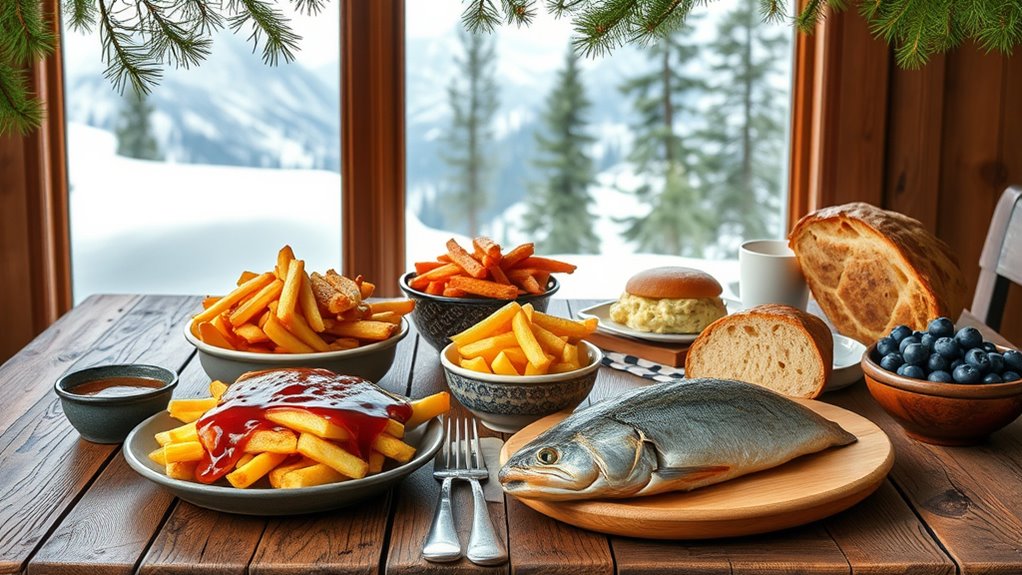
You’ll notice that Canada’s coastal regions focus heavily on seafood because of the easy access to fish and shellfish. Meanwhile, the prairie provinces prioritize grains and meats, reflecting their vast farmland and livestock. These geographic features shape local diets and inspire traditional cooking methods suited to each environment. Additionally, regional variations in local ingredients contribute to diverse culinary traditions across the country.
Coastal Seafood Abundance
Stretching along Canada’s vast coastlines, the abundance of seafood has considerably shaped your local food choices. You’ll find that coastal communities rely heavily on fresh catches, influencing traditional dishes and daily diets. Here are three ways seafood impacts your cuisine:
- Variety of Fish and Shellfish: Salmon, cod, lobster, and snow crab are staples, featured in dishes like smoked salmon or seafood chowders.
- Preservation Techniques: Smoking, drying, and pickling allow seafood to last through harsh winters and long voyages.
- Cultural Traditions: Indigenous methods like drying salmon and European influences like steaming shellfish blend to create unique regional flavors. Additionally, digital platforms facilitate the sharing of traditional recipes and preservation techniques, helping communities preserve their culinary heritage.
This rich seafood abundance defines the culinary identity along the coasts, emphasizing freshness, preservation, and cultural fusion.
Prairie Grain Focus
The expansive prairie regions of Canada have shaped a distinctive culinary landscape centered around grains and hearty, meat-based dishes. You’ll find wheat, barley, and oats dominate local agriculture, making bread, porridge, and baked goods staples in the diet. Grain farming fuels the production of traditional foods like bannock and hearty stews that use locally raised beef and pork. You might also enjoy simple, filling dishes such as poutine topped with meat gravy or meat pies packed with savory fillings. The flat, fertile land encourages large-scale grain cultivation, which influences regional cuisine. Seasonal harvests dictate meal choices, with fresh grains and preserved meats featured heavily during long winters. This landscape’s geography guarantees that grains and meat remain central to prairie cooking traditions.
The Impact of Immigration on Canadian Food Culture
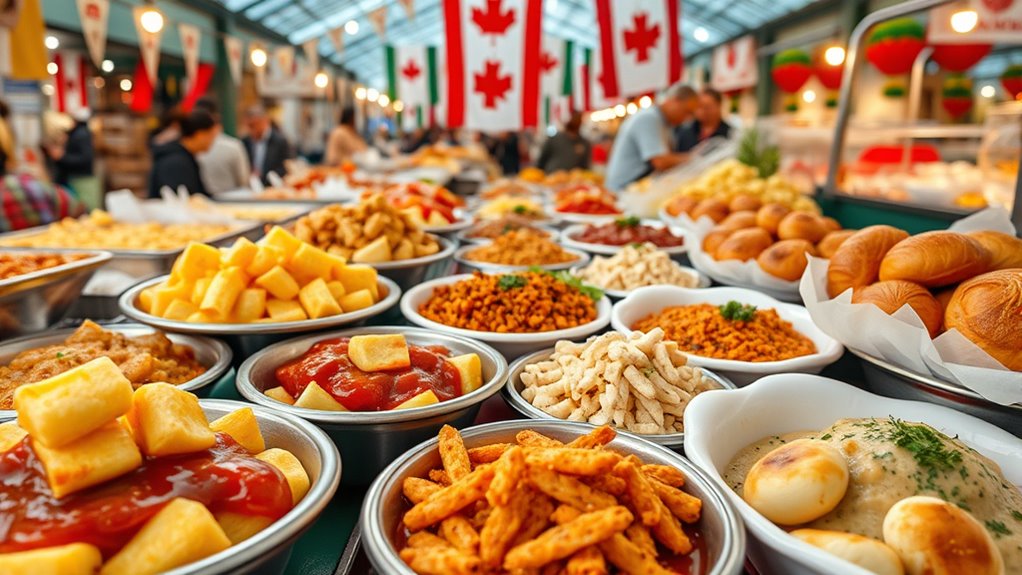
How has immigration shaped Canadian food culture? Immigration has introduced new flavors and techniques, enriching Canada’s culinary landscape. You’ll find diverse influences that blend seamlessly into traditional dishes. For example:
- Immigrants brought their native ingredients, like spices and vegetables, expanding local menus.
- New cooking methods, such as sushi-making from Japanese immigrants, became part of everyday eating.
- Fusion dishes emerged, combining native and immigrant flavors, like Chinese-inspired poutine with soy sauce or spices.
These changes reflect Canada’s open culinary identity. Different communities share their traditions, creating a vibrant, multicultural food scene. As a result, Canadian cuisine isn’t static; it evolves with each wave of newcomers. You’re encouraged to explore these influences to appreciate the country’s rich culinary diversity fully.
Fusion and Innovation in Canadian Gastronomy
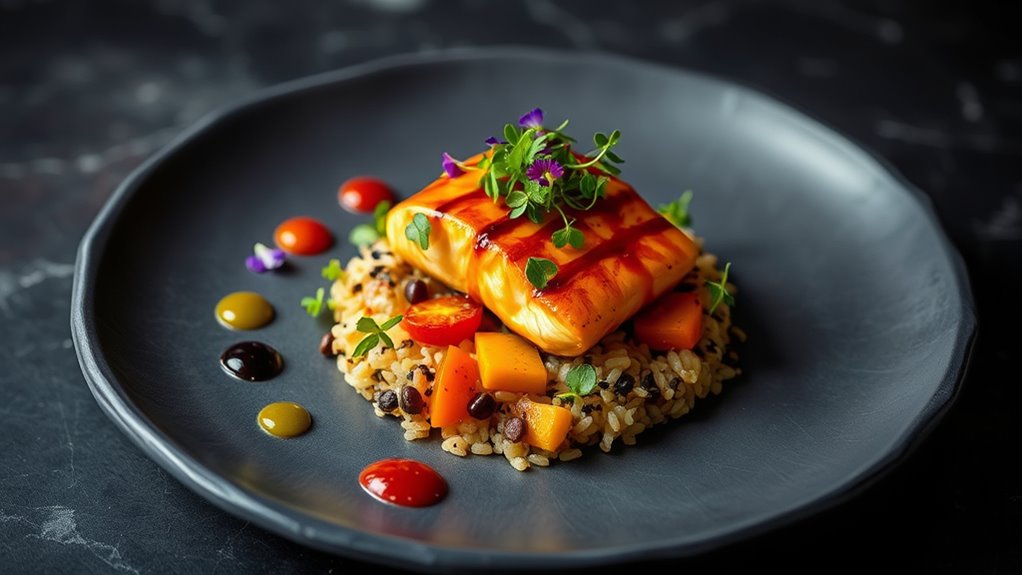
Have you noticed how Canadian cuisine continually evolves by blending traditional flavors with new influences? This fusion reflects the country’s diverse immigrant communities and innovative chefs pushing culinary boundaries. You’ll find dishes that combine indigenous ingredients with global techniques, creating exciting flavors. For example, chefs often mix Asian spices with local salmon or incorporate Caribbean jerk seasoning into hearty meat stews. Vancouver’s sushi scene is renowned for its inventive rolls, while Toronto’s multicultural markets showcase fusion street foods. Canadian chefs also experiment with plant-based options, blending local produce with international styles. This ongoing innovation keeps Canadian food vibrant and dynamic, honoring its roots while embracing new tastes. Additionally, understanding culinary fusion highlights how cultural exchange influences evolving food traditions across the country. It’s a culinary landscape that celebrates creativity, diversity, and a forward-thinking approach to tradition.
Seasonal and Preserved Foods in Canada’s Culinary History

Canada’s climate and seasonal shifts have shaped its culinary traditions by making preservation methods essential for survival. You’ll find that indigenous peoples and settlers relied heavily on preserving foods to get through long winters. Here are three common methods:
- Smoking and drying meats like pemmican and fish to keep them edible.
- Canning and pickling vegetables and berries during harvest seasons.
- Making maple syrup from spring sap, a sweet staple for year-round use.
These techniques allowed communities to store nutrition over cold months. Preserved foods became part of everyday life, ensuring sustenance and flavor. Whether it’s dried bison, smoked salmon, or sweet maple syrup, these traditions reflect Canada’s reliance on seasonal resources and ingenuity in food preservation.
Frequently Asked Questions
How Have Indigenous Cooking Techniques Influenced Modern Canadian Cuisine?
Indigenous cooking techniques influence modern Canadian cuisine by inspiring methods like smoking, drying, roasting, and preserving foods, which are still used today. You’ll find these techniques in contemporary dishes such as smoked salmon, dried meats, and preserved berries. Indigenous knowledge also introduced maple syrup extraction, now a Canadian staple. These methods help you enjoy hearty, traditional flavors while honoring the country’s rich cultural history.
What Role Do Regional Ingredients Play in Canadian Food Identity?
Regional ingredients shape your Canadian food identity by highlighting local flavors and traditions. In coastal areas, seafood like salmon and shellfish take center stage, while the prairies emphasize grains and meats, reflecting agricultural abundance. In the north, preserved foods and game are common due to harsh winters. You can taste these regional ingredients in dishes that celebrate your country’s diverse climate and landscape, making each region uniquely flavorful and authentic.
How Have Recent Immigrants Transformed Traditional Canadian Dishes?
You see how recent immigrants have transformed traditional Canadian dishes by adding their unique flavors and techniques. For example, a Vietnamese family might create a bánh mì sandwich using local Canadian ingredients, blending their heritage with regional produce. This fusion brings new life to classic dishes, making them more diverse and vibrant. Your culinary experience becomes richer, reflecting Canada’s multicultural tapestry and showing how immigrant influences continually shape and redefine Canadian cuisine.
What Are Some Lesser-Known Canadian Foods From Remote Areas?
In remote areas of Canada, you might encounter unique dishes like Inuit muktuk, which is whale blubber and skin, or caribou stew made from local game. You’ll also find traditional dried fish and berries preserved through smoking or drying. These lesser-known foods reflect the region’s harsh climate and reliance on local, seasonal ingredients, showcasing the resilience and ingenuity of communities living far from urban centers.
How Does Climate Impact Seasonal Food Availability Across Canada?
Climate profoundly influences seasonal food availability across Canada. In coastal areas, you find fresh seafood during fishing seasons, while prairie regions depend on grains and preserved meats during colder months. In northern territories, you rely on stored, dried, or smoked foods due to long winters and short growing seasons. You adapt by using traditional preservation methods like smoking, drying, and fermenting, ensuring a steady food supply year-round despite harsh weather conditions.
Conclusion
You’ve explored Canada’s rich culinary tapestry, from Indigenous roots to modern fusion. Remember, variety is the spice of life, and Canada’s diverse food scene proves that embracing different flavors creates a vibrant, unique cuisine. By celebrating tradition and innovation, you can appreciate how geography, history, and culture shape every bite. So, keep exploring and savoring—after all, the proof of the pudding is in the eating.