
New York’s cuisine reflects its rich immigrant history, offering diverse flavors like Italian pizza, Jewish deli classics, Chinese dim sum, Korean BBQ, and street favorites like hot dogs and halal platters. Neighborhood districts preserve regional traditions, while food halls and pop-ups showcase innovation and fusion dishes like Korean tacos and sushi burritos. Street vendors and modern techniques blend tradition with creativity, making NYC a global culinary hub. Keep exploring to discover how this melting pot continues to evolve.

Get travel and outdoor gear delivered free with Prime
- Fast, free delivery on millions of items
- Prime Video, Amazon Music and more included
- Member-only deals all year
Key Takeaways
- NYC’s culinary scene is shaped by diverse immigrant communities, including Italian, Jewish, Chinese, Korean, Indian, and Latin American influences.
- Iconic dishes like New York-style pizza, deli sandwiches, and street foods such as hot dogs and halal platters reflect local history and cultural fusion.
- Neighborhood districts like Little Italy, Chinatown, Koreatown, and Jackson Heights preserve regional cuisines and immigrant culinary traditions.
- Modern trends include fusion dishes, street food innovation, and culinary techniques like molecular gastronomy and fermentation.
- Food halls, pop-ups, and street vendors promote culinary diversity, supporting emerging chefs and global flavors within the city.
As an affiliate, we earn on qualifying purchases.
Immigrant Roots and Ethnic Influence
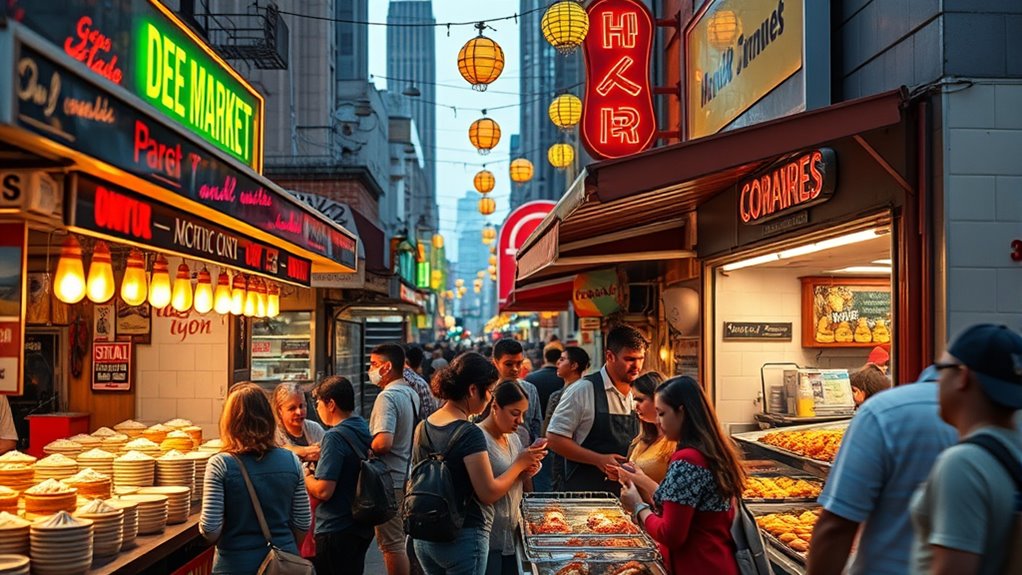
New York City’s vibrant culinary scene is deeply rooted in its immigrant history, with each wave of newcomers shaping the city’s flavors. You can see this in the ingredients and dishes brought by Italian, Jewish, Eastern European, and other communities. Italian immigrants introduced pizza, mortadella, and heroes, transforming Lower Manhattan’s food culture. Jewish immigrants popularized pastrami, bagels with lox, and corned beef, establishing timeless deli traditions. Street vendors in tenement neighborhoods sold a mix of European snacks, blending flavors from diverse backgrounds. Neighborhood enclaves like Little Italy, Chinatown, and Koreatown developed their own culinary identities, preserving authentic regional cuisines. This melting pot of cultures created a dynamic, ever-evolving food landscape that continues to define New York’s unique, multicultural character. Culinary diversity remains a hallmark of the city’s food scene, reflecting its rich immigrant roots.
As an affiliate, we earn on qualifying purchases.
Iconic New York Dishes

You can’t talk about New York’s culinary identity without mentioning its iconic dishes. Classic NYC pizza and deli sandwich staples like pastrami on rye define the city’s food scene. These dishes reflect a blend of immigrant influences and local innovation that make New York cuisine truly unique.
Classic NYC Pizzas
Classic NYC pizzas are legendary for their distinctive style and bold flavors. You’ll recognize them by their large, thin, foldable slices that fit perfectly in your hand. The crust, often coal-fired, offers a crispy edge with a chewy center, delivering a satisfying bite. Toppings are simple but flavorful, emphasizing quality ingredients. As you enjoy a slice, you’ll notice how the balance of sauce, cheese, and crust creates a harmonious taste. Here’s what makes a classic NYC pizza stand out:
- Large, thin, and foldable slices
- Charred, coal-fired crust
- Minimal but flavorful toppings
- Emphasis on fresh, quality ingredients
This style of pizza embodies the city’s fast-paced, no-nonsense culinary spirit, making it a must-try for any visitor or local. The signature style of NYC pizza highlights the importance of authentic cooking techniques and simple, high-quality ingredients that define the city’s culinary identity.
Deli Sandwich Staples
Deli sandwiches have become a defining feature of New York City’s vibrant food scene, reflecting its diverse immigrant roots and culinary innovation. You’ll find classics like pastrami on rye and corned beef, which originated from Jewish delis serving hearty, flavorful cuts. The iconic New York-style bagel with lox and cream cheese showcases the city’s Jewish influence, while the Italian heroes packed with mortadella, salami, and provolone highlight Italian-American communities. These sandwiches aren’t just meals—they’re cultural symbols. To understand their significance, consider this table:
| Deli Staple | Origin/Influence |
|---|---|
| Pastrami on rye | Jewish delis, Eastern Europe |
| Italian heroes | Italian immigrants |
| Bagel with lox | Jewish, New York tradition |
| Corned beef | Irish-American, Jewish roots |
| Knishes | Jewish, Eastern European |
These staples define NYC’s deli culture, blending tradition with local innovation. Culinary heritage plays a vital role in shaping the city’s unique deli landscape.
As an affiliate, we earn on qualifying purchases.
Delicatessens and Sandwich Culture

Delicatessens have long been integral to New York City’s vibrant culinary landscape, serving as social hubs and culinary landmarks. These establishments reflect the city’s diverse heritage and inventive spirit. You’ll find classic staples like hand-sliced meats, house-made pickles, and fresh-baked breads shaping their menus. They’ve expanded beyond Jewish traditions to include Italian heroes, chopped cheese, and breakfast sandwiches on rolls. As you explore, you might notice:
- Iconic establishments like Katz’s and Russ & Daughters setting standards
- Signature items like everything bagels with lox
- The blending of old-world recipes with modern twists
- The role of delis as community gathering spots, preserving cultural roots
- The influence of dog breeds on the names and themes of some local eateries, adding a playful touch to the culinary scene
These delis continue to adapt, blending tradition with innovation, and remain essential to New York’s culinary identity.
As an affiliate, we earn on qualifying purchases.
Street Food Evolution

You see how immigrant vendors transformed NYC’s streets into vibrant food hubs, selling everything from knishes to halal dishes. Iconic street eats like hot dogs and pretzels became symbols of quick, affordable city life, while today’s food trucks and carts continue to evolve with global flavors. Modern trends, such as Korean tacos and chopped cheese, showcase how street food keeps innovating while honoring its diverse roots. Additionally, the incorporation of unique and wicked planters in urban food markets highlights how creative presentation enhances the overall dining experience.
Immigrant Vendors’ Impact
Immigrant vendors have played a crucial role in shaping New York City’s street food scene, introducing diverse flavors that reflect the city’s multicultural roots. You can see their impact in the variety of snacks and meals available from street carts and pushcarts across the city. These vendors brought authentic tastes from their homelands, transforming urban corners into culinary hubs.
- They popularized classic snacks like knishes, pretzels, and ethnic treats such as halal gyros and Korean tacos.
- Their innovation gave rise to iconic foods like the chopped cheese sandwich and halal platters.
- Vendors helped sustain neighborhood identities by offering affordable, quick bites representing their cultural heritage.
- They contributed to NYC’s reputation for diverse, accessible street eats, shaping the city’s fast-paced culinary evolution.
Iconic NYC Street Eats
Street food has long been the heartbeat of New York City’s vibrant culinary scene, evolving alongside its diverse communities. You’ll find classic favorites like hot dogs, pretzels, and knishes that have become symbols of quick, accessible eats. Over time, new vendors introduced Korean tacos, halal carts, and arepas, reflecting NYC’s immigrant influences. These foods traveled from pushcarts to iconic city landmarks, shaping the city’s street cuisine. Here’s a glimpse of some popular street eats:
| Food Item | Description | Origin |
|---|---|---|
| Hot Dog | Sausage in a bun with mustard | German-American |
| Pretzel | Twisted baked bread with salt | German |
| Chopped Cheese | Ground beef sandwich in a roll | Bronx |
| Halal Cart Food | Spiced meat with rice and toppings | Middle Eastern |
These eats tell NYC’s culinary story—fast, flavorful, and ever-evolving. Zoning laws and regulations play a crucial role in how street vendors operate and where they can set up, ensuring safety and order in the bustling city.
Modern Street Food Trends
In recent years, NYC’s street food scene has undergone a dynamic transformation, blending tradition with innovation to meet modern tastes. You’ll find classic favorites like hot dogs and pretzels evolving with new flavors and presentation styles. Food trucks and carts now showcase diverse cuisines, reflecting immigration waves and culinary creativity. Decoding slang has also influenced how vendors connect with a broader audience through social media and branding. Korean tacos and halal carts spice up the streets with global influences. Arepa stands and bodega staples like chopped cheese highlight grassroots innovation. Trendy creations like Cronuts and ramen burgers go viral, blending comfort and novelty. Street vending regulations shape how vendors innovate and expand their menus. This evolution keeps NYC at the forefront of culinary trends while honoring its rich street food heritage. You get a taste of history, diversity, and cutting-edge cuisine all in one vibrant cityscape.
Culinary Innovation and Trends

Have you ever wondered how New York City remains at the forefront of culinary innovation? It’s because the city constantly pushes boundaries, blending tradition with creativity. You’ll find viral sensations like the Cronut, a perfect fusion of croissant and doughnut, and the Ramen Burger, combining Japanese flavors with American comfort food. Top chefs experiment with fusion cuisine, molecular techniques, and global ingredients, often debuting limited-time specials that turn into must-try staples. Food halls and pop-ups serve as launchpads for emerging talents and international cuisines, fueling trend cycles. NYC’s dining scene is ever-evolving, seamlessly reinventing classics and introducing new concepts. This relentless drive for innovation keeps the city’s culinary landscape dynamic, exciting, and truly world-class. Embracing continuous learning and experimentation, chefs and restaurateurs stay ahead of trends, ensuring the city remains a culinary pioneer.
Global Flavors and Neighborhood Specialties
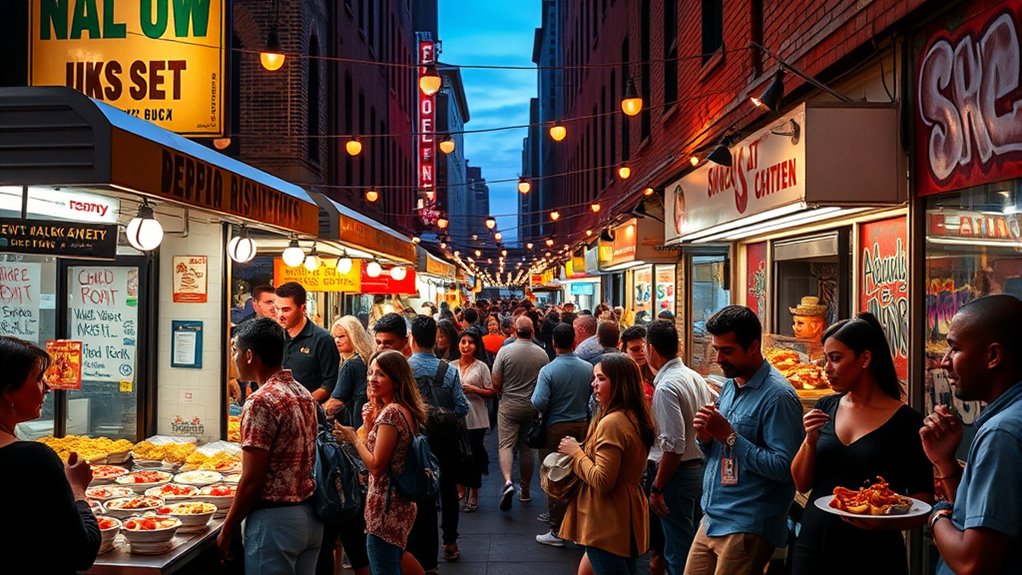
New York City’s vibrant neighborhoods serve as living showcases of global culinary traditions, reflecting the city’s status as an international food capital. You can explore authentic flavors from around the world just by walking through different districts. In Chinatown, savor dim sum and Peking duck, while Little Italy offers cannoli, espresso, and traditional pasta dishes. Koreatown serves up Korean BBQ, kimchi, and spicy stews, and Jackson Heights brings Indian, Bangladeshi, and Nepali cuisines. Other neighborhoods feature regional specialties such as Uzbek plov, Dominican mofongo, and West African jollof rice. These enclaves preserve cultural identities through food, offering you a chance to experience diverse flavors without leaving the city. This culinary mosaic constantly evolves, making NYC an unparalleled global dining destination.
The Role of Food Halls and Pop-Ups
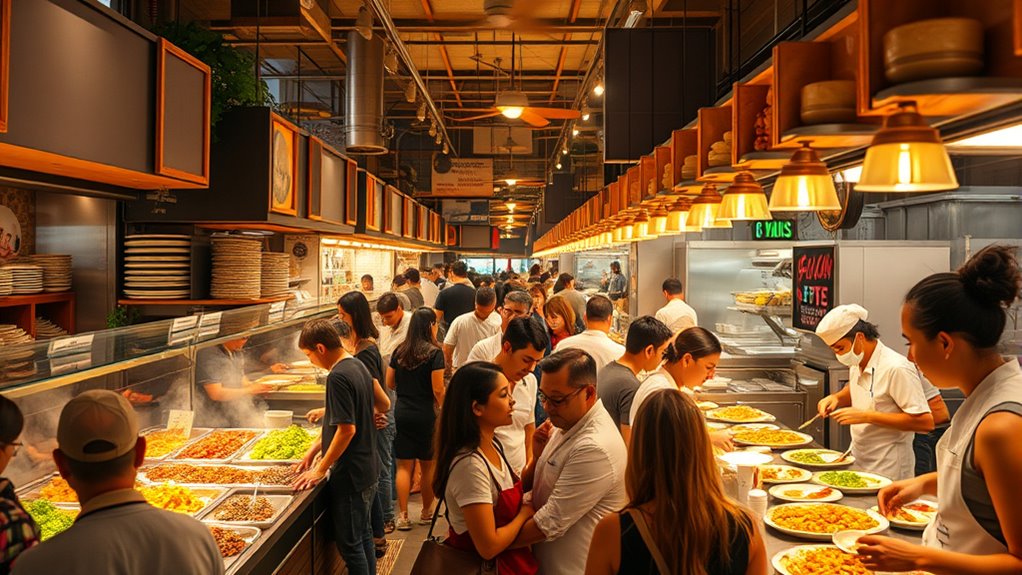
Food halls and pop-ups have become essential to NYC’s dynamic culinary scene by offering a platform for emerging chefs, diverse cuisines, and innovative concepts to thrive. They bring together a variety of vendors under one roof, making it easy for you to explore global flavors in a single visit. Food halls like Chelsea Market and Essex Street Market showcase established favorites and new talent, fostering community and creativity. Pop-ups allow chefs to experiment with concepts, test new dishes, and reach different audiences without long-term commitments. These venues also support small-scale entrepreneurs, giving you access to authentic, often hard-to-find dishes. Recognizing the aroma of various ingredients can enhance your appreciation of the culinary diversity present in these venues. As a result, food halls and pop-ups keep NYC’s culinary scene exciting, ever-evolving, and deeply rooted in innovation and diversity.
Fusion and Modern Culinary Techniques
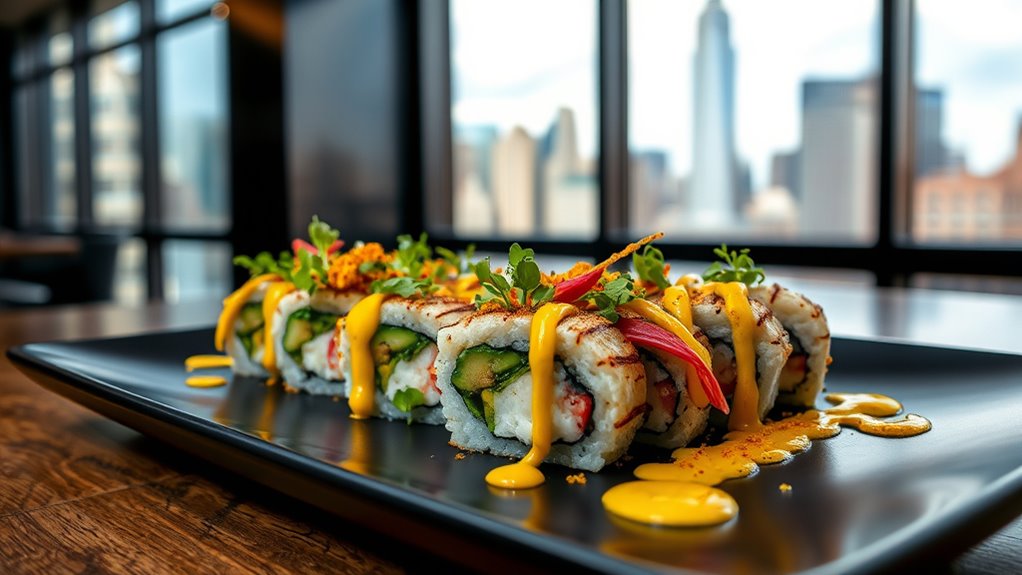
Fusion and modern culinary techniques have transformed New York City’s dining scene into a playground for innovation, where chefs blend diverse traditions with cutting-edge methods. You can experience this mix in a variety of ways:
- Combining global flavors, like Korean tacos or sushi burritos, to create new street food favorites
- Using molecular gastronomy to craft visually stunning dishes that surprise your senses
- Incorporating techniques like sous-vide cooking for precise, tender results
- Experimenting with fermentation and pickling to add depth and complexity to dishes
These approaches push boundaries while honoring NYC’s rich culinary history. Chefs draw inspiration from immigrant roots, blending old-world flavors with new technology. The result is a vibrant, ever-evolving food scene that constantly reinvents classic dishes.
Neighborhood Culinary Districts

NYC’s neighborhoods act as vibrant culinary districts, each offering a distinct tapestry of flavors shaped by their immigrant communities. In Little Italy, you’ll find authentic Italian pastries, pasta, and espresso, reflecting generations of immigrants. Chinatown serves dim sum, Peking duck, and stir-fried dishes that preserve Chinese culinary traditions. Koreatown offers Korean barbecue, bibimbap, and street snacks, showcasing Korea’s influence. The Bronx’s Arthur Avenue is a hub for Italian-American staples, from fresh mozzarella to traditional panettone. Queens boasts diverse enclaves like Jackson Heights, where Indian, Bangladeshi, and Latin cuisines thrive, offering vibrant curries and tacos. These neighborhoods serve as living culinary museums, where local ingredients, techniques, and cultures blend into an evolving food landscape that’s uniquely New York.
Frequently Asked Questions
How Have Nyc’s Food Regulations Influenced Street Food Diversity?
You’ll notice that NYC’s street food diversity thrives thanks to regulations that balance safety with accessibility. Permits and licensing requirements can be strict, but they also encourage vendors to innovate within rules, leading to diverse offerings like halal carts, Korean tacos, and arepa stands. These regulations help maintain quality and safety, fostering a vibrant street food scene that reflects the city’s immigrant communities and evolving culinary landscape.
What Impact Did Dutch Settlers Have on NYC Baking Traditions?
Dutch settlers introduced baked goods and early American biscuit traditions, which markedly influenced NYC baking. You’ll notice these influences in the city’s regional baking practices, like simple, hearty breads and biscuits. Dutch methods emphasized practical, rustic baking that integrated into local cuisine, laying a foundation for later American baking styles. Their contributions helped shape NYC’s diverse baked goods, blending European techniques with local ingredients, creating a lasting culinary legacy.
How Do Neighborhood Enclaves Preserve Authentic Culinary Practices?
You can see neighborhood enclaves preserve authentic culinary practices by maintaining traditional recipes, cooking methods, and ingredients rooted in their cultural heritage. Local businesses, family-run restaurants, and street vendors pass down recipes through generations, ensuring the flavors stay true. Community festivals, cultural events, and dedicated markets celebrate these traditions, fostering pride. By supporting these establishments, you help keep the neighborhood’s unique culinary identity vibrant and authentic for future generations.
What Role Do Family-Owned Delis Play in Nyc’s Cultural Identity?
Family-owned delis play a essential role in NYC’s cultural identity by serving as community hubs that preserve tradition and history. You find them offering classic dishes like pastrami on rye, hand-sliced meats, and house-made pickles, creating a sense of belonging. These delis celebrate diversity, adapt to new tastes, and act as gathering places where you can experience authentic flavors that reflect the city’s rich immigrant roots and evolving culinary landscape.
How Have Modern Trends Like the Cronut Shaped Nyc’s Culinary Landscape?
Modern trends like the Cronut have transformed NYC’s culinary scene by pushing boundaries and inspiring innovation. You see chefs experimenting with hybrid creations, blending classic techniques with new flavors, which attracts both locals and tourists enthusiastic for unique experiences. These trends often start as limited-time offerings, creating buzz and setting new standards. As a result, NYC stays at the forefront of global food trends, constantly evolving and redefining its vibrant, diverse dining landscape.
Conclusion
Despite its reputation for endless culinary innovation, New York’s true flavor lies in its rich history of immigrant influences and classic dishes. Ironically, what started as humble street food and deli sandwiches now defines a global culinary capital. So next time you indulge in a trendy fusion or pop-up, remember—sometimes the most iconic flavors are rooted in tradition, proving that even in a city of constant change, old favorites still hold the real power.
Fall Picks
fall essentials
As an affiliate, we earn on qualifying purchases.