📊 Full opportunity report: A Walking App Where Routes Guide The Narration on IdeaNavigator AI — validation score, market gap, and execution plan.

Get travel and outdoor gear delivered free with Prime
- Fast, free delivery on millions of items
- Prime Video, Amazon Music and more included
- Member-only deals all year
TL;DR
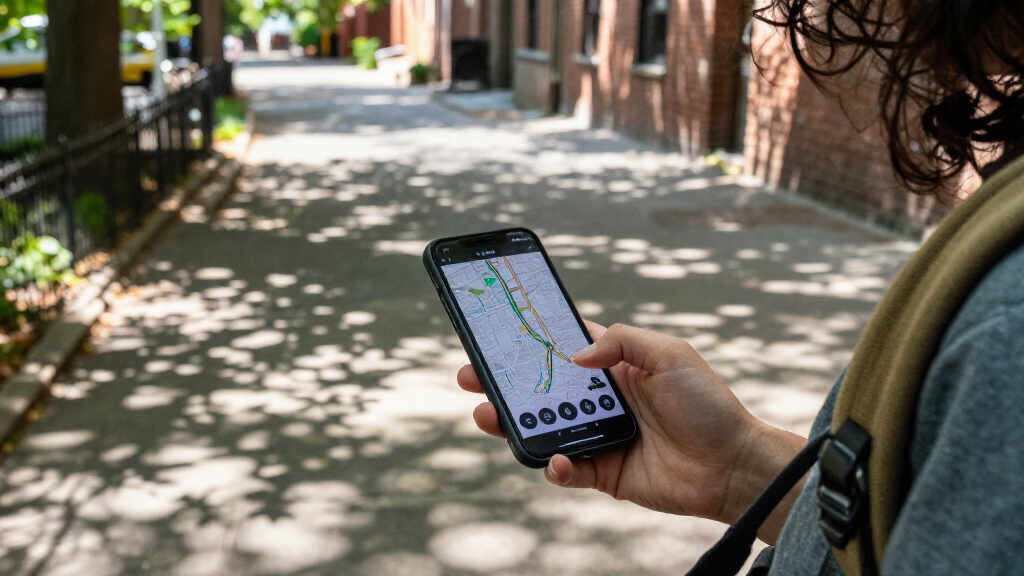
IdeaNavigator AI has outlined a concept for a walking app that generates audio narration from a user’s live route, including local history, architecture and nature. It proposes testing the idea in two cities, tracking how often people walk with the app by week four and checking narration accuracy on a sample of routes.
IdeaNavigator AI has proposed testing a walking app that generates audio narration based on a person’s live route, responding to corners and nearby landmarks with details about history, buildings and other local features. The concept is framed as an early product opportunity, not a launched service: its proposed first test would run in two cities and track repeat use and narration accuracy.
The proposed app would let a user start a walk and hear narration tailored to the streets they travel. Suggested subjects include local history, architecture and unusual details, with themed modes for history, architecture and nature. Users could also save favorite routes. The concept does not specify which cities, what information the app would display or how users would control the audio.
IdeaNavigator AI presents the product as a response to a gap between general audio content and conventional guided tours. Its framing is that podcasts typically do not respond to a listener’s location, while many tour apps focus on landmark districts rather than everyday streets. The proposed use case is a walker who wants their neighborhood or travel surroundings narrated.
The suggested business model combines a consumer subscription with a licensing tier for tourism boards. To test demand, the proposal calls for launching in two cities, measuring walks per week among users at week four, and auditing narration accuracy across a sample of routes. No pricing, user targets, accuracy threshold or pilot results are provided.
Product concept · Early-stage proposal
A Walking App Where Routes Guide the Narration
Imagine a walk that tells its own story: audio shaped by the streets, buildings, history and nature around you. IdeaNavigator AI proposes a two-city pilot to find out whether the idea works.
Concept proposed · No launch announced01 / The experience
A neighborhood with a soundtrack
Start a walk and hear context tailored to the route as it unfolds, with narration responding to corners and nearby landmarks.
History
Local stories and place details, connected to where the walker is.
Architecture
Buildings and streets become prompts for a closer look.
Nature
Potential narration about nearby natural features and unusual details.
02 / The proposed flow
From route to narration
The concept describes a simple loop, while leaving the underlying data, audio controls and fact-checking method open.
Start a walk
The user chooses to begin a route.
Follow the route
Nearby streets and landmarks shape what comes next.
Listen and explore
Audio offers local context in a chosen theme.
Save favorites
Favorite routes could be kept for another walk.
03 / Validation plan
Test repeat use and trust
The proposed two-city pilot asks two distinct questions: do people come back, and are route descriptions dependable?
Two checks, no results yet
These bars show the proposed measures, not achieved scores.
No participant count, activity definition, audit method or success threshold has been provided.
Which cities, local data sources and fact-verification safeguards would the pilot use?
How would users control audio, and how would outdated or conflicting records be handled?
Would walkers subscribe, and would tourism boards license the service?
The proposal suggests a consumer subscription plus tourism-board licensing; no pricing is stated.
04 / Why this format
Audio that follows the walker
IdeaNavigator AI frames the opportunity as a gap between general audio and conventional tours. Podcasts usually do not respond to location; many tours center on landmark districts. A route-aware format might bring narration to everyday streets.
Listen anywhere
Podcasts provide stories, but typically do not adapt to a listener’s location.
Follow a set route
Many audio tours focus on established visitor areas and selected landmarks.
Discover nearby
Generated narration could respond to ordinary surroundings—if it proves useful and accurate.
05 / What is known
Proposal, not a product launch
The concept points to potential uses for generated, location-grounded content. The information provided does not confirm a prototype, technical system, participating city or tourism-board agreement.
Is the app available to download?
No launch or download information is provided. This is a product concept with a suggested test.
How might narration react to a route?
The idea describes audio about nearby history, buildings and local details, triggered by the walker’s surroundings. The technical method is not specified.
How would the idea be tested?
A two-city launch is proposed, measuring walks per week at week four and auditing accuracy on a sample of routes.
What remains unverified?
Appeal, accuracy, subscription demand and tourism-board interest. No pilot schedule, results or success criteria are stated.
Testing Audio Beyond Tourist Routes
The proposal centers on whether location-based narration can make ordinary walks more engaging without requiring a professionally produced tour for every route. If generated audio can draw on local information and respond to a walker’s surroundings, the format could extend guided content beyond established visitor areas. That remains a product hypothesis, not a demonstrated outcome.
The two-city test would address two separate questions: whether people return to the app regularly, and whether its narration is dependable. A week-four measure of walks per week offers one way to gauge repeat use, while a route sample audit could expose errors in local history or descriptions. The proposal does not state how either measure would be defined or what results would count as success.
The suggested tourism-board licensing option also points to a possible institutional buyer alongside individual subscribers. Whether tourism organizations would pay for this service, and whether consumer subscriptions could support ongoing development, are untested questions. For readers, the distinction matters: the idea describes a possible product and validation plan, not an available app or established market.
Products Worth Considering

Bose QuietComfort Headphones (2nd Gen), Wireless Noise-Cancelling Over-Ear Headphones, Black

Sony WH-1000XM6 Wireless Noise-Canceling Over-Ear Headphones, Blue, Bundle

Bose QuietComfort Wireless Bluetooth Headphones with Active Noise Cancellation, Mic, USB‑C Charging, Deep Bass, 24‑Hour Battery – White Smok
As an affiliate, we earn on qualifying purchases.
Why Route-Based Audio Is Proposed Now
IdeaNavigator AI argues that recent advances in large language models could make it possible to generate location-grounded narration on demand from open data, including historical, architectural and place records. Its stated rationale is that generating content dynamically could reduce the per-route production work associated with conventional audio tours, which often concentrate on selected landmarks.
The concept does not provide technical details about its data sources, location tracking, content-generation system or safeguards against inaccurate descriptions. Nor does it identify a completed prototype, a development team or an agreement with a city or tourism board. The available information is therefore best understood as a proposed opportunity and test plan, rather than evidence that the technology has been built or validated.
Pilot Details Still Missing
No pilot launch, participating cities, app release date or development status has been announced in the available details. It is also unclear which open datasets would supply the narration, how the app would verify facts, or how it would handle outdated, incomplete or conflicting local records. These issues could affect both the usefulness and reliability of route-specific audio.
The proposed evaluation is not fully specified. There is no stated number of participants, definition of an active walk, comparison baseline or threshold for week-four retention. The accuracy audit likewise has no described sample size, review method or standard for judging errors. There are no reported user results or confirmation that a tourism board has agreed to license the product.
A Two-City Test Is Proposed
The next step described by IdeaNavigator AI is a limited launch in two cities, followed by measurement of how many walks users take each week through week four and a review of narration accuracy on selected routes. Those checks would help establish whether people return to the experience and whether its generated descriptions are reliable enough for everyday use.
No timetable or further milestone is stated. Until a pilot is announced and results are made available, the concept’s appeal, accuracy, subscription demand and potential for tourism-board licensing remain unverified.
Source: IdeaNavigator AI
Key Questions
Is the walking app available to download?
No launch or download information is provided. The proposal describes a product concept and a suggested test, not a confirmed app release.
How would the app’s narration respond to a route?
The proposed app would use a walker’s live route to generate audio about nearby history, buildings and other local details, with narration reacting at corners and landmarks. The technical method has not been described.
How would the idea be tested?
IdeaNavigator AI proposes a launch in two cities, measuring walks per week at week four and auditing narration accuracy on a sample of routes. No pilot schedule, sample size or success threshold is given.
How might the service make money?
The suggested model pairs a consumer subscription with a licensing tier for tourism boards. Pricing and buyer interest have not been established.
Source: IdeaNavigator AI