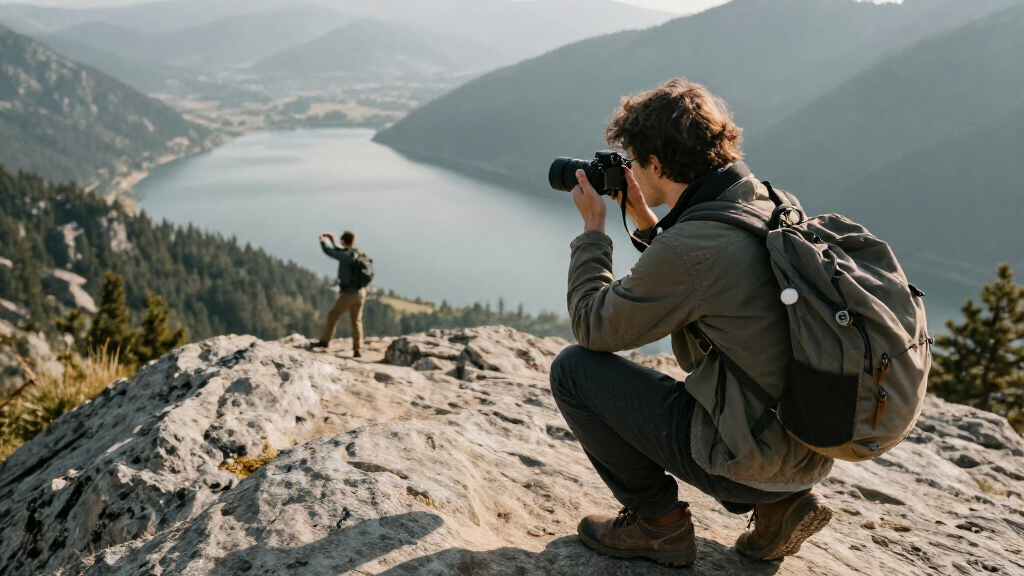
This checklist is for travelers who want to bring home thoughtful photographs without making gear choices more complicated than the trip itself. It covers a camera body, lens, tripod, bag, memory card, and battery charger, so you can consider the pieces together before packing.

Get travel and outdoor gear delivered free with Prime
- Fast, free delivery on millions of items
- Prime Video, Amazon Music and more included
- Member-only deals all year
The sections follow those six gear slots. Each one explains what role the item is meant to fill, what details deserve a closer look, and where the named pick may need a compatibility check. A product title alone does not confirm every specification or fit detail, so use the checklist to guide your own review.
Start with the gear you already own, then check each proposed pick against your camera system, travel plans, and packing space. Confirm model compatibility and included accessories in the product listing before buying, and give fit and function priority over filling every slot.
Mirrorless Camera
A camera body is the foundation of the kit: it determines which lenses and accessories can work with it, and it is the piece you will carry and operate throughout the trip. The listed pick is the Sony Alpha a6400 APS-C Mirrorless Camera Body 4K Black. Its name identifies a mirrorless body and an APS-C format, but it does not tell you everything you need to know about included accessories, controls, or compatibility with the rest of your gear.
A common mistake is choosing a body before checking the lens mount and the lenses already in your bag. The named lens is a Canon RF lens for EOS R series, so do not assume it attaches directly to the Sony body. Check the exact camera and lens specifications, and verify whether any proposed adapter supports the functions you need. Also consider how the body feels in hand, how you will carry it, and whether its controls suit the kinds of photographs you plan to make. Treat the 4K wording in the title as a prompt to verify recording details, not as a complete description of video capabilities.
What to look for:
- Confirm the camera body’s lens mount and format.
- Check whether the kit includes a battery, charger, or other accessories.
- Compare grip and controls with how you expect to use the camera.
- Verify the recording and connectivity details you need.
- Check compatibility with each lens and accessory in your kit.
Sony Alpha a6400 APS-C Mirrorless Camera Body 4K Black
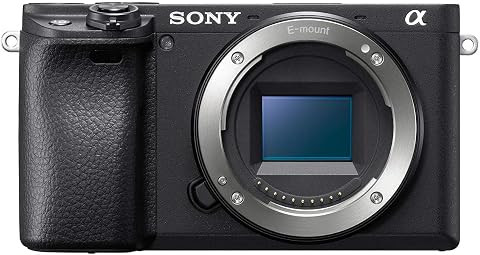
The Sony a6400 is a mirrorless interchangeable-lens camera featuring fast autofocus, real-time tracking, and a tiltable LCD screen ideal for vlogging and professional filming. It offers high-speed continuous shooting, 4K video recording, and a compact design suitable for photography and videography enthusiasts.
Pros:
- Fast autofocus with real-time tracking
- High-quality 4K video recording
- Tiltable LCD screen ideal for vlogging
- Compact and lightweight design
Cons:
- Battery life may be limited for extended shoots
- No in-body image stabilization
- Complex menu system for beginners
Best for: Travelers building a mirrorless kit around the Sony body
Not ideal for: Shoppers expecting the listed Canon RF lens to fit directly
Bottom line: Check the mount and included accessories before making this body the center of your travel kit.
Camera Lens
A lens shapes how you frame a scene and can matter as much as the camera body when assembling a travel setup. The pick here is the Canon RF 35mm F1.8 Macro STM Lens for EOS R Series. Its title gives you useful starting points—RF mount, 35mm, F1.8, macro, and STM—but you should confirm the full specifications and supported camera bodies before treating those labels as a complete buying guide.
The main compatibility check is especially important for this checklist: the named Sony body and Canon RF lens are from different camera systems. Do not assume they pair directly; verify mount compatibility and any adapter requirements with the manufacturers. Another common mistake is buying based on a focal-length number alone without considering how it will frame the subjects you photograph. Think about the balance of landscapes, details, people, and everyday scenes on your itinerary, then decide whether this lens’s stated features match those needs. Check the listing for focus behavior, dimensions, and what is included, and make sure the lens will be manageable in your bag alongside the body and other essentials.
What to look for:
- Verify the RF mount works with your exact camera body.
- Confirm any adapter requirements and supported functions.
- Check what the 35mm focal length means for your intended framing.
- Review the macro and STM details in the manufacturer listing.
- Check lens dimensions and included accessories for packing fit.
Canon RF 35mm F1.8 Macro STM Lens for EOS R Series

The Canon RF 35mm F1.8 Macro STM Lens is a compact, versatile lens designed for EOS R series mirrorless cameras. It features 0.5x magnification, a minimum focusing distance of 0.56 ft, optical image stabilization, and a control ring for easy adjustments.
Pros:
- Compact and lightweight design
- Excellent macro capabilities with 0.5x magnification
- Optical image stabilization for sharp images
Cons:
- Limited to RF mount cameras
- Focal length may be less versatile for some users
Best for: Travelers using a compatible EOS R series camera
Not ideal for: Owners of the listed Sony body seeking a direct-fit lens
Bottom line: Confirm the camera mount first, then decide whether the stated lens features fit your travel subjects.
Camera Tripod
A tripod can help support a camera when you want a steady setup, but the item named for this slot is a camera detector: Compact Hidden Camera Detector with RF Bug Detection, Magnetic & Infra. The title does not describe a conventional camera tripod. That distinction matters because choosing an item by the category heading alone can leave you without the support gear you expected to pack.
Before buying, check the full product listing and confirm what the device is designed to do and what is included. Do not infer tripod functions from the section label, and do not assume the detector has a mounting point or can support a camera. If you need a tripod, look for an item explicitly described as one and verify its camera attachment, folded size, setup, and compatibility with your intended camera. Consider how much space you have and whether you are willing to carry and set up support gear during your trip. Keep the named detector under consideration only if its stated purpose also matches a separate need; it does not fill the tripod role based on its title.
What to look for:
- Confirm the product’s stated purpose in its full listing.
- Check whether it is actually a camera-support tripod.
- For a tripod, verify the camera attachment and compatibility.
- Review folded dimensions and how it packs with your bag.
- Check included parts rather than assuming a mount is provided.
Compact Hidden Camera Detector with RF Bug Detection, Magnetic & Infrared Sensor

The CHIRSMIP compact detector combines RF signal scanning, magnetic detection, camera finding, infrared spotting, and a trigger alarm in one portable device. It’s designed for quick privacy checks in hotels, cars, offices, rentals, and travel bags, with rechargeable battery power and five‑year support.
Pros:
- All‑in‑one 5‑in‑1 detection (RF, magnetic, camera, infrared, alarm)
- Portable and rechargeable for on‑the‑go use
- Suitable for indoor and outdoor environments
- Long‑term manufacturer support (5 years)
Cons:
- No built‑in display; alerts are auditory only
Best for: Travelers separately seeking the detector described in the listing
Not ideal for: Anyone who needs a camera-support tripod for this slot
Bottom line: The named item is a detector, so choose a clearly identified tripod if camera support is the goal.
Camera Bag
A camera bag helps keep the kit together and makes it easier to carry gear between stops. The listed pick is Camera Backpack, Large Capacity Outdoor DSLR Backpack, Compatible with. The title suggests a backpack intended for camera gear, but it ends before naming what it is compatible with. That missing detail is a key fit check, particularly when your proposed kit combines a Sony camera body and a Canon RF lens.
A common mistake is relying on “large capacity” without checking the bag’s actual dimensions, interior layout, or padding. Look at the product listing for the compatible camera and lens types, compartment measurements, closures, and any included dividers or accessories. Compare those details with the exact gear you plan to carry, including the camera, lens, memory card, charger, and any separate tripod. Consider how the backpack fits your travel routine: whether you can access the gear comfortably and whether the packed bag fits your luggage or day-trip plans. A category description is not enough to establish compatibility or protection, so confirm those points before relying on the bag to carry valuable equipment.
What to look for:
- Find the complete compatibility details in the listing.
- Compare interior measurements with your exact gear.
- Check padding, dividers, closures, and what is included.
- Consider access to camera gear while traveling.
- Check packed dimensions against luggage and day-trip needs.
Camera Backpack, Large Capacity Outdoor DSLR Backpack, Compatible with 15.6-Inch

This large capacity camera backpack is designed for outdoor photography, featuring a padded compartment for 15.6-inch laptops and customizable space for DSLR cameras, lenses, and accessories. Made of water-resistant, durable fabric, it offers ergonomic comfort and multiple storage options for travel and outdoor adventures.
Pros:
- Durable water-resistant fabric suitable for outdoor use
- Adjustable padded dividers for customized camera storage
- Ergonomic shoulder straps and breathable back panel for comfort
- Multiple pockets and straps for accessories and tripods
Cons:
- Heavy weight at 1280 grams may be tiring over long periods
- Large size may be less suitable for minimalist travelers
- Limited color options
Best for: Travelers who want a camera backpack and can verify its fit
Not ideal for: Anyone relying on the incomplete title to confirm compatibility
Bottom line: Check the complete listing and interior dimensions against the actual kit before choosing this bag.
Memory Card
A memory card is essential to the camera workflow because it is where captured images and video are recorded. The named pick is SanDisk 1TB Extreme PRO SDXC UHS-II Memory Card – C10, U3, V60, 6K, 4K. The title supplies several format and speed markings, but those labels alone do not establish that the card is supported by a particular camera or that every stated recording use will work in your setup.
A common buying mistake is matching a card to a camera by capacity alone. Check the camera’s manual for supported card types and recording requirements, then compare those with the exact card specifications from the manufacturer. Confirm the card form factor and interface, and make sure the capacity suits your travel habits and plan for backing up files. Consider whether you want one card or a separate backup approach; the best choice depends on how you handle images during the trip. Do not rely on the 6K or 4K words in the title as a promise about camera compatibility or recording performance. Verify the camera’s supported modes and the card’s rating details together before you depend on it for a trip.
What to look for:
- Confirm the camera supports SDXC and the card interface.
- Check recording requirements in the camera manual.
- Verify the listed capacity and speed ratings with the manufacturer.
- Plan how images will be backed up during travel.
- Check the card form factor and compatibility before packing.
SanDisk 1TB Extreme PRO SDXC UHS-II Memory Card – C10, U3, V60, 6K, 4K UHD

The SanDisk 1TB Extreme PRO SDXC UHS-II card is designed for prosumers and professionals, supporting 6K and 4K UHD video recording with high-speed data transfer. It offers fast shot speeds, high capacity, and reliable performance for demanding photography and videography tasks.
Pros:
- High capacity suitable for 6K and 4K video recording
- Fast transfer speeds up to 280MB/s
- Reliable performance for professional use
Cons:
- Performance may vary depending on host device
- High capacity may be more expensive than lower-capacity cards
Best for: Travelers whose camera supports this SDXC card and ratings
Not ideal for: Anyone whose camera support or recording needs are unconfirmed
Bottom line: Match the card’s format and ratings to the camera manual before relying on it for a trip.
Camera Battery
A battery charger helps you prepare for time away from an outlet, but the charger has to match the battery system you actually carry. The listed item is Sony BC-TRW W Series Battery Charger. Its title identifies a Sony W Series charger; it does not establish compatibility with every Sony camera or battery, including the body named elsewhere in this checklist.
A common mistake is assuming that a charger works because the camera brand matches. Check the camera manual and battery model, then verify that the BC-TRW is listed as compatible with that exact battery. Confirm what the product includes, how it connects to power, and whether it suits the outlets and charging routine on your itinerary. If your kit uses a different battery type, this charger may not meet your need. Consider how many batteries you expect to carry and whether you can recharge between travel days, but base that plan on the camera and battery specifications rather than the charger title alone. Keep the battery model and charger model together in your packing notes so they are easy to check before departure.
What to look for:
- Match the charger to the exact battery model.
- Confirm camera and battery compatibility in the manuals.
- Check included power connections and accessories.
- Consider your access to outlets during the trip.
- Verify the charger model before packing.
Sony BC-TRW W Series Battery Charger

This compact, universal voltage battery charger is designed for traveling, featuring a retractable plug and quick charging for NP-FW50 batteries.
Pros:
- Compact and portable design ideal for travel
- Universal voltage for worldwide use
- Quick charging capability
Cons:
- Limited to NP-FW50 batteries
- No detailed charging time information
Best for: Travelers carrying a compatible Sony W Series battery
Not ideal for: Anyone whose camera uses a different battery type
Bottom line: Verify the battery model first so the charger you pack matches your camera’s power system.
Build the kit in a practical order: first confirm the camera body and lens mount, then make sure the lens fits that body. Match the memory card and battery charger to the camera’s manual, and choose a bag that fits the exact gear. Resolve the tripod slot separately, since the named pick is a detector by title. This order helps you avoid buying accessories that cannot serve the camera system you plan to carry.
You do not need to fill every slot at once. Start with gear that works together and suits the photographs you want to make, then add pieces as your travel routine becomes clearer. A few careful compatibility checks can make packing simpler and help you head out with a kit you understand.
Halloween Picks

Vexalify 11-Inch Halloween Pumpkin Fog Machine with 12-Color Lights

Kalolary 11 ft Halloween Inflatable Archway Ghost House Tunnel

12-Foot Inflatable Pumpkin Halloween Archway with LED Lights
As an affiliate, we earn on qualifying purchases.