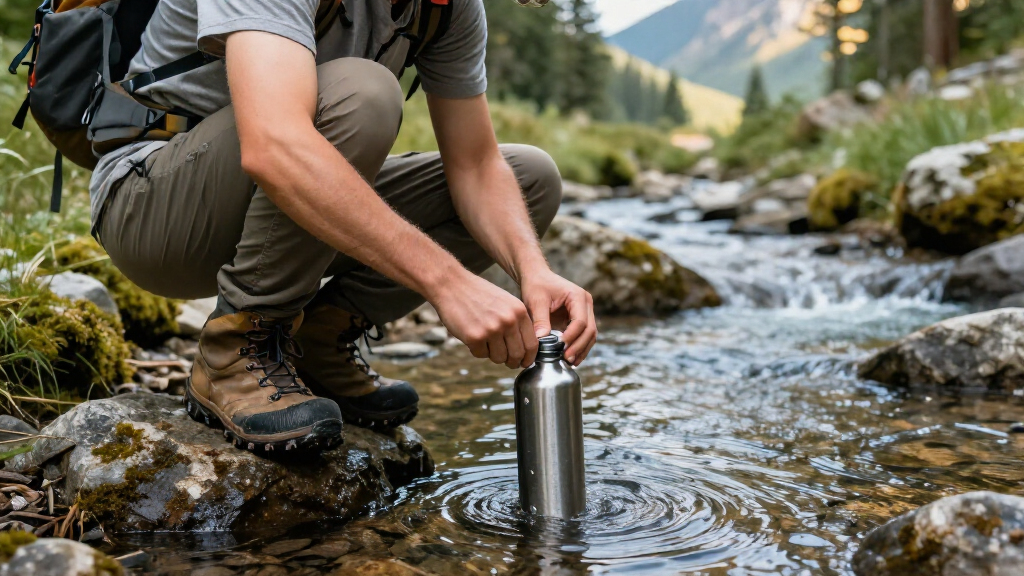
Portable camping water filters range from simple drink-through straws to pump, squeeze, gravity, and battery-powered systems. I name the Sawyer Squeeze with Cnoc 2-Liter Bladder my best overall pick for its adaptable setup, while the Katadyn BeFree 1L stands out for fast, compact hydration and the Katadyn Pocket Ceramic for a durable pump-style design. The main tradeoff is convenience versus capacity: lighter filters suit solo hikers, while gravity or powered systems can make camp water easier to prepare for a group. Filter type, source-water conditions, maintenance, and how much water you carry all affect the right choice. Read on for the full breakdown of all 15 options and a guide to matching a filter to your trips.

Get travel and outdoor gear delivered free with Prime
- Fast, free delivery on millions of items
- Prime Video, Amazon Music and more included
- Member-only deals all year
Complete the kit


Key Takeaways
- The Sawyer Squeeze with Cnoc bladder is the most adaptable all-round choice: its squeeze-and-bladder format can serve both trail drinking and camp water needs, unlike a basic straw.
- Gravity filtration favors camp convenience over pack simplicity: the Waterdrop bag system gives you a way to collect and filter a larger batch, but its reservoir takes more room than a personal filter.
- Pump filters trade effort for source access and control: the Katadyn Pocket and Hiker models suit users who want to draw water directly from a source, while pumping takes more work than squeezing or gravity feeding.
- Electric models add operating dependencies: SEESE, ITEHIL, and Greeshow bring powered filtration features, but battery or charging needs make them less straightforward than manual options on remote trips.
- Pack count is not the same as versatility: straw multipacks from Practical Survival, Pure Flow, and LifeStraw can equip several people, but they do not automatically provide a shared camp-water reservoir.
| SEESE Electric Portable Water Purifier for Camping, Hiking, and Emergencies |  | Best for Fast Electric Filtering | Filtration method: Six-stage composite system with ultrafiltration, carbon fiber, and PP cotton | Filter pore size: 0.01 micron | Maximum flow rate: 700 ml/min | VIEW LATEST PRICE | See Our Full Breakdown |
| Katadyn Pocket Ceramic Hand Pump Water Filter | 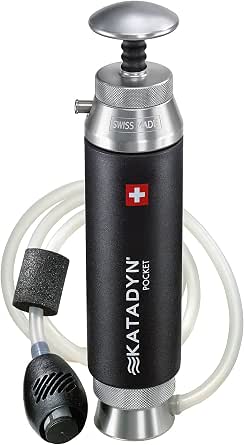 | Best for Long-Term Field Use | Filter type: Silver-impregnated ceramic | Flow rate: Up to 1 liter per minute | Filter capacity: Up to 13,000 gallons | VIEW LATEST PRICE | See Our Full Breakdown |
| ITEHIL Portable Electric Water Filter with Solar Charging, 0.01-Micron Filtration | 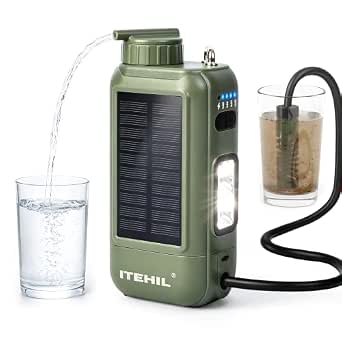 | Best for Off-Grid Charging Options | Filtration method: Ahlstrom filter, hollow-fiber membrane, and activated carbon | Filtration precision: 0.01 microns | Maximum flow rate: 700 ml/min | VIEW LATEST PRICE | See Our Full Breakdown |
| Waterdrop Gravity Water Filter Straw with 1.5-Gallon Water Bag | 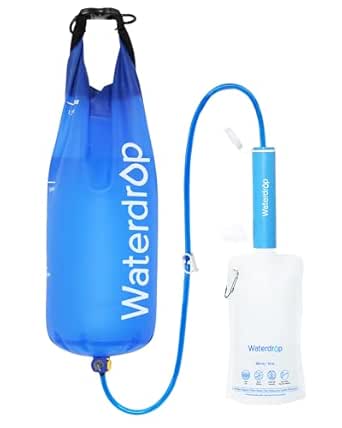 | Best for Group Camp Water | Filtration method: Hollow-fiber ultrafiltration membrane | Filter pore size: 0.1 micron | Maximum flow rate: 700 ml/min | VIEW LATEST PRICE | See Our Full Breakdown |
| Practical Survival Reusable Emergency Water Filter Straws, 2-Pack |  | Best Two-Person Backup | Quantity: 2 filters | Filtration method: Hollow-fiber membrane | Filtration performance: Claimed removal of over 99.99% of waterborne bacteria and parasites | VIEW LATEST PRICE | See Our Full Breakdown |
| Katadyn Hiker Pro Transparent Hand Pump Water Filter |  | Best Pump Filter for Group Trips | Purification method: Pleated glass fiber with activated carbon | Filter pore size: 0.2 microns | Maximum flow rate: 1 liter per minute | VIEW LATEST PRICE | See Our Full Breakdown |
| Greeshow Portable Electric Water Filter for Camping and Emergencies |  | Best for Multi-Source Emergency Readiness | Filtration: Five-stage system with 0.01-micron hollow-fiber membrane, KDF, activated carbon, and PP cotton | Maximum flow rate: 700 mL per minute | Filter lifespan: Description states up to 1,000 L; another listed capacity is 220 L | VIEW LATEST PRICE | See Our Full Breakdown |
| LifeStraw Personal Water Filter for Hiking, Travel, and Emergencies |  | Best Minimalist Backup Filter | Purification method: Hollow-fiber membrane | Bacteria reduction: 99.999999% | Parasite reduction: 99.999% | VIEW LATEST PRICE | See Our Full Breakdown |
| Katadyn BeFree 1L Collapsible Water Filter Bottle |  | Best Compact Bottle Filter | Bottle capacity: 1 liter | Filter type: 0.1-micron hollow-fiber membrane | Maximum flow rate: Up to 2 liters per minute | VIEW LATEST PRICE | See Our Full Breakdown |
| Lormandy Portable Straw Water Filter with Water Pouch and Tubing |  | Best Accessory-Rich Filter Kit | Filtration: Sediment prefilter and 0.1-micron hollow-fiber membrane | Flow rate: About 800 mL per minute | Filter capacity: Description states 1,320 gallons; specifications state 1,300 gallons | VIEW LATEST PRICE | See Our Full Breakdown |
| Pure Flow Water Filter Straw Kit, 5-Pack, 1,500 L Capacity |  | Best Multi-Person Straw Kit | Pack count: 5 | Stated filtration capacity: Up to 1,500 liters | Filtration method: Pre-filter, granular activated carbon, and fine-fiber membrane | VIEW LATEST PRICE | See Our Full Breakdown |
| LifeStraw Personal Water Filter, 5 Pack, Blue |  | Best Lightweight Personal Straw | Pack quantity: 5 | Filter life: Up to 4,000 liters per filter | Weight: 1.6 oz | VIEW LATEST PRICE | See Our Full Breakdown |
| Katadyn Hiker Pump-Action Water Filter, 11 oz |  | Best Compact Pump Filter | Filter type: Pump-action microfilter | Weight: 11 oz in title; 1.2 lb listed item weight | Dimensions: 6.5 x 3 x 3 in | VIEW LATEST PRICE | See Our Full Breakdown |
| Katadyn Pocket Ceramic Hand Pump Water Filter |  | Best Long-Life Ceramic Pump | Purification method: Ceramic | Maximum flow rate: 1 liter per minute | Filter capacity: Up to 13,000 gallons | VIEW LATEST PRICE | See Our Full Breakdown |
| Sawyer Squeeze Water Filtration System with Cnoc 2-Liter Bladder |  | Best Versatile Group-Camp Filter | Purification method: 0.1-micron hollow-fiber membrane | Bladder capacity: 2 liters (64 oz) | Bladder material: TPU | VIEW LATEST PRICE | See Our Full Breakdown |
| portable camping water filter | Weight | Dimensions | Filter capacity | Maximum flow rate |
|---|---|---|---|---|
| SEESE Electric Portable Water | — | — | Up to 7,925 gallons | 700 ml/min |
| Katadyn Pocket Ceramic Hand Pu | 20 oz | — | Up to 13,000 gallons | — |
| ITEHIL Portable Electric Water | — | — | Up to 1,000 liters | 700 ml/min |
| Waterdrop Gravity Water Filter | 4.64 oz | — | Up to 1,400 gallons (5,300 liters) | 700 ml/min |
| Practical Survival Reusable Em | 56.7 g | 8 × 1.5 × 1.5 in | Product claims state up to 1,800 gallons per filter; supplied specifications also state 1,100 gallons | — |
| Katadyn Hiker Pro Transparent | 11.2 ounces | 3 x 3 x 6 inches | Up to 1,150 liters | 1 liter per minute |
| Greeshow Portable Electric Wat | 480 g | 2.8 × 6.5 × 3.7 inches | — | 700 mL per minute |
| LifeStraw Personal Water Filte | 1.62 ounces | 3.75 x 12 x 1.39 inches | — | — |
| Katadyn BeFree 1L Collapsible | 2.24 ounces | 4.25 x 10 x 3 inches | Up to 1,000 liters | Up to 2 liters per minute |
| Lormandy Portable Straw Water | Less than 1.8 ounces | 6 × 2 × 2 inches | Description states 1,320 gallons; specifications state 1,300 gallons | — |
| Pure Flow Water Filter Straw K | — | 1.1 x 1.1 x 8.2 in | — | — |
| LifeStraw Personal Water Filte | 1.6 oz | 3.75 x 12 x 1.39 in | — | — |
| Katadyn Hiker Pump-Action Wate | 11 oz in title; 1.2 lb listed item weight | 6.5 x 3 x 3 in | — | 0.95 liters per minute |
| Katadyn Pocket Ceramic Hand Pu | 20 oz in description; 7.36 oz listed item weight | 10 x 2.4 x 2.4 in | Up to 13,000 gallons | 1 liter per minute |
| Sawyer Squeeze Water Filtratio | Less than 6 oz | 5.5 x 2 x 11.75 in | — | — |
More Details on Our Top Picks
SEESE Electric Portable Water Purifier for Camping, Hiking, and Emergencies
The SEESE is a strong fit for campers who want powered filtration without hand pumping or sucking through a straw. Its 700 ml/min flow rate can fill a bottle more conveniently than the Practical Survival straws, while its 12.3-ounce weight and compact body remain manageable in a pack. The rechargeable battery, built-in light, and backwash function add useful camp-side features, and an extra filter is included. The tradeoff is dependence on a charged battery: unlike the non-electric Waterdrop gravity kit, it cannot keep filtering once power runs out. The listed cartridge replacement point is 1,800 gallons, so buyers should also plan for replacement rather than treating the filter as maintenance-free. I’d choose it for powered convenience, not for a trip where recharging is uncertain.
Pros:- Electric operation avoids manual pumping and direct suction
- Up to 700 ml/min flow rate supports quicker bottle filling
- USB-C rechargeable battery, built-in light, and backwash function
- Compact 12.3-ounce design includes an extra filter
Cons:- Requires battery power and recharging to operate
- Cartridge replacement is listed after 1,800 gallons
- Specified operating temperature range is limited to 5–40 °C
Best for: Campers and emergency-kit owners who want fast, powered bottle filling and can recharge the unit between outings.
Not ideal for: Backpackers on long trips without reliable charging access, or anyone who wants a simple non-electric filter.
- Filtration method:Six-stage composite system with ultrafiltration, carbon fiber, and PP cotton
- Filter pore size:0.01 micron
- Maximum flow rate:700 ml/min
- Filter capacity:Up to 7,925 gallons
- Recommended cartridge replacement:After 1,800 gallons
- Battery:2,800 mAh; up to 6 hours continuous operation; USB Type-C charging
- Dimensions and weight:6.5 × 4.2 × 2.1 in; 12.3 oz
- Included features:Backwash function, built-in light, self-cleaning, extra filter
Our verdict“Choose the SEESE for quick electric filtering and added camp features, but pick the Waterdrop gravity kit if you want filtration without a battery.”
Katadyn Pocket Ceramic Hand Pump Water Filter
The Katadyn Pocket Ceramic suits campers who value a repairable, field-serviceable pump over minimal weight. Its ceramic cartridge can be cleaned on the trail, and the built-in wear indicator helps show when that maintenance is needed. A flow rate of 1 liter per minute is faster than the electric SEESE’s listed rate, and the filter connects to most water bottles and hydration packs. Its 20-year guarantee also signals a different ownership proposition from lighter straw filters such as the Practical Survival two-pack. That durability comes with clear costs: at 20 ounces, it is heavier than the SEESE and requires repeated manual pumping. I’d favor it for established camps and frequent trips where field cleaning and long service life matter more than pack weight or hands-free operation.
Pros:- Field-cleanable ceramic cartridge supports maintenance away from home
- Wear indicator signals when the cartridge needs cleaning
- Pumps up to 1 liter per minute
- Aircraft-grade aluminum and stainless steel construction with a 20-year guarantee
Cons:- Manual pumping takes more effort than the powered SEESE
- At 20 ounces, it is heavier than compact straw-style filters
- Pump-based setup is less minimal than a direct-drinking straw
Best for: Frequent campers and backcountry users who want a field-cleanable pump with broad bottle and hydration-pack compatibility.
Not ideal for: Ultralight backpackers, or anyone who wants to filter water without manual effort.
- Filter type:Silver-impregnated ceramic
- Flow rate:Up to 1 liter per minute
- Filter capacity:Up to 13,000 gallons
- Weight:20 oz
- Materials:Aircraft-grade aluminum and stainless steel
- Cleaning:Field-cleanable with included brush pad
- Compatibility:Most water bottles and hydration packs
- Guarantee:20 years
Our verdict“Pick the Katadyn Pocket for durable, field-cleanable pumping; skip it if low pack weight and effortless operation matter most.”
ITEHIL Portable Electric Water Filter with Solar Charging, 0.01-Micron Filtration
The ITEHIL is the most charging-flexible option in this group: it supports USB-C and solar charging, and can also serve as an emergency power bank and light. Its 5,200 mAh battery is larger than the SEESE’s 2,800 mAh battery, although the stated continuous runtime is shorter at up to four hours. Both electric filters list a 700 ml/min maximum flow rate and 0.01-micron filtration, so the ITEHIL’s main distinction is its extra power versatility rather than faster filtering. Solar charging can help when outlets are scarce, but it depends on suitable sunlight and time; it is not a dependable substitute for planning battery use. The stated filter capacity is up to 1,000 liters, with replacement timing affected by water quality and use.
Pros:- Offers both USB-C and solar charging
- 5,200 mAh battery also supports emergency power-bank use
- Built-in light adds a practical camp feature
- Lists 0.01-micron filtration and a maximum 700 ml/min flow rate
Cons:- Continuous runtime is listed at up to four hours per charge
- Solar charging depends on available sunlight and charging time
- Filter capacity is listed at up to 1,000 liters, with service life varying by water quality
Best for: Campers building an off-grid kit who want USB-C and solar charging, plus a backup light and power-bank function.
Not ideal for: Buyers seeking a long-lasting cartridge or a filter that does not rely on batteries and charging conditions.
- Filtration method:Ahlstrom filter, hollow-fiber membrane, and activated carbon
- Filtration precision:0.01 microns
- Maximum flow rate:700 ml/min
- Filter capacity:Up to 1,000 liters
- Battery and runtime:5,200 mAh; up to 4 hours continuous operation
- Charging options:USB-C and solar
- Dimensions and weight:3.2 × 2.4 × 7 in; listed weight 1 oz
- Additional power features:Emergency power bank and light
Our verdict“Choose the ITEHIL over the SEESE if solar charging and backup power matter more than longer stated runtime or cartridge capacity.”
Waterdrop Gravity Water Filter Straw with 1.5-Gallon Water Bag
The Waterdrop gravity kit is the clearest choice here for preparing a larger supply rather than filtering one drink at a time. Its included 1.5-gallon water bag lets gravity feed water through the straw, giving it a group-camp role that the direct-drinking Practical Survival filters do not fill. It is non-electric and weighs 4.64 ounces, so it avoids the charging needs of the SEESE and ITEHIL without adding a pump. The 0.1-micron hollow-fiber membrane and stated 700 ml/min maximum flow rate suit practical camp use, though the listed capacity is lower than the Katadyn Pocket’s. Backwashing can help restore flow, but it requires clean water and compatible connections. Choose this for shared water access, not the smallest possible kit.
Pros:- Includes a 1.5-gallon gravity-fed water bag for shared camp use
- Non-electric operation avoids battery charging
- Backwashable straw can be cleaned to help maintain flow
- Lightweight at 4.64 ounces and compatible with suitable bags or bottles
Cons:- The water bag adds bulk compared with a standalone straw
- Backwashing requires clean water and a compatible threaded bottle or bag
- Listed filter capacity is up to 1,400 gallons, below the Katadyn Pocket’s stated capacity
Best for: Small groups and base-camp users who want to filter water into a shared supply instead of drinking directly from a source.
Not ideal for: Solo hikers who prioritize the smallest, simplest drinking filter or lack clean water for backwashing.
- Filtration method:Hollow-fiber ultrafiltration membrane
- Filter pore size:0.1 micron
- Maximum flow rate:700 ml/min
- Filter capacity:Up to 1,400 gallons (5,300 liters)
- Water bag capacity:1.5 gallons
- Weight:4.64 oz
- Power source:Non-electric
- Included components:Filter straw, 1.5-gallon gravity-fed bag, and 16-ounce water pouch
Our verdict“Choose the Waterdrop for a compact gravity-fed group supply, but pick a standalone straw for simpler solo drinking.”
Practical Survival Reusable Emergency Water Filter Straws, 2-Pack
The Practical Survival two-pack offers a simple way to give two campers separate direct-drinking filters, or to keep one as a backup. Each straw is lightweight and uses a 0.1-micron hollow-fiber membrane; the package also includes a backflushing plunger for each filter. Compared with the Waterdrop gravity kit, this set is easier to divide between people and does not require carrying a water bag, but it lacks the Waterdrop’s shared reservoir and gravity-fed setup. It also cannot match the SEESE’s powered bottle-filling approach: these straws are for drinking directly, with backflushing needed to maintain them. Capacity claims are inconsistent in the supplied information, so I would not choose this set based solely on its stated lifespan. Its strongest case is portable redundancy.
Pros:- Two filters allow one per person or one as a spare
- Hollow-fiber filtration is specified down to 0.1 micron for microplastics
- Each filter includes a backflushing plunger
- Lightweight at 56.7 g per listed product specification
Cons:- Requires direct drinking through the straw rather than powered or gravity-fed filling
- Backflushing is needed to maintain the filters
- Capacity information conflicts between the product claims and supplied specifications
Best for: Two hikers or emergency-kit planners who want separate lightweight straws and an included backflushing tool for each.
Not ideal for: Groups who need to fill a shared reservoir, or buyers who need clear, consistent filter-capacity information.
- Quantity:2 filters
- Filtration method:Hollow-fiber membrane
- Filtration performance:Claimed removal of over 99.99% of waterborne bacteria and parasites
- Microplastic filtration:Down to 0.1 micron
- Filter capacity:Product claims state up to 1,800 gallons per filter; supplied specifications also state 1,100 gallons
- Dimensions:8 × 1.5 × 1.5 in
- Weight:56.7 g
- Included components:Backflushing plunger per filter and user manual
Our verdict“Choose this two-pack for portable redundancy between two people, but choose the Waterdrop if you need a shared camp water supply.”
Katadyn Hiker Pro Transparent Hand Pump Water Filter
The Katadyn Hiker Pro suits campers who want to fill bottles or a hydration pack at the source rather than sip through a straw. Its manual pump moves up to 1 liter per minute, and the included connectors make it more adaptable to camp containers than the single-bottle Katadyn BeFree. The transparent housing also lets you check the cartridge visually, while the pre-filter and cleanable protector help manage debris before it reaches the main filter. The tradeoff is the work: pumping takes time and effort, especially when filling several containers. At 11.2 ounces, it is also much heavier than the BeFree or LifeStraw Personal. I’d choose it for shared camp water needs, not for a solo hiker seeking the smallest, simplest carry option.
Pros:- Pumps up to 1 liter per minute for filling containers at the source.
- Connectors support most water bottles and hydration packs.
- Transparent housing makes cartridge inspection easier.
- Includes a modular pre-filter and cleanable filter protector.
Cons:- Manual pumping requires ongoing effort.
- At 11.2 ounces, it weighs more than the BeFree and LifeStraw Personal.
- Filter capacity is limited to up to 1,150 liters.
Best for: Backpackers and small groups who want to pump water into bottles or hydration systems at camp.
Not ideal for: Solo ultralight hikers who prefer a straw or squeeze filter and want to avoid carrying a pump.
- Purification method:Pleated glass fiber with activated carbon
- Filter pore size:0.2 microns
- Maximum flow rate:1 liter per minute
- Filter capacity:Up to 1,150 liters
- Weight:11.2 ounces
- Dimensions:3 x 3 x 6 inches
- Power source:Manual
- Included connectors:Easy Fill bottle adapter and 1/4-inch hydration system connector
Our verdict“Choose the Hiker Pro if you need a versatile pump for camp water and can accept extra weight and manual effort.”
Greeshow Portable Electric Water Filter for Camping and Emergencies
The Greeshow GS-2811 is the most power-flexible choice here: it can run from its battery, solar panel, hand crank, or USB-C, and it adds a 3000 mAh power bank and SOS flashlight. That kit gives it a broader emergency role than the manual Katadyn Hiker Pro, though the Hiker Pro avoids charging decisions and has a simpler operating setup. Greeshow’s five-stage system includes a 0.01-micron hollow-fiber membrane and automatic backwashing, with a stated flow rate of 700 mL per minute. Those features may appeal when convenience and backup power matter more than minimum weight. At 480 g, it is substantially heavier than the LifeStraw Personal, and its product information conflicts on capacity: the description says up to 1,000 L while another listed figure is 220 L. I’d treat that capacity uncertainty as a real drawback.
Pros:- Offers battery, solar, hand-crank, and USB-C power options.
- Automatic pumping delivers water at up to 700 mL per minute.
- Includes a 3000 mAh power bank and SOS flashlight.
- Automatic backwashing can help clear accumulated debris.
Cons:- Product information gives conflicting filter-capacity figures.
- At 480 g, it is heavier than simple straw-style filters.
- Operating temperature is limited to 41–104 °F.
Best for: Campers building an emergency kit who want powered filtration plus several charging options and a backup power bank.
Not ideal for: Ultralight backpackers or buyers who need a clearly stated, dependable filter-life figure before setting out.
- Filtration:Five-stage system with 0.01-micron hollow-fiber membrane, KDF, activated carbon, and PP cotton
- Maximum flow rate:700 mL per minute
- Filter lifespan:Description states up to 1,000 L; another listed capacity is 220 L
- Power options:Battery, solar, hand crank, and USB-C
- Power bank capacity:3000 mAh
- Weight:480 g
- Dimensions:2.8 × 6.5 × 3.7 inches
- Operating temperature:41–104 °F
Our verdict“Pick the Greeshow for emergency-oriented versatility, but skip it if low pack weight or unambiguous capacity data is a priority.”
LifeStraw Personal Water Filter for Hiking, Travel, and Emergencies
At 1.62 ounces, the LifeStraw Personal is the easiest option here to tuck into a daypack or emergency kit and forget until needed. Its hollow-fiber membrane is specified to reduce bacteria, parasites, microplastics, and sediment, and it needs no battery or setup. That simplicity contrasts with the Greeshow, which offers powered flow and extra emergency features but adds weight and more parts. The key limitation is how you drink: the LifeStraw works by sipping directly from a source or a filled container, rather than pumping water into a separate storage vessel. The Katadyn BeFree is a more convenient bottle-based choice for hikers who want to carry filtered water as they walk. I’d choose this straw for a compact backup or direct-source drinking, not as the only tool for a group camp kitchen.
Pros:- Weighs only 1.62 ounces.
- Requires no electricity or batteries.
- Specified to reduce bacteria, parasites, microplastics, and sediment.
- Can be used with natural water sources or a filled container.
Cons:- Designed for direct drinking rather than filling a separate storage vessel.
- Does not provide a stated flow rate for filling camp containers.
- Its 4,000-liter capacity is lower than the 5,000-liter figure stated for the Lormandy filter.
Best for: Day hikers and emergency-kit planners who want a very light, no-power filter for direct drinking.
Not ideal for: Campers who need to filter water into multiple bottles or store a supply for a group.
- Purification method:Hollow-fiber membrane
- Bacteria reduction:99.999999%
- Parasite reduction:99.999%
- Microplastic reduction:99.999%; down to 1 micron
- Capacity:4,000 liters
- Weight:1.62 ounces
- Dimensions:3.75 x 12 x 1.39 inches
- Power source:No electricity or batteries required
Our verdict“Choose the LifeStraw Personal as a lightweight direct-drinking backup, not as a group water-filling system.”
Katadyn BeFree 1L Collapsible Water Filter Bottle
The Katadyn BeFree 1L makes filtered water easy to carry: fill the collapsible bottle, then drink by squeezing it, with no pump or separate straw to manage. Its stated flow rate of up to 2 liters per minute is faster than the Hiker Pro’s 1 liter per minute, though that speed still depends on squeezing rather than a powered mechanism. At just 2.24 ounces, it is far lighter than the Hiker Pro and more practical for one person who wants water on the move. Cleaning is also straightforward: shake or swish the filter in water without tools or disassembly. The tradeoff is the integrated one-liter format, which is less suited to filling several camp vessels than the Hiker Pro’s hoses and connectors. Its capacity is up to 1,000 liters, and squeezing remains part of every drink.
Pros:- Collapsible one-liter bottle packs down for travel.
- Weighs 2.24 ounces.
- Rated flow rate reaches up to 2 liters per minute.
- Filter can be cleaned by shaking or swishing without tools.
Cons:- Requires squeezing to move water through the filter.
- One-liter bottle format is less useful for filling multiple camp containers.
- Filter capacity is limited to up to 1,000 liters.
Best for: Solo hikers and backpackers who want a low-weight bottle filter for drinking while moving.
Not ideal for: Groups or campers who need to fill larger containers without squeezing a bottle.
- Bottle capacity:1 liter
- Filter type:0.1-micron hollow-fiber membrane
- Maximum flow rate:Up to 2 liters per minute
- Filter capacity:Up to 1,000 liters
- Weight:2.24 ounces
- Dimensions:4.25 x 10 x 3 inches
- Power source:Gravity-fed
- Bottle material:Synthetic; BPA-free
Our verdict“Pick the BeFree for compact, on-the-go water access, but choose the Hiker Pro if your priority is filling camp bottles and hydration systems.”
Lormandy Portable Straw Water Filter with Water Pouch and Tubing
The Lormandy Q3 stands out for including more ways to collect and move water than the LifeStraw Personal: the kit includes a 16-ounce pouch, silicone tubing, and a syringe for backflushing. Its 0.1-micron hollow-fiber membrane and sediment prefilter suit campers who want a compact filter that can connect to compatible bags or bottles, rather than only sipping directly from a source. The stated flow rate is about 800 mL per minute, and its weight is under 1.8 ounces, close to the LifeStraw’s 1.62 ounces. The extra parts add useful flexibility, but they also create more pieces to keep track of. Backflushing is needed after repeated use to help maintain flow, and capacity is inconsistent across the supplied data: 1,320 gallons in the description versus 1,300 gallons in the specifications. I’d favor it when the included pouch and tubing fit your setup.
Pros:- Includes a reusable 16-ounce pouch, silicone tubing, and backflush syringe.
- Weighs less than 1.8 ounces.
- Can connect to outdoor sources, bottles, or compatible drinking bags.
- Stated flow rate is about 800 mL per minute.
Cons:- Needs backflushing after repeated use to help maintain flow.
- Capacity differs between the description and specifications.
- The pouch and tubing add parts to manage compared with the LifeStraw Personal.
Best for: Campers who want a lightweight straw filter with a pouch and tubing for several ways to draw water.
Not ideal for: Buyers who want a simple, direct-drinking straw or need a clearly consistent filter-capacity figure.
- Filtration:Sediment prefilter and 0.1-micron hollow-fiber membrane
- Flow rate:About 800 mL per minute
- Filter capacity:Description states 1,320 gallons; specifications state 1,300 gallons
- Weight:Less than 1.8 ounces
- Dimensions:6 × 2 × 2 inches
- Included accessories:16-ounce water pouch, silicone tubing, and syringe
- Connection:International standard threaded connector
- Power source:Gravity
Our verdict“Choose the Lormandy if its included pouch and tubing suit your camp setup, but prefer the simpler LifeStraw for direct drinking alone.”
Pure Flow Water Filter Straw Kit, 5-Pack, 1,500 L Capacity
The five-straw bundle suits groups or emergency kits where handing out individual filters is more useful than sharing a pump. Its five-stage setup combines a pre-filter, activated carbon, and fine-fiber membrane to reduce sediment and unwanted tastes or odors. Compared with the LifeStraw Personal Water Filter, 5 Pack, it has a lower stated capacity per unit, but adds a water bladder and extension hose for more ways to collect and drink. That extra gear may help at a campsite, though connections depend on container design, so I would check compatibility before relying on a hydration system. The claimed 1,500-liter capacity also varies with source-water quality and maintenance. I’d choose this kit for flexible group distribution, not for buyers who need a verified virus barrier or a simple, standardized bottle connection.
Pros:- Five reusable filters let several people carry their own
- Pre-filter, carbon, and fine-fiber stages target sediment, particles, and unwanted taste or odor
- Includes a water bladder, extension hose, and carabiner
- Compact dimensions suit backpacking or emergency storage
Cons:- Stated capacity depends on source-water quality and use conditions
- Connections may not fit every bottle or hydration system
- The provided filtration description does not specify protection against viruses
Best for: Camping groups and emergency planners who want five individual straws plus a bladder and hose for varied water collection.
Not ideal for: Solo hikers seeking the lightest, simplest setup, or anyone who needs confirmed compatibility with a specific hydration system.
- Pack count:5
- Stated filtration capacity:Up to 1,500 liters
- Filtration method:Pre-filter, granular activated carbon, and fine-fiber membrane
- Dimensions:1.1 x 1.1 x 8.2 in
- Container type:Water bag
- Included components:Water absorber, extension hose, carabiner, and water bladder
Our verdict“Choose this five-pack when a group wants compact personal straws with included water-collection accessories and can confirm its connections suit their setup.”
LifeStraw Personal Water Filter, 5 Pack, Blue
For hikers who want a no-frills filter in every pack, the LifeStraw Personal Water Filter stands out for its low weight and specified pathogen reduction. Each unit weighs 1.6 ounces, operates without power, and is rated to remove bacteria and parasites through a hollow-fiber membrane. Compared with the Pure Flow Water Filter Straw Kit, it has a higher stated capacity per filter, while Pure Flow supplies a bladder and hose for collection options. LifeStraw keeps the setup simpler, but it does not remove viruses, and its 30-day warranty is short. The 4,000-liter figure is per filter, so the five-pack is useful for distributing spares rather than carrying one shared device. I’d pick it for lightweight individual kits, not for travelers who need broader pathogen coverage or a longer warranty.
Pros:- Each filter weighs 1.6 ounces
- Hollow-fiber membrane is specified to remove bacteria and parasites
- Runs manually without batteries or electricity
- Five units make it easy to distribute filters among a group or store spares
Cons:- Does not remove viruses
- The 30-day warranty is limited
- Each unit has a stated 4,000-liter filter life
Best for: Backpackers and emergency-kit planners who want several low-weight personal filters with stated bacteria and parasite reduction.
Not ideal for: Travelers facing possible viral contamination, or buyers who want a longer warranty or a shared bottle-and-hose setup.
- Pack quantity:5
- Filter life:Up to 4,000 liters per filter
- Weight:1.6 oz
- Purification method:Hollow-fiber membrane
- Specified removal:99.999999% of bacteria and 99.999% of parasites
- Power source:None; manual operation
- Dimensions:3.75 x 12 x 1.39 in
- Warranty:30 days
Our verdict“Choose this pack for lightweight personal filtration against bacteria and parasites, but skip it if virus removal is required.”
Katadyn Hiker Pump-Action Water Filter, 11 oz
The Katadyn Hiker makes sense for campers who prefer pumping water into a bottle over drinking directly through a straw. Its manual pump provides a stated flow rate of 0.95 liters per minute, and the microfilter is designed to screen sediment and fine particles. Unlike the Katadyn Pocket Ceramic Hand Pump Water Filter, this model has a lower stated capacity but a smaller listed footprint; the Pocket is built around a cleanable ceramic cartridge and more durable materials. The Hiker can be field-cleaned, but the provided description says it lacks the activated-carbon stage found in the Hiker Pro, so it is not the pick for taste improvement. Product details also conflict on weight and purification method, making those specifications harder to rely on. I’d choose it for straightforward pumping, after verifying the exact model details.
Pros:- Manual operation requires no batteries or electricity
- Microfilter is designed to screen sediment and fine particles
- Field cleaning can help address reduced flow during trips
- Compact listed dimensions fit a pump-based camping kit
Cons:- Requires repeated manual pumping
- Description says it lacks the activated-carbon stage found in the Hiker Pro
- Published weight and purification-method details conflict
Best for: Backpackers who want a compact manual pump to fill bottles from wilderness sources and value field-cleanable filtration.
Not ideal for: Campers seeking taste-and-odor reduction, a high-capacity long-term ceramic filter, or fully consistent published specifications.
- Filter type:Pump-action microfilter
- Weight:11 oz in title; 1.2 lb listed item weight
- Dimensions:6.5 x 3 x 3 in
- Stated capacity:750 liters
- Maximum flow rate:0.95 liters per minute
- Power source:Manual
- Maximum supported TDS:500 ppm
- Included components:Filter, water bottle, and screws
Our verdict“Pick the Hiker for a compact, cleanable pump setup, but verify its specifications and choose the Pocket Ceramic if long service life matters more.”
Katadyn Pocket Ceramic Hand Pump Water Filter
The Katadyn Pocket Ceramic is the long-haul pump choice in this group: its ceramic cartridge is listed for up to 13,000 gallons and can be cleaned in the field, while the wear indicator offers a way to monitor cartridge condition. Compared with the Katadyn Hiker Pump-Action Water Filter, it is built for a much longer stated service life and has aircraft-grade aluminum and stainless steel construction, but that durability comes with a heavier, more involved hand-pumping setup. It connects to most bottles and hydration packs, which can make campsite filling more flexible than a personal straw. The supplied weight figures conflict—20 ounces in the description versus 7.36 ounces in the item listing—so I would confirm packed weight before buying. I’d favor it for frequent trips and repairable field use, not for weight-conscious day hikers.
Pros:- Ceramic cartridge can be cleaned in the field and includes a wear indicator
- Stated capacity reaches up to 13,000 gallons
- Aircraft-grade aluminum and stainless steel construction
- Connects to most water bottles and hydration packs
Cons:- Manual pumping takes more effort than a straw or squeeze filter
- Weight listings conflict between 20 oz and 7.36 oz
- Pump format adds bulk compared with the LifeStraw personal straw
Best for: Frequent backpackers and preparedness-minded campers who want a field-cleanable ceramic pump with a long stated cartridge capacity.
Not ideal for: Ultralight hikers or occasional campers who would rather carry a straw or squeeze filter than a hand pump.
- Purification method:Ceramic
- Maximum flow rate:1 liter per minute
- Filter capacity:Up to 13,000 gallons
- Filter life cycle:20 years
- Weight:20 oz in description; 7.36 oz listed item weight
- Dimensions:10 x 2.4 x 2.4 in
- Materials:Ceramic, aircraft-grade aluminum, and stainless steel
- Connections:Most water bottles and hydration packs
- Included accessories:Cleaning brush pad and bottle clip
Our verdict“Choose the Pocket Ceramic for repeated trips and a cleanable, long-capacity pump, provided its actual weight suits your pack.”
Sawyer Squeeze Water Filtration System with Cnoc 2-Liter Bladder
The Sawyer Squeeze with Cnoc bladder bridges personal filtration and shared campsite water: fill the two-liter wide-mouth bladder, squeeze water through the filter, or configure it for gravity use. Its under-six-ounce weight and backwashable hollow-fiber membrane make it more adaptable than the LifeStraw Personal Water Filter, which is designed for direct drinking rather than filling a reservoir. The Sawyer also connects to threaded bottles, giving it several ways to serve a group. Its stated lifespan of up to 100,000 gallons is unusually high, though actual performance still depends on care and water conditions. The tradeoff is hands-on operation: squeezing takes effort, and restoring flow requires backwashing. I’d choose it for campers who value flexible water delivery and maintenance options, not anyone seeking a powered or completely effortless system.
Pros:- Under six ounces, with a two-liter bladder for collecting and carrying water
- Can connect to threaded bottles or operate as a gravity filter
- Backwashable design offers a way to restore flow
- Wide-mouth TPU bladder is designed for easier filling
Cons:- Requires manual squeezing or a gravity setup
- Backwashing adds maintenance and requires the included cleaning accessories
- Listed dimensions do not clarify whether they include the bladder or filter
Best for: Backpackers and small camping groups who want one lightweight filter that can fill a bladder, connect to bottles, or run by gravity.
Not ideal for: Campers who want hands-free powered filtration or do not want to squeeze water and backwash the filter.
- Purification method:0.1-micron hollow-fiber membrane
- Bladder capacity:2 liters (64 oz)
- Bladder material:TPU
- Weight:Less than 6 oz
- Dimensions:5.5 x 2 x 11.75 in
- Operation:Manual
- Filter lifespan:Up to 100,000 gallons
- Included accessories:Cleaning coupling and cleaning plunger
- Warranty:Lifetime warranty against manufacturer defects
Our verdict“Choose the Sawyer Squeeze for a lightweight, adaptable campsite filter that can supply a bladder or bottles, if manual operation is acceptable.”
How We Picked
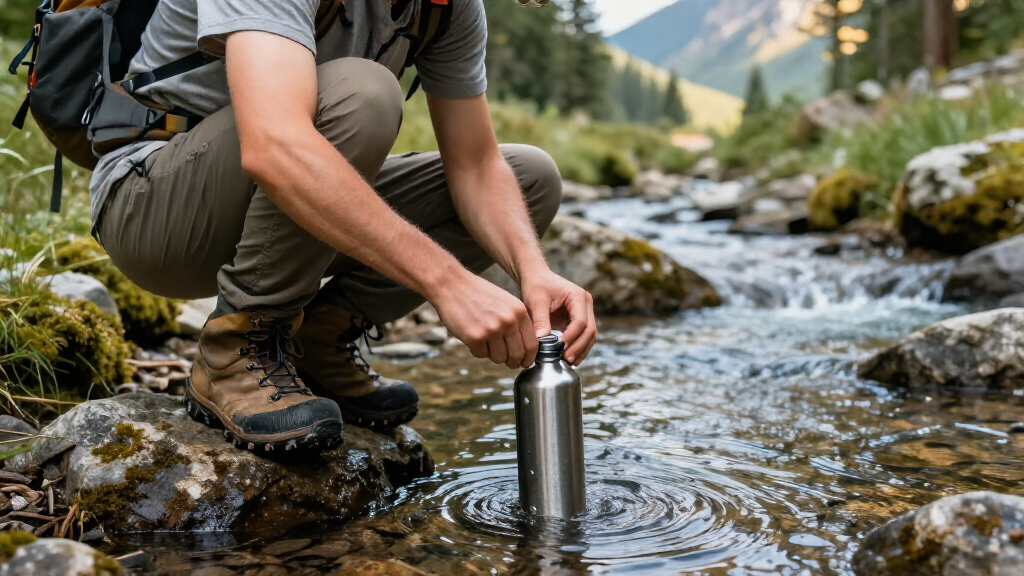
I compared these options as portable camping water filters, focusing on how each format fits actual trip routines: drinking directly from a source, filtering into a bottle or bladder, or preparing a larger supply at camp. I weighed portability, expected convenience, capacity and intended user count, power requirements, maintenance demands, and how much flexibility the design offers. I also treated filtration claims as product-specific rather than assuming that every filter addresses the same contaminants; buyers should check the manufacturer’s stated performance against their water sources.
The ranking favors systems that balance useful filtration with practical carrying and setup. Flexible squeeze and pump systems rank ahead of single-purpose straws for broad camping use, while compact drink-through models remain strong choices for light day hikes and backup kits. Gravity and electric designs can earn their place when their convenience or features match a buyer’s routine, but their added components and dependencies count against them for minimalists. The two Katadyn Pocket entries are the same named model, so I treat them as one distinct design rather than inventing a difference between duplicate listings.
Factors to Consider When Choosing Portable Camping Water Filters
Choosing a filter is less about finding one format that does everything and more about matching it to your water routine. I would start with the source, the number of people, and whether you need water only on the trail or also at camp; those choices matter more than a long feature list.
Match Filtration Claims to Your Water Source
Water that looks clear is not automatically safe, and a filter’s stated performance can vary by contaminant type. Before buying, check the manufacturer’s documentation for what the specific model is designed to reduce or remove, and compare that with local guidance for your destinations. A filter described for bacteria or protozoa should not be assumed to address viruses, dissolved chemicals, or salt. If your trip may involve questionable sources, consider whether treatment beyond filtration is needed for those conditions. One common mistake is choosing by micron number alone without checking the product’s full testing claims. I would also plan an alternative water-treatment method for trips where source quality is uncertain.
Choose a Flow Style That Fits Your Routine
Drink-through straws work well when you want to take water directly from a source, but they do not fill a bottle or supply a cooking pot by themselves. Squeeze filters give more control over transferring water into containers, while pump models draw from a source without requiring a compatible bag. Gravity systems can reduce hands-on work when you are settled at camp, although they need time to hang or rest and space for the reservoir. Think through where filtering will happen: on a trail break, beside a lake, or at a shared campsite. Buying a format that does not match that routine can make even a capable filter frustrating to use.
Size the System for the Group, Not Just the Pack
A solo hiker may value a low-bulk straw or bottle filter, while a group can benefit from a system that gathers water for several people. But a larger reservoir can add packing volume, and a personal filter may require repeated use or a separate clean-water container at camp. Estimate how much water your group needs for drinking and meal preparation, then consider whether the filter can deliver it without creating a long wait. Multipacks can distribute personal filters among several campers, but they do not necessarily make shared water handling easier. For family or base-camp use, prioritize collection and storage as well as filtration rate. For fast-moving trips, lighter personal systems may be the better compromise.
Account for Power, Spare Parts, and Failure Points
Manual filters avoid charging and battery planning, while electric models may offer useful powered operation or charging features. That convenience comes with added components that need to be packed, protected, and kept ready to operate. Check what the device needs for charging, whether its battery can be replenished during your trip, and what happens if power runs out. Manual pumps also have moving parts, and squeeze systems depend on compatible reservoirs or connections. A common planning error is bringing a powered purifier as the only water-treatment option without a backup. I would judge extra features by whether they solve a real trip problem, not by how many are listed.
Plan for Cleaning and Cold-Weather Care
Flow can slow as a filter collects material, so maintenance affects how convenient it remains over a trip. Read the maker’s cleaning and backflushing instructions before departure, and check whether the design needs a syringe, cap, or other accessory. Ceramic elements may require cleaning as specified by their maker, while soft reservoirs and tubing need careful drying and storage. Cold conditions deserve special attention: some filter elements can be damaged if they freeze after becoming wet, so follow the product’s temperature guidance. Do not assume that a filter is ready for long storage just because its exterior looks dry. A little maintenance planning can matter more than a small difference in packed weight.
Pay More for a Clear Trip-Specific Advantage
A more elaborate system makes sense when it reduces a recurring burden, such as pumping for a group or relying on a power feature you will use regularly. A premium pump can suit frequent trips where sturdy construction and a serviceable design matter more than the lightest carry. By contrast, occasional day hikers may get more value from a simple personal filter and a separate bottle. Compare the complete setup, including reservoir, tubing, adapters, and cleaning accessories, rather than judging the filter alone. Also confirm that replacement or service parts are available for the model you choose. Paying more is worthwhile when it buys a useful difference in your routine, not simply a longer feature list.
Frequently Asked Questions
Is a portable water filter enough for every backcountry water source?
No single filter should be assumed to cover every hazard. Product performance depends on the specific model and the contaminants it is designed to address, so check its documentation against the conditions where you plan to camp. A filter that handles certain microorganisms may not address viruses, chemicals, or salt. Local advisories can also affect what treatment is appropriate. If the source is uncertain, plan an additional treatment method or choose a different water source rather than relying on appearance alone.
Should I choose a filter straw or a squeeze system for camping?
A straw is a straightforward fit when you mainly need to drink directly from a source and want a personal backup. A squeeze system is more useful if you want to fill a bottle, bladder, or cooking container, though it depends on carrying a compatible reservoir and handling the transfer. For a day hike with reliable refill stops, a straw may be enough. For overnight trips, the ability to collect and store clean water can make a squeeze setup more practical. Choose based on how you plan to use water at camp, not only on trail weight.
Do I need a gravity filter if I camp with other people?
Not necessarily, but a gravity setup can reduce the repeated hands-on work of filtering water for a group at camp. It usually requires carrying a reservoir and giving the water time to pass through, so it may be less appealing for moving quickly or packing light. A pump or squeeze filter can also serve several people, though the person filtering may need to repeat the process more often. Estimate your group’s drinking and cooking needs before deciding. If everyone already carries an individual filter, a shared reservoir may add bulk without solving a problem.
Are electric camping water filters a good choice for remote trips?
They can be useful when powered operation or a charging feature fits your plans, but the added electronics create a power dependency that manual filters avoid. Check how the unit charges, how long it can operate on a charge, and whether you can keep it powered during the trip. Treat the stated filtration performance as model-specific, just as you would with a manual filter. For an extended trip without reliable charging, a manual backup is a sensible part of the plan. If convenience matters more than minimum complexity, an electric model may still suit your routine.
What should I check before storing a water filter between camping trips?
Follow the manufacturer’s instructions for cleaning, drying, and long-term storage, since procedures differ by filter type. Check whether the element must be protected from freezing after it becomes wet; cold damage may not be obvious from the outside. Dry reservoirs and tubing as directed, and inspect connections for wear before your next trip. Do not store a filter with moisture trapped inside unless its instructions specifically allow that. A pre-trip check also gives you time to replace worn parts or confirm that any pump, battery, or cleaning accessory is ready.
Conclusion
For a flexible one-filter setup, I would choose the Sawyer Squeeze with Cnoc 2-Liter Bladder as the best overall option because it supports both personal use and water transfer. The best value direction is a simple personal straw, especially the LifeStraw or a multipack when you need separate filters for several campers, though those options are less suited to shared camp water. For a premium, durable pump-style pick, the Katadyn Pocket is the standout; the Hiker models make more sense if you want a different pump format. Beginners who want a compact, direct drinking setup can start with the Katadyn BeFree 1L, while campers who prefer low-effort batch collection should look at the Waterdrop gravity system. Choose SEESE, ITEHIL, or Greeshow only if their powered features fit your charging plan, and check each model’s filtration claims against your likely sources before heading out.