Among these 4K trail cameras for wildlife, I’d choose the Bushnell CORE DS-4K as the best overall starting point for dependable, no-glow monitoring; the MAXDONE Solar Wi-Fi model stands out for rechargeable, phone-based access, while the Tactacam Reveal Ultra is the cellular pick for remote sites. The main tradeoffs are image detail versus battery life, no-glow discretion versus the limits of nighttime footage, and convenient connectivity versus added setup and service needs. A 4K label alone does not tell you how well a camera will capture fast, moving animals or how often you’ll need to visit it. I compare all 13 options by their intended use, power approach, monitoring style, and practical drawbacks. Read on for the full breakdown and guidance on choosing a camera for your wildlife site.

Get travel and outdoor gear delivered free with Prime
- Fast, free delivery on millions of items
- Prime Video, Amazon Music and more included
- Member-only deals all year
Complete the kit



Key Takeaways
- The lineup’s strongest split is monitoring style: Bushnell’s CORE DS-4K and CORE S-4K are non-cellular no-glow choices, while the Tactacam Reveal Ultra is the pick for sending images from a remote location.
- Solar and rechargeable options reduce dependence on frequent battery changes, but they suit sites where a panel can be positioned and maintained better than shaded or hard-to-reach locations.
- Multi-camera bundles favor broad coverage over individual camera refinement: WOSODA’s three-camera pack and WOSPORTS’ two-pack can cover more trails, while single units are easier to place and evaluate one site at a time.
- Some listed cameras are not actually 4K video models: the Browning Spec Ops Elite HP5 is listed at 1440p, so buyers prioritizing 4K should distinguish it from the 4K-labeled options.
- Several products share similar headline specs, including multiple MAXDONE solar Wi-Fi listings and two SPYPOINT FORCE 4K listings; buyers should compare the exact included accessories and model details rather than assuming separate listings mean different performance.
| Browning Spec Ops Elite HP5 Ultra Trail Camera, 46MP, 1440p |  | Best for On-Camera Wildlife Review | Photo resolution: 46MP | Video resolution: 1440p with sound | Trigger speed: Adjustable, 0.1–0.7 seconds | VIEW LATEST PRICE | See Our Full Breakdown |
| WOSPORTS 64MP 4K Non-Cellular Trail Camera with No-Glow Night Vision |  | Best Value for 4K Without a Network | Photo resolution: Up to 64MP | Video resolution: 4K (3840 × 2160) | Trigger speed: 0.2 seconds | VIEW LATEST PRICE | See Our Full Breakdown |
| Bushnell CORE DS-4K No-Glow Trail Camera |  | Best for Long-Range Night Coverage | Photo resolution: Up to 32MP | Video resolution and frame rate: 4K (2160p) at 30 fps | Trigger speed: 0.15 seconds | VIEW LATEST PRICE | See Our Full Breakdown |
| WOSPORTS Rechargeable Trail Camera, 2-Pack, 56MP 4K, Non-Cellular |  | Best Two-Camera Wildlife Setup | Pack size: Two cameras | Photo resolution: Up to 56MP | Video resolution: Up to 4K (3840 × 2160) | VIEW LATEST PRICE | See Our Full Breakdown |
| MAXDONE Solar Trail Camera with Wi-Fi and Bluetooth, 4K Video, 64MP Photos, Night Vision, 6000mAh Battery, and 32GB Card |  | Best for Solar-Assisted Phone Access | Photo resolution: 64MP | Video resolution and frame rate: 4K at 30 fps | Trigger speed: 0.1 seconds | VIEW LATEST PRICE | See Our Full Breakdown |
| Tactacam Reveal Ultra Cellular Trail Camera |  | Best for Remote Wildlife Monitoring | Photo resolution: 4K | Video resolution: 2.5K | Connectivity: 4G LTE and wireless | VIEW LATEST PRICE | See Our Full Breakdown |
| Browning Strike Force Pro DCL Nano 26MP Trail Camera with Dual Lens Technology and 4K Video |  | Best for Fast, Detailed Field Capture | Still image resolution: 26 MP | Video resolution: 4K (3840 x 2160) | Trigger speed: 0.15 seconds | VIEW LATEST PRICE | See Our Full Breakdown |
| Bushnell CORE S-4K No-Glow 4K Trail Camera |  | Best for No-Glow Night Monitoring | Image resolution: Up to 30MP | Video resolution: 4K | Trigger speed: 0.2 seconds | VIEW LATEST PRICE | See Our Full Breakdown |
| MAXDONE Solar Trail Camera with 4K Video, 64MP Photos, Wi-Fi, Bluetooth, and Night Vision |  | Best Solar Single-Camera Pick | Photo resolution: 64 MP | Video resolution: 4K | Night vision range: Up to 65 ft | VIEW LATEST PRICE | See Our Full Breakdown |
| MAXDONE 2-Pack Solar Trail Camera with 4K Video, Wi-Fi, Bluetooth, and Night Vision |  | Best for Covering Two Wildlife Zones | Pack size: 2 cameras | Photo resolution: 64 MP | Video resolution: 4K at 30 fps | VIEW LATEST PRICE | See Our Full Breakdown |
| WOSODA 3-Pack Trail Cameras, 48MP 4K, No-Glow Night Vision, 120° Wide Angle, IP66 Waterproof |  | Best Multi-Camera Coverage | Quantity: 3 cameras | Photo resolution: 48MP | Video resolution: 4K | VIEW LATEST PRICE | See Our Full Breakdown |
| SPYPOINT FORCE-4K Non-Cellular Trail Camera with 4K Video and 48MP Photos |  | Best for Long-Range Detection | Camera type: Non-cellular trail camera | Photo resolution: Up to 48MP | Video resolution: 4K with audio | VIEW LATEST PRICE | See Our Full Breakdown |
| SPYPOINT FORCE 4K Non-Cellular Trail Camera |  | Best for Simple, No-Plan Scouting | Photo resolution: 48MP | Video resolution: 4K with sound | Field of view: 66° | VIEW LATEST PRICE | See Our Full Breakdown |
| 4K trail cameras for wildlife | Trigger speed | Photo resolution | Video resolution | Storage |
|---|---|---|---|---|
| Browning Spec Ops Elite HP5 Ul | Adjustable, 0.1–0.7 seconds | 46MP | 1440p with sound | SDXC cards up to 512GB |
| WOSPORTS 64MP 4K Non-Cellular | 0.2 seconds | Up to 64MP | 4K (3840 × 2160) | 16GB card included; supports up to 256GB |
| Bushnell CORE DS-4K No-Glow Tr | 0.15 seconds | Up to 32MP | — | User-supplied SD card, up to 512GB |
| WOSPORTS Rechargeable Trail Ca | 0.2 seconds | Up to 56MP | Up to 4K (3840 × 2160) | 8GB installed SD card; supports up to 256GB |
| MAXDONE Solar Trail Camera wit | 0.1 seconds | 64MP | — | 32GB microSD card included; supports up to 256GB |
| Tactacam Reveal Ultra Cellular | Under 0.5 seconds | 4K | 2.5K | 16GB internal; SD card slot for expansion |
| Browning Strike Force Pro DCL | 0.15 seconds | — | 4K (3840 x 2160) | — |
| Bushnell CORE S-4K No-Glow 4K | 0.2 seconds | — | 4K | — |
| MAXDONE Solar Trail Camera wit | 0.1 seconds | 64 MP | 4K | — |
| MAXDONE 2-Pack Solar Trail Cam | — | 64 MP | 4K at 30 fps | — |
| WOSODA 3-Pack Trail Cameras | 0.2 seconds | 48MP | 4K | — |
| SPYPOINT FORCE-4K Non-Cellular | 0.4 seconds | Up to 48MP | 4K with audio | SD card, not included |
| SPYPOINT FORCE 4K Non-Cellular | 0.4 seconds | 48MP | 4K with sound | SD card included |
More Details on Our Top Picks
Browning Spec Ops Elite HP5 Ultra Trail Camera, 46MP, 1440p
I’d choose the Browning Spec Ops Elite HP5 Ultra when checking footage at the camera matters more than recording in 4K. Its 2-inch color screen makes setup and field previews easier without taking the SD card to another device, while the adjustable 0.1–0.7-second trigger lets you tune response to the site. Invisible infrared illumination reaches up to 100 feet, a longer stated range than the WOSPORTS 64MP 4K camera’s 80 feet. The tradeoff is video: this Browning records 1440p with sound, not 4K, so it falls short of this roundup’s clearest match for 4K footage. I’d also plan for eight AA batteries and a separate SDXC card. It suits wildlife observers who value discreet night coverage and convenient field checks over maximum video resolution.
Pros:- Adjustable trigger speed from 0.1 to 0.7 seconds
- Invisible infrared illumination rated up to 100 feet
- 2-inch color screen supports setup and field previews
- Accepts SDXC cards up to 512GB and several AA battery types
Cons:- Records 1440p video rather than 4K
- Requires eight AA batteries, which are not included in the supplied product details
- SDXC memory card is needed for recording
Best for: Wildlife observers who regularly adjust camera placement in the field and want an onboard screen plus long-range invisible infrared.
Not ideal for: Buyers who require 4K video, want to avoid buying and carrying AA batteries, or need storage included.
- Photo resolution:46MP
- Video resolution:1440p with sound
- Trigger speed:Adjustable, 0.1–0.7 seconds
- Night illumination:Invisible infrared up to 100 feet
- Display:2-inch color screen
- Storage:SDXC cards up to 512GB
- Power:Eight AA batteries; alkaline, rechargeable, or lithium
- Connectivity:Wireless
Our verdict“Choose this Browning for field previews and up-to-100-foot invisible IR, but skip it if 4K video is a firm requirement.”
WOSPORTS 64MP 4K Non-Cellular Trail Camera with No-Glow Night Vision
The WOSPORTS 64MP 4K is a straightforward pick for wildlife watchers who want high-resolution recording without cellular service or app dependence. Its 4K video, adjustable photos up to 64MP, and 0.2-second trigger cover the core job of capturing passing animals; the 120-degree detection angle also gives it a broad monitoring area. Compared with the Bushnell CORE DS-4K, it offers a wider stated detection angle and a larger screen, while the Bushnell lists a longer 120-foot night-vision range versus this camera’s 80 feet. A 16GB card is included, but batteries and optional power accessories are not. Its no-glow IR is useful for discreet observation, though the camera remains local-storage only: there’s no Wi-Fi or cellular connection for remote checks.
Pros:- Records 4K video and adjustable-resolution photos up to 64MP
- 0.2-second trigger and 120-degree motion-detection angle
- No-glow infrared night vision rated up to 80 feet
- Includes a 16GB card and supports storage up to 256GB
Cons:- No cellular, Wi-Fi, or app connectivity for remote viewing
- Batteries and optional rechargeable or solar power accessories are sold separately
Best for: Landowners and wildlife hobbyists who want 4K recording, broad motion coverage, and included starter storage without remote connectivity.
Not ideal for: Buyers who need to check clips remotely or want a longer stated night-vision range than 80 feet.
- Photo resolution:Up to 64MP
- Video resolution:4K (3840 × 2160)
- Trigger speed:0.2 seconds
- Detection angle:120 degrees
- Night vision:No-glow infrared, up to 80 feet
- Display:2-inch color LCD
- Storage:16GB card included; supports up to 256GB
- Power options:Eight AA batteries, compatible rechargeable lithium battery, or compatible solar panel
- Connectivity:Non-cellular and non-Wi-Fi
Our verdict“Pick this WOSPORTS model for local 4K wildlife recording and a wide detection angle, not for remote monitoring.”
Bushnell CORE DS-4K No-Glow Trail Camera
For wildlife activity that continues after dark, I’d favor the Bushnell CORE DS-4K for its stated 120-foot no-glow night-vision range and separate sensors optimized for day and night images. It records 4K at 30 fps, while its 0.15-second trigger is faster on paper than the 0.2-second response of both WOSPORTS cameras in this batch. That combination makes it a stronger fit for a distant trail or feeding area than the WOSPORTS 64MP model, whose listed night range is 80 feet. The tradeoffs are a smaller 1.5-inch screen and a lower maximum still resolution of 32MP. It also needs a user-supplied SD card. Choose it for night reach and day/night imaging priorities, not the biggest screen or highest photo count.
Pros:- No-glow night vision rated up to 120 feet
- Separate sensors optimized for daytime and nighttime images
- Records 4K video at 30 fps
- 0.15-second trigger speed and several mounting options
Cons:- 1.5-inch screen is smaller than the 2-inch displays on the WOSPORTS options
- SD card is not included
- Maximum listed photo resolution is 32MP
Best for: Wildlife watchers monitoring a distant trail or open feeding area who prioritize no-glow night coverage and 4K footage.
Not ideal for: Buyers who want a large setup screen, higher-than-32MP still images, or an included SD card.
- Photo resolution:Up to 32MP
- Video resolution and frame rate:4K (2160p) at 30 fps
- Trigger speed:0.15 seconds
- Night vision:No-glow, up to 120 feet
- Viewing angle:110 degrees
- Screen:1.5 inches
- Weather resistance:IP54
- Storage:User-supplied SD card, up to 512GB
- Mounting:Web belt, tripod socket, or security cable
Our verdict“Choose the Bushnell for long-range no-glow night coverage and fast triggering, provided its smaller screen and 32MP photo ceiling suit your needs.”
WOSPORTS Rechargeable Trail Camera, 2-Pack, 56MP 4K, Non-Cellular
This two-camera WOSPORTS set is aimed at buyers who want to watch more than one trail, crossing, or habitat edge without relying on a network. Each camera records up to 4K video and 56MP photos, with a 0.2-second trigger and 120-degree detection angle. Having two units changes the practical value: compared with the single WOSPORTS 64MP 4K camera, you can cover separate locations, though this set lists a slightly lower photo ceiling and the same 80-foot night-vision range. The included rechargeable batteries and SD cards also reduce the separate setup purchases required by that single-camera option. Its IP66-rated housing suits exposed outdoor placements, but the cameras remain local-storage only. Charging requires removing the battery; the Type-C port is for data transfer, not charging.
Pros:- Two cameras support monitoring separate wildlife locations
- Up to 4K video and 56MP photos
- Rechargeable lithium batteries and SD cards are included
- IP66-rated housing with 0.2-second trigger and 120-degree detection
Cons:- No cellular, Wi-Fi, or app connectivity
- Battery must be removed for charging; the Type-C port is for data transfer only
- 80-foot night-vision range is shorter than the Bushnell CORE DS-4K’s stated 120 feet
Best for: Wildlife observers who need simultaneous coverage at two locations and prefer rechargeable power with local SD-card recording.
Not ideal for: Buyers who need cellular or app access, want the simplest charging routine, or only need one camera.
- Pack size:Two cameras
- Photo resolution:Up to 56MP
- Video resolution:Up to 4K (3840 × 2160)
- Trigger speed:0.2 seconds
- Detection angle:120 degrees
- Night vision range:Up to 80 feet
- Power:Rechargeable lithium battery
- Storage:8GB installed SD card; supports up to 256GB
- Weather protection:IP66-rated housing
Our verdict“Pick this two-pack to cover two wildlife sites with included rechargeable power, but choose another option if you need remote access or convenient in-camera charging.”
MAXDONE Solar Trail Camera with Wi-Fi and Bluetooth, 4K Video, 64MP Photos, Night Vision, 6000mAh Battery, and 32GB Card
The MAXDONE Solar Trail Camera suits wildlife watchers who want to retrieve clips by phone nearby and reduce battery changes. Its solar charging and 6000mAh rechargeable battery give it a different power approach from the AA-powered Browning Spec Ops Elite HP5 Ultra, while built-in Wi-Fi and Bluetooth connect a phone to the camera’s own hotspot for previews and downloads. It records 4K at 30 fps, with 64MP photos, a 0.1-second trigger, and a wide 130-degree detection angle. That trigger is quicker on paper than the Bushnell CORE DS-4K’s 0.15 seconds, but its stated night-vision range is only 65 feet, well short of the Bushnell’s 120. The phone connection is local, not home Wi-Fi or cellular, and initial pairing requires very close phone placement.
Pros:- Solar charging paired with a 6000mAh rechargeable battery
- Records 4K at 30 fps and captures photos up to 64MP
- 0.1-second trigger and 130-degree detection angle
- Includes a 32GB microSD card and supports up to 256GB
Cons:- Phone connection uses the camera’s own hotspot and does not support home Wi-Fi or cellular service
- Initial phone pairing requires the phone to be within 0.5 feet of the camera
- 65-foot night-vision range is shorter than the Bushnell CORE DS-4K’s stated 120 feet
Best for: Wildlife watchers placing a camera near a reachable trail who want solar-assisted power and phone-based clip retrieval without removing the card.
Not ideal for: Buyers monitoring remote sites beyond the 55-foot connection range, needing cellular uploads, or prioritizing long-range night vision.
- Photo resolution:64MP
- Video resolution and frame rate:4K at 30 fps
- Trigger speed:0.1 seconds
- Detection angle:130 degrees
- Night vision range:Up to 65 feet
- Battery and charging:6000mAh rechargeable battery with solar charging
- Connectivity:Wi-Fi 6 and Bluetooth; camera hotspot connection up to 55 feet
- Storage:32GB microSD card included; supports up to 256GB
- Weather protection:IP66-rated housing
Our verdict“Choose the MAXDONE for solar-assisted power and nearby phone downloads, not for remote cellular access or long-range night coverage.”
Tactacam Reveal Ultra Cellular Trail Camera
The Tactacam Reveal Ultra is the clearest fit here when checking the camera remotely matters more than avoiding a data plan. Its 4K stills, live viewing, and photo requests let you check activity without retrieving the card, unlike the Bushnell CORE S-4K, which relies on local storage and onsite access. A trigger speed under 0.5 seconds and burst mode of up to nine shots help capture quick animal movement, while switchable low-glow and no-glow infrared lets you choose between a longer stated range and a less visible flash. GPS movement alerts add protection for cameras placed far from home. The tradeoff is ongoing cellular service, and its 2.5K video falls short of the 4K video offered by several non-cellular picks. I would skip it if you want a simple camera with no service plan.
Pros:- Live viewing and photo requests allow remote checks of field activity.
- GPS alerts can notify you if the camera moves more than a half-mile from its last known location.
- Switchable low-glow and no-glow infrared accommodates different nighttime monitoring needs.
- 16GB internal storage, an SD card slot, and a built-in LCD provide flexible local access.
Cons:- Cellular features require a data plan.
- Video resolution is 2.5K, below the 4K video offered by the Browning Strike Force Pro DCL Nano and other picks.
- Long deployments may call for compatible optional power accessories.
Best for: Wildlife watchers who place cameras on remote properties and want live viewing, photo requests, and movement alerts without visiting the site.
Not ideal for: Buyers avoiding recurring cellular service or those who require 4K video rather than 4K still photos and 2.5K video.
- Photo resolution:4K
- Video resolution:2.5K
- Connectivity:4G LTE and wireless
- Trigger speed:Under 0.5 seconds
- Infrared flash:Switchable low-glow (96 ft) and no-glow (80 ft)
- Storage:16GB internal; SD card slot for expansion
- Display:2-inch LCD
- Weight:2.2 pounds
Our verdict“Choose the Reveal Ultra if remote access and camera-location alerts matter more to you than avoiding a data plan or getting 4K video.”
Browning Strike Force Pro DCL Nano 26MP Trail Camera with Dual Lens Technology and 4K Video
The Browning Strike Force Pro DCL Nano is aimed at wildlife observers who value quick local capture over app access. Its 0.15-second trigger is the fastest listed among these five cameras, giving it an advantage when deer or other animals cross the detection area briefly. Dual-lens technology is designed to handle daytime and low-light nighttime imaging, and the 130-foot RADIANT 6 infrared range exceeds the Bushnell CORE S-4K’s stated 110-foot night range. It also records 4K video with sound, which can preserve more context than a still image alone. Unlike the cellular Tactacam Reveal Ultra, however, this model has no listed remote viewing; USB is its only listed connection. Its compact body is convenient to mount, but six AA batteries mean regular power checks are part of field use.
Pros:- 0.15-second trigger speed helps capture animals that pass quickly through the detection zone.
- Dual-lens technology supports daytime and low-light nighttime imaging.
- Records 4K video with sound for more context around wildlife activity.
- RADIANT 6 infrared illumination is rated for up to 130 feet.
Cons:- USB is the only listed connectivity option, so footage requires local access.
- Requires six AA batteries.
- Its 26MP still resolution is lower than the Bushnell CORE S-4K’s stated maximum of 30MP and the MAXDONE cameras’ 64MP claims.
Best for: Wildlife observers who want fast-triggering 4K video with sound and plan to retrieve footage directly from a compact, tree-mounted camera.
Not ideal for: Buyers who need cellular alerts, remote photo access, or a camera that operates without replaceable AA batteries.
- Still image resolution:26 MP
- Video resolution:4K (3840 x 2160)
- Trigger speed:0.15 seconds
- Detection range:100 feet
- Infrared flash range:Up to 130 feet
- Power source:6 AA batteries
- Screen:3 inches
- Dimensions:3.25 x 2.5 x 4.25 inches
Our verdict“Pick the Browning for quick, locally stored wildlife footage with sound, but choose the Tactacam if remote checks are a priority.”
Bushnell CORE S-4K No-Glow 4K Trail Camera
The Bushnell CORE S-4K makes sense for wildlife monitoring where a visible flash could disturb animals. Its no-glow infrared is paired with a stated 110-foot night range, giving it a longer listed reach than the MAXDONE cameras’ 65-foot night vision. The 0.2-second trigger and one-second recovery rate also suit locations where animals may pass in quick succession. Compared with the Browning Strike Force Pro DCL Nano, Bushnell offers a higher stated maximum still resolution—up to 30MP—but Browning has the faster trigger and a longer stated infrared range. The Bushnell’s color viewscreen makes setup easier in the field, while IP54 protection is a more limited rating than the IP66 MAXDONE models. It is a straightforward local-recording choice, not a remote-monitoring camera, and batteries and an SD card are separate purchases.
Pros:- No-glow infrared is designed for discreet nighttime monitoring.
- 110-foot night range and 0.2-second trigger support coverage of active wildlife routes.
- Captures 4K video and still images up to 30MP.
- Color viewscreen helps with camera setup and field checks.
Cons:- Six AA lithium batteries and an SD card are sold separately.
- IP54 protection is below the IP66 rating listed for both MAXDONE cameras.
- No wireless or cellular access is listed, so checking footage requires visiting the camera.
Best for: Wildlife photographers monitoring cautious or nocturnal animals who want no-glow illumination, a field viewscreen, and local image storage.
Not ideal for: Buyers seeking remote access, included storage, solar power, or the higher weather-protection rating listed for the MAXDONE cameras.
- Image resolution:Up to 30MP
- Video resolution:4K
- Trigger speed:0.2 seconds
- Recovery rate:1 second
- Night range:110 feet
- Flash type:No-glow infrared
- Maximum SD card capacity:512GB
- Water resistance:IP54
Our verdict“Choose the CORE S-4K for discreet local monitoring of wary wildlife, but look to a MAXDONE model if solar power or IP66 protection matters more.”
MAXDONE Solar Trail Camera with 4K Video, 64MP Photos, Wi-Fi, Bluetooth, and Night Vision
For a single-camera setup where battery maintenance is a concern, the MAXDONE Solar Trail Camera combines an adjustable solar panel with a 6000mAh rechargeable battery, USB-C charging, and a pre-installed 32GB card. That self-contained power and storage package contrasts with the Bushnell CORE S-4K, which lists separately purchased batteries and SD storage. MAXDONE also claims 64MP photos and 4K video, with a 0.1-second trigger that is quicker on paper than the Browning Strike Force Pro DCL Nano’s 0.15-second response. Its limits are about access, not capture: Wi-Fi and Bluetooth connect to a phone nearby, but the camera does not use home Wi-Fi or cellular networks and sends no real-time alerts. The 65-foot night range is also shorter than Bushnell’s 110 feet, so I would favor MAXDONE for easier power upkeep over longer-range night coverage.
Pros:- Adjustable solar panel, 6000mAh battery, and USB-C provide several charging options.
- Includes a 32GB SD card, reducing setup steps compared with the Bushnell CORE S-4K.
- Listed 0.1-second trigger speed is the quickest among these five products.
- IP66 weather protection suits outdoor placement in rainy or humid conditions.
Cons:- Does not support home Wi-Fi, cellular networks, remote access, or real-time motion alerts.
- Phone connection depends on short-range camera-created Wi-Fi, with an open-area range of about 33–50 feet.
- Night vision is rated for up to 65 feet, shorter than the Bushnell CORE S-4K’s 110-foot night range.
Best for: Property owners who want one solar-assisted camera with included storage and are willing to retrieve files from nearby using the app.
Not ideal for: Wildlife watchers who need remote access or motion alerts, or who need a longer stated night range than 65 feet.
- Photo resolution:64 MP
- Video resolution:4K
- Night vision range:Up to 65 ft
- Trigger speed:0.1 seconds
- Battery capacity:6000 mAh
- Charging methods:Solar, USB-C, and rechargeable battery
- Included storage:32GB SD card
- Water resistance:IP66
Our verdict“Choose this MAXDONE for solar-assisted power and included storage at one nearby-access site, not for remote monitoring or long-range night coverage.”
MAXDONE 2-Pack Solar Trail Camera with 4K Video, Wi-Fi, Bluetooth, and Night Vision
The MAXDONE 2-Pack is the practical pick when one camera cannot cover every trail, feeding area, or water source. Two units let you monitor separate locations, while each camera records 4K video at 30 fps and uses a 100-degree lens to cover a broad scene. The included rechargeable batteries, adjustable solar panels, and 32GB cards make deployment more self-contained than the Bushnell CORE S-4K, which requires separately purchased batteries and storage. Like the single-camera MAXDONE, though, its app connection works only nearby—up to about 55 feet in open areas—and it does not provide home Wi-Fi or remote access. Its 65-foot low-glow night range is shorter than Bushnell’s listed 110 feet, and the wide view may trade tight framing for broader coverage. I’d choose this pair for spread-out monitoring, not unattended remote checks.
Pros:- Two cameras can cover separate trails or habitat areas at once.
- 4K video at 30 fps and a 100-degree field of view capture broad scenes.
- Rechargeable batteries and adjustable solar panels support extended outdoor placement.
- Each camera includes a 32GB SD card and IP66-rated weather protection.
Cons:- App access is limited to about 55 feet in open areas.
- No home Wi-Fi support or remote access is available.
- Low-glow night vision reaches up to 65 feet, shorter than the Bushnell CORE S-4K’s stated 110-foot night range.
Best for: Landowners who want to monitor two nearby or separate wildlife zones and can visit each camera to retrieve footage.
Not ideal for: Buyers who need cellular access, real-time remote checks, or long-distance night coverage at a single camera site.
- Pack size:2 cameras
- Photo resolution:64 MP
- Video resolution:4K at 30 fps
- Lens field of view:100°
- Night vision range:65 feet
- App connection range:Up to 55 feet in open areas
- Included storage:32GB SD card
- Weather protection:IP66
Our verdict“Choose the two-camera MAXDONE when broad coverage across two sites matters more than remote access or longer-range night vision.”
WOSODA 3-Pack Trail Cameras, 48MP 4K, No-Glow Night Vision, 120° Wide Angle, IP66 Waterproof
The WOSODA 3-pack is the clearest choice here for monitoring several trails, feeding areas, or property boundaries at once. Each unit records 4K video and 48MP stills, while the 120° detection angle covers more of the approach than the SPYPOINT FORCE-4K’s 66° field of view. Its 0.2-second trigger is also quicker than either SPYPOINT’s listed 0.4-second trigger, which can help with fast-moving wildlife crossing the frame. The 940nm no-glow infrared is suited to discreet nighttime observation, and the set arrives with batteries, memory cards, and a card reader. The tradeoff is ongoing upkeep: three cameras each need four AA batteries, and the included cards are only 16GB apiece. Choose this for coverage breadth, not the simplest long-term maintenance.
Pros:- Three cameras make it practical to monitor multiple locations simultaneously.
- 120° detection angle provides broader coverage than the SPYPOINT FORCE-4K’s 66° field of view.
- 0.2-second trigger is faster than the listed 0.4-second SPYPOINT models.
- Includes batteries, three 16GB SD cards, and a card reader.
Cons:- Four AA batteries per camera mean maintaining the full set requires 12 batteries.
- Included 16GB cards may fill quickly when recording 4K video.
- A three-camera setup requires more installation and retrieval work than a single-camera option.
Best for: Wildlife watchers who want to monitor three separate locations and prefer a wide detection zone with discreet nighttime capture.
Not ideal for: People seeking one compact, low-maintenance camera or extended recording between card changes; each camera needs four AA batteries and comes with a 16GB card.
- Quantity:3 cameras
- Photo resolution:48MP
- Video resolution:4K
- Night vision:940nm infrared
- Trigger speed:0.2 seconds
- Detection angle and range:120°; 80 ft
- Display:2-inch color LCD
- Power:4 AA batteries per camera
- Included storage:Three 16GB SD cards
Our verdict“Choose the WOSODA set if your priority is covering three wildlife locations with wide, discreet detection and you can manage the extra battery and card upkeep.”
SPYPOINT FORCE-4K Non-Cellular Trail Camera with 4K Video and 48MP Photos
The SPYPOINT FORCE-4K favors detection distance over a broad view: its motion sensor reaches up to 110 feet, while its 66° field of view is much narrower than the WOSODA 3-Pack’s 120° detection angle. That makes it a better fit for a defined trail or approach than a wide clearing where animals can enter from several directions. It records 4K video with audio and up to 48MP photos, with a 0.4-second trigger and a 2-inch screen for setup and playback at the camera. Burst and time-lapse modes add options for tracking activity patterns. Unlike the WOSODA bundle, this is a single camera and the SD card is not included. It also has no cellular connection, so footage stays on the card until you retrieve it.
Pros:- Motion detection reaches up to 110 feet, farther than the listed 80-foot range of the WOSODA 3-Pack.
- Records 4K video with audio and captures photos up to 48MP.
- 2-inch color LCD supports setup and review at the camera.
- Includes 5-photo burst, time-lapse, and Time-Lapse+ modes.
Cons:- The 66° field of view covers less width than the WOSODA 3-Pack’s 120° detection angle.
- SD card is not included, so recording requires a separate storage purchase.
- Non-cellular operation means footage cannot be checked remotely.
Best for: Wildlife observers monitoring a long, narrow trail who want on-camera playback, audio in video, and extended motion-detection reach.
Not ideal for: Buyers needing wide-angle coverage, multiple camera placements, or remote image delivery; this model has a 66° view, is sold as a single camera, and is non-cellular.
- Camera type:Non-cellular trail camera
- Photo resolution:Up to 48MP
- Video resolution:4K with audio
- Field of view:66°
- Motion detection range:Up to 110 ft
- Trigger speed:0.4 seconds
- Display:2-inch color LCD
- Storage:SD card, not included
- Capture modes:5-photo burst, time-lapse, Time-Lapse+
Our verdict“Pick this SPYPOINT for a long, focused trail where detection distance and on-camera review matter more than wide coverage or remote access.”
SPYPOINT FORCE 4K Non-Cellular Trail Camera
The SPYPOINT FORCE 4K suits wildlife watchers who want a straightforward, non-cellular setup and do not want to manage a SIM card or data plan. It records 4K video with sound and 48MP photos, with time-lapse and multishot modes for observing activity beyond motion-triggered clips. Its 66° field of view and 110-foot detection range match the other SPYPOINT FORCE-4K listing, so both are better aimed down a defined route than across a broad feeding area; the WOSODA 3-Pack offers a much wider 120° detection angle and three placements. This listing specifies an included SD card, a useful distinction from the other SPYPOINT listing, which says storage is not included. You still need to retrieve the card physically, and battery-powered operation calls for periodic visits.
Pros:- Includes an SD card, unlike the separately listed SPYPOINT FORCE-4K version.
- Captures 48MP photos and 4K video with sound.
- 110-foot detection range is suited to monitoring a defined approach.
- Offers photo, video, time-lapse, Time-Lapse+, and multishot modes.
Cons:- Non-cellular design requires physical retrieval of the SD card to view footage.
- The 66° field of view is narrower than the WOSODA 3-Pack’s 120° detection angle.
- Battery-powered operation requires maintenance visits, especially at remote placements.
Best for: Scouts and wildlife observers who want a single camera with an included SD card, onboard review, and no cellular plan.
Not ideal for: People who need remote footage access, broad-area coverage, or minimal trips to a remote camera; it has a 66° view and requires card retrieval and battery upkeep.
- Photo resolution:48MP
- Video resolution:4K with sound
- Field of view:66°
- Detection range:110 ft
- Trigger speed:0.4 seconds
- Display:2-inch LCD
- Connectivity:Non-cellular; no SIM or Wi-Fi
- Storage:SD card included
- Capture modes:Photo, video, time-lapse, Time-Lapse+, multishot
Our verdict“Choose this SPYPOINT if you want a single no-plan camera with an included SD card and are comfortable retrieving footage and maintaining batteries.”
How We Picked
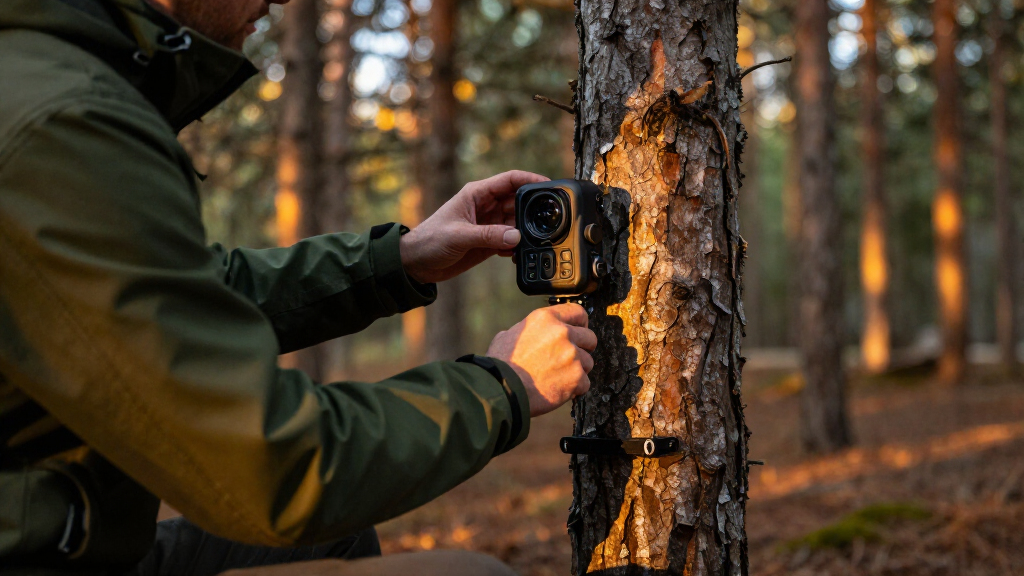
I ranked these cameras around the needs of wildlife monitoring: whether the listed video resolution matches a 4K request, how each camera handles discreet nighttime capture, and how its power and connectivity choices affect upkeep. I also weighed setup burden, the usefulness of a single camera versus a multi-camera bundle, and whether a product’s stated features suit remote observation or routine visits. A high megapixel number alone did not earn a higher position, since still-photo resolution does not establish video quality or reliable animal capture.
The order favors versatile options that fit common wildlife uses, then models with a clearer advantage for a particular setup, such as solar-assisted power, cellular access, or multi-site coverage. I treated similarly named listings cautiously: the two MAXDONE solar cameras and two SPYPOINT FORCE 4K entries may have overlapping capabilities, so their exact bundle contents and model specifications should be checked before purchase. The Browning Spec Ops Elite HP5 is included for comparison, but its listed 1440p video makes it a weaker match for buyers who require 4K.
Factors to Consider When Choosing 4K Trail Cameras For Wildlife
I’d choose a wildlife camera by matching it to the site and the job, not by sorting the box claims from largest to smallest. These factors help separate useful field performance from specifications that may not change what you learn about animal activity.
Check What “4K” Actually Describes
Confirm whether 4K refers to recorded video, still photos, or both; megapixel counts and video resolution are different measures. A camera marketed with a large photo megapixel figure may still record at a lower video resolution, as the listed 1440p Browning Spec Ops Elite HP5 illustrates. Also check whether 4K recording is available at the frame rate and capture settings you expect, since fast wildlife can be harder to interpret in choppy footage. Higher-resolution clips can take more storage space and may be slower to review or transfer. If you mainly need to identify a passing animal, reliable trigger response and usable framing can matter more than the largest number on the package.
Match Night Vision to Animal Behavior
No-glow infrared is useful when minimizing visible illumination matters, but the label does not promise a clear nighttime image at every distance. Placement, vegetation, animal speed, and the camera’s illumination range all affect what the footage shows. A wide detection angle can cover more of a clearing, yet it may also record more empty space or trigger on movement beyond the trail. Narrower coverage can be a better fit for a known crossing where you want animals framed consistently. Before choosing, decide whether your priority is discreet observation, broad coverage, or close identification.
Plan Power Around the Site, Not the Spec Sheet
Solar-assisted cameras can reduce routine battery changes, but they need a useful panel position and enough access for occasional checks. Dense canopy, winter conditions, and a camera mounted facing an unsuitable direction can limit the benefit. Rechargeable models may be convenient when you can collect the camera and recharge it, while replaceable batteries can be easier to swap at a remote site. Video length, trigger frequency, and wireless use all affect how quickly power is consumed. Estimate how often animals cross the site before deciding whether low-maintenance power is more valuable than a simpler camera setup.
Choose Connectivity for How Often You Can Visit
A non-cellular camera stores images locally and avoids the need for a cellular connection, making it a practical choice where you can visit the camera or retrieve its card. Wi-Fi and Bluetooth models can simplify nearby transfers, but those features generally help when you are close enough to connect. Cellular cameras such as the Tactacam Reveal Ultra suit locations where you want remote updates, though they add dependence on network coverage and a compatible service arrangement. Check signal quality at the actual mounting spot, not just at the nearest road or house. Remote access is most useful when it saves a difficult trip or lets you react to activity promptly.
Use Bundles Only When You Need More Than One View
Two- and three-camera packs can cover separate trails, entrances, or habitat zones, helping you compare activity across a property. They are less compelling if you have only one suitable mounting point or are still learning how angle and height affect capture. Multiple cameras also mean more cards, batteries, mounts, and files to manage, even when a bundle reduces the number of separate purchases. A single camera lets you learn one location before expanding coverage. Start with the smallest setup that answers your wildlife question, then add cameras where the first one leaves a genuine blind spot.
Prioritize Placement and Weather Protection
Even a feature-rich camera can miss wildlife if it points across a trail rather than along a likely approach or is mounted where branches trigger it repeatedly. Look for a stable mounting point, a clear view, and a height suited to the animals you want to observe. Waterproof ratings such as IP66, listed for the WOSODA three-pack, can help buyers compare protection claims, but seals and mounting still need attention in exposed locations. Avoid aiming directly into strong sunlight if it washes out the scene, and test the framing before leaving a camera unattended. Good placement often improves useful evidence more than adding another headline specification.
Frequently Asked Questions
Is the Browning Spec Ops Elite HP5 a good choice if I specifically need 4K video?
It is not the clearest match for that requirement: the supplied listing identifies the Spec Ops Elite HP5 as a 1440p camera. That may still be suitable if you value the rest of its feature set and do not need 4K footage, but the resolution claim should not be treated as equivalent to 4K. Compare it with the Bushnell CORE 4K models or the SPYPOINT FORCE-4K if recorded 4K video is non-negotiable. Check the manufacturer’s current specification sheet before buying, since product names and listings can be inconsistent.
Should I choose a solar Wi-Fi camera or a cellular trail camera for a remote wildlife site?
Choose based on how you need to retrieve images. The MAXDONE solar Wi-Fi models pair a solar-oriented power setup with nearby phone access, while the Tactacam Reveal Ultra is the more relevant option when remote cellular delivery is the goal. Wi-Fi does not mean you can check images from anywhere, and cellular access depends on coverage and service requirements. If you visit the property regularly and can retrieve a card, a non-cellular camera may be simpler. Check signal at the exact location before relying on any wireless feature.
Are multi-camera bundles better for monitoring wildlife than buying one camera?
A bundle is useful when you have several distinct sites to monitor, such as multiple trail crossings or separated feeding areas. WOSODA’s three-pack and WOSPORTS’ two-pack are designed for broader coverage, but each additional unit adds placement, power, storage, and file-management work. If you have not yet identified the best camera position, one unit lets you learn the site before committing to a larger setup. A second camera can then answer a specific question, such as whether animals use another route. More cameras help only when they provide views you could not get from one well-placed unit.
Do high megapixel numbers mean I will get better wildlife footage?
No. A megapixel figure usually describes still-photo output, while video resolution and recording behavior determine the detail in moving footage. This roundup includes products that advertise large photo counts alongside 4K video, but those numbers alone do not tell you how well a fast animal will be captured. Trigger timing, field of view, nighttime illumination, and camera placement also shape the usable result. If you mostly review clips, prioritize verified video specifications and the camera’s fit for the site over still-image megapixels.
How should I choose between the two Bushnell CORE 4K models and the SPYPOINT FORCE 4K?
Start by comparing the exact model number and current manufacturer specifications, since the supplied product names do not provide enough detail to establish a clear performance difference between these listings. The Bushnell CORE DS-4K and CORE S-4K are both presented as no-glow 4K options, making them relevant for discreet local monitoring. The SPYPOINT FORCE-4K is another non-cellular 4K choice, with a second similarly named listing that may overlap. Check included accessories, configuration, and any differences in capture settings before choosing. If those details match your needs, prioritize the camera that best fits your mounting site and image-retrieval routine.
Conclusion
For a versatile no-glow camera to start with, I’d choose the Bushnell CORE DS-4K as the best overall fit in this roundup. The WOSPORTS 64MP 4K is a best-value-style choice for buyers who want a straightforward non-cellular camera, while the Tactacam Reveal Ultra is the premium-style pick for remote monitoring where cellular access is available. Beginners may prefer a single non-cellular unit, such as the Bushnell CORE S-4K, over a multi-camera bundle because it is easier to place and manage. For broader coverage, consider the WOSODA three-pack; for solar-assisted power and nearby phone access, compare the MAXDONE solar Wi-Fi models. If 4K video is a strict requirement, verify each listing’s current specifications and skip the Browning Spec Ops Elite HP5 unless its listed 1440p resolution meets your needs.