
If you’re considering Africa as a digital nomad destination, you’ll find a variety of visa options, affordable living costs, and vibrant environments from cities to beaches. Countries like South Africa, Mauritius, and Cape Verde offer streamlined visas, reliable internet, and diverse cultural experiences. Understanding local tax laws and securing proper documents are key to smoother stays. Want to explore more about how to make Africa your next remote work hub? Keep exploring for detailed insights.
Key Takeaways
- Africa offers diverse digital nomad visas with varying requirements, processing times, and durations across countries like South Africa, Mauritius, and Cape Verde.
- Financial proof, stable internet, and health insurance are essential for visa approval and a smooth remote work experience.
- Cost of living is generally affordable, with modern infrastructure and reliable internet in urban areas and popular islands.
- Cultural and outdoor activities enrich the nomad lifestyle, from city networking to nature adventures and local craftsmanship.
- Planning ahead for visa processes, legal compliance, and insurance ensures a successful and enjoyable stay in Africa.

RoamWiFi 4G LTE WiFi Hotspot Router, Portable Mobile Hotspot Device for International Travel, Pocket WiFi No SIM Card Needed, Connect 10 Devices, 10GB Local Data Included, 170+ Countries Coverage
【WiFi Hotspot for Global Travel, 170+ Countries】 RoamWiFi 4G LTE mobile hotspot delivers seamless international connectivity without SIM…
As an affiliate, we earn on qualifying purchases.
As an affiliate, we earn on qualifying purchases.
Overview of Digital Nomad Visas in Africa
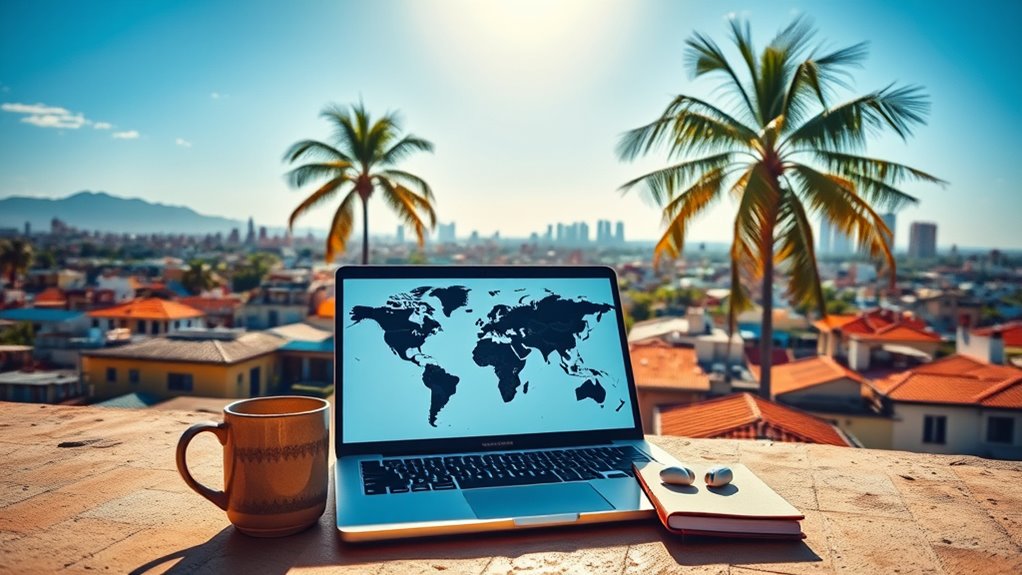
Are digital nomad visas in Africa truly accessible to remote workers? The truth is, access varies widely across the continent. Countries like South Africa, Cape Verde, and Mauritius offer formal visa programs designed for digital nomads, with clear application processes and reasonable requirements. South Africa’s visa lasts up to a year and requires proof of income, while Cape Verde provides a six-month visa with minimal fuss. Mauritius offers a flexible, fee-free Premium Visa that’s easy to obtain online. Namibia and Kenya have announced or are developing programs, but details are limited. Overall, some nations have embraced remote work trends, making visas more accessible, while others still lack formal pathways. Your experience depends heavily on the country’s specific policies and infrastructure, including practical tools that can help navigate these options.
Health Insurance for Nomads: Coverage That Moves With You
As an affiliate, we earn on qualifying purchases.
As an affiliate, we earn on qualifying purchases.
Key Requirements and Application Processes
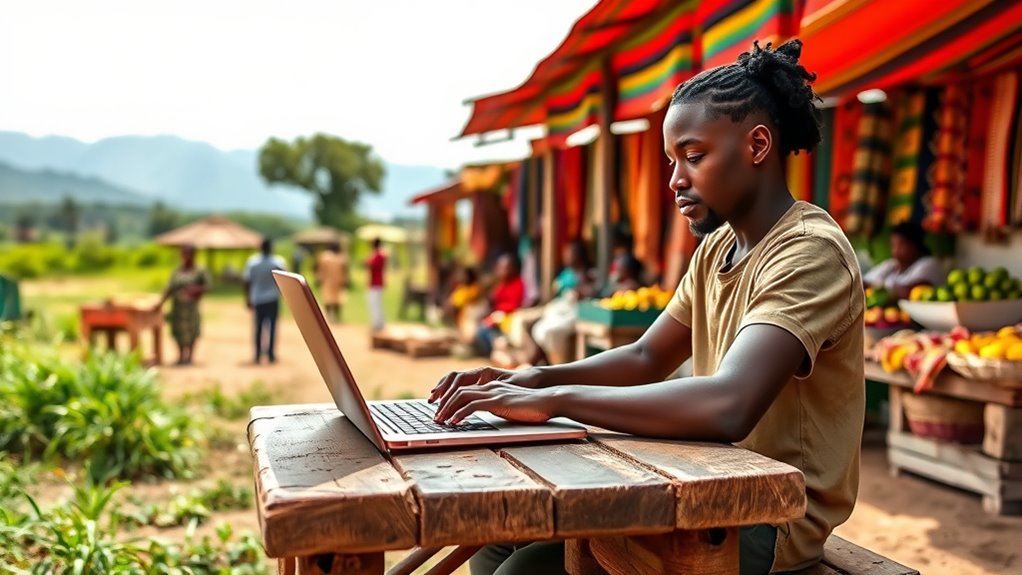
When applying for a digital nomad visa in Africa, you’ll need to gather specific documentation, such as your passport, proof of income, and health insurance. Processing times can vary from just a couple of weeks to over a month, depending on the country. Make sure you’re prepared with the required financial proof to meet each country’s application criteria. Additionally, understanding application requirements related to digital projectors can help you better prepare for your remote work setup.
Application Documentation Needed
Traversing the application process for a digital nomad visa in Africa requires gathering specific documentation to meet each country’s entry criteria. Here’s what you’ll typically need:
- Valid passport with at least six months’ validity beyond your planned stay.
- Proof of income or financial stability, such as bank statements or income certificates.
- Evidence of health insurance valid in the destination country.
- Additional documents like a clean criminal record, proof of accommodation, and travel itinerary.
- Familiarizing yourself with the tableware requirements can be helpful if visiting formal or cultural events during your stay.
Some countries, like Mauritius, streamline the process with online applications and minimal paperwork, while others, such as South Africa, demand detailed documentation and official translations. Always verify the specific requirements before submitting your application to avoid delays.
Processing Timeframes Vary
Processing times for digital nomad visas across Africa can vary markedly depending on the country and the specific application requirements. For example, South Africa’s visa process typically takes 4 to 8 weeks after submitting your documents, which can be a lengthy wait. In contrast, Mauritius offers a streamlined online application that takes about 48 hours to process. Cape Verde usually requires around two weeks, with visas issued shortly after arrival. Namibia’s processing time is more variable and depends on individual circumstances, often requiring multiple reapplications if needed. Kenya’s process remains somewhat unclear but is conducted online, emphasizing income proof. Be prepared for potential delays, and always check current processing times directly with immigration authorities, as they can change based on workload and administrative efficiency. Additionally, understanding the application process can help streamline your visa acquisition and reduce wait times.
Financial Proof Requirements
What kind of financial proof do you need to secure a digital nomad visa in Africa? Typically, you’ll need to demonstrate that you have sufficient funds to support yourself during your stay. Here’s what’s usually required:
- Bank statements showing a sustained balance—often €1,500 for Cape Verde or USD 2,000/month for Namibia.
- Proof of regular income, such as payslips or a contract, especially for South Africa or Namibia.
- Evidence of remote work or business ownership, mainly for Mauritius.
- Additional documentation may include financial affidavits or proof of savings if applying for family visas.
- The rise of digital payment methods and online financial tracking can help verify your financial stability and streamline your application process.
Ensure your documents are recent, clear, and meet each country’s specific financial thresholds to smooth the application process.

Taygeer Travel Backpack for Women, Carry On Backpack with Water Bottle Pocket & Shoe Pouch, TSA 15.6inch Laptop Mochila Flight Approved, Nurse Bag Casual Daypack for Weekender Business Hiking, Pink
Extra Shoe Bag & Wet Pocket: Large carry on backpack for women includes a bonus shoe bag to…
As an affiliate, we earn on qualifying purchases.
As an affiliate, we earn on qualifying purchases.
Cost of Living and Infrastructure Insights
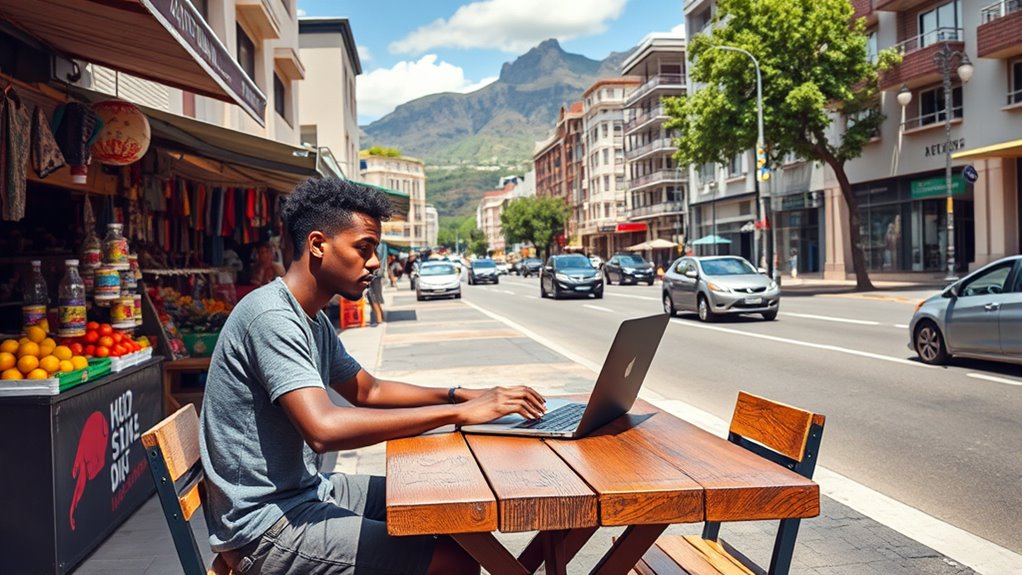
You’ll find that many African destinations offer affordable living costs, with rent and daily expenses often lower than in other regions. Reliable internet connectivity varies, but major cities and islands typically provide fast, stable connections suitable for remote work. Understanding these infrastructure options helps you choose the best location for your digital nomad lifestyle. Additionally, some areas may offer Kia Tuning services, which can enhance vehicle performance for travel within the region.
Affordable Living Costs in Africa
Africa offers a compelling advantage for digital nomads seeking affordability, with many countries boasting low living costs and reliable infrastructure. You can stretch your budget further while enjoying comfortable urban and natural environments. Here’s what you can expect:
- South Africa: Rent a one-bedroom apartment for around USD 407 monthly, with a cost of living index of 33.8, and reliable internet in major cities.
- Cape Verde: Enjoy rentals near USD 240, with improving but variable internet quality across islands.
- Mauritius: Moderate living costs combined with modern infrastructure and fast internet, ideal for remote work.
- Namibia: Affordable rentals and natural beauty, though internet can be inconsistent outside urban areas. Reliable internet quality is a key factor to consider for remote work success.
Reliable Internet Connectivity Options
Reliable internet connectivity is essential for digital nomads to maintain productivity and stay connected with clients or colleagues. In Africa, major cities like Johannesburg, Cape Town, Nairobi, and Mauritius boast robust infrastructure with high-speed internet options such as fiber optic and 4G LTE. These areas often have coworking spaces equipped with reliable Wi-Fi, making remote work seamless. However, outside urban centers or on some islands like Cape Verde, internet quality can vary, sometimes limited by infrastructure or geographic factors. To avoid interruptions, consider investing in a portable Wi-Fi device or multiple SIM cards with data plans. Always research the local service providers and check reviews before settling into your accommodation. Ensuring a stable internet connection is key to maintaining your workflow wherever you choose to work. Incorporating top internet solutions can help improve connectivity reliability in areas with less developed infrastructure.

S.O.S (Save Ourselves): 2025 Black Expat Guide – Portugal D7 & Golden Visa, Ghana Right of Abode, Mexico, Dubai, Costa Rica, Panama – Digital Nomad, … International Relocation for Black Americans"
As an affiliate, we earn on qualifying purchases.
As an affiliate, we earn on qualifying purchases.
Taxation and Legal Considerations

Understanding the tax implications of working remotely in Africa is crucial for digital nomads, as each country has its own rules governing tax residency and income taxation. You need to be aware of how long you stay and where your income originates. Here are key points to consider:
Understanding Africa’s remote work tax rules helps digital nomads stay compliant and avoid surprises.
- South Africa’s visa holders working for foreign companies may not face local taxes if they don’t meet residency criteria.
- Cape Verde exempts digital nomads from income tax and doesn’t treat them as residents.
- Mauritius offers no income tax on foreign earnings for non-residents, making it tax-friendly.
- Namibia’s short-term visas typically don’t establish tax residency, but consulting a tax expert is wise.
- Staying informed about local laws and legal considerations is essential to avoid surprises and ensure compliance while enjoying your nomadic lifestyle.
Lifestyle and Environment Highlights
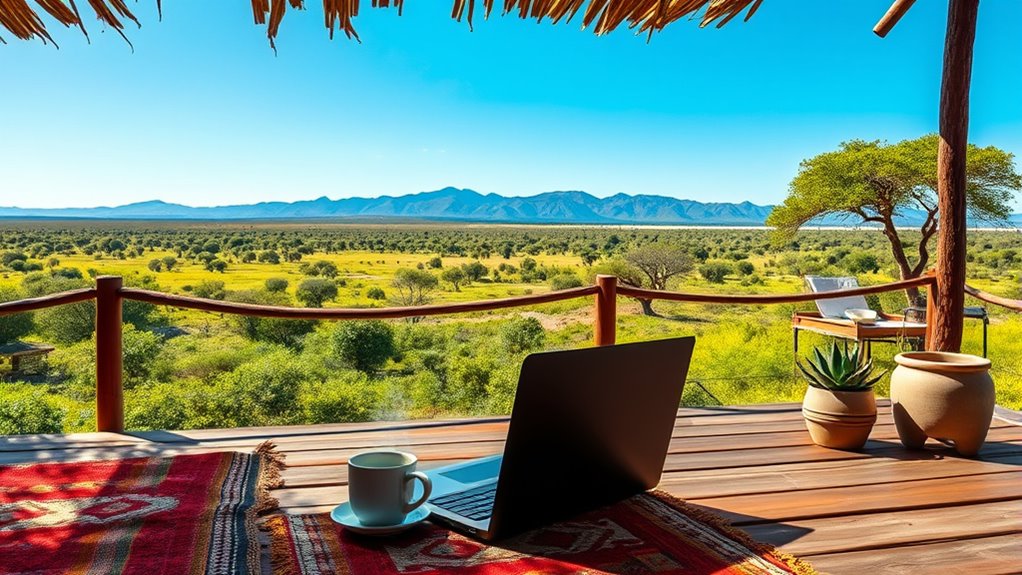
From vibrant cities to tranquil beaches, the environment and lifestyle options across Africa are incredibly diverse, offering something for every digital nomad. In South Africa, you’ll enjoy bustling urban centers like Johannesburg and Cape Town, filled with coworking spaces, cafes, and cultural experiences, alongside outdoor adventures like safaris and surfing. Cape Verde’s stunning islands boast pristine beaches, a relaxed island vibe, and friendly communities perfect for balancing work and leisure. Mauritius combines tropical beauty with modern infrastructure, offering lush landscapes and tranquil beaches just a short drive from urban amenities. Namibia’s vast deserts and rugged landscapes provide solitude and outdoor activities, ideal if you prefer nature’s serenity. Kenya blends lively cities with expansive wilderness, giving you a taste of both urban life and safari expeditions. Additionally, some regions offer creative expression opportunities through local crafts and art scenes that enrich the cultural experience.
Challenges and Tips for Remote Workers
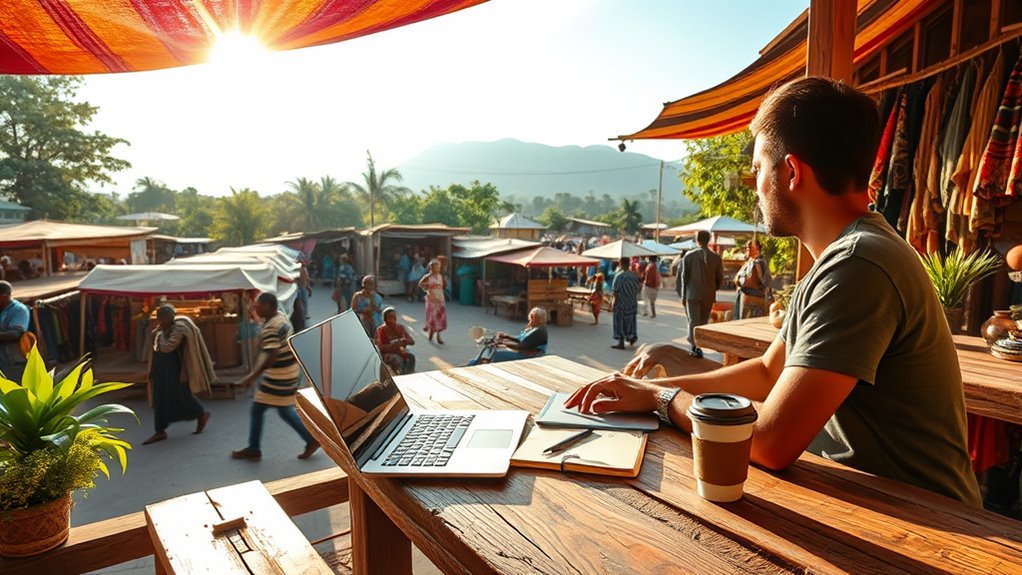
Managing the challenges of working remotely in Africa requires careful planning and adaptability. To stay ahead, consider these tips:
- Research visa processing times and requirements—some countries take up to 8 weeks, so apply early.
- Ensure reliable internet access by choosing accommodations with proven connectivity or coworking spaces in major cities.
- Secure extensive health and travel insurance to cover emergencies and medical needs.
- Understand local tax laws and residency rules—consult professionals to avoid legal issues.
Being proactive helps you navigate visa delays, internet issues, and legal complexities. Embrace flexibility, stay informed, and plan ahead to make your African remote work experience smooth and enjoyable. Adaptability is key to thriving as a digital nomad on the continent.
Frequently Asked Questions
Can I Work Remotely in Africa Without a Visa?
Yes, you can work remotely in Africa without a visa, but it depends on the country and its specific rules. Many nations require tourists to stick to tourism activities and do not permit remote work without a proper visa. If you plan to stay long or work remotely, it’s best to apply for the relevant digital nomad or work visa to avoid legal issues and enjoy your stay hassle-free.
Are Digital Nomad Visas in Africa Renewable?
About 60% of African countries with digital nomad visas offer renewals, but details vary. For instance, South Africa’s visa can be renewed up to three years, while Namibia’s is non-renewable but reapplication is allowed. Cape Verde and Mauritius offer renewals or extensions, often with minimal hassle. You should check each country’s specific requirements, as renewal processes and eligibility criteria differ, ensuring your remote work lifestyle stays uninterrupted.
How Reliable Is Internet Access Across Different African Countries?
You’ll find internet reliability varies across African countries. In major cities like Johannesburg, Cape Town, Nairobi, and Mauritius, internet is generally fast and stable, supporting remote work well. However, outside urban centers or on some islands like Cape Verde, internet can be inconsistent with slower speeds or outages. It’s wise to research specific locations beforehand, choose accommodations with reliable Wi-Fi, and consider backup options like mobile hotspots to guarantee seamless connectivity.
What Health Insurance Is Required for African Digital Nomad Visas?
You need health insurance that covers medical expenses and emergencies in the country you’re visiting. For example, Cape Verde requires valid health insurance to process your visa, and Mauritius offers a streamlined online application with no fees but still demands proof of coverage. It’s crucial to have extensive travel or medical insurance, as most countries mandate this to ensure you’re protected against unexpected health issues while working remotely.
Do I Need to Pay Local Taxes While Working Remotely in Africa?
You might need to pay local taxes while working remotely in Africa, depending on the country’s rules and your length of stay. Some nations, like South Africa and Namibia, consider you a tax resident if you stay long enough or meet certain criteria, which could mean paying taxes on worldwide income. Others, like Cape Verde and Mauritius, offer tax exemptions for digital nomads. Always check local regulations or consult a tax professional.
Conclusion
Venturing into Africa as a digital nomad offers a tapestry of vibrant cultures and inspiring landscapes. While exploring new environments can feel like a gentle dance with the unknown, embracing these experiences enriches your journey. With thoughtful preparation and an open heart, you’ll find yourself gently unfolding into a world full of warmth and opportunity. Let each challenge be a soft whisper guiding you toward a more vibrant, fulfilling chapter of your adventures.