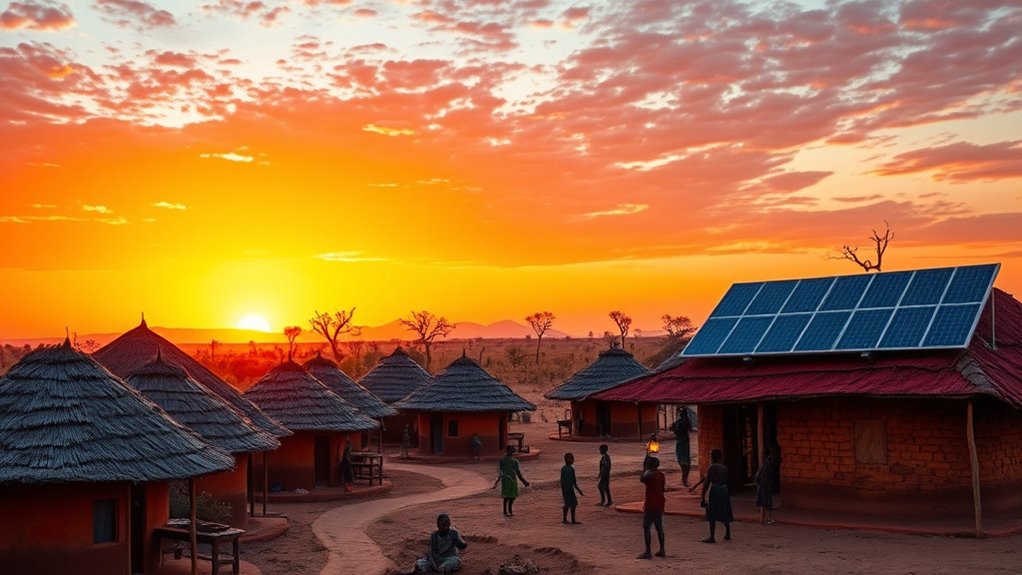

Kenya’s solar micro-grids are transforming Maasai communities by providing reliable, sustainable power where traditional grids don’t reach. You can see how these micro-grids generate solar energy during the day, store excess in batteries, and supply electricity to homes, schools, and clinics. This access allows communities to replace kerosene lamps, improve health, and support local businesses. If you keep exploring, you’ll discover how these innovations are shaping a brighter, more resilient future for remote areas.

Get travel and outdoor gear delivered free with Prime
- Fast, free delivery on millions of items
- Prime Video, Amazon Music and more included
- Member-only deals all year
Key Takeaways
- Solar micro-grids generate clean electricity during the day and store excess energy in batteries for nighttime use in Maasai villages.
- They enable remote Maasai communities to access reliable power without traditional grid extension costs.
- Micro-grids improve health, education, and economic activities by providing consistent energy for homes and local businesses.
- Local technicians are trained to maintain micro-grids, ensuring long-term sustainability and community independence.
- These renewable energy solutions serve as scalable models for sustainable rural development across Kenya.

Have you ever wondered how remote communities in Kenya are gaining reliable electricity? The answer lies in innovative solutions like solar micro-grids, which are transforming rural electrification efforts across the country, especially among the Maasai communities. These micro-grids harness renewable energy to provide a sustainable and affordable power source where traditional grid extension is impractical or too costly. By deploying solar panels and battery storage systems, these communities now access electricity that was once out of reach, drastically improving their quality of life.
Rural electrification has long been a challenge in Kenya due to the country’s vast and diverse terrain. Extending the national grid over large, rugged areas isn’t always feasible, especially in sparsely populated or isolated settlements. That’s where renewable energy shines. Solar micro-grids, which are small-scale, localized power systems, are particularly suited for these environments. They generate electricity during the day from the sun, store excess power in batteries for nighttime use, and distribute it to homes, clinics, schools, and businesses. This decentralization means communities aren’t dependent on distant, unreliable power lines; instead, they generate and manage their own electricity, fostering independence and resilience.
Solar micro-grids empower remote Kenyan communities to generate and manage their own reliable, sustainable electricity.
The Maasai communities, traditionally reliant on kerosene lamps and firewood, are now experiencing a significant shift. Solar micro-grids bring clean, affordable energy, reducing health risks associated with smoke inhalation and decreasing reliance on fossil fuels. Schools can now operate after dark, enabling better education, while clinics provide more consistent healthcare services. Small businesses flourish as they can now operate longer hours, improving local economies. The sustainability of these micro-grids is a key advantage. Since they use renewable energy sources, they reduce carbon emissions and help Kenya meet its climate goals. The systems are designed to be low-maintenance, with local technicians trained to handle routine repairs, ensuring long-term operation.
The success of solar micro-grids in Maasai communities underscores the importance of innovative, community-centered solutions in rural electrification. They demonstrate that renewable energy isn’t just a buzzword but a practical, crucial tool for development. By investing in these micro-grids, Kenya is creating a model for sustainable growth that can be replicated across other remote regions. The power of the sun is now illuminating even the most isolated corners of Kenya, empowering communities and paving the way for a brighter, more equitable future.
solar micro grid system for rural communities
As an affiliate, we earn on qualifying purchases.
As an affiliate, we earn on qualifying purchases.
Frequently Asked Questions
How Do Solar Micro-Grids Impact Traditional Maasai Lifestyles?
You might notice that solar micro-grids bring cultural shifts and lifestyle adaptations to Maasai communities. As access to electricity improves, traditional practices like storytelling and craft-making evolve, blending old customs with new technology. You’ll see changes in daily routines, with more time for education or entrepreneurship. These micro-grids empower you to maintain cultural identity while embracing modern benefits, transforming how you live and connect within your community.
What Are the Maintenance Challenges for Solar Micro-Grids in Remote Areas?
Imagine maintaining a solar micro-grid in a remote Maasai village. You’ll face challenges like battery degradation over time, reducing energy capacity. Without regular upkeep, technical expertise is vital to troubleshoot issues and replace worn components. Limited access to skilled technicians can delay repairs, risking power outages. Ensuring proper maintenance, training locals, and sourcing spare parts are essential to keep the micro-grid reliable and sustainable in such isolated areas.
How Affordable Are the Solar Solutions for Maasai Communities?
You’ll find that solar solutions are quite affordable for Maasai communities, thanks to affordability analysis and subsidy programs. These initiatives reduce upfront costs and make solar power more accessible. As a result, families can enjoy reliable electricity without breaking the bank. With ongoing support and government incentives, solar energy becomes a practical and sustainable option, empowering communities and improving their quality of life while remaining economically feasible.
What Training Is Provided to Locals for Managing Micro-Grids?
You’ll find that training programs and technical workshops are essential for empowering locals to manage micro-grids effectively. These programs teach you how to operate, maintain, and troubleshoot the solar systems, ensuring sustainability. By participating in hands-on workshops, you gain practical skills that help you confidently handle day-to-day operations. This training not only supports your community’s energy needs but also creates opportunities for ongoing employment and local expertise development.
How Do Micro-Grids Affect Local Wildlife and Ecosystems?
You might wonder how micro-grids impact wildlife and ecosystems. They can cause some wildlife disruption due to construction and increased human activity, but generally, they’re designed to minimize ecosystem changes. Solar micro-grids reduce reliance on fossil fuels, helping preserve ecosystems. Carefully planned installations guarantee minimal disturbance, supporting biodiversity. Overall, these micro-grids promote sustainable energy use, balancing community development with ecosystem health, and fostering a positive environmental impact.
solar battery storage for home use
As an affiliate, we earn on qualifying purchases.
As an affiliate, we earn on qualifying purchases.
Conclusion
You can see how Kenya’s solar micro-grids are transforming remote Maasai communities, providing reliable electricity where it was once scarce. With over 80% of households gaining access to clean energy, these micro-grids are not just powering homes but empowering lives. As more communities connect to these sustainable systems, you’ll witness a significant leap toward economic growth and improved quality of life. The future looks bright, fueled by solar energy and community resilience.
As an affiliate, we earn on qualifying purchases.
solar panel kits for remote areas
As an affiliate, we earn on qualifying purchases.
As an affiliate, we earn on qualifying purchases.
Fall Picks
fall essentials
As an affiliate, we earn on qualifying purchases.