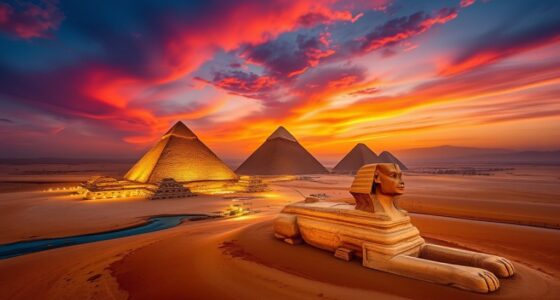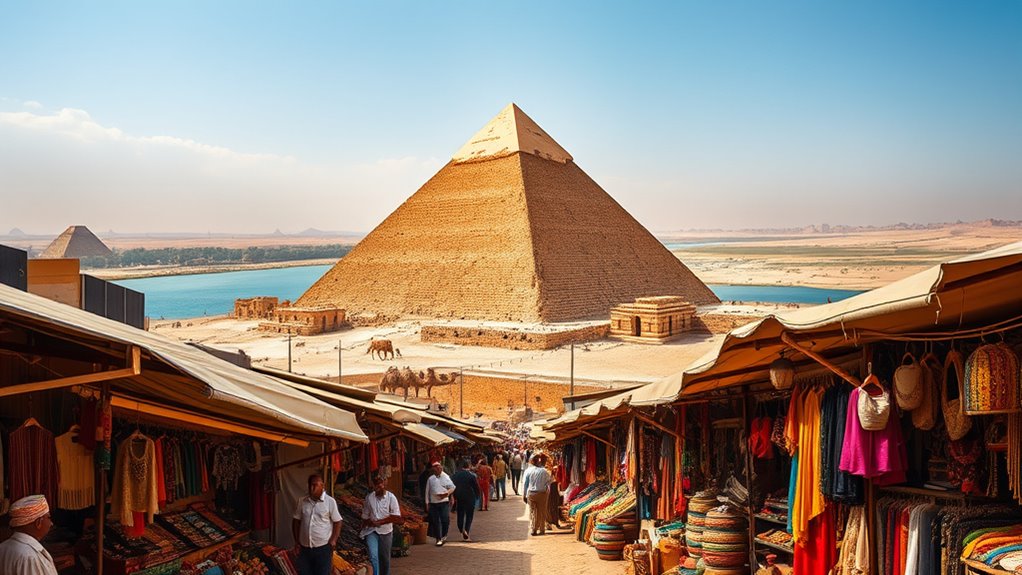

Egypt’s history and culture span over 7,000 years, beginning with early settlements along the Nile. You’ll find monumental structures like pyramids and temples reflecting advanced engineering and religious beliefs. The civilization developed a writing system, complex society, and art styles influenced by both internal evolution and foreign rulers like the Greeks and Romans. These traditions shaped Egypt’s enduring legacy. If you explore further, you’ll uncover more about how this ancient society continues to influence the world today.
Key Takeaways
- Egypt’s history spans from early settlements along the Nile to powerful pharaoh-led kingdoms, showcasing monumental architecture and cultural achievements.
- The civilization integrated diverse influences from foreign occupations like Hyksos, Persians, Greeks, and Romans, shaping its unique cultural mosaic.
- Religious beliefs centered on the afterlife, with elaborate funerary practices, mummification, and worship of gods like Osiris.
- Iconic art and architecture include pyramids, temples, and tombs that reflect religious authority and technological prowess.
- The development of hieroglyphic writing preserved Egypt’s history, culture, and religious traditions across millennia.

Hieroglyphs
As an affiliate, we earn on qualifying purchases.
As an affiliate, we earn on qualifying purchases.
The Origins and Early Development of Egyptian Civilization
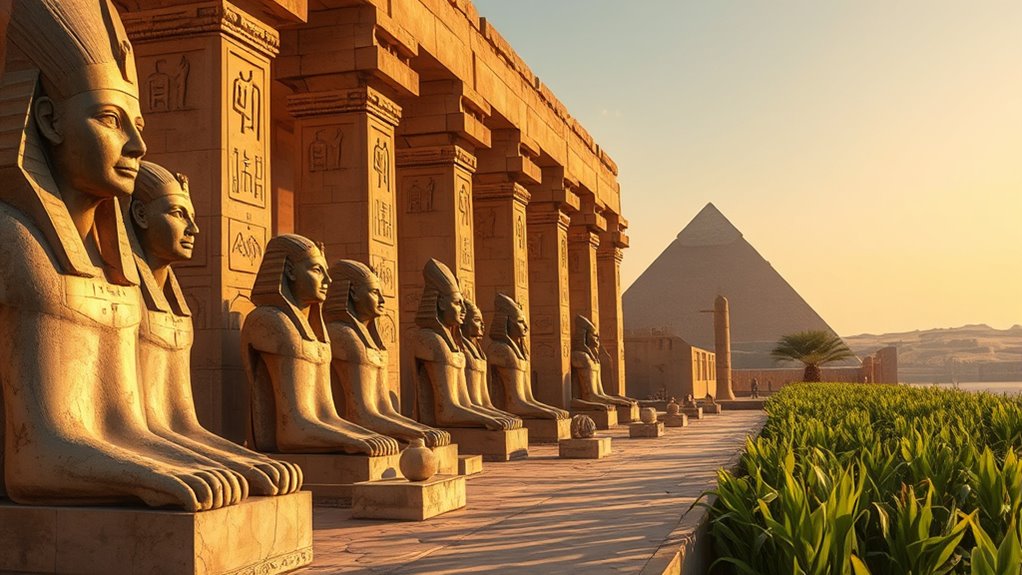
Have you ever wondered how Egypt’s civilization first took shape? It all began around 11,000 BC when early humans settled along the Nile River, taking advantage of its fertile banks. During the Paleolithic and Neolithic periods, small communities formed, gradually developing tools, farming techniques, and social structures. By around 4300 BC, the Pre-dynastic period saw the rise of villages like Naqada, where people started refining pottery and establishing trade routes. Writing emerged around 3250 BC, helping record transactions and traditions. As these communities grew, they unified into larger political entities. This process laid the foundation for the early kingdoms, setting the stage for the rich, complex civilization that would flourish along the Nile for thousands of years.

TRANSGOOD Egyptian Pyramid Statue Mini Size Resin Figurine Sculpture Home Décor Ancient Building Model Egypt Souvenirs
Material & Size: Made of high quality resin. 3.2*3.2*3.5inches/8*8*9cm; Color: Gold.
As an affiliate, we earn on qualifying purchases.
As an affiliate, we earn on qualifying purchases.
The Rise of the Pharaohs and the Formation of the Kingdoms

The rise of the pharaohs marked a pivotal turning point in Egypt’s history, as these powerful rulers began to unify the diverse communities along the Nile under centralized authority. You see, around 3100 BC, Menes (or Narmer) cemented this unity by founding the First Dynasty and establishing a strong, centralized monarchy. The pharaohs claimed divine status, linking themselves directly to gods like Horus, which solidified their power. Over time, this led to the formation of distinct kingdoms, particularly Upper and Lower Egypt. These early rulers built monumental structures, developed administrative systems, and expanded control beyond Egypt’s borders. The unification set the stage for Egypt’s enduring civilization, characterized by political stability, cultural innovation, and impressive architectural achievements. Furthermore, the centralized government established during this period allowed for the long-lasting development of arts, religion, and societal organization that define ancient Egypt.

Pamonrueer 19 Pcs Egyptian Figurines Set Resin Ancient Egypt Decor Hand-Painted Small Ancient Egyptian Pyramid Mummy Pharaoh Anubis Statue Egyptian Gods for Table Home Decoration
Resin material: Figurines are made of resin, with rich details that capture the essence of ancient Egyptian art…
As an affiliate, we earn on qualifying purchases.
As an affiliate, we earn on qualifying purchases.
Religious Beliefs and Funerary Practices
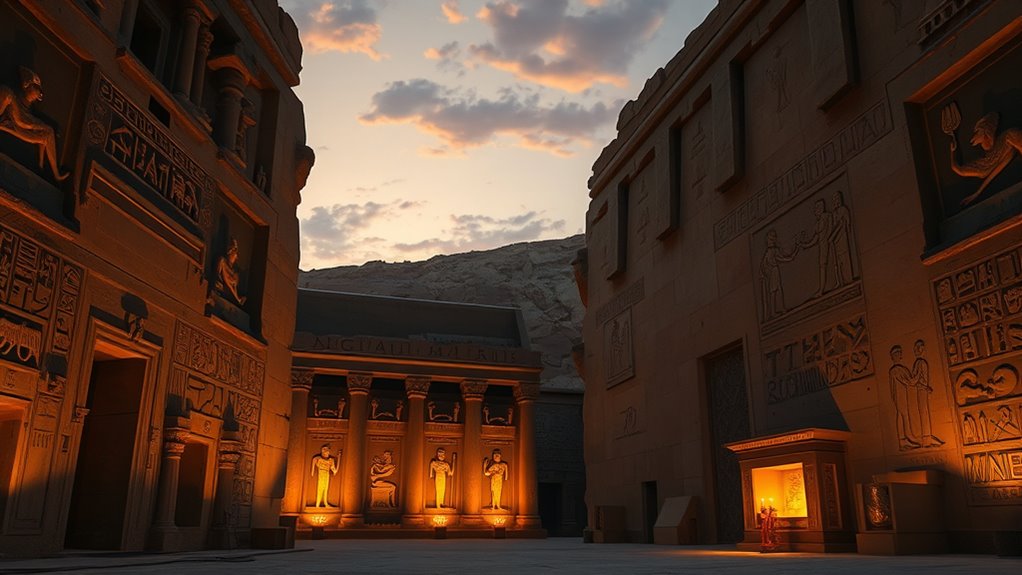
You’re about to explore how the ancient Egyptians prepared for the afterlife through specific rituals and beliefs. They developed complex mummification techniques to preserve bodies, ensuring a safe passage to the next world. Sacred texts like the Pyramid Texts and the Book of the Dead provided spells and guidance to navigate the journey beyond death.
Afterlife Beliefs and Rituals
Ancient Egyptians believed that life continued beyond death, making elaborate funerary practices crucial to guarantee a smooth journey to the afterlife. You’d prepare tombs filled with valuable objects, inscriptions, and texts to guide the deceased. Rituals included offerings of food, drink, and possessions to sustain them in the afterworld. They thought the soul, or ba, needed to reunite with the body, which is why preserving it was essential. Deities like Osiris played a central role, judging souls and granting access to eternal life. Funerary texts such as the Pyramid Texts and the Book of the Dead offered spells and instructions to protect the dead from dangers and ensure their safe passage. These rituals reflected their deep belief that death was just a new phase of existence. Additionally, the use of funerary artifacts was believed to aid in the journey and provide the deceased with necessary tools for the afterlife.
Mummification Techniques and Purposes
Mummification served as a vital religious practice aimed at preserving the body for the afterlife. You would carefully remove internal organs to prevent decay, often storing them in canopic jars decorated to honor specific deities. The body is then thoroughly dried using natron, a natural salt, which removes moisture and halts decomposition. After drying, you might stuff the body to maintain its shape and apply resins and oils for preservation and scent. Wrapping follows, using linen bandages inscribed with prayers or spells to protect the deceased. This process reflects the Egyptians’ belief that a well-preserved body was essential for the soul’s journey and eternal life. Mummification underscores their deep commitment to ensuring a safe passage into the afterlife, aligning with their religious and funerary ideals.
Sacred Texts and Spellbooks
Have you ever wondered how the Egyptians guaranteed a safe journey to the afterlife? They relied on sacred texts and spellbooks filled with powerful spells and guidance. These texts, like the Pyramid Texts and the Book of the Dead, helped you navigate challenges and monsters in the underworld. You’d find spells inscribed on coffins, walls, and papyrus scrolls, ensuring protection and success. These texts were tailored to each individual’s journey, emphasizing your need for divine aid. Here’s a quick look at some key texts: Cookie categories help categorize the types of spells and instructions included in these sacred writings.

The Complete Gods and Goddesses of Ancient Egypt
As an affiliate, we earn on qualifying purchases.
As an affiliate, we earn on qualifying purchases.
Artistic and Architectural Achievements
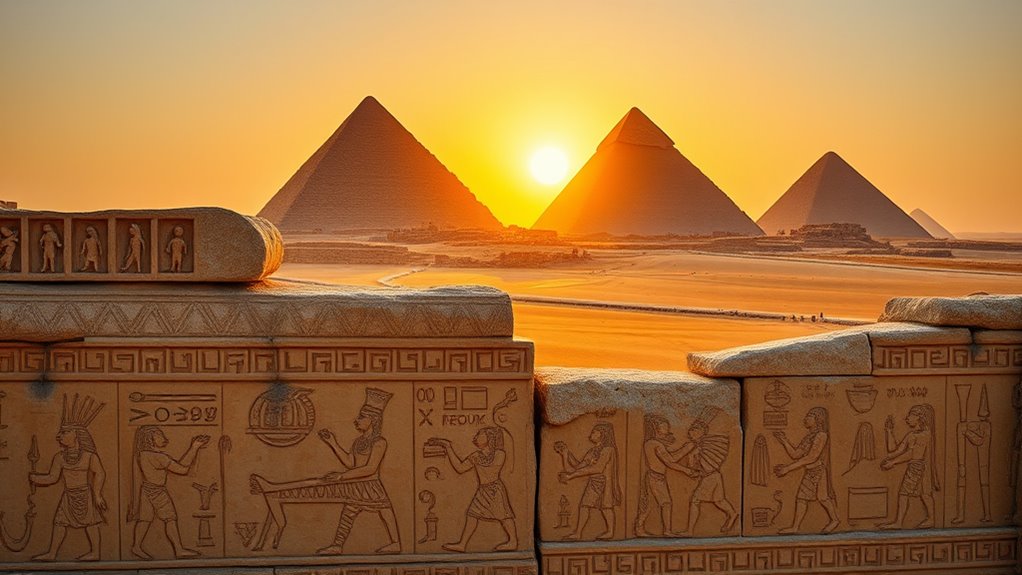
Egyptian artists and architects achieved remarkable feats that have left a lasting legacy in the world’s cultural heritage. You can admire their skill in building monumental structures like the pyramids at Giza and the Step Pyramid of Djoser, showcasing advanced engineering and precise planning. Temples such as Karnak and Luxor demonstrate complex layouts, towering columns, and detailed carvings that honor gods and pharaohs. Sculptors created statues with idealized forms, emphasizing divine perfection and authority. Artistry extended to intricate tomb paintings and jewelry, reflecting religious beliefs and social status. Their mastery of stone carving, painting, and construction techniques set standards that influence architecture and art even today. These achievements highlight their innovation, religious devotion, and dedication to preserving their culture for eternity. Additionally, their use of advanced construction techniques contributed to the durability and grandeur of their structures, ensuring their legacy endured through centuries.
The Evolution of Language and Writing Systems

The development of writing systems in Egypt marked a significant leap in communication, enabling the civilization to record history, religious texts, and administrative details with remarkable precision. Hieroglyphs, created around 3200 BC, allowed scribes to depict ideas through a complex combination of symbols representing sounds and concepts. Over time, writing evolved into cursive forms like hieratic and demotic, used for daily administration and record-keeping. During the Ptolemaic period, the Greek alphabet influenced Egyptian scripts, leading to Coptic, which incorporated Egyptian elements into Christian texts. This evolution reflects Egypt’s adaptability and the importance placed on preserving knowledge, which was facilitated by the development of writing systems. Writing was essential for religious rites, governance, and cultural expression, shaping Egypt’s history and ensuring its legacy endured through millennia.
Political Structures and Society During Different Periods

Throughout Egypt’s history, political structures evolved considerably, shaping society in each era. During the Old Kingdom, you’d see a centralized monarchy where the pharaoh was both divine and political ruler, commanding absolute authority. Society was stratified, with nobles, priests, and scribes supporting the ruler’s divine rule. In the Middle and New Kingdoms, power expanded through a complex bureaucracy of officials, military leaders, and administrators controlling regions and resources. Imagine:
- The pharaoh’s divine image reigning supreme at the core of society
- Officials and priests managing taxes and religious duties
- Artisans and farmers forming the vibrant social fabric
As control shifted over time, different cities like Memphis and Thebes became political centers. Foreign influences, especially during the Hyksos and later invasions, also reshaped governance and societal roles. These shifts in political authority reflected broader changes in societal organization and power dynamics across Egypt’s different periods.
Major Historical Transitions and Foreign Influences

You see how Egypt’s history is shaped by a series of foreign conquests and rule, from the Hyksos to the Greeks and Romans. These occupations introduced new technologies, beliefs, and artistic styles that blended with local traditions. As a result, Egypt’s culture became a rich tapestry of indigenous and foreign influences that still influence its identity today. Exploring whole-house water filtration systems can offer insights into how ancient Egyptians managed their water resources and adapted to foreign innovations.
Foreign Conquests and Rule
Have you ever wondered how Egypt’s history was shaped by foreign invasions and rule? Throughout its long history, Egypt experienced many foreign influences that transformed its culture and government. You might picture:
- The Hyksos introducing new weapons, chariots, and innovations during their brief rule, changing warfare tactics.
- The Persians conquering Egypt, bringing their administrative style and integrating it into Egyptian governance.
- The Greeks, led by Alexander the Great, establishing the Ptolemaic Dynasty, blending Egyptian traditions with Hellenistic culture.
- These foreign rulers often blended their customs with local traditions, creating a cultural mosaic that reflects Egypt’s complex history of conquest and adaptation.
Cultural Syncretism and Legacy
Major historical shifts and foreign influences profoundly shaped Egypt’s cultural landscape, fostering a unique blend of traditions and innovations. When you explore Egypt’s history, you’ll see how interactions with the Hyksos, Persians, Greeks, Romans, and Arabs merged indigenous practices with new ideas. These encounters introduced technologies, religious concepts, art styles, and administrative methods, creating a rich, layered legacy. For example, Greek influence during the Ptolemaic period fused Egyptian and Hellenistic traditions, visible in art and religion. Similarly, Islamic culture transformed language, architecture, and spiritual life after the Arab conquest. Despite these external influences, Egypt maintained core elements of its identity, blending them into a resilient and evolving culture. The cultural syncretism evident in Egypt’s history demonstrates how diverse influences can coexist and enrich a society. Today, this syncretic legacy continues to influence Egypt’s art, religion, and social practices.
Key Archaeological Sites and Cultural Heritage
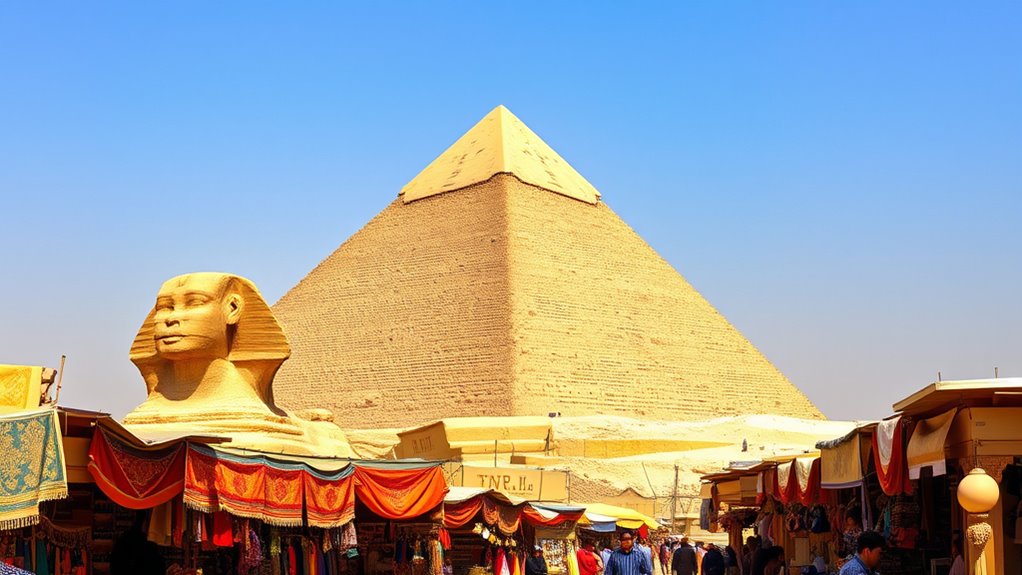
Egypt’s archaeological sites offer a window into its rich and ancient civilization, showcasing remarkable engineering, artistry, and religious practices. As you explore these sites, picture:
Discover Egypt’s ancient wonders, where engineering, artistry, and spirituality come alive through majestic pyramids and sacred temples.
- The Great Pyramids of Giza, towering symbols of divine kingship and engineering brilliance.
- The Step Pyramid at Saqqara, an early masterpiece of monumental stone construction.
- The grand temples of Luxor and Karnak, filled with colossal columns and sacred rituals.
These sites reveal Egypt’s mastery in architecture, religious devotion, and artistry. The Valley of the Kings, with its decorated tombs and hidden chambers, offers insight into funerary practices. Museums worldwide preserve countless artifacts, helping you connect with Egypt’s historic legacy and cultural achievements. Additionally, archival resources are available to support ongoing research and preservation efforts.
Frequently Asked Questions
How Did Egyptian Society Handle Social Mobility Despite Strict Class Divisions?
You can move up in Egyptian society mainly through administrative or religious service. Skilled artisans, scribes, or priests often gained status and wealth, allowing some social mobility. Serving in these roles provided opportunities to improve your standing, even if class divisions remained strict. Additionally, exceptional achievements in arts, architecture, or military service could also earn you recognition and a higher position within the social hierarchy.
What Role Did Women Play in Ancient Egyptian Political and Religious Life?
You’ll find that women in ancient Egypt played significant roles in both political and religious life. Queens like Hatshepsut and Nefertiti held power as pharaohs or regents, influencing policies and state affairs. Women also served as priestesses, deities’ intermediaries, and held property rights. Their involvement in religious rituals and royal court activities helped shape Egypt’s spiritual and political landscape, demonstrating their essential contributions beyond traditional gender roles.
How Did Foreign Invasions Influence Egyptian Technological Advancements?
When foreign invasions occur, you see Egypt adopting new technologies that improve warfare, agriculture, and craftsmanship. For example, during the Hyksos invasion, you witness the introduction of bronze weapons and horse-drawn chariots, transforming military tactics. These influences lead you to develop advanced tools and techniques, blending foreign innovations with indigenous skills, which ultimately boost Egypt’s productivity, defense, and cultural exchanges, shaping your civilization’s development over time.
In What Ways Did Egyptian Medicine Compare to Other Ancient Civilizations?
You’ll find that Egyptian medicine was remarkably advanced compared to other ancient civilizations. You’re likely to notice their detailed medical texts, like the Edwin Smith Papyrus, which describes surgical procedures and treatments. They used practical remedies, herbal medicines, and techniques like setting broken bones. Their emphasis on diagnosis and prognosis set them apart, and their approach influenced later medical practices in Greece and Rome, showcasing their innovative and systematic approach to health.
How Are Modern Egyptian Cultural Practices Connected to Ancient Traditions?
Modern Egyptian practices profoundly preserve ancient principles, blending beliefs and behaviors. You witness this in traditional festivals, where rituals honor ancestors and deities, echoing old religious rites. You see it in art and architecture, where hieroglyphic symbols inspire contemporary designs. You sense it in language, with Arabic words rooted in ancient Egyptian expressions. These enduring customs connect you to a past that shapes your identity, keeping ancient traditions alive in everyday life.
Conclusion
You might think Egypt’s history is just ancient ruins, but it’s a vibrant story of innovation, belief, and resilience. Exploring its culture reveals more than monuments; it shows how a civilization shaped the world. Don’t dismiss it as old news—Egypt’s legacy still influences art, language, and society today. By understanding its rich past, you gain a deeper appreciation for how human ingenuity creates lasting cultural treasures.