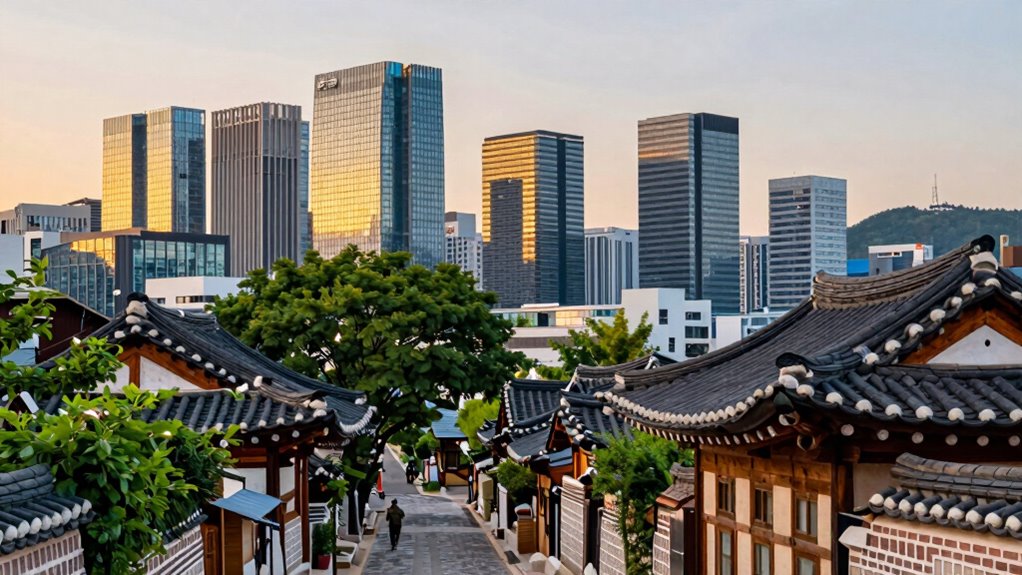

You see how South Korea seamlessly blends bustling cities with quiet traditions. Modern skyscrapers and high-tech shopping malls stand alongside historic hanok villages and cultural festivals. Young people enjoy K-pop and vibrant street life, while elders wear traditional Hanbok and share stories. The country respects its roots by incorporating traditional architecture into modern urban plans. This balance creates a unique cultural tapestry, showing how Korea honors its past while embracing the future—discover more about this fascinating harmony.

Get travel and outdoor gear delivered free with Prime
- Fast, free delivery on millions of items
- Prime Video, Amazon Music and more included
- Member-only deals all year
Key Takeaways
- Urban development integrates traditional architecture like hanok villages within modern cityscapes.
- Cultural festivals and markets preserve Korea’s heritage amid rapid modernization.
- Traditional clothing such as Hanbok is worn during special occasions, blending old customs with contemporary life.
- City planning balances high-tech infrastructure with spaces for cultural reflection and historical preservation.
- Elders and youth coexist, sharing stories and traditions alongside modern entertainment and technology.
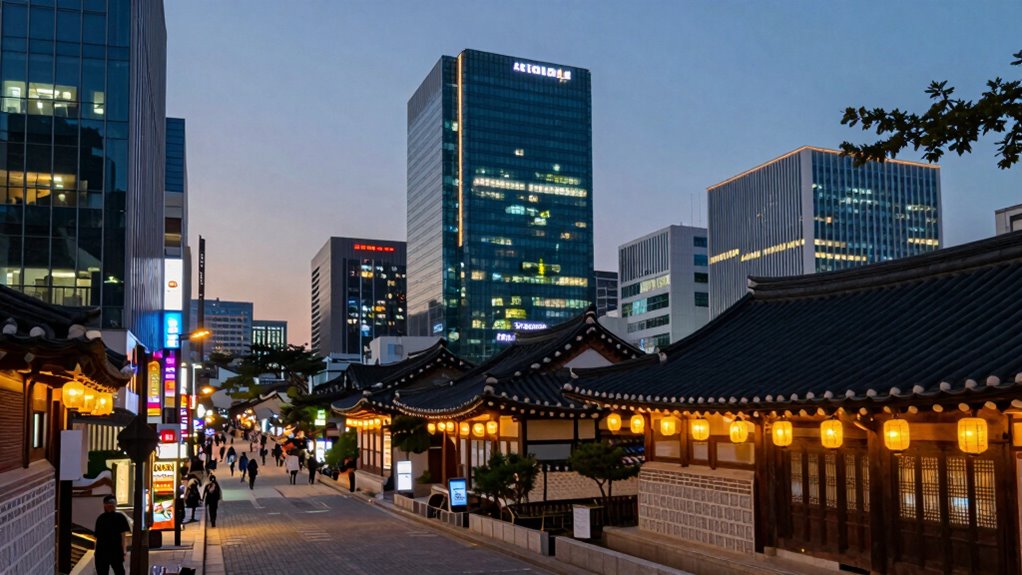
South Korea is a nation where the hustle of modern cities coexists seamlessly with deep-rooted traditions. As you explore its bustling streets, you quickly notice how the country’s vibrant energy is fueled by cutting-edge technology, sleek skyscrapers, and a thriving pop culture scene. K pop culture, for instance, dominates global charts and social media feeds, showcasing the country’s ability to innovate while embracing its modern identity. You might find yourself surrounded by fans enthusiastic to catch glimpses of their favorite idols, yet just a short walk away, you can visit tranquil temples and traditional markets that preserve Korea’s historical roots. This balance is what makes South Korea so fascinating—you’re constantly shifting between the fast-paced rhythm of city life and moments of quiet reflection.
In the midst of this modern landscape, traditional clothing like Hanbok fashion remains a symbol of Korea’s rich heritage. When you participate in cultural festivals or visit historical sites, you may see locals and tourists alike donning Hanbok, which contrasts beautifully against the modern city backdrop. Wearing Hanbok isn’t just about looking stylish; it’s a way to connect with the country’s history and cultural identity. You might even try your hand at Hanbok fashion, feeling the intricate embroidery and flowing fabrics that have been passed down through generations. These traditional garments are often worn during special occasions, yet they have also found a contemporary twist in modern fashion, blending old and new into a unique style statement. This practice reminds you that South Korea values its history even as it races forward into the future.
The coexistence of these worlds isn’t just superficial; it’s embedded in daily life. In Seoul, you can visit high-tech shopping malls filled with international brands, then step into a quiet hanok village to experience traditional architecture and peaceful courtyards. Here, the contrast feels natural and harmonious. You see young people dancing to K pop tunes in neon-lit streets, yet elders might be sitting nearby in traditional attire, sharing stories. This dynamic creates a cultural tapestry where the past and present inform and enrich each other. It’s a place where rapid urban development doesn’t erase history but instead elevates it, making South Korea a mesmerizing blend of fast-paced innovation and timeless tradition. You might also notice how traditional architecture and modern design merge seamlessly in urban planning, reflecting the country’s respect for its cultural roots amid relentless modernization. As you navigate this landscape, you realize that the country’s true charm lies in its ability to honor its roots while boldly embracing the future.
traditional Hanbok clothing for tourists
As an affiliate, we earn on qualifying purchases.
As an affiliate, we earn on qualifying purchases.
Frequently Asked Questions
How Do South Koreans Balance Modern Work Life With Traditional Practices?
You balance modern work life with traditional practices by embracing Korea’s corporate culture that values discipline and respect, while also honoring cultural rituals. Despite modernization challenges, you participate in traditional holidays and respect elders, even as you navigate a fast-paced career. This harmony allows you to stay connected to roots while thriving in a dynamic, globalized environment, blending tradition and innovation seamlessly in everyday life.
What Are Some Hidden Quiet Spots Amid Bustling South Korean Cities?
Imagine finding a secret garden in a concrete jungle—that’s what hidden temples and tranquil gardens offer in South Korea’s bustling cities. You can stumble upon quiet spots like Bongeunsa Temple near Gangnam or Seongbuk-dong’s serene gardens, where time slows down. These peaceful havens let you escape the rush, immersing yourself in tradition and calm amidst the city’s energy. They’re perfect retreats for reflection and renewal.
How Does Technology Influence Daily Traditional Rituals in Korea?
You harness technology to blend tradition with modern life through digital temples and virtual rituals. These innovations allow you to participate in spiritual practices remotely, respecting customs while fitting into your busy schedule. By using apps or online platforms, you can pay respects, meditate, or celebrate festivals from anywhere. Technology enhances your connection to tradition, making sacred rituals more accessible and adaptable in South Korea’s fast-paced, tech-driven environment.
Are There Specific Festivals That Highlight the Contrast Between Old and New?
You’ll find festivals like the Chuseok and Lunar New Year that highlight Korea’s blend of old and new. Traditional markets burst with vibrant displays, showcasing cultural heritage through food, crafts, and rituals. These celebrations let you experience Korea’s deep respect for tradition while embracing modernity. During these festivals, ancient customs coexist with contemporary festivities, allowing you to witness firsthand how the country preserves its heritage amidst rapid urban growth.
How Do South Korean Cities Preserve Historical Sites Amidst Urban Development?
You’ll find South Korean cities skillfully safeguard sacred sites through cultural preservation and architectural harmony. Developers delicately integrate historic landmarks into modern urban landscapes, ensuring ancient artistry remains accessible and admired. Dedicated conservation efforts keep traditional temples, palaces, and pagodas pristine, while innovative infrastructure respects their significance. This thoughtful balance allows bustling cityscapes to blend seamlessly with centuries-old cultural treasures, creating an enchanting coexistence of contemporary comfort and timeless tradition.
As an affiliate, we earn on qualifying purchases.
Conclusion
You’ve seen how South Korea balances rapid urban growth with preserving its rich traditions. Did you know that over 70% of Koreans still participate in traditional tea ceremonies? This blend of modernity and heritage creates a unique cultural tapestry, showing that progress doesn’t mean losing your roots. As you explore its bustling cities and tranquil temples, you’ll realize that South Korea’s charm lies in this perfect harmony—where fast-paced life and peaceful traditions coexist seamlessly.
K-pop merchandise and accessories
As an affiliate, we earn on qualifying purchases.
As an affiliate, we earn on qualifying purchases.
Korean cultural festival souvenirs
As an affiliate, we earn on qualifying purchases.
As an affiliate, we earn on qualifying purchases.
Fall Picks
fall essentials
As an affiliate, we earn on qualifying purchases.