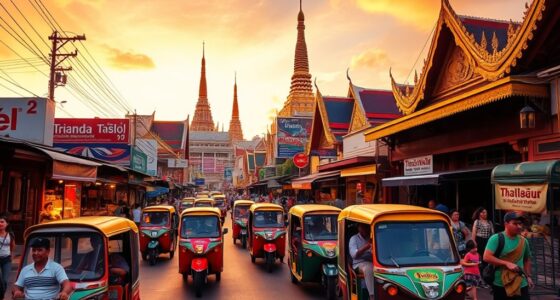

Thailand’s history begins with ancient kingdoms like Sukhothai and the powerful Ayutthaya Empire, which influenced its culture through art, architecture, and trade. After Ayutthaya’s fall, the Chakri dynasty established modern Bangkok, blending old traditions with Western influences. Buddhism plays a central role in daily life and festivals. Today, Thailand’s culture is a vibrant mix of ancient customs, modern innovations, and diverse influences—exploring further reveals how these elements shape its unique identity.
Key Takeaways
- Thailand’s history is rooted in early kingdoms like Sukhothai and Ayutthaya, shaping its cultural and political identity.
- The Thai script, developed in 1283, plays a crucial role in preserving cultural heritage and literature.
- Buddhism influences Thai festivals, art, and daily life, reflecting deep spiritual traditions.
- Cultural fusion in modern Thailand blends traditional practices with Western influences, enriching its social landscape.
- Thailand’s rich arts, architecture, and festivals showcase a blend of indigenous, Khmer, Chinese, and Western cultural elements.
Early Settlements and Kingdoms of Ancient Thailand
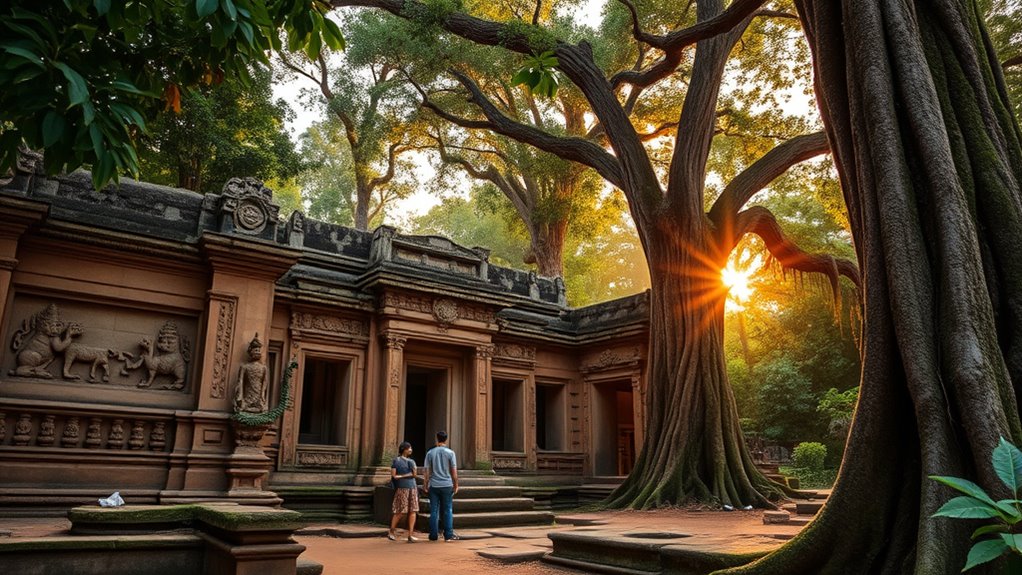
The early history of Thailand is shaped by a series of settlements and kingdoms that laid the foundation for its rich cultural heritage. Around the 8th to 10th centuries, Tai peoples migrated from Guangxi, China, settling in northern Thailand. Before that, the Mon people’s Hindu-Buddhist Dvaravati culture thrived from the 7th to 10th centuries across the region. During this period, the Singhanavati Kingdom (691 BCE–638 CE) emerged, which later evolved into the Ngoenyang Kingdom in the 7th century amid the “fourteen chiefdoms.” In 1238, the Sukhothai Kingdom was founded after overthrowing Khmer rule, with King Ramkhamhaeng developing the Thai script in 1283. These early kingdoms established the cultural and political roots that shaped Thailand’s identity. Additionally, the influence of ancient script development played a crucial role in preserving and transmitting the region’s cultural heritage through generations.
The Rise and Fall of the Ayutthaya Empire
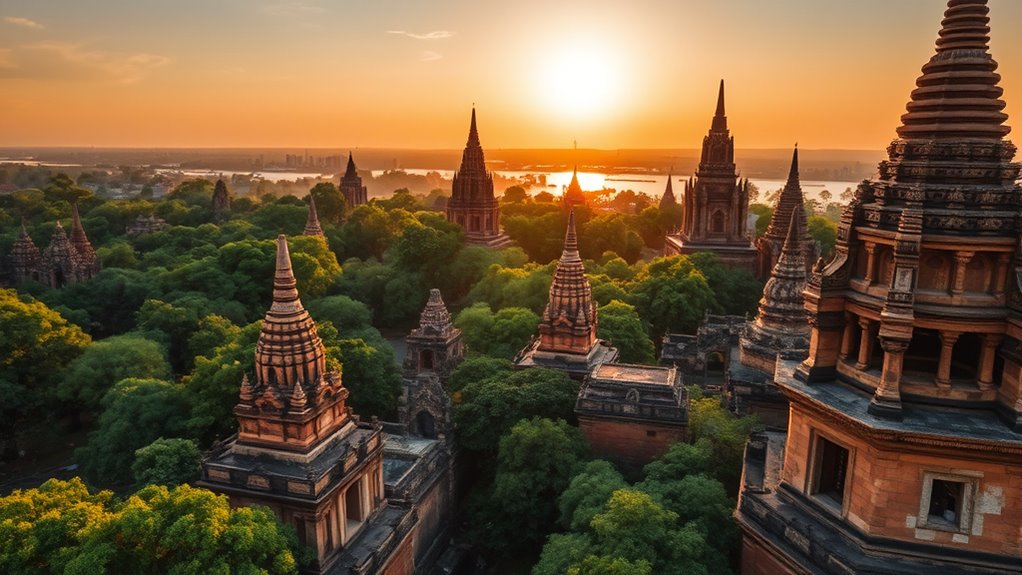
Following the early kingdoms that laid Thailand’s cultural foundations, the Ayutthaya Empire rose to prominence in 1351 as a powerful and influential regional force. You witness its expansion through trade, diplomacy, and military strength, establishing alliances with Europeans like the Portuguese and Dutch. Its capital, Ayutthaya, became a thriving hub of arts, architecture, and commerce, reflecting a blend of Thai, Khmer, and foreign influences. The empire also played a significant role in cultural exchange, fostering the development of unique Thai art and traditions. However, this prosperity attracts enemies, and in 1767, Burmese invasions topple the kingdom. You see the city destroyed, its treasures looted, and the empire’s dominance shattered. Despite its fall, Ayutthaya’s legacy endures in Thai culture, art, and history, shaping the nation’s identity and inspiring future rulers to revive and build upon its grandeur.
The Thon Buri Period and the Establishment of the Chakri Dynasty
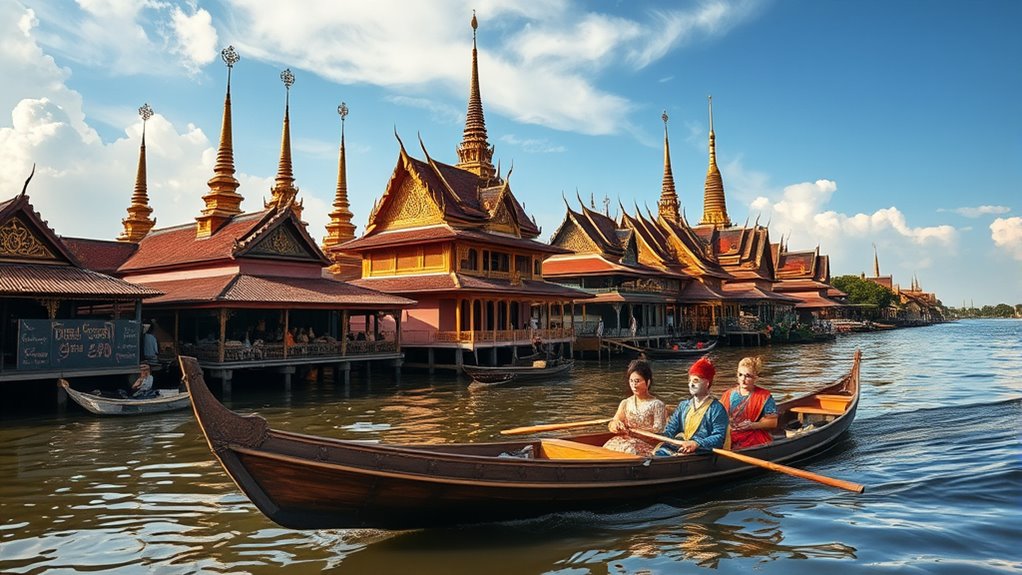
After the fall of Ayutthaya in 1767, Taksin the Great led efforts to expel Burmese invaders and restore stability to Siam. He established Thon Buri as the new capital on the west bank of the Chao Phraya River, symbolizing resilience. Taksin welcomed Chinese merchants and craftsmen, boosting trade and rebuilding the economy. His military campaigns expanded Siamese influence over Cambodia, Laos, and the Malay Peninsula. However, his reign ended abruptly due to mental instability, leading to his execution in 1782. Following his fall, Chao Phraya Chakri, a skilled general, founded the Chakri dynasty and moved the capital to Bangkok. The new dynasty unified the nation and laid the groundwork for modern Thailand’s political and cultural identity.
| Thon Buri | Bangkok |
|---|---|
| Resilient capital | Modern metropolis |
| Chinese influence | Western modernization |
| Taksin’s rule | Chakri dynasty |
Modernization and National Identity in the 19th and 20th Centuries
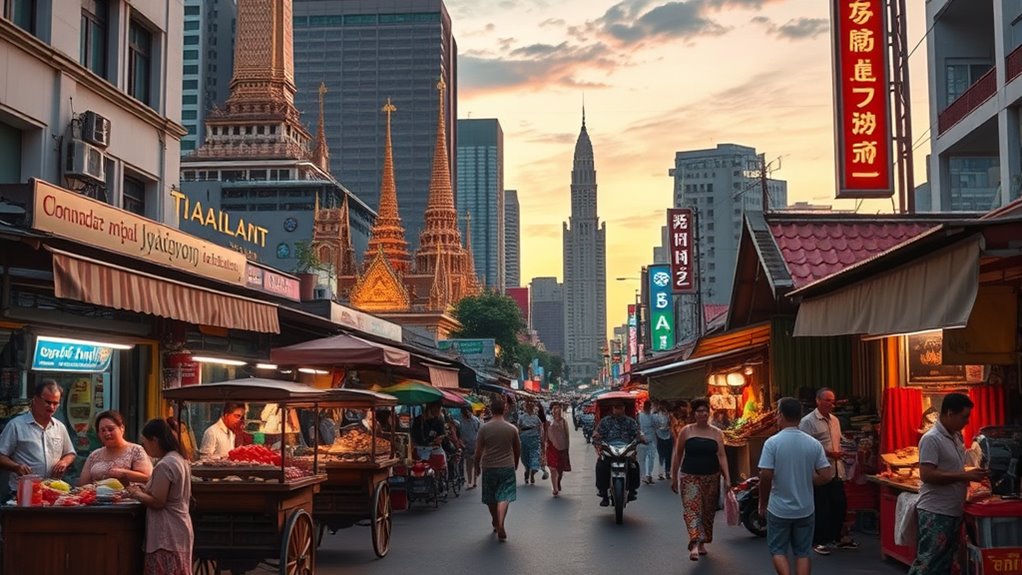
During the 19th and early 20th centuries, Thailand commenced a process of modernization that considerably shaped its national identity. King Chulalongkorn (Rama V) led reforms, building railways, schools, and legal systems, which helped modernize the country while preserving independence from colonial powers. You’ll see how the government adopted Western ideas, reformed administration, and abolished slavery, fostering a sense of national pride. The 1932 revolution shifted Thailand toward a constitutional monarchy, reducing royal power and creating a parliamentary system. As you observe, the country’s identity evolved from traditional monarchic authority to a nation blending indigenous culture with modern institutions. This period laid the foundation for Thailand’s development, balancing tradition with progress, and defining its unique place in regional and global affairs. Additionally, the influence of Western ideas on governance and society played a significant role in shaping Thailand’s modern national identity.
Thailand’s Role in Global Conflicts and Political Transformations
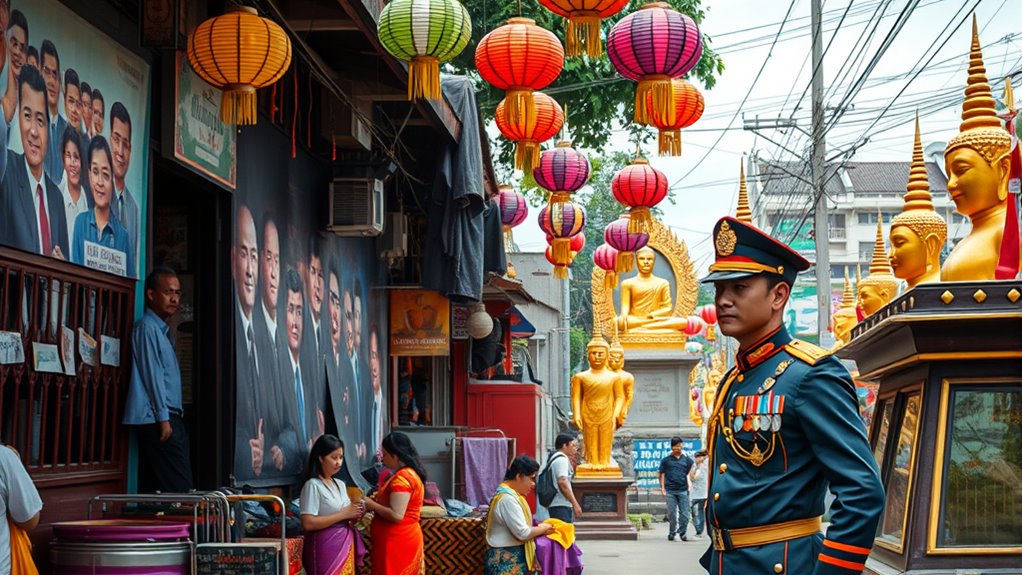
Thailand has played a strategic role in regional and global conflicts by steering alliances and maintaining its independence amid powerful neighbors. During the 20th century, it navigated complex international tensions, aligning with allies like Britain and Japan during World War I and II. Despite Japanese influence during WWII, Thailand preserved its sovereignty, negotiating treaties that limited colonial encroachment. The country shifted from an absolute monarchy to a constitutional system in 1932, reflecting internal political transformations. Thailand’s involvement in regional conflicts, such as the Vietnam War, saw it supporting U.S. efforts while balancing its sovereignty. Politically, Thailand experienced coups and protests, shaping its modern democracy. Through these conflicts and reforms, Thailand’s leadership aimed to protect national stability, assert independence, and influence regional diplomacy.
Cultural Heritage: Traditions, Art, and Religious Influences
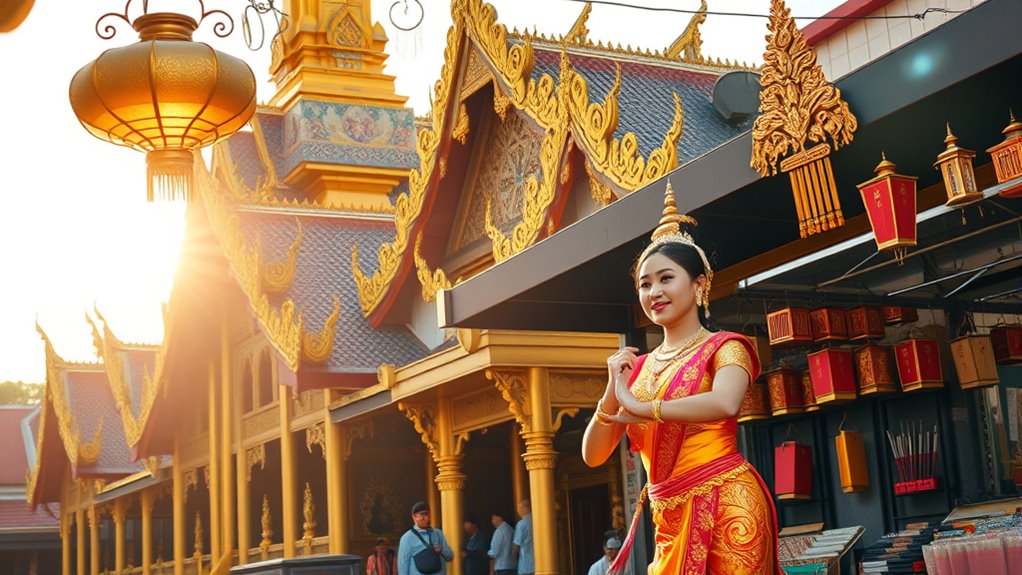
Rich in traditions and artistic expression, Thai culture reflects a deep intertwining of religious beliefs, historical influences, and indigenous customs. You’ll notice that Buddhism, especially Theravada Buddhism, shapes many cultural practices, festivals, and daily routines. Traditional arts like classical dance, intricate masks, and vibrant music preserve ancient stories and spiritual themes. The Thai script, developed in the 13th century, embodies national identity, while craftsmanship in textiles, ceramics, and woodwork highlights regional diversity. Religious influences are evident in ornate temples, statues, and rituals, blending Hindu, Buddhist, and animist elements. Celebrations such as Songkran and Loy Krathong showcase communal devotion and respect for nature. Overall, Thailand’s cultural heritage is a living reflection of its spiritual values, historical milestones, and rich artistic legacy. Additionally, cultural preservation efforts play a vital role in maintaining these traditional practices for future generations.
Contemporary Thai Society and Cultural Fusion
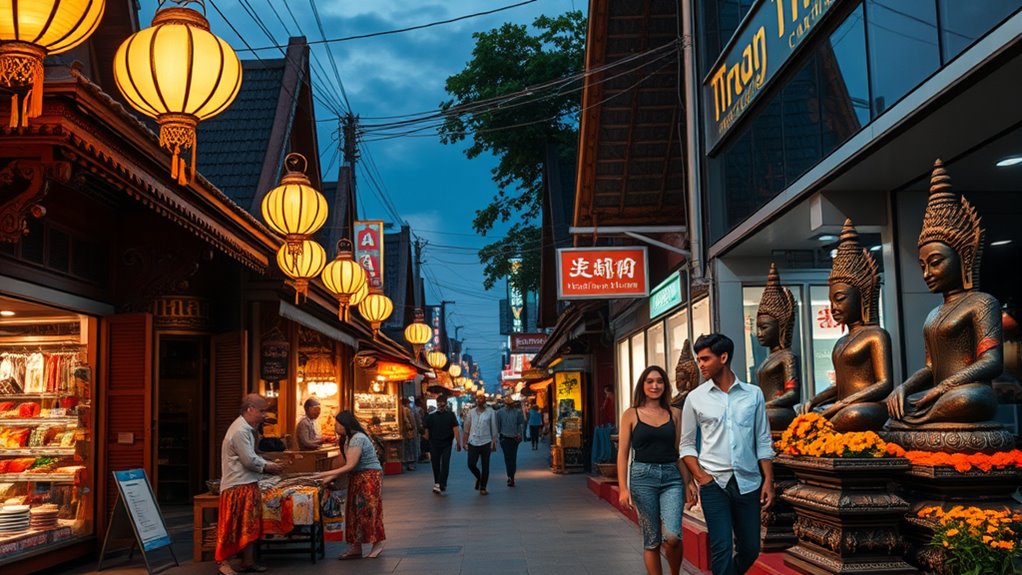
You see how modern Thai society blends traditional customs with Western influences, creating a unique cultural fusion. Urban centers like Bangkok are melting pots where ancient traditions coexist with global trends. This dynamic mix shapes everyday life and reflects Thailand’s evolving identity today. Embracing cultural intelligence enables Thais and visitors alike to better understand and navigate this complex cultural landscape.
Traditional and Western Customs
Contemporary Thai society is a vibrant blend of traditional customs and Western influences, creating a unique cultural fusion. You’ll notice this mix in everyday life, from modern clothing styles to traditional dress for festivals. Respect for Buddhist rituals remains strong, but Western holidays like Christmas and New Year are widely celebrated. You might see Western-style cafes alongside traditional markets, and Western music blending with Thai classical sounds. Social behaviors also reflect this fusion—while the wai greeting honors tradition, casual greetings like handshakes are common. Education, entertainment, and business practices incorporate Western ideas, yet deep-rooted customs such as merit-making and respect for elders stay essential. This balance defines Thailand’s dynamic identity, embracing change without losing its cultural core. The presence of cultural fusion enriches Thailand’s social landscape, making it a fascinating country where tradition and modernity coexist harmoniously.
Urban Cultural Melting Pot
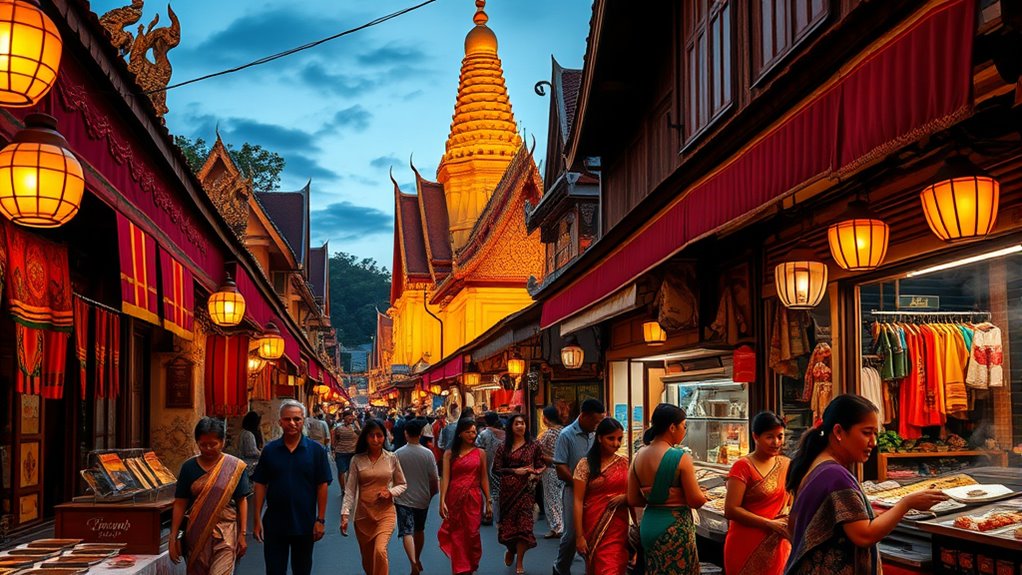
Modern Thai cities buzz with a vibrant mix of traditional customs and Western influences, creating a dynamic cultural landscape. You’ll notice this fusion in everyday life, from bustling markets to modern entertainment. Here are four key elements that define this melting pot:
- Diverse cuisines blending Thai spices with international flavors, offering street food stalls that serve everything from Pad Thai to fusion dishes.
- Architectural styles combining ancient temples with sleek skyscrapers, reflecting historical roots and modern innovation.
- Multicultural festivals celebrating Thai traditions alongside Chinese, Indian, and Western events.
- Contemporary art and music scenes incorporating traditional instruments and motifs with global trends. This cultural fusion is also reflected in the modern products available in Thai markets, showcasing the integration of traditional and contemporary influences.
This vibrant mix keeps Thai cities lively, evolving, and uniquely their own—an exciting space where history and modernity coexist seamlessly.
Frequently Asked Questions
How Did Thai Language and Script Influence Regional Southeast Asian Cultures?
You see, Thai language and script greatly influenced regional Southeast Asian cultures by spreading through trade, religion, and political expansion. As Thai rulers and monks used the script for religious texts and administration, neighboring countries adopted and adapted it, shaping their own writing systems. This shared linguistic foundation fostered cultural exchanges, strengthened diplomatic ties, and promoted a sense of regional identity that persists today.
What Are the Key Elements of Traditional Thai Religious Practices Today?
You observe that traditional Thai religious practices today center around Theravada Buddhism, which influences daily life and festivals. You see shrines and temples everywhere, where people pray, make offerings, and participate in rituals. You notice that animist beliefs blend seamlessly with Buddhism, emphasizing spirits and ancestors. You might also experience merit-making activities like almsgiving, meditation, and ceremonies during major Buddhist holidays, reflecting deep spiritual devotion and cultural identity.
How Did Colonial Pressures Shape Thailand’s Modern Political Landscape?
You might be surprised to learn that Thailand remained uncolonized, with over 80 treaties preserving its independence. Colonial pressures forced Thailand to modernize and adapt its political landscape, like establishing a constitutional monarchy in 1932 to limit royal power. These influences prompted reforms, economic growth, and regional diplomacy, helping Thailand maintain sovereignty in a colonial-dominated Southeast Asia. This resilience shaped a unique political identity that balances tradition and modern governance.
In What Ways Has Chinese Immigration Impacted Thai Cuisine and Festivals?
You’ll notice Chinese immigration greatly influences Thai cuisine and festivals. Chinese flavors, ingredients, and cooking techniques blend into traditional dishes like dim sum, noodles, and stir-fries. Festivities such as Chinese New Year are celebrated widely, with lion dances, fireworks, and offerings to ancestors becoming part of Thai traditions. This cultural exchange enriches Thailand’s vibrant festivals and diverse culinary landscape, creating a unique fusion that reflects deep historical connections.
What Are the Major Symbols of Thai National Identity and Their Origins?
You might wonder what symbols truly represent Thai national identity. The national flag, with its red, white, and blue stripes, symbolizes the nation, religion, and monarchy. The revered Buddha image reflects Buddhism’s deep roots in Thai culture. The golden Garuda symbolizes royal authority, while the traditional Thai dance and music highlight cultural heritage. These symbols originate from Thailand’s history, religion, and monarchy, uniting the people through shared identity.
Conclusion
As you explore Thailand’s rich history and vibrant culture, you’ll discover a land that gracefully adapts while honoring its deep roots. Its timeless traditions and resilient spirit invite you to appreciate a society that gently evolves, blending old and new with subtle elegance. Embrace the enchanting story of Thailand, where every moment hints at a warm, ongoing narrative—one that promises to captivate your heart and inspire your curiosity for years to come.