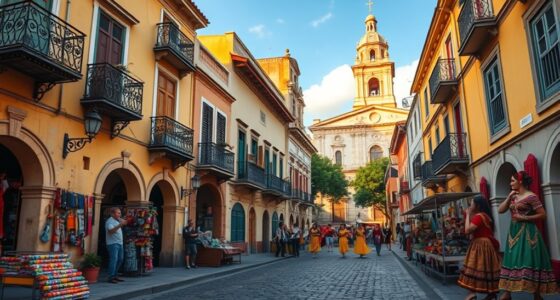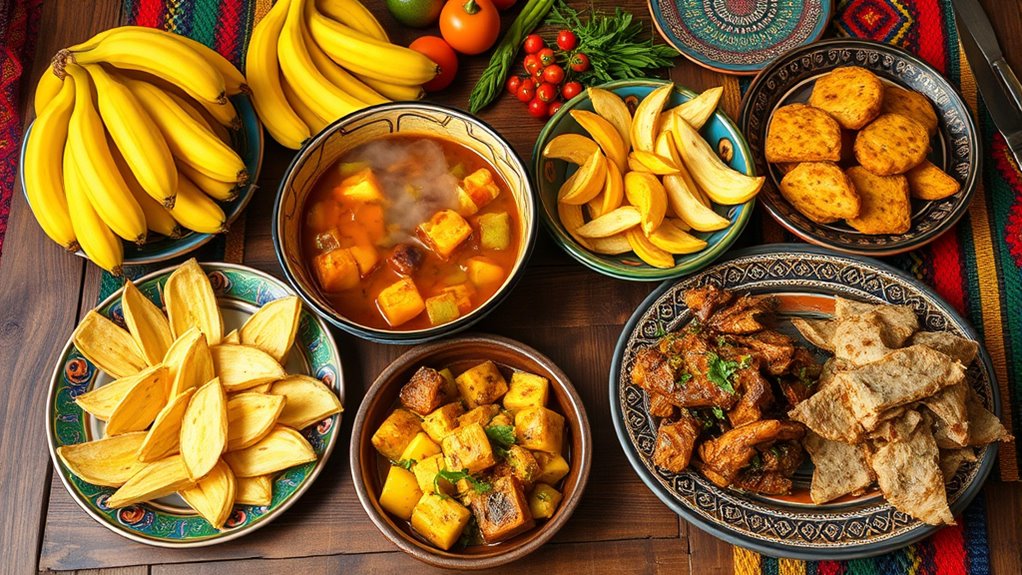

Discover the vibrant cuisine of the Dominican Republic, shaped by Spanish, African, and Taíno influences. You’ll find staples like rice, plantains, yuca, and hearty stews such as sancocho, often cooked slowly with flavorful sofrito. Iconic dishes like La Bandera and moro de guandules symbolize cultural pride, while sides like mangú and fried plantains add variety. Food plays a key role in celebrations and community life—explore further to uncover more delicious traditions.
Key Takeaways
- Dominican cuisine blends Spanish, African, and Taíno influences, reflecting a rich cultural heritage.
- Staple ingredients include rice, plantains, tubers, and legumes, prepared with slow-cooking techniques like sofrito.
- Iconic dishes such as La Bandera, Sancocho, and Moro de Guandules symbolize national identity and celebration.
- Common sides feature mangú, fried plantains, beans, and concon, emphasizing hearty, flavorful accompaniments.
- Food plays a vital role in social customs, festivals, and life milestones, fostering community and cultural pride.
The Fusion of Cultural Influences in Dominican Cooking
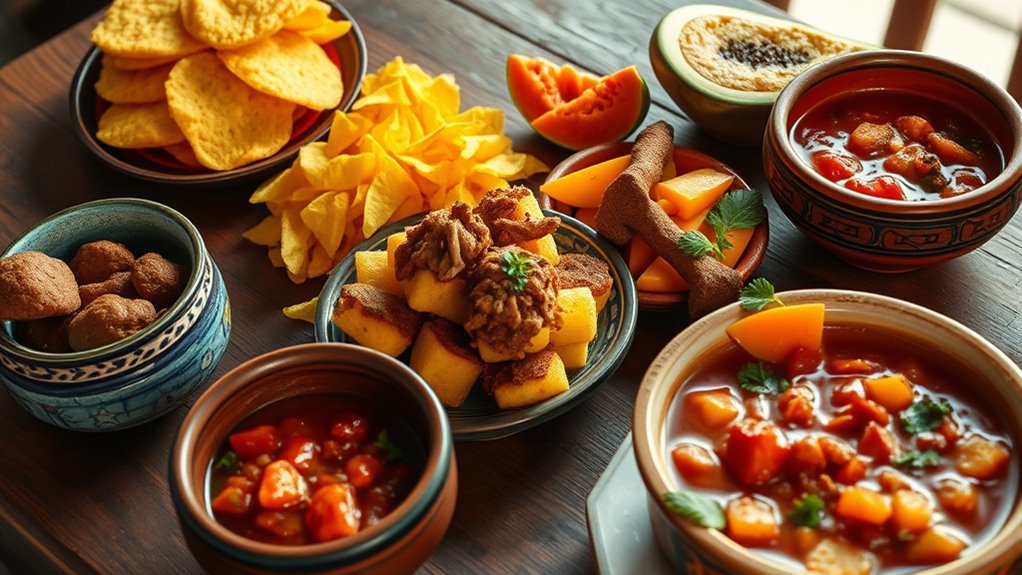
The fusion of cultural influences in Dominican cooking reflects the country’s rich and complex history. You’ll notice Spanish roots in traditional dishes like empanadas and chicharrón, which came with colonial settlers. African heritage contributes hearty stews, cooking styles, and ingredients such as plantains and yuca, adding depth and flavor. Indigenous Taíno influences are evident in the use of native crops like corn, cassava, and local herbs, shaping many traditional recipes. You’ll also find similarities with other Caribbean Spanish-speaking countries, sharing dishes with variations. This blend results in a vibrant culinary identity that combines European techniques, African flavors, and indigenous ingredients, creating a diverse and flavorful food culture that’s both rooted in history and continually evolving. Cultural influences play a pivotal role in shaping the unique flavors and culinary traditions found throughout the country.
Staple Ingredients and Traditional Cooking Techniques
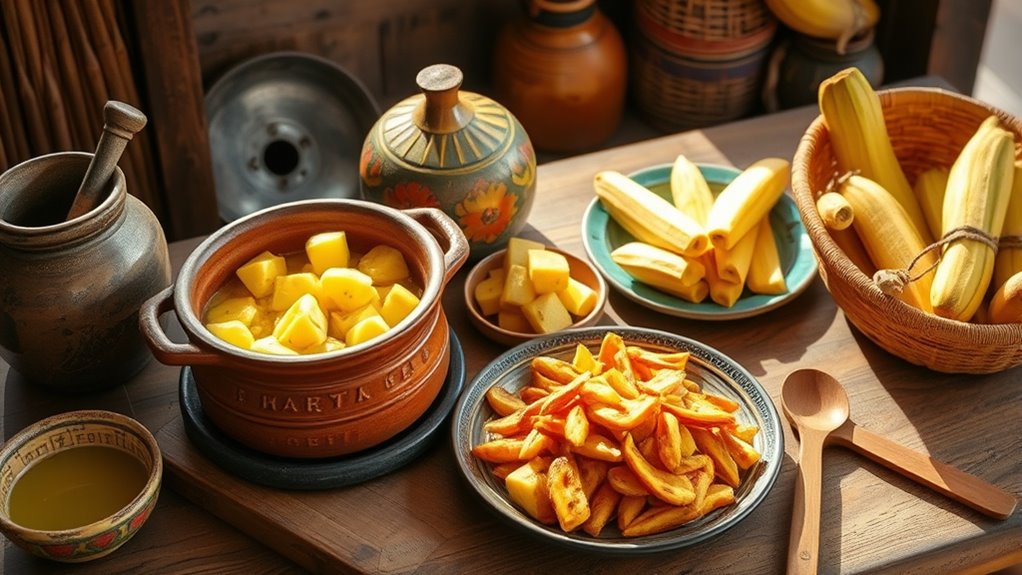
Dominican cuisine revolves around staple ingredients like rice, plantains, tubers, and legumes, which form the foundation of many traditional dishes. You’ll often see rice paired with beans, meats, or vegetables, cooked slowly in caldero pots for rich flavor. Green and ripe plantains are fried, mashed into mangú, or boiled. Tubers like yuca, malanga, and yam feature in hearty stews such as sancocho. Sofrito, a blend of garlic, herbs, and spices, seasons most dishes. Cooking techniques emphasize slow simmering and one-pot meals, ensuring flavors meld deeply. The use of contrast ratio in cooking utensils and presentation can also enhance visual appeal and overall dining experience. Here’s an overview:
| Ingredient | Preparation Methods | Common Dishes |
|---|---|---|
| Rice | Boiled, cooked with coconut or corn | Moro de guandules, arroz con pollo |
| Plantains | Fried, mashed, boiled | Mangú, tostones |
| Tubers | Boiled, stewed | Sancocho, yuca con mojo |
| Legumes | Cooked with spices or in rice dishes | Pigeon peas, beans |
| Herbs & Spices | Sautéed with ingredients or in sofrito | Seasoning for stews |
Iconic Dishes That Define Dominican Culinary Identity

Among the many dishes that capture the essence of Dominican cuisine, certain iconic meals stand out as symbols of national identity. You’ll recognize *La Bandera*, a hearty plate of rice, red beans, and meat, often accompanied by a fresh salad, reflecting unity and pride. *Sancocho* is a beloved stew with multiple meats and tubers, usually served during celebrations, symbolizing community. *Moro de Guandules* combines rice, pigeon peas, and coconut milk, highlighting festive flavors during Christmas. Crispy *Chicharrón* offers a savory snack, while *Empanadas* showcase Spanish influence with stuffed pastries. These dishes embody the vibrant flavors, cultural history, and communal spirit that define the Dominican culinary identity, making them essential to understanding the country’s rich food heritage. Additionally, the use of natural ingredients and traditional cooking methods exemplifies the importance of authenticity in preserving these culinary traditions.
Typical Sides and Accompaniments in Daily Meals

Typical sides and accompaniments play a crucial role in completing the vibrant meals of the Dominican Republic. They add flavor, texture, and balance to your plate. You’ll often find these staples:
- Mangú — mashed green plantains served at breakfast or with savory dishes, often topped with onions or cheese.
- Fried plantains — either ripe (sweet) or green (savory), enjoyed as a side or snack to complement main dishes.
- Beans — red, black, or pigeon peas, cooked plain or with rice, providing essential protein and hearty flavor.
Other common accompaniments include crispy concon (the toasted rice at the pot’s bottom), fresh avocado, and simple salads. These sides help create a well-rounded, flavorful meal rooted in tradition.
Customs, Celebrations, and the Role of Food in Dominican Society
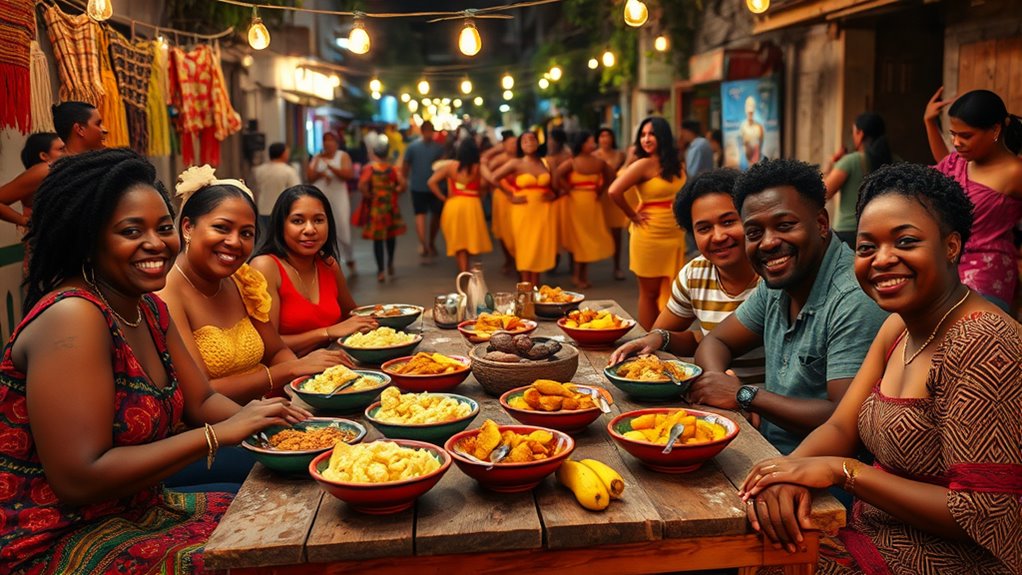
Food plays a central role in shaping social customs and celebrations across the Dominican Republic. When you participate in festivals and family gatherings, you’ll notice how shared meals bring people together, strengthening community bonds. During holidays like Christmas and Independence Day, traditional dishes like sancocho and moro de guandules take center stage, symbolizing national pride and cultural heritage. Food also marks life milestones, such as baptisms and weddings, where special recipes are prepared to honor tradition. Street food vendors serve empanadas and chicharrón, adding to the lively atmosphere. Through these customs, food becomes more than sustenance; it’s a way to preserve history, express identity, and celebrate togetherness in Dominican society. Cultural significance of food deepens these traditions, making culinary practices a vital part of social cohesion.
Frequently Asked Questions
How Has Tourism Influenced Modern Dominican Cuisine?
Tourism has considerably influenced your modern Dominican cuisine by introducing international flavors and culinary trends, making traditional dishes more innovative and diverse. You’ll find restaurants blending local ingredients with global techniques, appealing to tourists’ tastes. This exposure encourages you to try new fusion dishes, while also preserving authentic recipes. As a result, your culinary scene becomes more vibrant, combining tradition with modernity, and promoting the country’s rich food culture to a broader audience.
Are There Any Regional Variations Within Dominican Cooking Styles?
Yes, you’ll notice regional variations in Dominican cooking styles. In coastal areas, seafood dishes like conch and fish stews are more common, while inland regions favor hearty stews with tubers and meats. You might find different seasoning preferences, such as more spice in the south or sweeter flavors in the central regions. These differences reflect local ingredients and cultural influences, giving each area its unique culinary identity.
What Are Common Dietary Restrictions or Traditional Fasting Foods?
Think of your diet as a delicate dance; some steps are paused during fasting periods. You might avoid meats, dairy, or certain fats, especially during Lent or religious observances. Traditional fasting foods include fresh fruits, vegetables, legumes, and saltfish, which nourish the soul without breaking spiritual commitments. You honor these restrictions to connect with faith and community, transforming everyday eating into a soulful ritual.
How Is Seafood Incorporated Into Dominican Culinary Traditions?
Seafood plays a significant role in Dominican cuisine, especially along the coast. You’ll find dishes like ceviche, fried fish, and seafood stews, often flavored with garlic, cilantro, and local herbs. It’s common to serve seafood with rice, plantains, or fresh salads. During special occasions or festivals, seafood dishes become even more prominent, reflecting the country’s rich maritime heritage and love for fresh, flavorful ingredients from the sea.
What Role Do Street Foods Play in Everyday Dominican Diets?
Street foods play a essential role in your daily life by offering quick, flavorful options that fit seamlessly into your busy schedule. You might grab an empanada or some crispy chicharrón on the go, enjoying the vibrant flavors that reflect local traditions. These snacks aren’t just convenient—they’re a way to connect with community and culture, turning everyday moments into celebrations of Dominican culinary spirit.
Conclusion
As you explore Dominican cuisine, you’re tasting a vibrant mosaic of history and culture, like a lively dance that moves through every bite. The rich flavors and cherished traditions invite you to savor more than just food—they offer a taste of the island’s soul. So, let each meal be a celebration, a colorful tapestry woven with love, history, and the warm spirit of Dominican life.