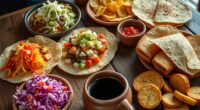
El Salvador’s history blends ancient indigenous cultures like Pipil, Lenca, and Maya with Spanish colonial influence, shaping its vibrant traditions. You’ll find evidence of this in archaeological sites, festivals, and crafts like pottery and weaving. The nation’s journey includes independence, periods of military rule, and a civil war that left lasting scars. Today, its culture celebrates resilience through music, dance, and cuisine. If you explore further, you’ll discover even more about how this diverse history influences its modern identity.
Key Takeaways
- Indigenous groups like Pipil, Lenca, and Maya established advanced societies that influence modern El Salvador’s culture and traditions.
- Spanish colonization introduced Christianity and European customs, blending with indigenous practices to shape local culture.
- El Salvador gained independence in 1821, with its history marked by political upheaval, military rule, and social inequality.
- The civil war (1980-1992) caused widespread atrocities, but peace accords fostered reconciliation and healing efforts.
- Cultural heritage is expressed through vibrant festivals, traditional crafts, and dishes like pupusas, reflecting a rich indigenous and Spanish legacy.

El Salvador Folk Art Girl Traditional Dress Design for Girls T-Shirt
Traditional Folk Art Dress design. Celebrate Salvadoran pride with this vibrant folk art design featuring a joyful girl…
As an affiliate, we earn on qualifying purchases.
As an affiliate, we earn on qualifying purchases.
Indigenous Roots and Colonial Foundations
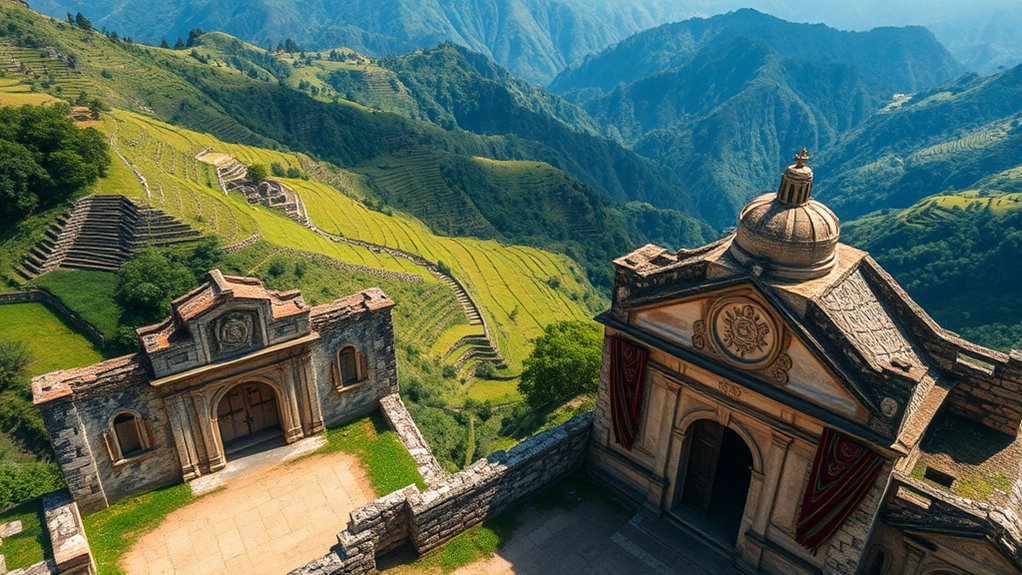
El Salvador’s indigenous roots run deep, with groups like the Pipil, Lenca, and Maya establishing complex societies long before European contact. You can see their influence in ancient settlements, artifacts, and traditions that still survive today. These communities developed advanced agriculture, trade networks, and spiritual practices. When the Spanish arrived in the early 16th century, they quickly imposed their rule, integrating the land into the Viceroyalty of New Spain. Colonial authorities introduced Christianity and European customs, blending them with indigenous traditions. Despite conquest and colonization, indigenous cultures persisted, often underground or in secret. Their resilience shapes El Salvador’s cultural landscape, visible in language, art, and community practices, reminding you of a rich history that predates colonial rule and continues to influence the nation’s identity.

Navy Peony Epic El Salvador Travel Stickers (28pcs) – Hand Illustrated, San Salvador, Salvadoran-Themed Decals for Journals, Scrapbooks, Luggage
CELEBRATE THE COLORS OF EL SALVADOR. Journey through volcanoes, beaches, and ancient ruins with our El Salvador Travel…
As an affiliate, we earn on qualifying purchases.
As an affiliate, we earn on qualifying purchases.
Path to Independence and National Development
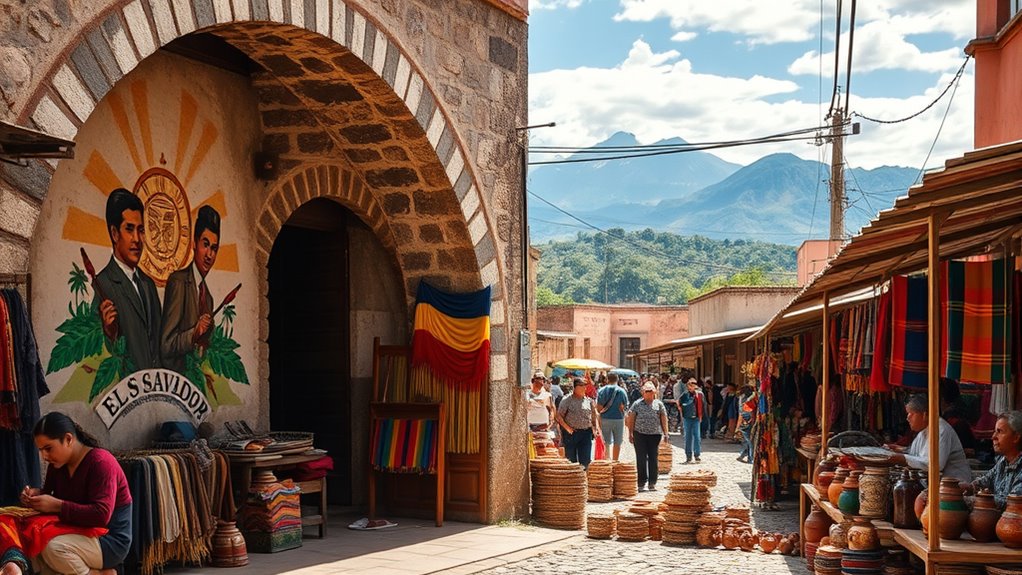
The rich indigenous cultures and colonial influences laid the groundwork for El Salvador’s pursuit of independence. You experience a society shaped by indigenous resilience and Spanish traditions, fueling desires for self-rule. In 1821, after years of unrest, El Salvador declared independence from Spain, joining broader Latin American movements. The new nation faced challenges establishing stability, with political chaos and economic reliance on coffee exports. Wealth concentrated among landowners, deepening inequality. Despite these struggles, efforts at reform emerged, but frequent coups hindered progress. Regional conflicts, like the 1969 skirmish with Honduras, tested national unity. Throughout this period, the nation laid the foundations for its identity, balancing colonial legacies with aspirations for sovereignty and growth amid ongoing social tensions. Additionally, the influence of knowledge and learning from various sources helped shape the emerging national consciousness and cultural identity.

The 2013 Import and Export Market for Men's and Boys' Shirts of Woven Textile Materials in El Salvador
As an affiliate, we earn on qualifying purchases.
As an affiliate, we earn on qualifying purchases.
Era of Military Rule and Political Turmoil
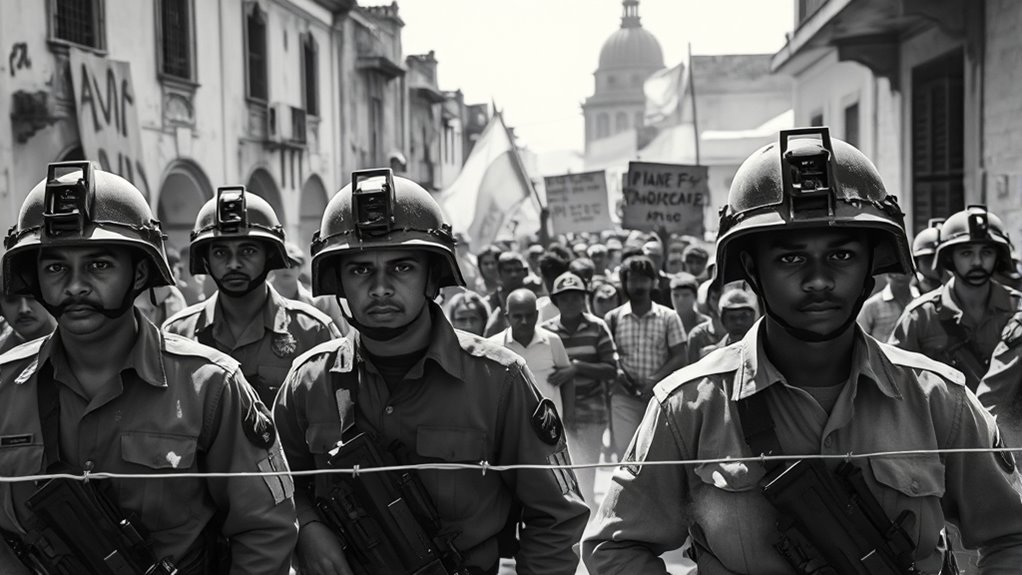
Amid rising tensions and social unrest, military leaders seized power in El Salvador, ushering in an era marked by authoritarian rule and political instability. You witness a country under strict military control, suppressing opposition and enforcing silence through violence. During this period, you see:
Military rule and repression fueled unrest and shaped El Salvador’s turbulent political future.
- The Hernández Martínez regime, known for La Matanza brutalizing indigenous communities in 1932.
- Frequent coups and military governments maintaining power with little regard for democratic processes.
- Increasing social unrest fueled by economic inequality, especially among poor communities and landless workers.
This climate of repression and instability leads to widespread discontent, setting the stage for future conflicts. You realize that this period deeply affects El Salvador’s political landscape, shaping its struggles for democracy and justice.

Anley Fly Breeze 3×5 Foot El Salvador Flag – Vivid Color and Fade proof – Canvas Header and Double Stitched – Salvadoran National Flags Polyester with Brass Grommets 3 X 5 Ft
Fly breeze series – This flag is ideal for low wind area. The lightweight design allows the flag…
As an affiliate, we earn on qualifying purchases.
As an affiliate, we earn on qualifying purchases.
Civil War, Human Rights, and Reconciliation
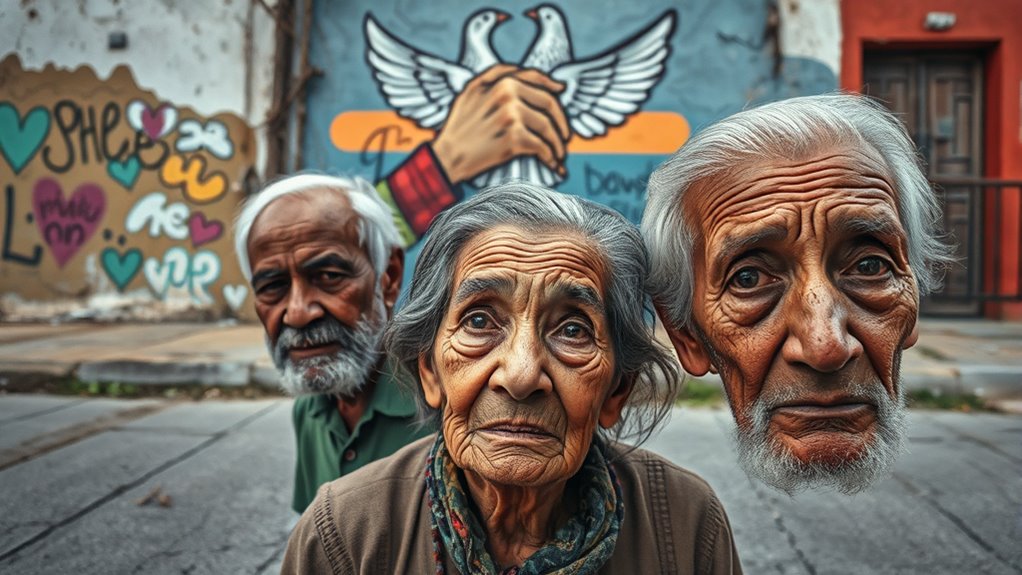
As civil conflict erupted in 1980, El Salvador plunged into a brutal war characterized by widespread human rights abuses and devastating violence. You witness atrocities like massacres, disappearances, and forced displacements, with innocent civilians caught in the crossfire. The government, backed by the U.S., and guerrilla groups, like the FMLN, commit brutal acts, leaving scars on the nation. Many people flee their homes, seeking safety abroad. International organizations condemn the violence, but peace remains elusive for years. In 1992, the Chapultepec Peace Accords finally bring an end to the fighting, opening a path toward reconciliation. Today, efforts focus on healing wounds, addressing past injustices, and building a more peaceful society, even as challenges like violence and inequality persist. Prophetic dreams and other spiritual practices have played a role in the healing processes for some communities, offering hope and guidance during difficult times.
Cultural Heritage, Traditions, and Modern Identity
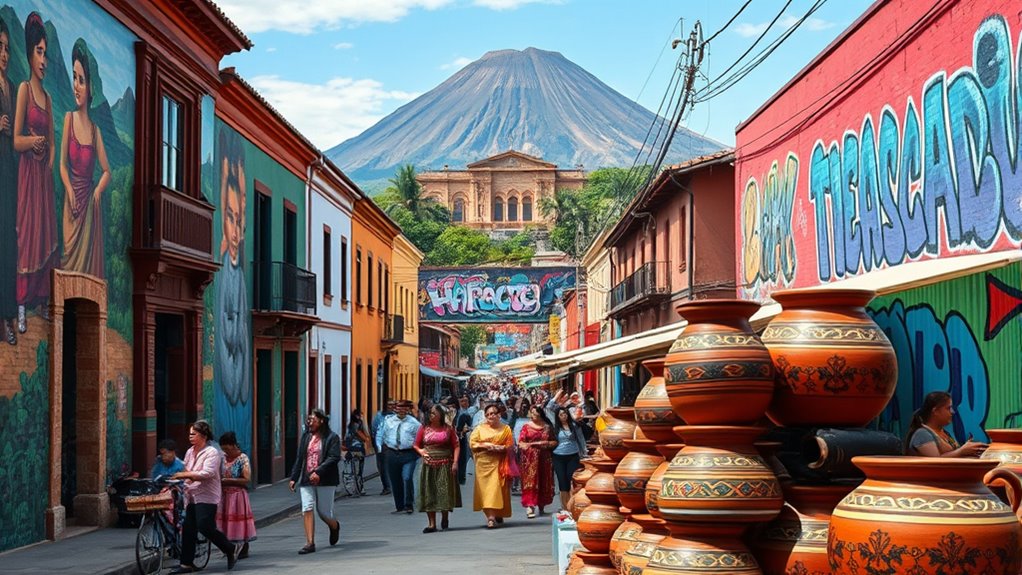
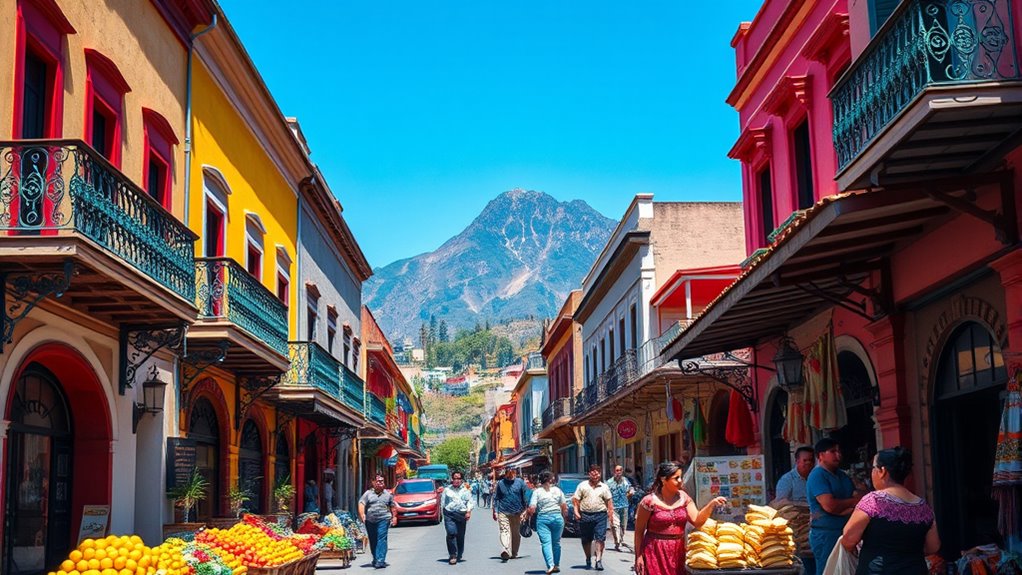
El Salvador’s rich cultural heritage is a vibrant tapestry woven from indigenous, Spanish, and African influences that shape the nation’s identity today. You can experience this diversity through lively festivals, traditional crafts, and regional cuisine. You might enjoy:
El Salvador’s vibrant culture blends indigenous, Spanish, and African influences through festivals, crafts, and cuisine.
- Celebrating festivals like Fiestas de San Migueland *Fiestas de San Salvador*, which showcase colorful parades, music, and dance.
- Exploring local crafts such as pottery, weaving, and woodwork, reflecting indigenous artistry.
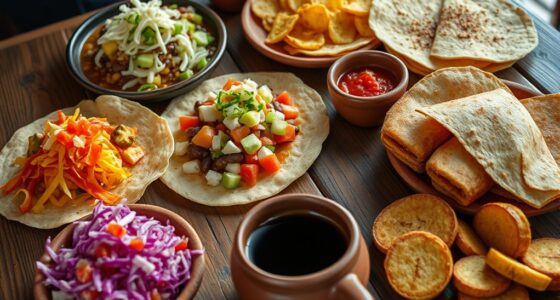
- Tasting dishes like pupusas, *sopaipillas*, and *chicharrón*, which highlight traditional ingredients and cooking techniques.
- The country’s vetted craftsmanship and cultural expressions are often recognized internationally, emphasizing the importance of preserving these traditions.
Modern El Salvador continues to embrace its heritage while blending contemporary culture. This dynamic mix influences art, music, and daily life, creating a unique national identity rooted in history and evolving traditions.
Frequently Asked Questions
How Have Indigenous Traditions Influenced Modern Salvadoran Society?
You’ll notice that indigenous traditions deeply influence Salvadoran society today. You might see it in traditional foods like pupusas, which blend indigenous ingredients and techniques. Cultural festivals, crafts, and local art often incorporate indigenous motifs and practices. Even in language and community celebrations, the spirit of indigenous resilience and customs remains alive. These traditions help preserve a unique identity, connecting you to the country’s rich historical roots and cultural diversity.
What Role Did Coffee Plantations Play in Shaping Social Hierarchies?
You see, coffee plantations played a significant role in shaping social hierarchies in El Salvador. They concentrated land ownership in the hands of a few wealthy families, creating a class divide. As the coffee industry boomed in the late 19th century, it reinforced economic inequality and established a hierarchy based on land and wealth. This structure influenced politics, society, and access to resources for decades to come.
How Did International Aid Impact Post-War Reconstruction Efforts?
You see, international aid played a crucial role in El Salvador’s post-war reconstruction, with over $6 billion in aid flowing into the country between 1992 and 2010. This support helped rebuild infrastructure, promote reconciliation, and develop social programs. You can imagine, this influx of resources provided hope for recovery, but it also created dependency challenges. Overall, aid was essential, yet it underscored the need for sustainable, long-term growth.
What Are the Most Significant Indigenous Archaeological Sites in El Salvador?
You should explore sites like Joya de Cerén, known as the “Pompeii of the Americas,” which preserves a 6th-century Maya farming community. Don’t miss San Andrés, an important Maya archaeological site with impressive stelae and structures. Also, visit Tazumal in Chalchuapa, a significant Mycenaean-style pyramid complex. These sites give you a glimpse into El Salvador’s rich indigenous past and offer a fascinating connection to ancient civilizations.
How Has Contemporary Art Evolved From Historical Cultural Influences?
You see that contemporary art in El Salvador reflects a blend of indigenous, Spanish, and modern influences. Artists incorporate traditional motifs, vibrant colors, and local themes, creating a unique cultural dialogue. You’ll notice how modern techniques merge with historical traditions, expressing social issues, identity, and heritage. This evolution showcases a dynamic artistic scene that honors its roots while embracing innovation, making Salvadoran art rich, diverse, and constantly evolving.
Conclusion
As you explore El Salvador’s rich history, you’ll see how its indigenous roots and struggles for independence shaped its vibrant culture today. Did you know that over 70% of the population identifies as mestizo, reflecting a blend of indigenous and Spanish heritage? This diverse background fuels the nation’s resilience and creativity. Embrace El Salvador’s story of perseverance, where tradition and modernity intertwine, making it a truly unique and inspiring place to learn about.