TL;DR

Get travel and outdoor gear delivered free with Prime
- Fast, free delivery on millions of items
- Prime Video, Amazon Music and more included
- Member-only deals all year
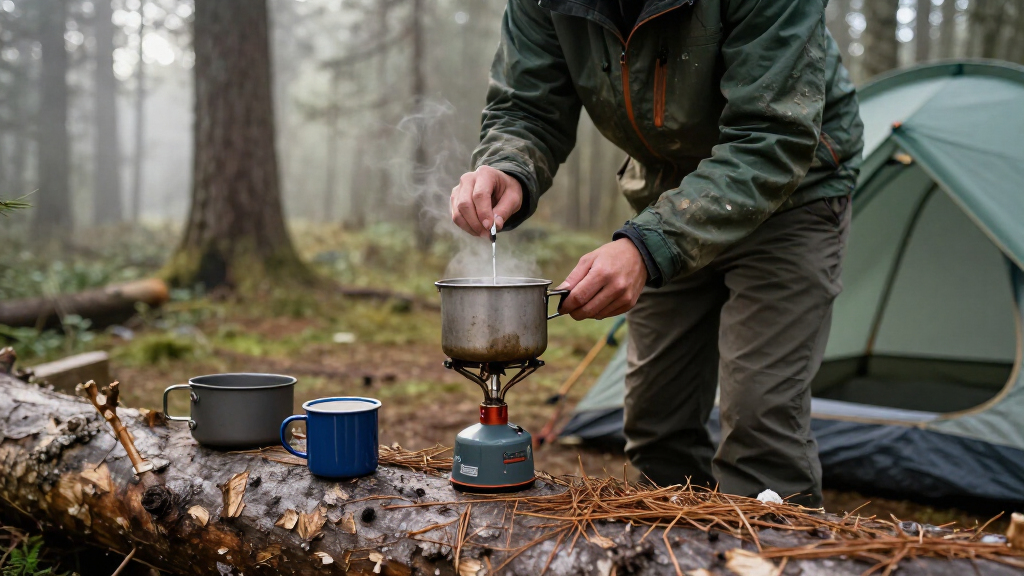
Compact camping stoves are portable cooking devices designed for trips where weight and packed size matter, from simple canister-top burners to integrated boiling systems and liquid-fuel models. Choose by comparing your complete packed setup, fuel access, stability, weather and cooking needs; always follow the maker’s instructions and use the stove outdoors in a safe, open area.
Compact camping stoves come in several designs, and the burner is only one part of the weight, fuel and cooking equation.
Here’s how to match a stove to your trip, meals and weather, compare common types, plan fuel and use your setup safely. A quick breakfast on a calm summer trail calls for a different tool than a hot dinner in a cold, windy camp.
Compare the whole packed system, including the pot, ignition, permitted wind protection and fuel—not only burner weight.
Choose an integrated system for simple boiling; consider broader support and flame control for simmering or wider cookware.
Check stove and fuel compatibility before travel; threaded canister, butane and white gas systems are not universally interchangeable.
Plan fuel from meal count and expected conditions, then test your stove and menu before depending on an estimate in remote terrain.
Use the stove outdoors on level ground, away from combustibles; never cook in a tent, vehicle or enclosed space.
What compact camping stoves do—and what the small size changes
Compact camping stoves are portable cooking devices designed for trips where weight and packed size matter, including backpacking, bikepacking and paddling. Some are little burners that screw onto a fuel canister; others pair a burner with a pot designed to work with it. That tiny package saves room, but it also gives you less space and stability than a home stove.Think of choosing one like packing shoes: the lightest pair isn’t automatically right if the route is rocky or the load is heavy. For a solo overnight trip with instant oatmeal and soup, a small burner may be all you need. For a group cooking a wider meal, pot support and flame control matter more.
Start with the job. If you mainly boil water, an integrated system can make camp meals quick and straightforward. If you want to fry or simmer, a broader burner and adjustable flame give you more control.
Compare four stove types before you pack
Canister-top stoves are simple and light, while integrated systems prioritize quick boiling; remote-canister and liquid-fuel designs suit different needs for stability, weather and trip length. Compare the tradeoffs against the meals you plan to cook, rather than choosing by the smallest advertised weight.
| Type | Works well for | Tradeoff | Example trip |
|---|---|---|---|
| Canister-top | Short trips and simple meals | Can feel top-heavy with a pot | A solo hiker boiling water for coffee |
| Remote-canister | More stable setups and flexible cookware | Often has extra parts to pack | A pair cooking from a wider pot at camp |
| Integrated system | Fast, efficient water boiling | Less flexible for simmering and other pots | A trekker making freeze-dried meals |
| Liquid-fuel | Some long trips and severe cold | Heavier, more complex and needs maintenance | A winter traveler using a model rated for the conditions |
These are broad patterns, not guarantees: specific models differ. If you’re planning elaborate meals, test your pot and burner together before you leave; a pot that wobbles on a tiny support can turn dinner into a balancing act.
Choose a stove by matching it to your trip
Pick a compact camping stove by matching your cooking, group size, conditions and fuel access to the whole packed system. Work through these checks before you buy: a weekend of solo water boiling and a week of group cooking ask for different equipment.
- List your meals. If you only boil water, an integrated pot system may suit you. If you’ll simmer rice or sauce, look for flame adjustment and cookware support suited to your pot.
- Count your people and pots. A tiny burner may be fine for one mug, but feel precarious under a large pot. Check the maker’s cookware limits.
- Weigh the full kit. Include the stove, pot, igniter, any permitted wind protection and fuel. Fuel weight can outweigh the burner on a longer trip.
- Check local fuel supply. Threaded isobutane-propane canisters, butane and white gas are not interchangeable across all stoves. Use only the fuel specified by the manufacturer.
- Account for weather. Cold, wind, altitude, water temperature, fuel level and pot shape can all change real-world performance. Treat advertised boil times as controlled-condition figures.
For example, a traveler flying to a multi-day route should check whether compatible fuel is sold near the trailhead before settling on a canister model. If no suitable canister is easy to find, the stove’s low burner weight won’t solve the supply problem.
Know what wind and cold do to your cooking
Cold can lower canister pressure, and wind can lengthen cooking time and increase fuel use. Pressure-regulated models aim to keep output steadier as pressure changes, but they cannot erase the effects of cold, wind or fuel choice. Even a clear boil-time figure may not match a gusty campsite.
Imagine trying to boil a mug beside a breezy alpine lake: the flame flickers, the pot loses heat, and you burn through more fuel waiting for bubbles. A heat-exchanger pot can improve efficiency, and some remote-canister models can run with the canister inverted, but use that method only when the manufacturer permits it and gives setup instructions.
Never wrap a canister stove in a windscreen unless its maker explicitly approves that arrangement. Trapped heat can overheat the canister and create a serious hazard. Check the stove manual for allowed wind protection, then follow it exactly.
Make fuel plans that leave room for real conditions
Estimate fuel from your planned meals, then adjust for people, conditions and a safety margin. Manufacturer guidance gives you a starting point, but your own stove, pot and meal routine determine what happens on the trail. A calm test in your backyard can reveal more than a guess based on the burner’s size.
Say you plan to boil water for two dehydrated dinners and two hot drinks each day. Count those boils, check the maker’s fuel guidance, and allow for cooler water or a windy evening. Try the same pot and portions at home before relying on the estimate far from a shop.
Fuel availability varies by region, so check the route and destination in advance. After the trip, follow the canister maker’s instructions and local waste rules; recycling requirements differ, and you should not puncture or burn a canister unless both the maker and local guidance explicitly say to.
Use your stove safely at every campsite
Operate a camping stove outdoors in a well-ventilated area on stable, level ground. Keep it away from dry vegetation and anything combustible, and follow the manufacturer’s instructions for lighting, fuel handling and shutdown. A patch of bare, level ground is a better cooking spot than a tent floor or a bed of dry leaves.
Never use a camping stove inside a tent, vehicle or other enclosed or partly enclosed space. Flames can start a fire, and combustion can produce carbon monoxide.
If children are at camp, keep them supervised and outside the stove’s immediate cooking area while it is lit and hot. Before your trip, check the local land manager’s current fire restrictions; some rules restrict stoves even when they have an on/off valve.
Answer the questions campers ask before buying
The best compact camping stove depends on what you cook, where you go and which tradeoffs you can live with. A lightweight canister-top burner may suit a solo summer overnight, while group meals or winter conditions can point toward a different design. These quick answers can help you narrow the choices.
- Are integrated systems worth the extra cost and bulk? They can be handy and efficient for boiling water, but they offer less flexibility for simmering or using other pots.
- Do compact stoves work in winter? Some do, but standard canister models can lose output as temperatures drop. Check the model’s cold-weather guidance and use only approved techniques and fuels.
- Can I cook inside a tent vestibule? No. The fire and carbon monoxide risks apply inside tents and other enclosed or partly enclosed spaces.
- How do I dispose of an empty canister? Follow local waste and recycling rules and the canister maker’s instructions; requirements vary by location.
On a cold trip, choosing a stove just because it performed well on a summer weekend can leave you with a slow, sputtering flame. Match the model’s guidance to the actual conditions you expect.
Frequently Asked Questions
Which compact stove is best for backpacking?
The right stove depends on your priorities: low weight, fast boiling, simmer control, cold-weather performance or cooking for a group. A solo hiker who boils water may prefer a simple canister-top or integrated system; a group using a wide pot may value stability and cookware flexibility.
Can I use a windscreen with a canister stove?
Only if the stove manufacturer permits it and provides instructions for your model. A windscreen that traps heat around the canister can cause dangerous overheating, so don’t improvise one.
How much fuel should I bring?
Start with the manufacturer’s guidance, then account for the number of people, meals, water boiled and expected conditions, with a safety margin. Test your stove and meal plan before relying on the estimate in remote terrain.
Are all camping stove fuel canisters interchangeable?
No. Threaded isobutane-propane canisters, butane canisters and white gas are not compatible with every stove. Use only the fuel type listed by the stove manufacturer and check local availability before traveling.
Conclusion
Choose your stove around the meals, weather and fuel you’ll actually face, then weigh the complete kit before you pack. In camp, keep the flame outdoors and the ground beneath it steady; a small blue burner should warm dinner, not the tent around you.Halloween Picks
halloween
As an affiliate, we earn on qualifying purchases.