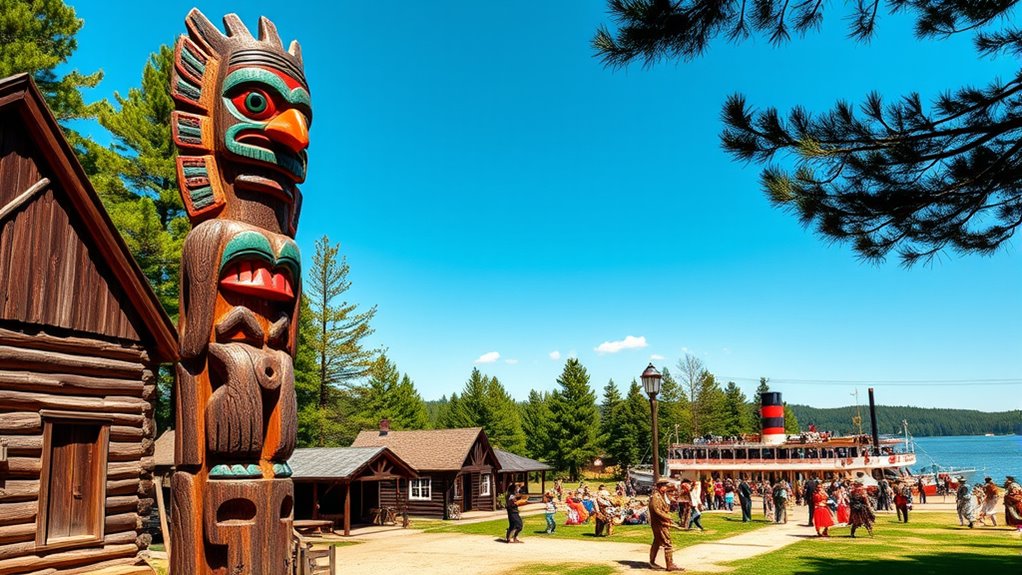

Minnesota’s history and culture blend Native American traditions with European influences, shaping its unique identity. You’ll find a rich indigenous legacy reflected in art, spirituality, and community life, alongside historic European settlements like St. Paul and Minneapolis. The state’s growth was fueled by lumber, milling, and railroads, while environmental landmarks like Lake Itasca and Voyageurs National Park highlight its natural beauty. Explore further to uncover the stories behind Minnesota’s vibrant heritage and evolving traditions.
Key Takeaways
- Minnesota’s history includes Native American cultures, European exploration, and statehood in 1858, shaping its diverse heritage.
- Indigenous art reflects spiritual, ceremonial, and land-connected traditions that influence contemporary Native artists.
- The state’s economy was driven by lumber, milling, and railroads, with landmarks like St. Anthony Falls highlighting environmental engineering efforts.
- Cultural influences from Native, Scandinavian, and German communities shape Minnesota’s festivals, architecture, and artistic expressions.
- Natural features such as lakes, rivers, and parks define Minnesota’s identity and support ongoing conservation and environmental movements.

Minnesota Scenery Art Print – 11×14 Inches, Perfect for Home Office, Bedroom, or Living Room Wall Decor
COLORFUL PASTEL WALL PRINTS: Add a burst of color to your home with our Pop Art Dog Print….
As an affiliate, we earn on qualifying purchases.
As an affiliate, we earn on qualifying purchases.
Indigenous Roots and Early European Encounters

Long before European explorers arrived, the land that is now Minnesota was home to vibrant Indigenous communities, primarily the Dakota (Sioux) and Ojibwe (Anishinaabe). You can still see their lasting influence in local traditions, place names, and cultural practices. The Dakota and Ojibwe had established governance systems, spiritual beliefs, and ways of life that thrived for centuries. When French explorers first arrived in the 1650s, they began mapping the region and establishing trade routes, especially in fur trading. This contact introduced new goods and alliances but also brought challenges, such as conflicts over land and resources. The fur trade connected Native communities with Europeans, shaping the region’s early economic and cultural landscape, setting the stage for future interactions and upheavals. Additionally, European contact played a significant role in shaping the region’s history, setting in motion events that would influence Native communities for generations.

The Last Full Measure: The Life and Death of the First Minnesota Volunteers
As an affiliate, we earn on qualifying purchases.
As an affiliate, we earn on qualifying purchases.
Formation of the Minnesota Territory and Settlement Boom
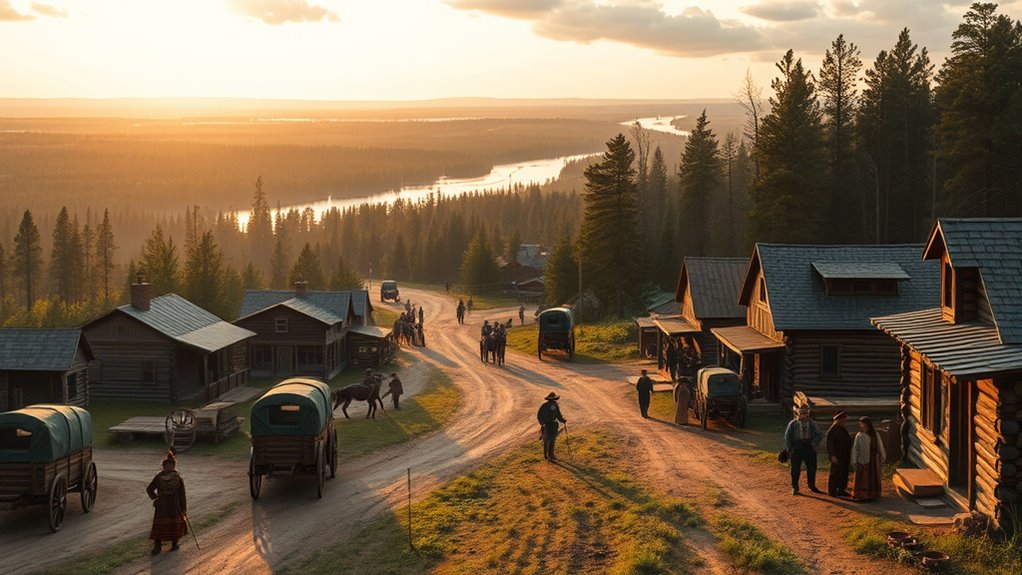
As European contact increased in the late 17th century, the region’s strategic importance grew, laying the groundwork for formal territorial organization. You can see this in the early treaties and explorations that opened lands for settlement. Minnesota officially became part of the U.S. through the Northwest Ordinance and Louisiana Purchase, with borders set in 1818. The Minnesota Territory formed in 1849, with fewer than 4,000 residents. Towns like St. Paul, St. Anthony, and Stillwater emerged, followed by Minneapolis’s incorporation in 1856. The push for statehood gained momentum, and Minnesota became the 32nd state in 1858. Land grants, railroads, and infrastructure projects encouraged rapid settlement, turning the region into a thriving hub of growth and development. Additionally, the development of transportation infrastructure accelerated migration and economic expansion throughout the area.
Minnesota indigenous craft kits
As an affiliate, we earn on qualifying purchases.
As an affiliate, we earn on qualifying purchases.
Economic Growth: Lumber, Milling, and Railroads
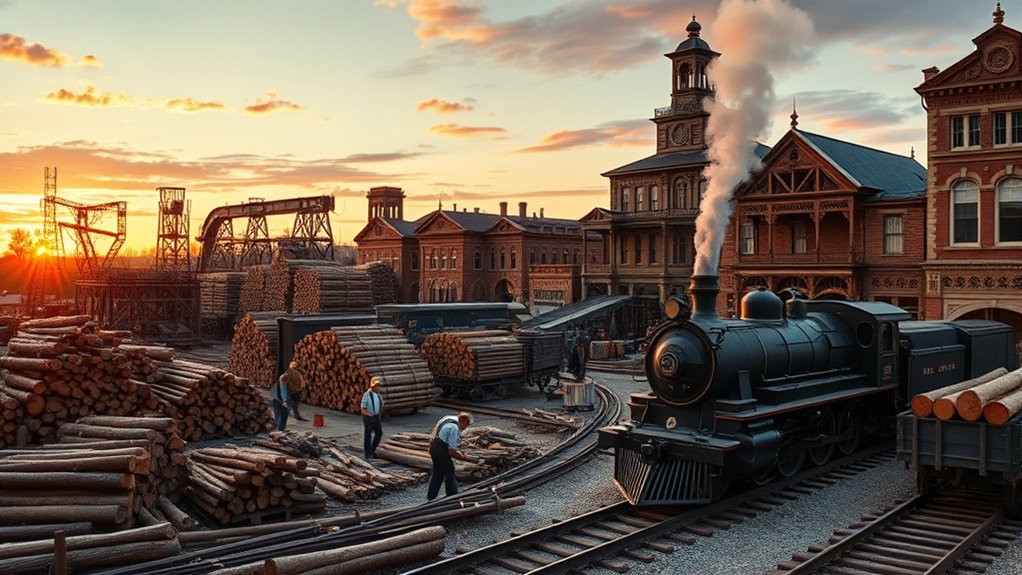
You’ll see how Minnesota’s economy exploded with the expansion of the lumber industry and flour milling, transforming towns like Stillwater and Minneapolis. Railroads played a key role, linking resources to markets and fueling growth across the region. Together, these industries laid the foundation for Minnesota’s economic development in the late 19th century. The growth of Filipina culture and the community’s resilience also contributed to shaping the state’s diverse cultural landscape during this period.
Lumber Industry Expansion
The expansion of Minnesota’s lumber industry in the mid-19th century fueled rapid economic growth, transforming the region’s towns into bustling centers of industry. As treaties opened up land for settlement, you’ll see sawmills popping up along major rivers like the St. Croix and Mississippi, where waterpower made lumber processing efficient. You’ll notice towns like Stillwater and St. Anthony thriving because of the booming demand for timber. Railroads played a pivotal role, enabling you to transport logs and finished lumber across the state and to distant markets. The industry’s growth attracted workers, entrepreneurs, and investors, turning Minnesota into a national hub for timber. This expansion not only fueled economic development but also laid the foundation for future industries in the region.
Flour Milling Boom
Following the growth of Minnesota’s lumber industry, the state soon became a powerhouse in flour milling, transforming its economy once again. You see, the abundant waterpower from St. Anthony Falls made Minneapolis a hub for flour mills by the 1870s. New milling technologies, like the “new process,” increased efficiency and output. The boom attracted investment, workers, and related industries, fueling rapid growth. To help you visualize this, consider:
- Flour production soared, making Minneapolis the “Mill City”
- Waterpower provided cheap, reliable energy for mills
- Railroads expanded to transport flour nationwide
- Immigrant labor fueled industry workforce growth
- The Postpartum Sexual Activity period was not a concern during this era, but awareness of health and recovery was developing among the population.
This boom cemented Minnesota’s economic importance, setting the stage for its industrial future and shaping the region’s identity in the national economy.
Railroad Infrastructure Growth
Why did railroad expansion become a cornerstone of Minnesota’s economic growth? Because it connected remote regions with markets, fueling industries like lumber and milling. As railroads rapidly spread in the 1860s–1880s, they made transportation faster, cheaper, and more reliable. Federal land grants and state sales of “internal improvement” lands incentivized this growth, enabling towns to flourish and industries to expand beyond local boundaries. Railroads opened access to timber-rich northern forests, boosting the lumber industry, and facilitated movement of crops and goods across the state. This infrastructure also attracted new settlers, accelerating settlement and development. Without the railroads, Minnesota’s economic transformation from frontier to industrial hub would have taken much longer. They became the backbone of state growth, linking communities and markets across the region, and the expansion of railroad infrastructure played a crucial role in this process.

Minnesota on the Map: A Historical Atlas
As an affiliate, we earn on qualifying purchases.
As an affiliate, we earn on qualifying purchases.
Pivotal Social and Political Events in Minnesota History
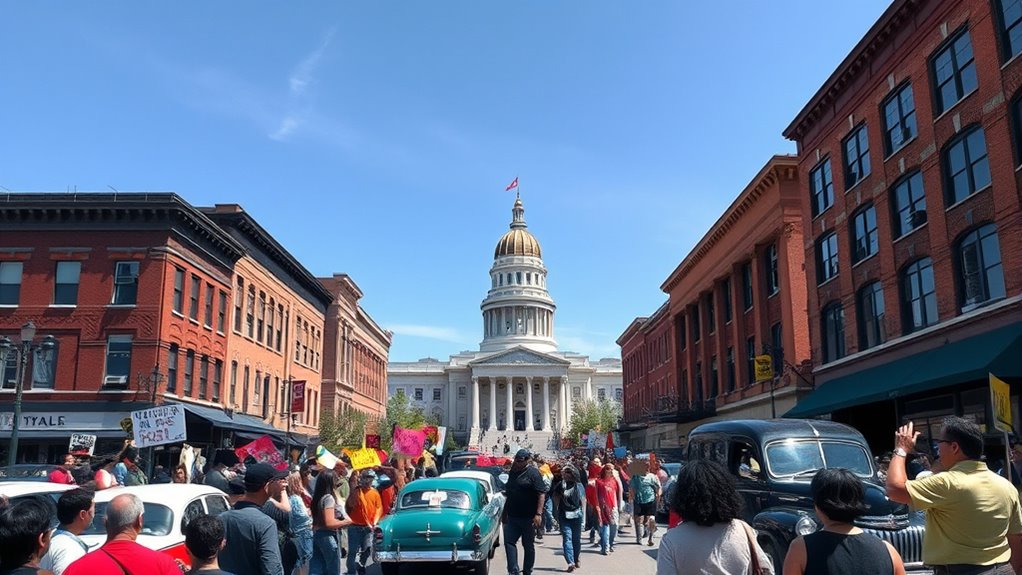
Minnesota’s history is marked by a series of pivotal social and political events that shaped its identity and governance. These moments reflect struggles for equality, state development, and political innovation. You witness how the Civil War’s quick mobilization set the stage for future leadership. You also see the significance of the 1862 Dakota Uprising, which led to displacement and lasting repercussions. The state’s pioneering stance on civil rights is evident in Eliza Winston’s court victory. Additionally, Minnesota’s political landscape shifted with Jesse Ventura’s 1999 gubernatorial win and Mee Moua’s historic Senate appointment. These events reveal a state committed to social progress, justice, and political diversity, molding a unique identity rooted in resilience and forward-thinking. The cultural heritage of Minnesota has also played a vital role in shaping its social fabric and community values.
Cultural Heritage and Artistic Contributions

You can see Minnesota’s cultural heritage in its vibrant artistic traditions rooted in Native American craftsmanship and storytelling. European influences, especially Scandinavian and other European immigrant styles, blend into the state’s art, music, and architecture. These diverse contributions shape Minnesota’s unique artistic identity and community expression today. Additionally, the state’s affinity for Honda tuning reflects a broader appreciation for automotive customization and technical craftsmanship among enthusiasts.
Native American Artistic Traditions
Have you ever appreciated the intricate beadwork or vibrant carvings that reflect Native American cultural heritage? Native American artistic traditions in Minnesota are rich and diverse, showcasing skills passed down through generations. You’ll find stunning examples in their jewelry, pottery, textiles, and wood carvings. These works often serve spiritual, ceremonial, and practical purposes, embodying cultural stories and beliefs. Additionally, the growth mindset among Native artists fosters innovation and the evolution of traditional art forms while honoring ancestral techniques. These creations reveal a deep connection to the land, spirituality, and community. They continue to inspire contemporary Native artists, preserving their cultural legacy while adapting to modern expressions. Native American art in Minnesota remains a crucial part of the state’s cultural identity.
Scandinavian and European Influences
European immigrants, particularly from Scandinavia and Germany, have profoundly shaped Minnesota’s cultural landscape. They brought their traditions, art, and craftsmanship, enriching the state’s identity. You’ll find Scandinavian festivals celebrating lutefisk and lefse, while German heritage is evident in biergartens and architecture. Their influence extends to music, dance, and visual arts, blending seamlessly with Native American heritage to create a unique cultural tapestry. To illustrate their impact, consider this table:
| Cultural Influence | Artistic Contribution |
|---|---|
| Scandinavian | Folk music, woodworking |
| German | Architectural styles, beer culture |
These influences continue to thrive, shaping Minnesota’s vibrant arts scene and community traditions. Their legacy is visible in everything from local festivals to art galleries, making the state a true cultural crossroads. Additionally, immigrant communities have established numerous cultural centers and museums dedicated to preserving and celebrating their heritage, further enriching Minnesota’s diverse cultural landscape.
Environmental Landmarks and Natural Resources
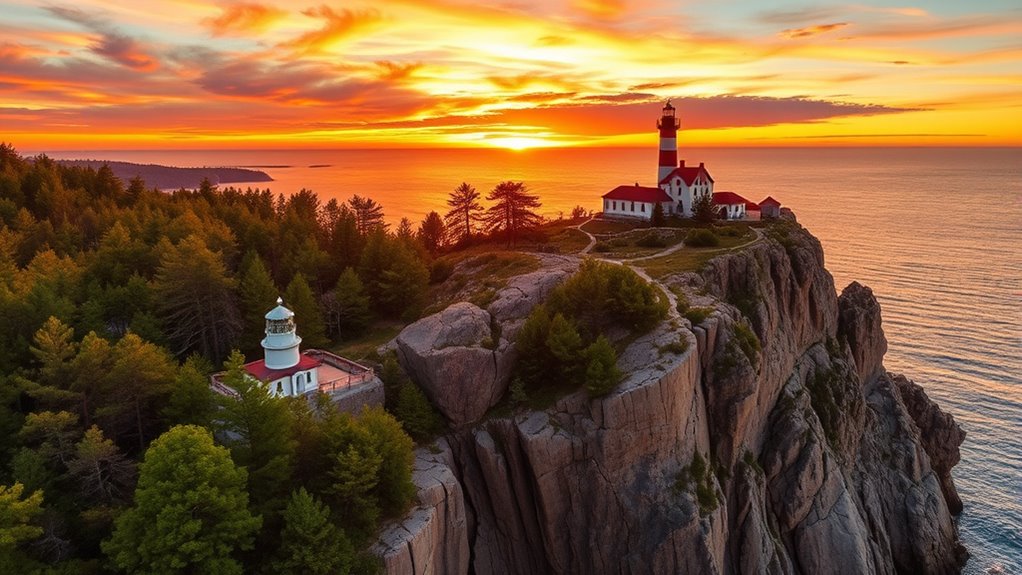
Minnesota’s natural landscape is characterized by its abundant lakes, rivers, and forests, which have shaped the state’s identity and resources. You can explore the iconic Boundary Waters Canoe Area Wilderness, a pristine haven for paddling and camping. The headwaters of the Mississippi River at Lake Itasca highlight the state’s essential role in North American hydrology. Over 1.5 million acres of school trust lands are managed for conservation and recreation. The collapse and subsequent restoration of St. Anthony Falls in the 1870s demonstrate early environmental engineering efforts. Consider these key landmarks:
- Boundary Waters Canoe Area Wilderness
- Lake Itasca, Mississippi headwaters
- Voyageurs National Park
- St. Anthony Falls restoration
These sites reflect Minnesota’s commitment to preserving its natural beauty and resources. Additionally, predictive modeling in environmental management helps monitor and protect these vital ecosystems for future generations.
Notable Figures and Movements Shaping the State

Numerous individuals and social movements have played pivotal roles in shaping Minnesota’s identity and progress. You’ve likely heard of Hubert H. Humphrey, who championed civil rights and served as Vice President, inspiring political activism. The labor movement gained momentum through figures like Cesar Chavez and organizations advocating for workers’ rights, shaping fair labor laws. The Native American rights movement, led by leaders such as Winona LaDuke, fights for sovereignty and environmental protection. The Minnesota Progressive Movement, influential in the early 20th century, pushed for reforms in education and social justice. More recently, the Twin Cities’ Black Lives Matter protests have spotlighted racial justice. These individuals and movements have driven social change, fostering a more inclusive, equitable Minnesota.
Minnesota’s Unique Identity and Regional Traditions
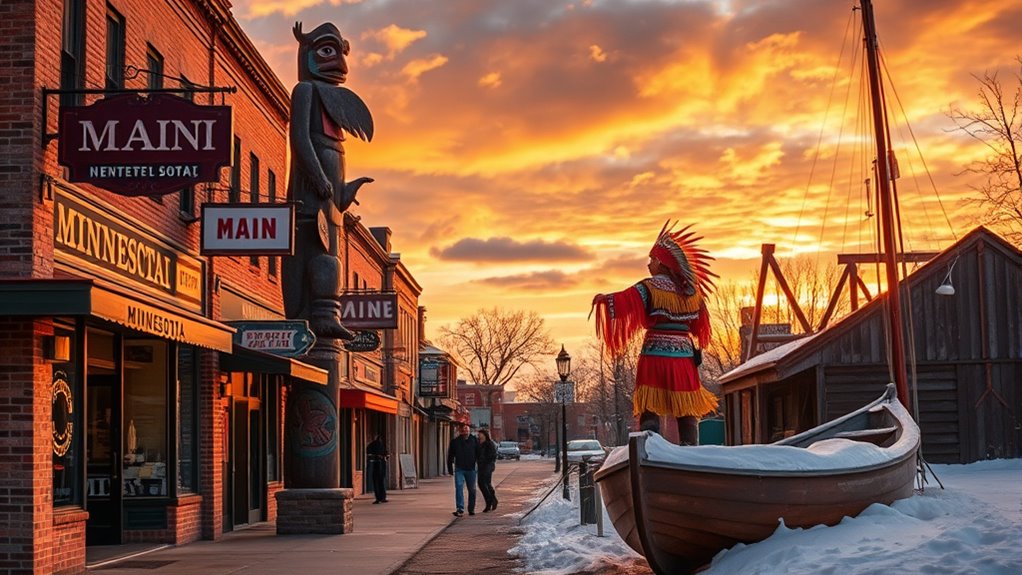
Minnesota has cultivated a distinct identity rooted in its blend of cultural traditions, regional customs, and community values. You’ll notice this in the friendly “Minnesota nice” attitude and the pride in local heritage. The state’s Scandinavian and German roots influence its holiday celebrations, cuisine, and folk festivals. Native American traditions remain crucial, shaping art, storytelling, and community gatherings. Regional differences also define Minnesota’s character:
- The Twin Cities’ urban arts and innovation scene
- The outdoor lifestyle centered on lakes, parks, and recreation
- The rural focus on farming, woodworking, and traditions
- The northern wilderness culture of canoeing, camping, and conservation
All these elements combine to create a unique state identity that celebrates diversity, resilience, and community spirit.
Frequently Asked Questions
How Did Native American Tribes Influence Minnesota’s Early History?
You see Native American tribes like the Dakota and Ojibwe shaping Minnesota’s early history through their long-standing communities, governance, and cultural practices. They established trade networks, especially in fur trading, and influenced settlement patterns. Their treaties opened land for European settlers, and conflicts like the Dakota Uprising marked tensions over land and rights. Their presence and traditions continue to impact Minnesota’s cultural identity and environmental stewardship today.
What Role Did Minnesota Play in the Civil War?
Minnesota was a beacon of loyalty during the Civil War, shining brightly as the first Northern state to send volunteers to the Union Army. You can think of it as a steadfast ship steering through turbulent waters, showing unwavering support for the Union cause. Its early contributions helped shape the war effort, and with leaders like Eliza Winston gaining freedom, Minnesota’s role reflects both courage and progress in a tumultuous time.
How Did the Fur Trade Shape Minnesota’s Development?
The fur trade shaped Minnesota’s development by boosting economic activity and establishing key trading relationships between Native peoples and European traders. You can see how it led to the creation of important trading posts like Fort Snelling and spurred the growth of towns such as Stillwater and St. Paul. The trade also fueled the growth of industries like lumber and milling, helping Minnesota shift from Native lands to a thriving economic hub.
What Are Minnesota’s Most Significant Environmental Preservation Efforts?
You might think Minnesota’s environment is vulnerable, but its most significant preservation efforts include protecting the Boundary Waters Canoe Area Wilderness and Voyageurs National Park. These areas safeguard pristine lakes, forests, and wildlife, ensuring future generations can enjoy outdoor recreation. State parks and over 1.5 million acres of school trust lands also focus on conservation. These initiatives demonstrate Minnesota’s commitment to balancing development with protecting its natural beauty.
How Have Immigrant Communities Impacted Minnesota’s Cultural Identity?
You see that immigrant communities, like Scandinavians and Germans, have deeply shaped Minnesota’s cultural identity. They brought traditions, languages, and customs that blend with Native American heritage, creating a diverse and vibrant society. You’ll notice their influence in our festivals, cuisine, architecture, and community values. These contributions foster a sense of shared history, pride, and resilience, making Minnesota uniquely rich in cultural diversity and welcoming to newcomers.
Conclusion
As you explore Minnesota’s rich history, you’re walking through a land woven with vibrant Native traditions, bustling frontier towns, and shimmering lakes reflecting the sky’s changing hues. Imagine the steady hum of lumber mills, the lively dance of cultural festivals, and the rugged beauty of forests and prairies. This state’s story is a tapestry of resilience and innovation, inviting you to see its spirit alive in every sunset over its natural wonders.