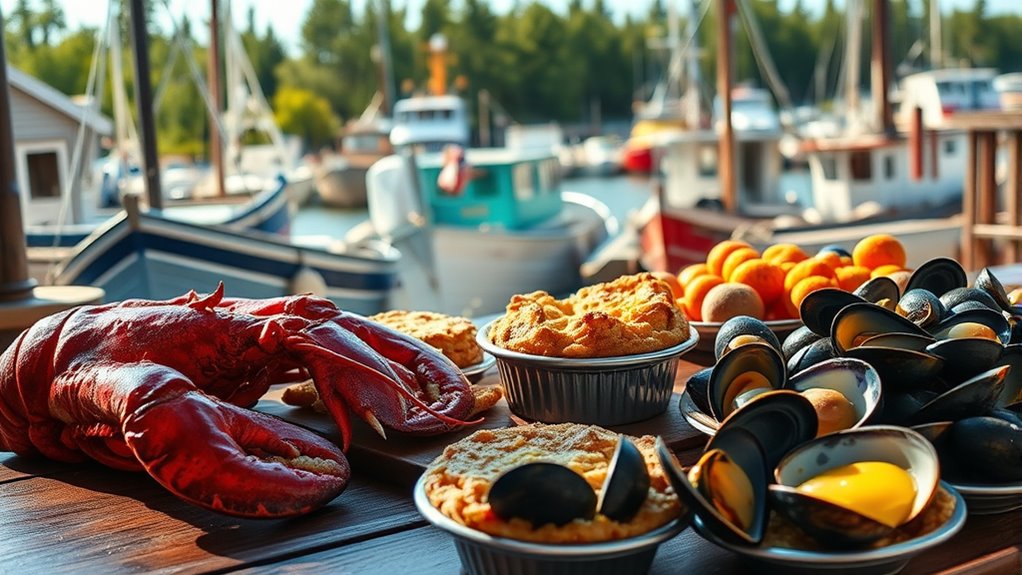

Maine’s culinary traditions focus on fresh seafood like lobster, clams, and fish, reflecting its maritime roots. Indigenous practices, seasonal foraging, and immigrant influences shape dishes like chowders, meat pies, and smoked fish. Preservation methods such as canning and smoking helped sustain communities and celebrate regional flavors. If you explore further, you’ll uncover how these diverse traditions combine to create Maine’s unique food culture and local pride.
Key Takeaways
- Maine’s cuisine is renowned for its seafood, especially lobster, clams, and clam chowder, reflecting its maritime heritage.
- Indigenous food practices emphasize sustainable harvesting, seasonal foraging, and traditional preservation methods like drying and fermenting.
- Immigrant communities, including French Canadian, Italian, Jewish, Greek, and Middle Eastern groups, have enriched Maine’s culinary landscape.
- Preservation techniques such as smoking, canning, and salting have historically supported year-round access to seafood and local ingredients.
- Seasonal foraging of wild berries, fiddleheads, sea vegetables, and other native plants plays a vital role in Maine’s food traditions.
The Roots of Maine’s Seafood Heritage
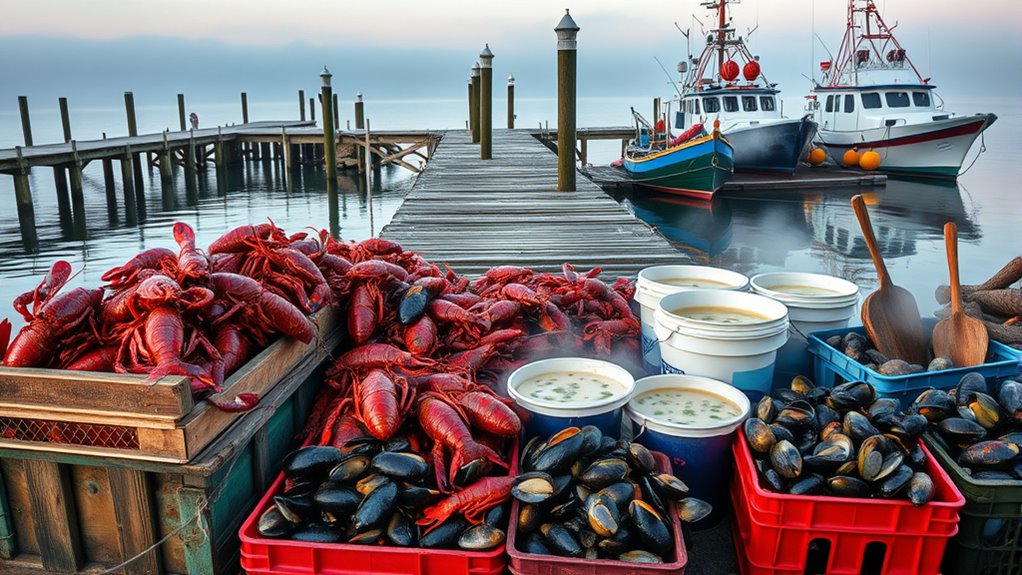
Maine’s seafood heritage runs deep, rooted in centuries of fishing traditions that shaped the state’s culinary identity. You’ll find that lobster harvesting started in the 19th century and remains a cornerstone of local cuisine. The famous lobster roll combines fresh lobster meat with mayo or melted butter on a toasted bun, embodying Maine’s coastal flavors. Clam chowder, made from local clams, potatoes, and cream, offers comfort in a bowl. Oysters and clams are staples, often featured in traditional clambakes and chowders. Historically, salt-preserved fish like cod and pollock were essential for survival, offering a means to store and enjoy seafood year-round. These practices highlight Maine’s long-standing relationship with the sea, shaping its vibrant and iconic seafood culture. Cheating has also influenced social dynamics and trust within communities, paralleling the importance of honesty in preserving the integrity of traditions.
Indigenous Food Practices and Their Impact
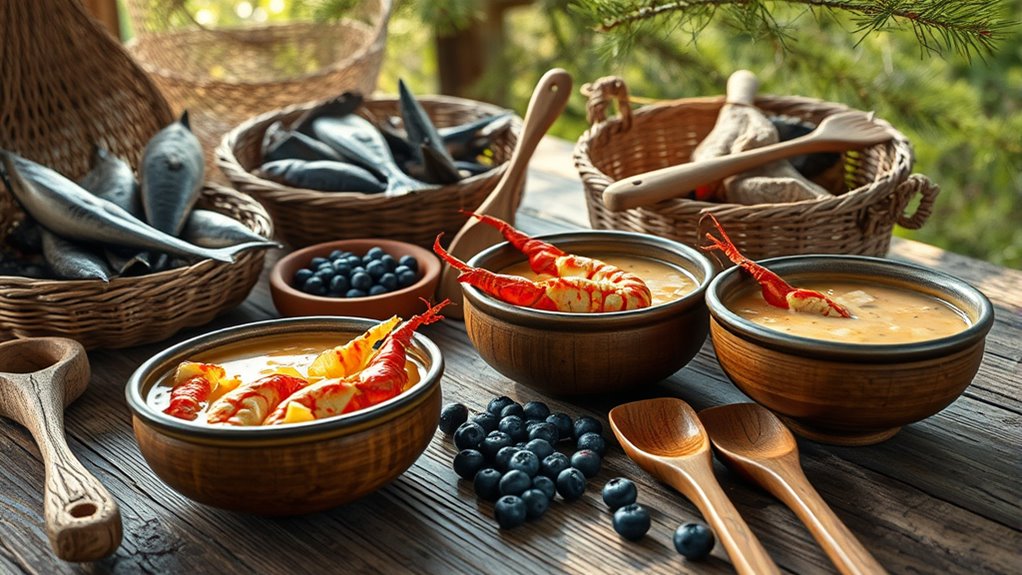
You can see how Wabanaki foraging traditions shaped Maine’s early food landscape by gathering native plants and harvesting seafood sustainably. Indigenous communities used preservation techniques like drying, curing, and smoking to store their catch and foraged foods long before modern methods existed. Their seafood harvesting practices set the foundation for Maine’s coastal cuisine, emphasizing respectful and local resource use. Additionally, their knowledge of seasonal foraging ensured sustainable harvesting throughout the year.
Wabanaki Foraging Traditions
The Wabanaki people have long practiced foraging as an essential part of their food traditions, relying on the rich natural resources of Maine’s forests, rivers, and coastlines. You would gather wild foods like berries, nuts, and roots, carefully harvesting to sustain the land. Fish, shellfish, and game provided crucial protein sources, with techniques rooted in respect for nature. You might collect clams, mussels, and other shellfish from tidal areas or hunt game like deer and moose in the forests. Wild plants such as fiddleheads, wild leeks, and various berries are seasonal staples, harvested sustainably. These foraging practices reflect a deep understanding of the land’s cycles and emphasize a respectful, harmonious relationship with nature that continues to influence Maine’s culinary heritage today.
Preservation Techniques Used
Indigenous food practices have profoundly shaped how resources are preserved and utilized in Maine. You learn that native methods like drying, curing, smoking, and fermenting were essential for extending the shelf life of local foods before modern refrigeration. For example, Wabanaki communities salted and air-dried fish, creating chewy, storable provisions that could last through harsh winters. These techniques allowed them to maintain access to crucial nutrients year-round. Additionally, fermenting preserved flavors and increased food safety, while smoking added aroma and extended freshness. These methods weren’t just about preservation—they reflected a deep understanding of the land and sustainable resource use. Indigenous practices laid the groundwork for later innovations like canning, blending traditional knowledge with evolving technology to guarantee food security in Maine’s challenging climate. Cybersecurity vulnerabilities during the adoption of new preservation technologies underscored the importance of safeguarding traditional methods from modern threats.
Indigenous Seafood Harvesting
How did early Native communities sustainably harvest seafood along Maine’s coast? They used respectful, low-impact methods rooted in observation and tradition. They selective harvested shellfish, fish, and other marine resources, ensuring populations remained healthy. Techniques like hand gathering, trap setting, and seasonal fishing aligned with nature’s cycles, preventing overfishing. They also practiced taboos and shared knowledge to avoid depleting resources. Additionally, these practices were often guided by indigenous food practices, emphasizing harmony with nature to maintain long-term resource availability.
Influences of Immigrant Culinary Traditions
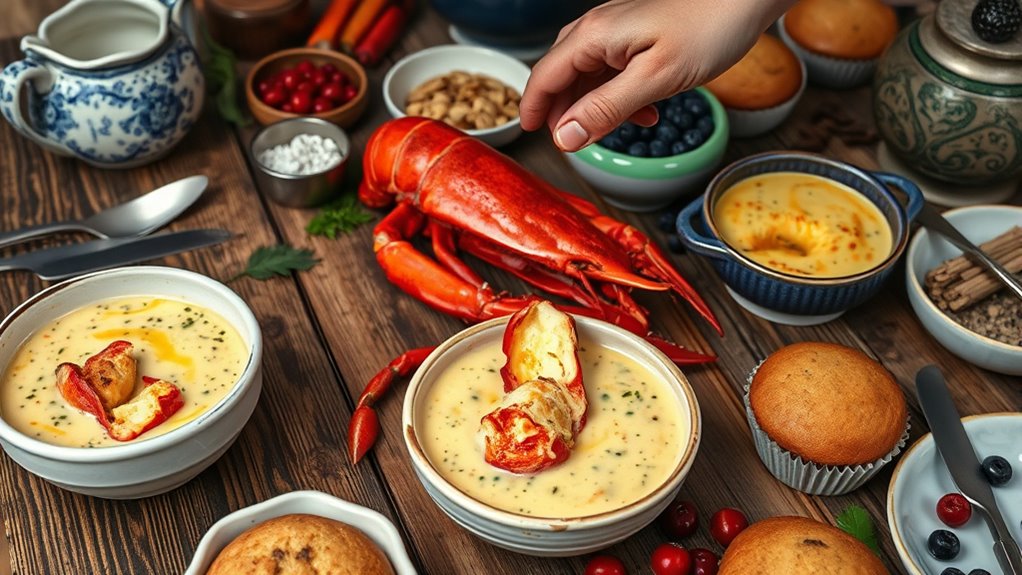
Immigrants have profoundly shaped Maine’s culinary landscape, bringing diverse flavors and cooking techniques that blend seamlessly with local ingredients. French Canadian immigrants introduced hearty meat pies and poutine-style dishes, adapting them to Maine’s available meats and dairy. Italian immigrants contributed pasta, sauces, and baked goods, influencing local bakeries and home cooking. Jewish immigrants brought bagels, smoked fish, and traditional baked goods, enriching Maine’s breakfast and deli scenes. Greek and Middle Eastern immigrants introduced flavorful spices, grilled meats, and fresh produce, expanding regional tastes. These communities not only added new dishes but also influenced food presentation and preparation styles. Their contributions created a culinary mosaic, where old-world recipes meet Maine’s seafood, berries, and dairy, resulting in a vibrant, evolving food culture rooted in migration and adaptation. Additionally, the incorporation of specialized cooking techniques from different cultures has further enriched Maine’s culinary traditions, leading to a diverse and dynamic food scene.
Traditional Preservation Techniques in Maine
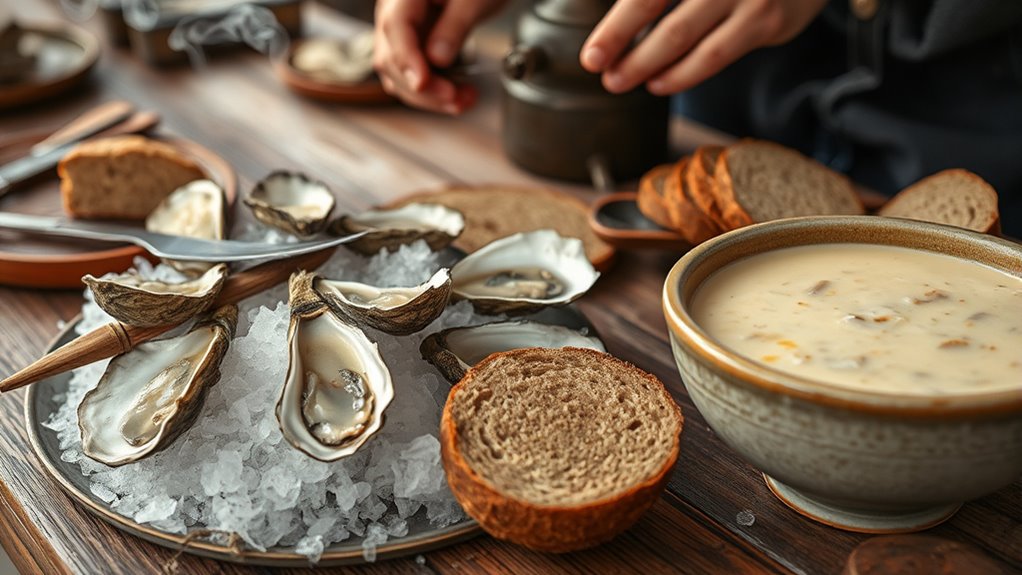
You’ll see that Maine’s early preservation techniques relied heavily on salting and drying fish to store it for long periods. Canning later revolutionized food storage, making Maine’s seafood more accessible year-round. Smoking and fermentation also played key roles, giving preserved foods unique flavors and extending their shelf life. Additionally, the use of heat settings for customized styling in modern preservation methods has improved the efficiency and safety of food storage processes.
Salting and Drying Methods
Salting and drying have long been essential preservation techniques in Maine, allowing communities to store seafood and other perishable foods for extended periods. You might have seen white fish like cod, pollock, or hake lightly salted and air-dried, creating slack-salted fish that could be stored and enjoyed later. These methods helped fishermen and families preserve their catch before refrigeration and canning became common. The process involves applying salt to draw moisture out, inhibiting bacterial growth, and then air-drying the fish outdoors or in smokehouses. This tradition supported Maine’s seafood economy and provided reliable food sources during harsh winters. Even today, these techniques honor the state’s rich maritime history and are sometimes used for artisanal products or culinary traditions that emphasize flavor and preservation. Additionally, these methods contributed to a clutter-free and organized approach to food storage, making preservation both practical and efficient.
Canning Innovations and Impact
How did Maine transform its traditional preservation methods with the advent of canning? You see, canning revolutionized food storage, allowing Maine’s seafood and produce to last longer and reach markets farther away. It brought efficiency, safety, and consistency to home and commercial kitchens. Imagine opening a jar of locally caught clams in winter, or savoring Maine blueberries preserved at peak ripeness year-round. Canning impacted the region by:
- Preserving seafood without salt or drying, maintaining fresh flavors.
- Extending harvests, so families stored summer’s bounty for winter months.
- Supporting local economies by creating canned seafood industries.
- Making Maine’s culinary staples accessible beyond coastal areas.
- Law of Attraction principles can also be applied to foster community pride and attract new opportunities in local food traditions.
This innovation empowered Mainers to enjoy their rich food heritage throughout the year, reinforcing community bonds and regional identity.
Smoking and Fermentation Techniques
Traditional preservation methods like smoking and fermentation have long been essential to Maine’s culinary heritage, allowing communities to extend the shelf life of their harvests and seafood. You might smoke fish like cod or salmon over wood fires, infusing them with rich flavors while removing moisture. Fermentation, used for vegetables and seafood, transforms ingredients through natural bacteria, creating tangy, preserved foods. These techniques weren’t just practical—they also developed regional flavors and culinary identities. Smoking was often done in community smokehouses, while fermentation took place in cellar or barrel setups. Both methods relied on careful control of temperature and humidity. An understanding of juice extraction techniques contributed to the variety of preserved fruit and vegetable products. Today, these age-old techniques still influence Maine’s food scene, highlighting a deep respect for tradition and sustainable preservation practices.
Iconic Maine Dishes and Regional Staples
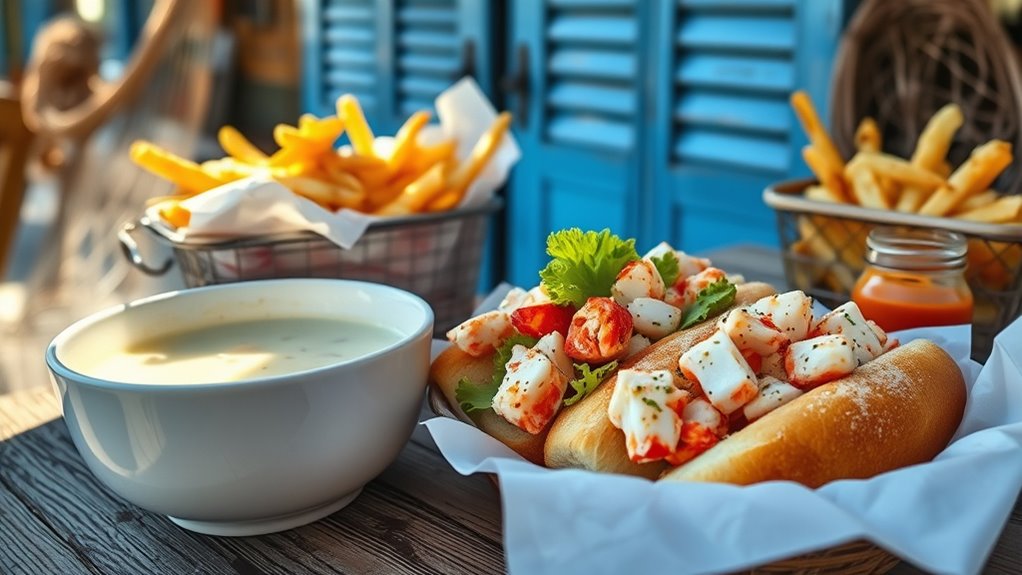
Maine’s culinary identity is defined by its iconic dishes and regional staples that reflect its rich coastal heritage and diverse cultural influences. You’ll find that fresh, local ingredients take center stage in many traditional favorites. Imagine:
- A steaming lobster roll, packed with tender lobster meat, drizzled with melted butter or mayo, nestled in a toasted bun.
- Creamy clam chowder, thick with local clams, potatoes, and a hint of herbs, served piping hot.
- Char-grilled oysters and clams, often enjoyed in seaside clam bakes or straight from the shell.
- Salted, air-dried cod or pollock, enjoyed as hearty snacks or incorporated into simple, flavorful meals.
These staples embody Maine’s coastal spirit and culinary pride.
The Role of Foraging and Seasonal Foods
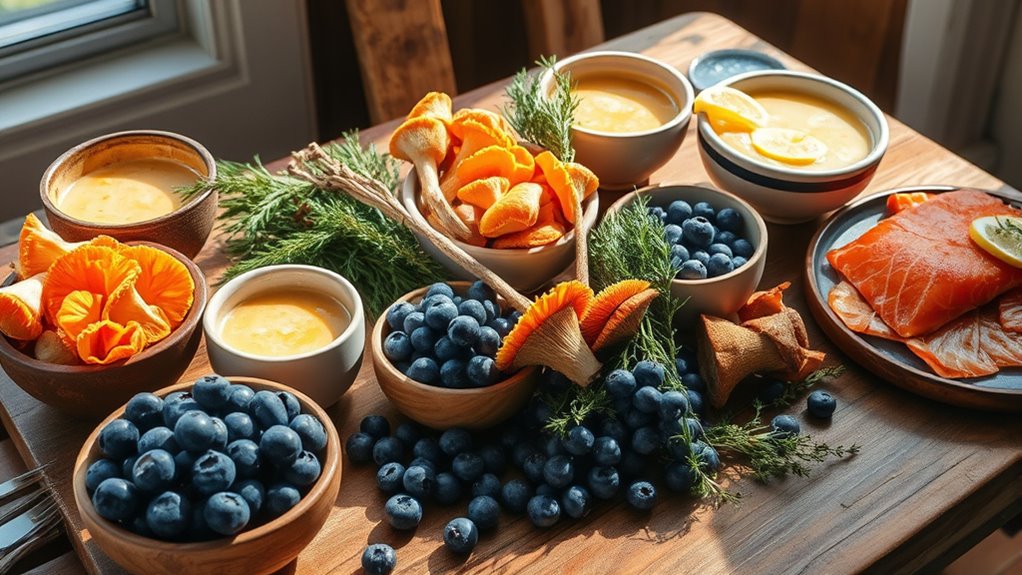
Foraging has long played an essential role in shaping Maine’s culinary landscape, connecting communities to their natural environment and seasonal rhythms. You might gather wild blueberries in late summer, adding vibrant flavor to pies and jams. Fiddleheads, the young fern fronds in spring, offer a fresh, seasonal delicacy that highlights Maine’s foraging traditions. During fall, you can harvest acorns or hickory nuts, which locals might incorporate into hearty dishes. Seaweed and coastal sea vegetables are also foraged along the shoreline, enriching soups and salads. These practices emphasize sustainable harvesting and respect for nature’s cycles, ensuring food sources remain abundant year after year. Incorporating traditional foraging techniques helps preserve Maine’s unique culinary heritage and promotes ecological balance.
Vegetarian and Religious Dietary Customs
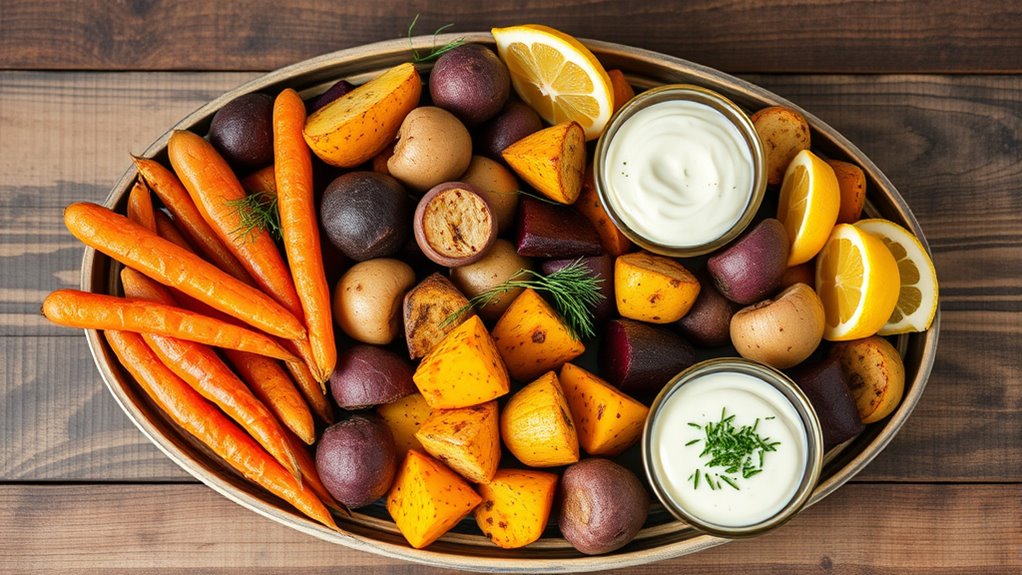
Vegetarian and religious dietary customs have played a significant role in shaping Maine’s culinary history, reflecting both spiritual beliefs and practical choices. You might picture hearty farm-fresh foods like:
- Whole wheat bread baking in wood-fired ovens, filling kitchens with warm aromas.
- Potatoes simmering in rustic stews, a staple for sustenance and simplicity.
- Fresh vegetables like carrots, peas, and squash served alongside dairy-rich dishes.
- Simple, wholesome meals emphasizing local produce, often prepared with butter and herbs.
These customs were influenced by religious movements promoting modest, ethical eating, and early settlers relying on available farm products. Together, they created a tradition of straightforward, nourishing food rooted in practicality and respect for nature.
The Evolution of Maine’s Food Identity

The culinary identity of Maine has continually evolved through a dynamic blend of tradition, innovation, and cultural influences. You’ve seen how indigenous practices laid a foundation of sustainable, local ingredients, shaping early foodways. As settlers and immigrants arrived, they introduced new recipes like meat pies and baked beans, blending old-world flavors with Maine’s abundant resources. Over time, preservation methods such as salting, drying, and canning kept food available year-round, fostering community and self-sufficiency. Today, Maine’s food identity is a reflection of this layered history—fresh seafood remains central, but modern chefs incorporate global flavors and sustainable practices. You now experience a cuisine that honors its roots while embracing innovation, creating a vibrant, evolving culinary landscape.
Frequently Asked Questions
How Has Maine’s Seafood Industry Evolved Over the Centuries?
You’ve seen Maine’s seafood industry grow from simple, indigenous fishing practices to a major economic force. Initially, Wabanaki people harvested local fish and shellfish, then Europeans introduced commercial fishing methods. Over time, technology improved, making harvesting more efficient. Today, lobster, clams, and oysters still dominate, but sustainable practices and regulations now guarantee the industry’s longevity. Your experience reflects Maine’s rich, evolving seafood heritage rooted in centuries of tradition.
What Native Plants Are Traditionally Foraged in Maine?
You’re missing out on Maine’s most incredible native plants if you don’t forage for them! You can harvest fiddleheads, which look like tiny green crowns bursting with flavor, and wild blueberries that are so sweet they’ll blow your mind. Don’t forget to pick wild ramps with their pungent aroma, or seaweed along the coast. These plants have sustained locals for centuries and are bursting with history and flavor just waiting for you to discover.
How Did Immigrant Cuisines Influence Modern Maine Dishes?
Immigrant cuisines have greatly shaped modern Maine dishes by introducing new ingredients and cooking styles. You’ll notice French Canadian immigrants brought meat pies and hearty stews, while other groups added flavors through spices and techniques from their homelands. These influences blend with local seafood and native ingredients, creating dishes that are both traditional and innovative. You get a rich culinary tapestry that reflects Maine’s diverse cultural history and ongoing migration.
What Are the Traditional Methods Used for Preserving Maine’s Seafood?
You can preserve Maine’s seafood through methods like salting, drying, smoking, and fermenting. Historically, people lightly salted and air-dried white fish like cod and pollock for storage and flavor, a process known as slack-salting. Canning later revolutionized preservation, extending shelf life and making seafood available year-round. These techniques reflect Maine’s rich fishing traditions and community-based food practices that have been passed down through generations.
How Do Seasonal Foods Shape Maine’s Culinary Calendar?
Seasonal foods considerably shape your culinary calendar in Maine by dictating what’s fresh and available throughout the year. In spring, you enjoy foraged fiddleheads and wild berries, while summer brings ripe blueberries and fresh seafood like lobster and clams. Fall offers harvest vegetables and hearty dishes, and winter features preserved foods like salted fish and root vegetables. These seasonal cycles inspire local festivals and traditional recipes, creating a dynamic, year-round food culture.
Conclusion
You’ll find that Maine’s culinary traditions blend indigenous practices, immigrant influences, and seasonal foraging, creating a rich, diverse food culture. Some theorize that Maine’s seafood dominance shaped American coastal cuisine more than elsewhere, and evidence suggests this may be true, given the region’s unique preservation techniques and regional staples. Embracing these traditions reveals a culinary identity rooted in resourcefulness and community, making Maine a true gastronomic gem worth exploring.