
Maine’s history and culture are shaped by its Indigenous Wabanaki tribes, early European settlers, and a strong maritime heritage. You’ll find the legacy of fishing, shipbuilding, and seafood traditions, along with historic sites and festivals celebrating Maine’s unique identity. From its path to statehood to technological advances and social progress, Maine’s story is rich and layered. Explore further to discover how these elements continue to influence the state today.
Key Takeaways
- Maine’s history begins with Indigenous groups like the Red Paint People and Wabanaki tribes, emphasizing their enduring cultural influence.
- European settlement involved French and English conflicts, leading to Maine’s statehood in 1820 and a focus on independence.
- The state’s economy historically centered on maritime industries such as fishing, shipbuilding, and trade, supported by local agriculture.
- Industrialization brought manufacturing, technological innovations, and social progress, shaping Maine’s modern cultural landscape.
- Digital initiatives like Maine Memory Network and virtual tours promote accessible preservation and education of Maine’s rich cultural heritage.

Atlas of a Changing Earth
As an affiliate, we earn on qualifying purchases.
As an affiliate, we earn on qualifying purchases.
Early Inhabitants and Native Cultures
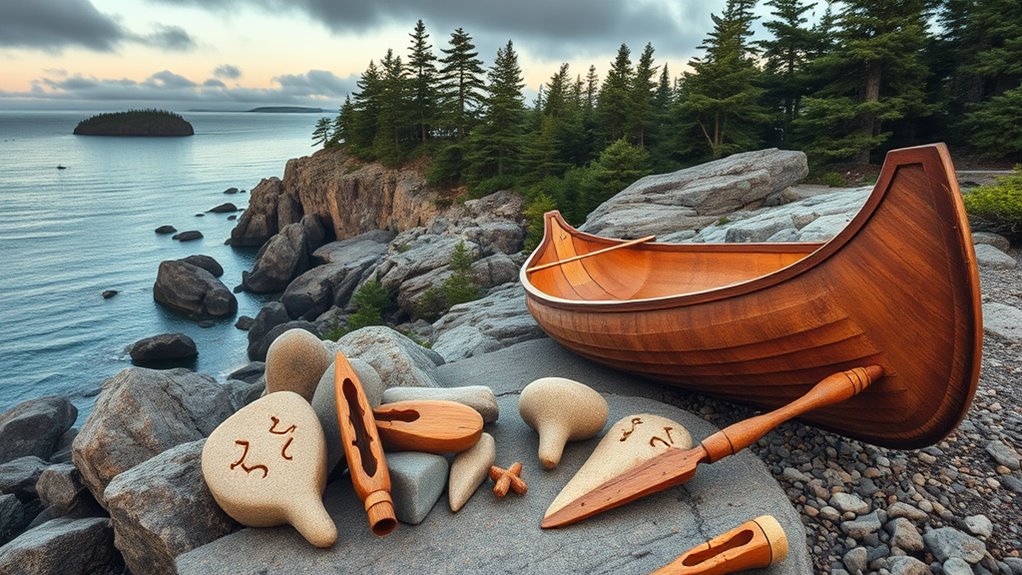
Long before European settlers arrived, Maine was inhabited by the Red Paint People, a maritime culture known for their elaborate burial practices and skillful use of the coastal environment. You can see their influence today through artifacts and burial sites along the shoreline. These early inhabitants relied heavily on fishing, hunting, and gathering along the coast, developing sophisticated tools to secure their food. Around 12,000 years ago, the Wabanaki tribes arrived, continuing a rich Native American presence. They adapted to Maine’s forests and waters, establishing communities that thrived for generations. Their traditions, spiritual beliefs, and connection to the land still shape Maine’s cultural landscape. Recognizing these early cultures helps you understand Maine’s deep-rooted history and the enduring legacy of its Indigenous peoples. Additionally, the environmental adaptations of these cultures demonstrate their ability to sustainably utilize the abundant resources provided by Maine’s coastal environment.

Down East : A Maritime History Of Maine
Used Book in Good Condition
As an affiliate, we earn on qualifying purchases.
As an affiliate, we earn on qualifying purchases.
European Settlement and Territorial Disputes
After centuries of Indigenous presence shaping Maine’s early history, European settlers arrived in the 1600s, bringing new cultures and competing claims to the land. The French established Acadian settlements in northern Maine, igniting disputes with the English colonists. These conflicts led to border uncertainties and territorial disputes, as both nations claimed parts of Maine. The Treaty of Paris in 1763 ended French claims, but tensions persisted. The table below highlights key European players and disputes:
| Year | Event | Participants |
|---|---|---|
| 1604 | French begin settlement | France, Indigenous tribes |
| 1620s | English settle in Maine | England, French |
| 1755 | French and Indian War conflicts | France, Britain |
| 1763 | Treaty of Paris ends French claims | Britain, France |
| 1800s | Boundary disputes persist | Maine, Canada |
These disputes shaped Maine’s early geopolitical landscape. Additionally, ongoing territorial disputes influenced the region’s development and relationships with neighboring territories.

Sing On, Maine United!
As an affiliate, we earn on qualifying purchases.
As an affiliate, we earn on qualifying purchases.
Maine’s Path to Statehood
You can see how the desire for independence fueled Maine’s journey to statehood. After supporting the American Revolution, settlers pushed for separation from Massachusetts, gaining momentum over time. By 1820, Maine achieved its goal, establishing its own government and identity. Throughout this process, the settlers’ efforts reflected a growing sense of regional security, which contributed to their push for independence.
Movement for Separation
What motivated Maine’s residents to pursue independence from Massachusetts? They felt neglected and underrepresented, especially during conflicts like the War of 1812. Frontier settlers believed Massachusetts officials ignored their needs, leaving Maine vulnerable and unprotected. Over time, residents grew frustrated with the lack of political and economic autonomy, feeling Maine’s interests were sidelined in Boston. The desire for local control, combined with a distinct regional identity and economic differences, fueled the movement. They wanted their own government to better manage resources, defend borders, and promote development. This growing sentiment led to petitions, debates, and eventually, efforts to separate. The movement gained momentum as residents sought a government that truly reflected their needs, culminating in Maine’s push for statehood in the early 19th century. Regional identity and economic disparities further strengthened their resolve to gain independence.
Statehood Achievements
Maine’s journey to statehood was marked by significant political and social achievements that established its independence. You played a role in shaping Maine’s identity by supporting the movement for separation from Massachusetts, which gained momentum after the Revolution. In 1819, delegates drafted a constitution emphasizing independence and religious freedom, setting the stage for statehood. Maine officially became the 23rd state in 1820 under the Missouri Compromise, which balanced free and slave states. At that time, Maine’s population neared 300,000, and Portland served as the temporary capital before Augusta was established as the permanent seat of government. These achievements marked Maine’s progression from a frontier territory to a thriving, independent state, laying the foundation for its future growth and development.

Revolutionary War Sites in New England (3rd ed.): Your guide to the historic sites that bring American Revolution history to life
As an affiliate, we earn on qualifying purchases.
As an affiliate, we earn on qualifying purchases.
The Economic Foundations of Early Maine
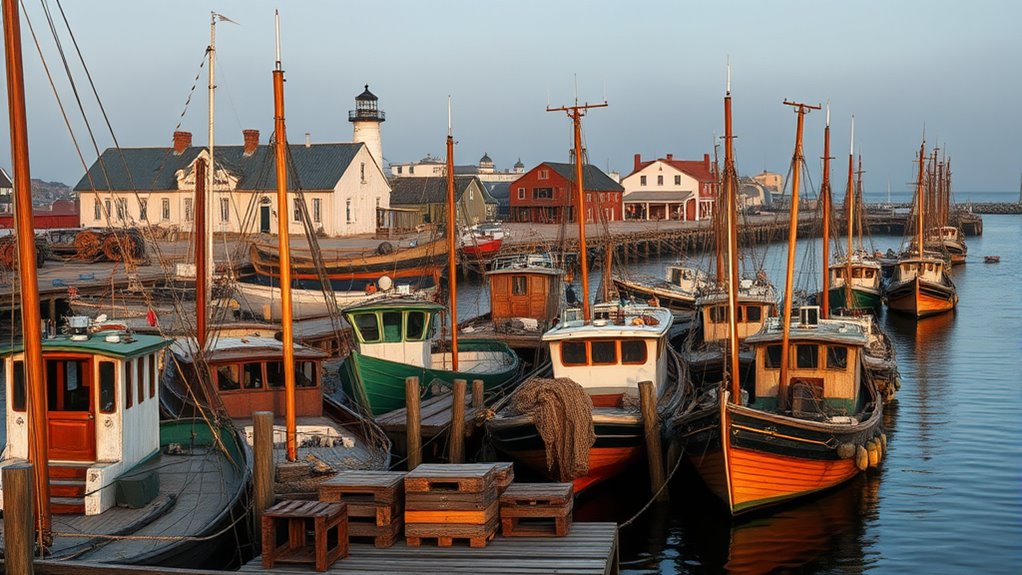
You’ll see that Maine’s early economy relied heavily on its maritime industry, which fueled shipping, fishing, and shipbuilding. Agriculture also gained momentum as potatoes and other crops became key to local livelihoods. Meanwhile, trade and commerce expanded, connecting Maine’s resources with national and international markets. Additionally, the development of local business hours helped facilitate commerce and community engagement.
Maritime Industry Growth
The maritime industry became the economic backbone of early Maine, fueling growth through fishing, shipbuilding, and trade. You rely on the bounty of the Atlantic, catching cod, haddock, and lobsters that sustain communities. Shipbuilding flourished as Maine’s forests provided timber for vessels that expanded trade routes. These ships transported goods and people, connecting Maine with global markets. The table below highlights key aspects of the maritime industry’s growth:
| Industry Component | Key Locations | Impact |
|---|---|---|
| Fishing | Portland, Bar Harbor | Food supply, trade exports |
| Shipbuilding | Bath, Eastport | Economic development |
| Trade | Machias, Kennebunk | International commerce |
| Maritime Labor | Coastal villages | Jobs and community growth |
| Naval Support | Kittery, Belfast | Defense and technological advances |
This industry shaped Maine’s economy, culture, and identity. Additionally, maritime technology advancements played a significant role in enhancing efficiency and safety across the industry.
Agricultural Development Rise
As Maine’s maritime industry laid the groundwork for economic growth, early settlers also began cultivating the land to sustain their communities. You’ll find that farming became essential, especially in the inland regions where maritime pursuits weren’t possible. Potatoes quickly emerged as a major crop, thriving in Maine’s cool climate and fertile soil. Settlers cleared land for small farms, growing grains, beans, and vegetables to feed local populations and support trade. Agriculture complemented the maritime economy, creating a diversified economic base. Over time, farming techniques improved, and local markets expanded. You’ll see that agriculture not only provided sustenance but also helped establish Maine’s economic stability in the early years, laying the foundation for future growth beyond its ports. The adoption of automation technologies in farming practices further increased productivity and efficiency.
Trade and Commerce Expansion
Trade and commerce became the backbone of early Maine’s economy, fueling growth and connecting the region to broader markets. As you explore Maine’s early economic growth, you’ll notice how maritime industries played a crucial role in expanding trade. Maine’s location along key shipping routes allowed it to:
- Export timber, fish, and agricultural products to national and international markets
- Establish bustling ports like Portland and Bath as trade hubs
- Develop shipbuilding industries that supported both local needs and global commerce
You’ll see how these activities created jobs and attracted settlers, laying the foundation for Maine’s economic future. The region’s natural resources and strategic coastal position made trade a driving force, transforming Maine into an important player in regional and international commerce. Additionally, the development of port cities facilitated the movement of goods and people, further boosting economic growth.
Maritime Heritage and Cultural Traditions
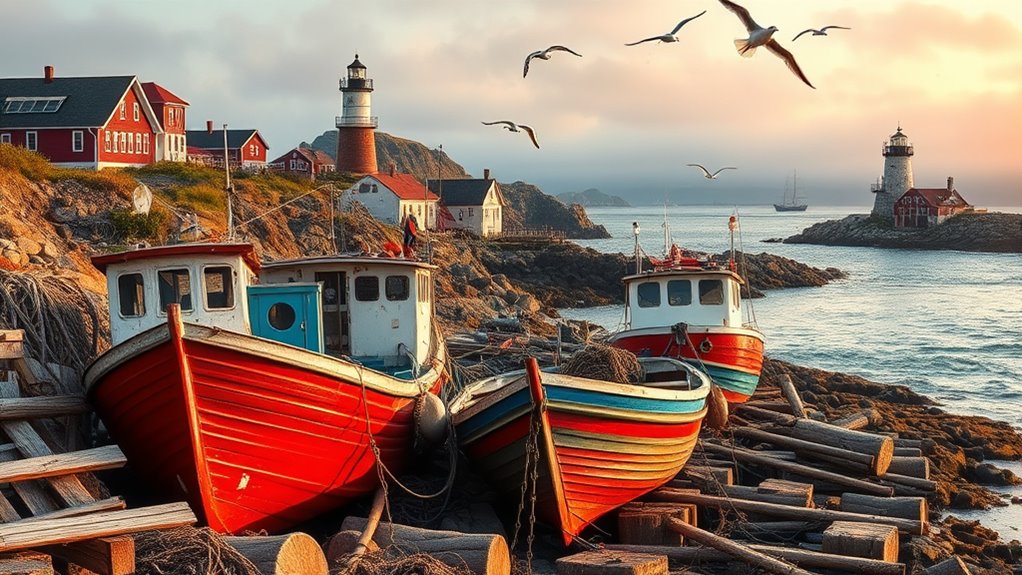
Maine’s maritime heritage runs deep, shaping its identity through centuries of seafaring, fishing, and shipbuilding. You can see this legacy in the historic lighthouses lining the coast and the bustling fishing ports that still operate today. Traditional crafts like boatbuilding and lobstering are passed down through generations, preserving skills and customs. Seafood, especially lobster and clams, remains central to local cuisine and cultural celebrations. Museums and historic sites highlight Maine’s maritime past, offering insight into shipbuilding, navigation, and seafaring life. Festivals like the Portland Lobster Festival showcase this vibrant tradition, drawing visitors and locals alike. By embracing these customs, you keep alive a proud maritime legacy that continues to define Maine’s cultural identity. Additionally, the region’s farm-to-table cooking movement emphasizes locally sourced ingredients, further celebrating Maine’s rich culinary heritage.
Maine’s Industrialization and Technological Progress
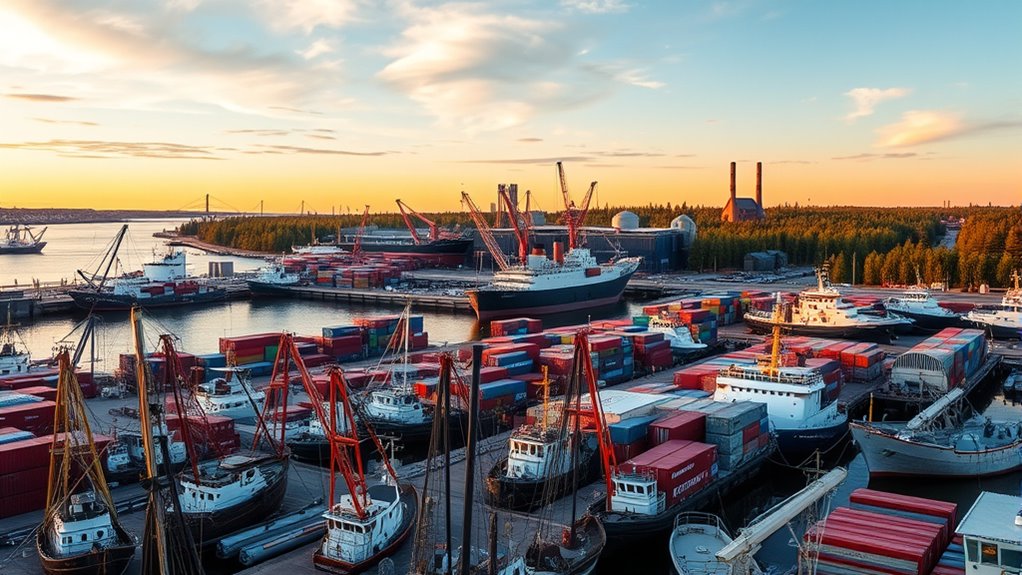
Industrialization transformed Maine from a primarily maritime economy into a hub of technological innovation and manufacturing. You see this shift through key developments that revolutionized the state’s industry.
Industrialization shifted Maine from maritime roots to a center of innovation and manufacturing.
- The launch of the first Navy submarine in Maine marked a major leap in naval technology.
- The rise of textile mills and paper manufacturing boosted economic growth and provided new job opportunities.
- Infrastructure projects like the Maine Turnpike connected cities and facilitated commerce across the region.
- The adoption of somatic therapy techniques during this era reflected a growing understanding of how emotional well-being impacts overall productivity and societal health.
These advancements pushed Maine forward, turning it into a center of innovation. You can still see remnants of this era in the historic shipyards, factories, and technological sites scattered throughout the state. Maine’s industrial progress laid the groundwork for its modern economy and technological achievements.
Political Milestones and Social Progress
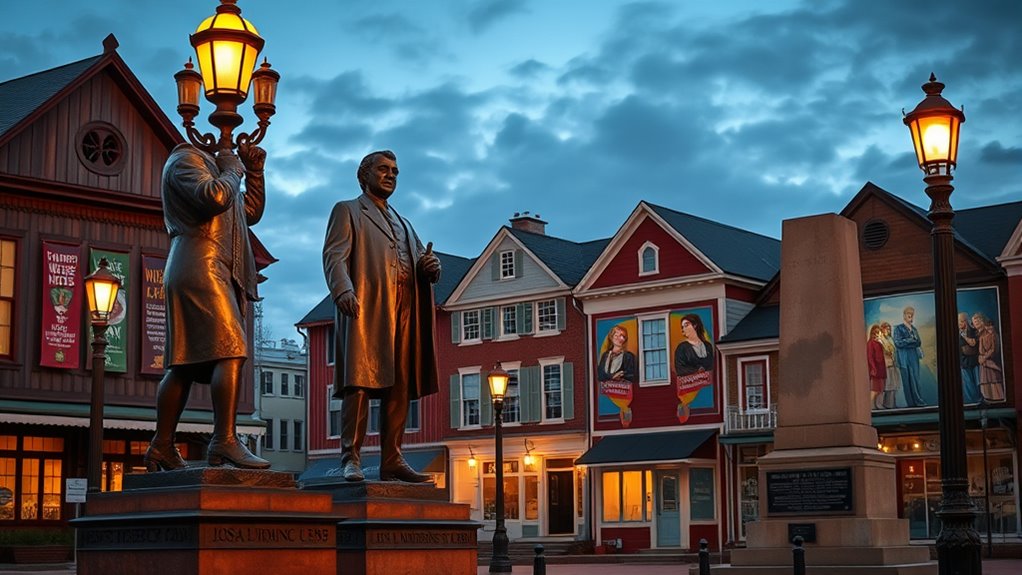
Throughout its history, Maine has achieved several significant political milestones that reflect its commitment to progress and equality. You’ve seen the state lead in women’s political representation, with Maine hosting the first all-female Senate race in the nation. The state also expanded voting rights early on, emphasizing inclusivity. Maine’s leaders have championed environmental conservation, passing laws to protect its natural landscapes. You’ve witnessed efforts to improve social justice, such as advancing healthcare and education reforms. Maine’s political landscape has fostered civic engagement, encouraging residents like you to participate actively. These milestones highlight Maine’s ongoing dedication to fostering a fair, progressive society rooted in democratic values and social equity.
Preservation of Historic Sites and Cultural Landmarks
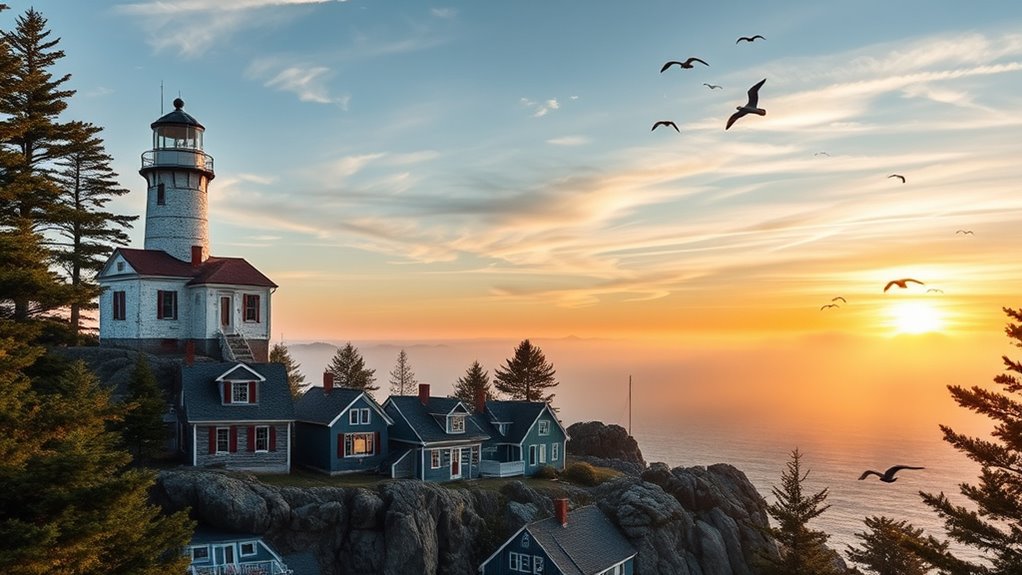
Preserving Maine’s historic sites and cultural landmarks is essential to maintaining the state’s rich heritage for future generations. Your efforts help protect places like St. Croix Island and the Wabanaki tribal sites, ensuring their stories endure. By supporting preservation initiatives, you contribute to:
- Restoring historic buildings and landmarks, maintaining their architectural integrity
- Educating the public through guided tours and interpretive programs
- Securing funding and advocacy for ongoing conservation projects
These actions conserve Maine’s diverse history, from Native American roots to colonial and maritime traditions. Maintaining these sites allows you and others to connect with the past, fostering pride and understanding. Your commitment ensures that Maine’s unique cultural identity remains vibrant and accessible for years to come.
Maine’s Natural Beauty and Tourism Industry
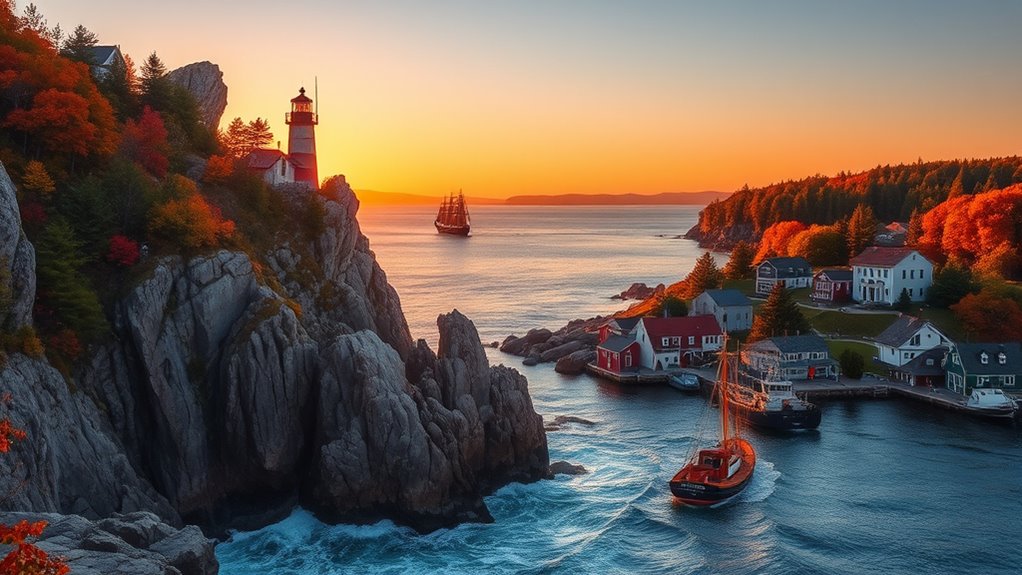
Maine’s natural beauty draws visitors from around the world, offering stunning landscapes that showcase its rugged coastlines, dense forests, and sparkling lakes. You can explore miles of pristine beaches, rugged cliffs, and picturesque islands along the Atlantic. The state’s lush forests attract outdoor enthusiasts who hike, kayak, and enjoy wildlife watching in places like Acadia National Park. Lakes such as Moosehead and Sebago provide perfect spots for fishing, boating, and relaxing. Seasonal changes create breathtaking scenery year-round, from vibrant autumn foliage to winter snow-covered landscapes. The tourism industry thrives on these natural attractions, supporting local businesses, guiding outdoor adventures, and offering scenic drives. Your visit to Maine promises immersive experiences in its unspoiled wilderness and coastal charm.
Contemporary Cultural Expressions and Educational Resources
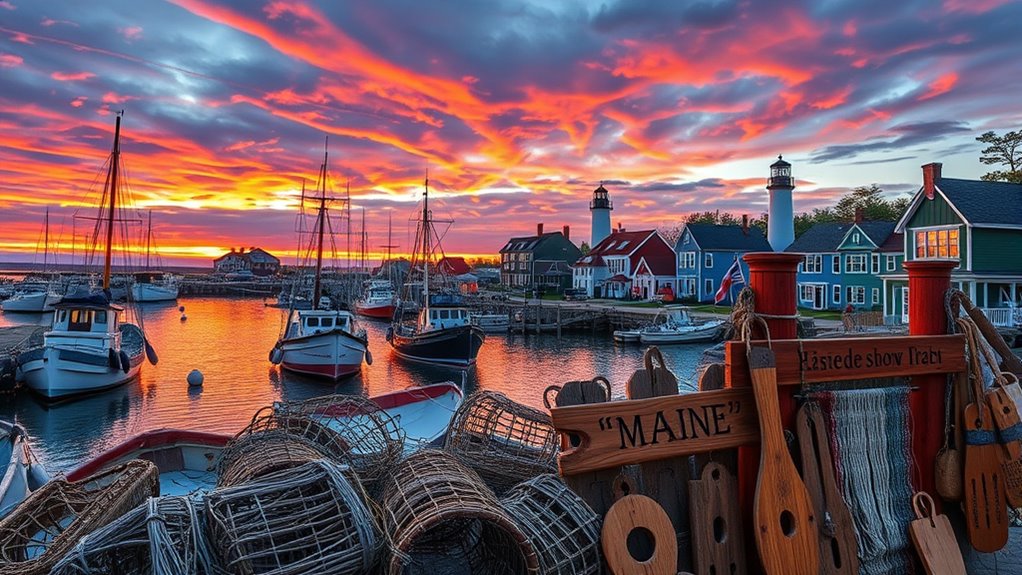
You can experience Maine’s vibrant culture through its lively festivals and events that celebrate local traditions. Digital education initiatives like the Maine Memory Network make the state’s history accessible to everyone. These resources help you connect with Maine’s rich past while engaging with its contemporary cultural expressions.
Cultural Festivals and Events
Have you ever attended a festival that captures the vibrant spirit and diverse traditions of Maine? If not, you’re missing out on lively celebrations that showcase the state’s rich cultural heritage. Maine hosts numerous festivals throughout the year, highlighting its maritime roots, Native American traditions, and seasonal customs.
- Celebrations like the Maine Celtic Festival honor Irish and Scottish heritage with music, dance, and food.
- The Common Ground Country Fair emphasizes sustainable farming and rural life, connecting visitors to Maine’s agricultural history.
- The Portland Sea Festival celebrates Maine’s maritime legacy with boat races, seafood, and educational exhibits.
These events not only bring communities together but also serve as educational resources, helping you understand Maine’s history through immersive experiences and cultural displays.
Digital Education Initiatives
Digital education initiatives are transforming how Maine preserves and shares its rich cultural heritage. You can explore Maine’s history through interactive online platforms, virtual tours, and digital archives. The Maine Memory Network, for example, offers access to thousands of photographs, documents, and recordings that bring the state’s past to life from your home. These resources make it easier to learn about Native tribes, maritime traditions, and historic sites. The table below highlights some key digital initiatives shaping Maine’s educational landscape:
| Initiative | Focus Area | Impact |
|---|---|---|
| Maine Memory Network | Digital archives | Accessible history for schools and communities |
| Virtual Tours | Historic sites | Remote exploration of landmarks like St. Croix Island |
| Educational Apps | Interactive learning | Engages students with Maine’s cultural stories |
Frequently Asked Questions
How Did Maine’s Indigenous Tribes Influence Modern State Culture?
You can see Maine’s indigenous tribes influence modern state culture through their continued traditions, art, and community practices. Wabanaki tribes, in particular, preserve their languages, crafts, and storytelling, enriching Maine’s cultural landscape. You might participate in Native-led events, visit cultural centers, or learn about their history at historic sites. Their ongoing presence and contributions shape Maine’s identity, emphasizing respect for nature, community, and cultural heritage that still thrive today.
What Role Did Maine Play During the American Revolution?
You should know that Maine supported the American Revolution strongly, with many settlers fighting for independence. Imagine the frontier, where local volunteers and militia played key roles in battles and defending their land. Your ancestors likely participated in or supported these efforts, helping secure freedom from British rule. Their dedication helped shape Maine’s identity as a fiercely independent state, and their legacy continues to influence the region’s patriotic spirit today.
How Did Maine’s Early Industries Shape Its Development?
You see, Maine’s early industries like maritime trade, shipbuilding, and fishing played a essential role in shaping its development. These industries fueled economic growth, created jobs, and attracted settlers. As you explore Maine’s coast, you’ll notice how its shipbuilding tradition led to innovation and prosperity. The fishing industry, especially lobstering and whaling, established Maine as a critical maritime hub, laying the foundation for its future economic and cultural growth.
What Are Some Unique Cultural Traditions Specific to Maine?
You’ll find Maine’s unique culture woven into its lobstering traditions, symbolizing resilience and self-reliance. Celebrate the iconic lobster roll, a delicious emblem of coastal life, and participate in the annual Maine Lobster Festival, where community spirit and maritime heritage shine. Folk music, featuring fiddles and traditional dances, echoes the state’s deep roots. These customs embody Maine’s independent spirit, connecting you to its vibrant, timeless character.
How Does Maine Preserve Its Historical Landmarks Today?
You can explore Maine’s historical landmarks through preservation efforts led by local organizations, government agencies, and community volunteers. They maintain sites like historic forts, museums, and landmarks by restoring structures, providing educational programs, and promoting responsible tourism. You’re encouraged to visit these sites, participate in guided tours, and support preservation initiatives, ensuring Maine’s rich history remains accessible and celebrated for future generations.
Conclusion
As you explore Maine’s rich tapestry, you’re walking through a living mosaic of history and culture, each piece whispering stories of resilience and tradition. Like the rugged coastline shaping its shores, Maine’s heritage molds who you are, inviting you to dive deeper into its timeless spirit. Embrace this connection, and let its enduring legacy be a guiding lighthouse on your journey, illuminating the path to understanding and appreciation.