Maryland’s cuisine centers around its Chesapeake Bay seafood, especially blue crabs, oysters, and rockfish. You’ll find classic dishes like crab cakes, Maryland crab soup, and soft-shell crabs, often seasoned with Old Bay. The culinary traditions also include stuffed ham, pit beef, and regional innovations that blend cultural influences from Native American, European, and African heritage. If you keep exploring, you’ll discover even more about Maryland’s rich, flavorful food heritage.

Get travel and outdoor gear delivered free with Prime
- Fast, free delivery on millions of items
- Prime Video, Amazon Music and more included
- Member-only deals all year
Key Takeaways
- Maryland’s cuisine is heavily influenced by Chesapeake Bay seafood, featuring dishes like crab cakes, oysters, and baked rockfish.
- Traditional Maryland foods include crab soup, stuffed ham, hog maw, and pit beef, blending African, Native American, and European culinary roots.
- Maryland’s seafood preparations emphasize freshness, briny flavors, and simple seasoning with Old Bay and regional herbs.
- Historic recipes and cookbooks, such as “Maryland’s Way,” preserve the state’s rich culinary heritage and traditional cooking techniques.
- Modern chefs innovate Maryland classics with global spices, fresh ingredients, and contemporary presentation, blending tradition with creativity.
Maryland Blue Crab: The State’s Iconic Delicacy

Maryland Blue Crab is unquestionably the state’s most famous delicacy, celebrated for its sweet, succulent meat and distinctive flavor. When you indulge in a crab feast, you experience the essence of Maryland’s culinary heritage. Steamed crabs are typically seasoned with Old Bay, enhancing their natural sweetness, and eaten directly from the shell with your hands. These feasts often include vinegar and melted butter, emphasizing the rich, savory taste of the crab. The blue crab’s popularity extends beyond casual dining; it’s a cultural symbol often linked to summer gatherings and community celebrations. Maryland’s blue crabs are prized for their size and flavor, making them a staple of local cuisine that captures the state’s maritime spirit and culinary pride. Diverse designs of crab-shaped serving dishes and tools are also popular for enhancing the dining experience.
Regional and Historical Food Traditions in Maryland

Have you ever wondered how Maryland’s rich history shapes its unique culinary traditions? You’ll find that Maryland’s food reflects a blend of African, Native American, and European influences, shaped by its Chesapeake Bay surroundings. Dishes like Maryland Stuffed Ham showcase African American slave cooking, while local seafood such as rockfish and oysters highlight the Bay’s bounty. Traditional recipes, preserved in historic cookbooks and manuscript collections, reveal a culinary heritage rooted in community and celebration. Regional specialties like pit beef and hog maw trace back generations, representing Southern Maryland and German immigrant roots. Food festivals, holidays, and heritage efforts keep these traditions alive, connecting you to Maryland’s past through flavors passed down and adapted over centuries. The culinary tools used in traditional Maryland cooking, such as cast iron skillets and tobacco pipe ash for seasoning, also provide insight into the resourcefulness of early settlers.
Maryland Crab Soup and Its Variations

Crab soup stands out as a regional favorite that encapsulates Maryland’s rich seafood tradition. You’ll find it served in many variations, each highlighting local ingredients and flavors. The classic tomato-based version features fresh lump crab meat, vegetables, Old Bay seasoning, Worcestershire sauce, and a flavorful broth. Some enjoy cream of crab soup, which adds richness and smoothness, while others prefer a “50/50” blend combining both styles. Variations include spicy versions with cayenne pepper or tangy additions like lemon juice. You might also encounter:
- Cream of crab soup with a velvety texture
- Spicy Maryland crab soup with hot peppers
- “50/50” soup blending tomato and cream bases
- Hearty versions with potatoes or corn
- Light, broth-based styles for summer gatherings
Each variation reflects Maryland’s seafood passion and culinary creativity.
The Unique Heritage Dish: Maryland Stuffed Ham
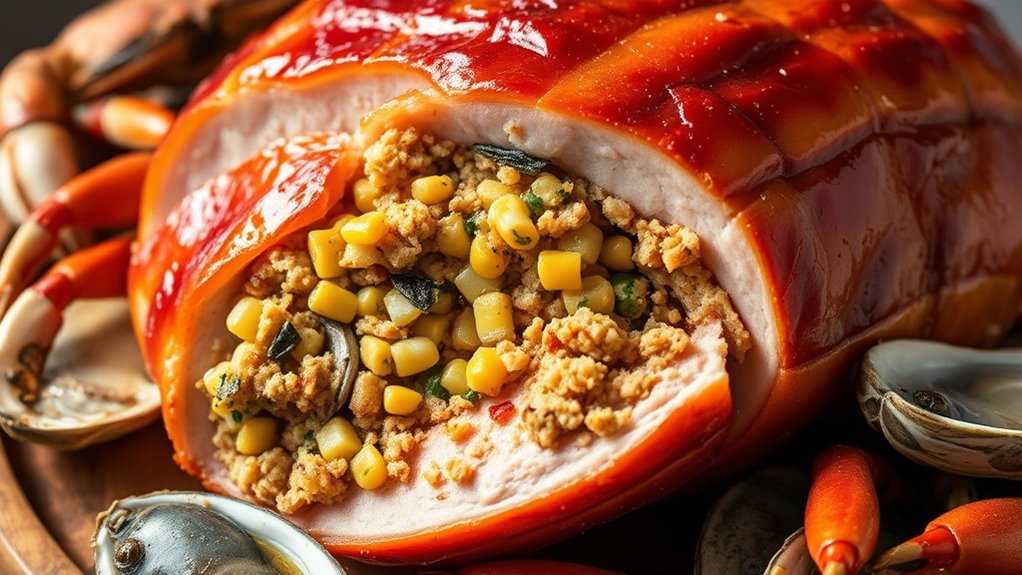
Did you know that Maryland Stuffed Ham is a centuries-old Southern Maryland specialty rooted in African American culinary traditions? You’ll find it prepared mainly for holidays like Thanksgiving, Christmas, and Easter, reflecting its importance in local culture. The process involves curing and deboning a whole ham, then stuffing it with a mixture of kale, cabbage, spices, and sometimes other greens. Once stuffed, it’s tightly wrapped in cheesecloth and boiled or baked to develop rich flavors. This dish showcases the resourcefulness of enslaved African Americans, who used local ingredients and traditional methods to create hearty, flavorful fare. Additionally, proper gear shifting techniques can be employed when preparing and serving, ensuring a smooth culinary experience. Maryland Stuffed Ham embodies a deep connection to history, blending African, Native American, and European influences into a distinctive, celebrated culinary heritage.
Maryland’s Barbecue and Meat Classics

You’ll find Maryland’s barbecue scene dominated by pit beef, known for its smoky flavor and roadside stands that draw crowds from all around. Traditional meat dishes like stuffed ham and hog maw highlight the region’s rich culinary history and cultural roots. These classics showcase Maryland’s unique approach to comfort food and slow-cooked traditions. Additionally, the state’s diverse culinary influences reflect a cultural heritage that continues to evolve and enrich its food scene.
Maryland Pit Beef
Maryland pit beef stands out as a distinctive and beloved barbecue tradition, known for its smoky flavor and tender, sliced beef. You’ll find it at local stands and festivals, often cooked over open flames or charcoal to develop a rich, smoky taste. The beef is typically seasoned with simple spices, then cooked to perfection and sliced thin. As you enjoy it, consider these key aspects:
- Originated in Baltimore in the 1970s
- Usually served with horseradish, BBQ sauce, or horseradish sauce
- Often accompanied by sides like coleslaw or fries
- Prepared on custom-built pits for authentic flavor
- Celebrated at numerous local festivals and stands
This tradition captures Maryland’s love for hearty, flavorful meat, adding a smoky twist to the regional culinary landscape.
Traditional Meat Dishes
Traditional meat dishes form an essential part of Maryland’s culinary heritage, showcasing a variety of flavors and cooking techniques passed down through generations. You’ll find Maryland’s signature pit beef, with its smoky, charred exterior and tender interior, often served on a bun with horseradish sauce. Maryland Stuffed Ham, a labor-intensive dish, is reserved for holidays and features cured, deboned ham filled with seasoned greens and spices. Hog Maw, a German-inspired dish, involves stuffing a pig’s stomach with pork and potatoes, reflecting historic immigrant influences. Meatloaf and chicken dishes serve as comfort foods in many homes. Additionally, Maryland’s rich farming traditions bring hearty potato casseroles and hearty meat-based dishes that continue to define the state’s unique culinary identity.
Chesapeake Bay’s Influence on Local Seafood Cuisine

You can’t explore Maryland’s seafood traditions without recognizing the Chesapeake Bay’s crucial role in shaping local flavors. The Bay provides fresh, abundant catches like blue crabs, rockfish, and oysters that define Maryland’s culinary identity. Traditional preparations highlight these ingredients through baked fish, fish hash, and dishes seasoned with Bay-influenced flavors. Additionally, the region’s rich fishing heritage influences the methods and recipes that have been passed down through generations.
Fresh Chesapeake Seafood
Have you ever tasted the bounty of Chesapeake Bay? If not, you’re missing out on a rich seafood tradition. The bay’s waters provide Maryland with some of its freshest catches, shaping local dishes. You can enjoy:
- Steamed blue crabs, seasoned with Old Bay and dipped in butter
- Oysters on the half shell, showcasing their briny flavor
- Baked rockfish, often seasoned with herbs and lemon
- Fish hash, a hearty dish combining local fish and potatoes
- Soft-shell crabs, fried to crispy perfection
These seafood staples are central to Maryland’s culinary identity. The bay’s influence runs deep, making fresh seafood a must-try experience. Every bite connects you to generations of Marylanders who have cherished these flavors. fresh seafood is a key element of the region’s cuisine, reflecting the area’s rich natural resources.
Traditional Fish Preparations
The Chesapeake Bay’s rich waters have shaped how Marylanders prepare and enjoy their local fish, creating a distinctive culinary tradition. You’ll find baked rockfish, a simple yet flavorful dish, often seasoned with Old Bay and served with seasonal greens. Fish hash, another classic, combines chopped local fish with potatoes, onions, and spices, cooked until crispy—perfect for hearty meals. Frying soft crabs is a beloved method, enjoyed in sandwiches or as part of a seafood platter. Smoked or grilled fish also features in many recipes, highlighting the Bay’s influence. These preparations emphasize freshness and simplicity, allowing the natural flavors of Maryland’s abundant fish to shine. They connect you to a rich heritage rooted in the Chesapeake’s waters and local culinary practices. Traditional fish preparations have become a symbol of Maryland’s unique regional identity and culinary history.
Bay-Influenced Flavors
Chesapeake Bay’s abundant waters deeply influence Maryland’s seafood flavors, infusing dishes with a distinct briny sweetness and smoky richness. This bay’s bounty shapes everything from classic crab cakes to oyster stews, giving Maryland cuisine its signature taste. As you explore local dishes, you’ll notice the bold use of bay-seasoned ingredients and methods that highlight the freshness of the catch. The use of affiliate marketing disclosures ensures transparency when sharing recipes or culinary products associated with Maryland cuisine. These flavors reflect the bay’s essential role in Maryland’s culinary identity, connecting you to the region’s maritime heritage.
Preserving Maryland’s Culinary Heritage Through Literature

Literature plays an essential role in preserving Maryland’s rich culinary heritage by capturing traditional recipes, cooking techniques, and cultural stories that might otherwise be lost to time. Historic cookbooks like “Maryland’s Way” and manuscripts from the 19th century document early crab cakes, stuffed ham, and regional seafood preparations, keeping these traditions alive. Food historians use these texts to revive practices and teach new generations about Maryland’s culinary roots. Local magazines and community organizations compile recipes that reflect cultural diversity and community memory. Public programs and heritage tourism celebrate these culinary stories, ensuring they’re passed down. By engaging with these literary sources, you help keep Maryland’s unique foodways vibrant and accessible, honoring the history behind its iconic dishes.
Iconic Maryland Foods and Drinks

Maryland’s culinary identity is deeply tied to its iconic foods and drinks, which have become symbols of local culture and tradition. You can’t visit without trying the legendary Maryland Blue Crab, known for its sweet, succulent meat. Crab cakes are a staple, often made with lump crab meat and Old Bay seasoning. Maryland’s crab soup, with its tomato base and fresh crab, is a regional favorite. Soft crabs, fried to perfection, are another seafood hallmark. You’ll also find oysters in dishes like oyster stew and raw on the half shell. Additionally, Maryland’s signature beverages often complement seafood feasts. Here are some iconic foods and drinks you’ll encounter:
- Lemon sticks
- Crab imperial
- Maryland White Potato Pie
- Maryland-style crab cakes
- Local craft beers
Furthermore, the state’s rich culinary traditions reflect both its maritime heritage and agricultural bounty, making Maryland a distinctive destination for food lovers.
Modern Twists on Traditional Maryland Recipes

Traditional Maryland recipes are being reimagined today with innovative techniques and flavors that appeal to modern palates. Chefs are adding global spices to crab cakes, creating spicy versions with jalapeños or curry. Some are substituting gluten-free breadcrumbs or incorporating fresh herbs for brighter flavors. Creative twists include crab-stuffed avocado or crab-topped flatbreads, blending local seafood with contemporary presentation. Old recipes like Maryland crab soup get upgraded with coconut milk or smoky chipotle peppers, balancing tradition with bold new tastes. Fried soft crabs are served alongside spicy aioli or tangy slaw for a fresh take. These adaptations celebrate Maryland’s culinary roots while embracing innovation, making the classic dishes exciting for today’s food lovers. You get to enjoy Maryland’s rich flavors in fresh, unexpected ways, especially as smart indoor gardens make it easier to grow herbs and vegetables year-round at home.
Frequently Asked Questions
What Are the Origins of Maryland’s Famous Crab Cakes?
You might be surprised to learn that Maryland’s famous crab cakes date back to the late 19th century. They originated from the Chesapeake Bay’s abundant blue crabs, which locals used to create a flavorful, savory dish. Early recipes used fresh lump crab meat, bread crumbs, and seasonings, often preserved in historic manuscripts. Over time, they became a regional specialty, celebrated for their rich flavor and simple, quality ingredients.
How Has Maryland’s Diverse Heritage Influenced Its Traditional Dishes?
Maryland’s diverse heritage shapes its traditional dishes through blending African, Native American, and European influences, creating a rich culinary tapestry. You’ll find this mix in hearty stuffed ham, flavorful crab feasts, and savory oyster recipes, each reflecting cultural roots. These traditions are preserved through historic cookbooks, community celebrations, and local markets, inviting you to experience Maryland’s unique food story that celebrates history, community, and flavors passed down through generations.
What Are the Traditional Methods of Preparing Maryland Soft Crabs?
You typically prepare Maryland soft crabs by first cleaning and lightly seasoning them. Many people choose to fry them, often dipping in beaten egg and seasoned flour or cornmeal before frying until golden brown. Some prefer pan-frying or sautéing for a lighter option. You can serve soft crabs with melted butter, vinegar, or a squeeze of lemon, highlighting their delicate, sweet flavor. This simple method preserves the crab’s tender texture.
How Do Maryland’s Historical Recipes Differ From Modern Versions?
Maryland’s historic recipes differ distinctly from modern versions by preserving traditional practices and ingredients. You’ll find that old recipes often rely on time-honored techniques like slow simmering, simple seasonings, and natural flavors, unlike today’s quick-cook methods or creative innovations. You might notice more regional staples like Old Bay seasoning, homemade broths, and handcrafted touches that honor Maryland’s culinary cultural core, keeping the historic heartbeat of Maryland’s mouthwatering meals alive today.
What Local Beverages Are Traditionally Paired With Maryland Seafood?
You’ll find that traditional Maryland seafood is often paired with local beverages like cold, crisp beers such as regional lagers or ales, which complement the rich flavors of crab and oysters. Maryland also has a history of enjoying sweet iced tea or lemonade during seafood feasts, especially in summer. These drinks enhance the fresh, briny taste of seafood and are a staple at crab feasts and other coastal gatherings.
Conclusion
Exploring Maryland’s culinary scene shows that food isn’t just about taste — it’s about tradition, history, and community. From the beloved blue crab to hearty Chesapeake Bay seafood, each dish tells a story. Remember, “You are what you eat,” so savor these local flavors and keep Maryland’s food heritage alive. Embrace the flavors, share the stories, and enjoy every bite of this rich culinary tapestry.
Halloween Picks
halloween
As an affiliate, we earn on qualifying purchases.