
Alaska’s cuisine combines indigenous practices, sustainable harvesting, and modern innovations. You’ll find traditional foods like salmon, marine mammals, berries, and land game prepared with techniques like smoking, drying, fermenting, and freezing. The culture honors resourcefulness and respect for nature, blending old techniques with new culinary styles. If you continue exploring, you’ll discover how Alaska’s food traditions carry deep cultural significance and continue to evolve today.
Key Takeaways
- Alaska’s cuisine heavily features traditional indigenous foods like salmon, marine mammals, berries, and roots, prepared using smoking, drying, fermenting, and freezing.
- Indigenous harvesting techniques emphasize sustainability, utilizing every part of animals and respecting natural resources.
- Modern culinary practices incorporate native ingredients into innovative dishes, blending traditional techniques with contemporary styles.
- Food preservation methods such as canning, fermenting, and drying are vital for year-round nutrition and cultural continuity.
- Community-led initiatives promote local food production, backyard gardening, and farm-to-table movements, celebrating Alaska’s rich food heritage.
Indigenous Food Practices and Cultural Significance
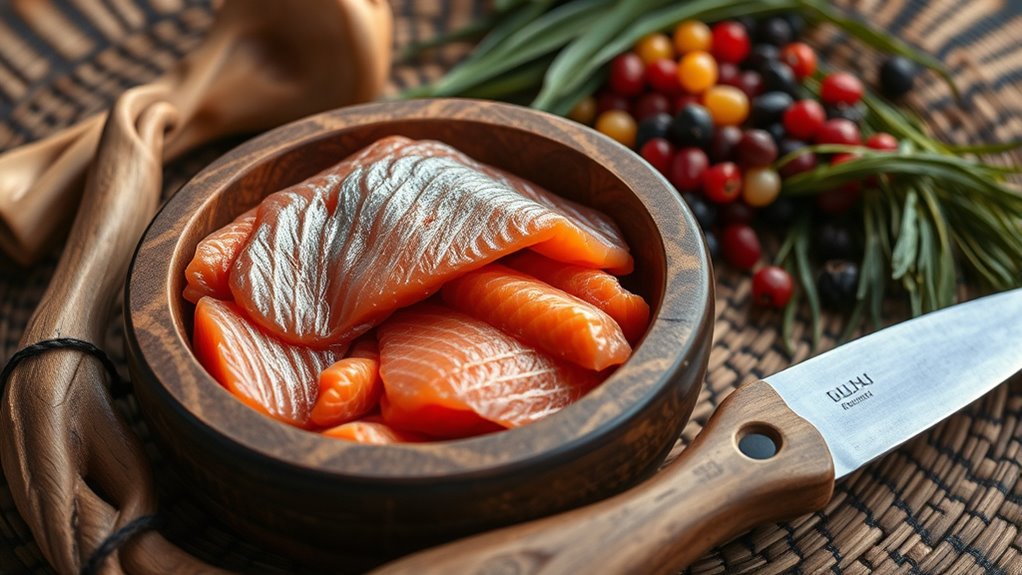
Indigenous Alaska Native groups have developed food practices deeply rooted in their respect for nature and sustainable resource use. You learn that they harvest wild resources like salmon, marine mammals, berries, and roots with care, ensuring future generations can also benefit. Preservation methods like smoking, drying, and fermenting help store food through harsh winters, emphasizing efficiency and tradition. Every part of the animal, including organs and fats, is used to maximize nutrition and minimize waste. These practices reflect a deep cultural connection to the land and sea, emphasizing balance and gratitude. You see that traditional foods like muktuk and dried berries aren’t just sustenance—they’re symbols of identity, history, and spiritual harmony with nature. Understanding sustainable resource use is essential to appreciating the resilience and ingenuity of Alaska Native culinary traditions.
Key Marine and Land Resources in Alaskan Cuisine
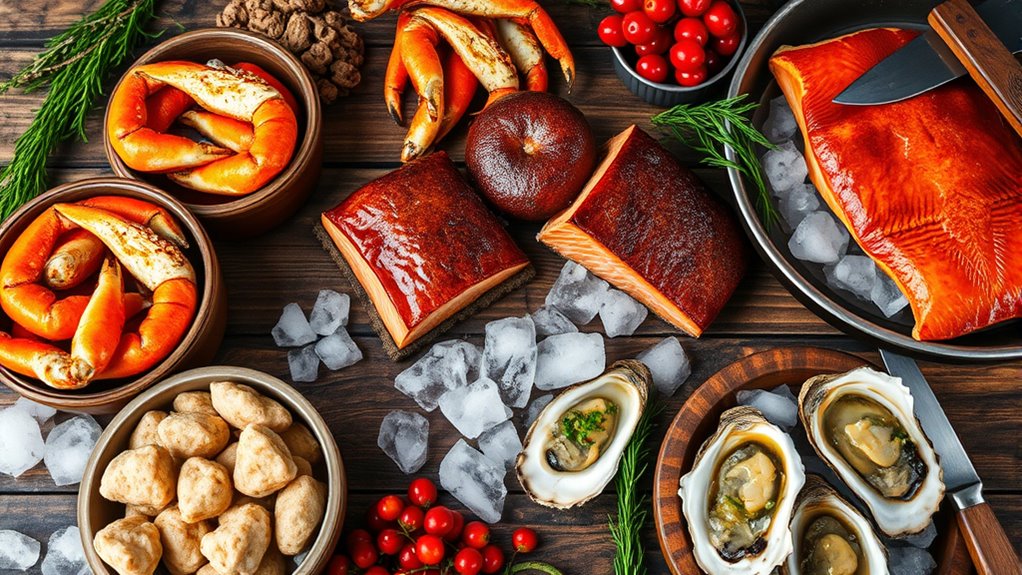
You can’t explore Alaskan cuisine without recognizing how indigenous communities harvest seafood and land animals sustainably. They utilize every part of their catch and game, ensuring resources are preserved for future generations. Foraging for berries, roots, and greens also plays a crucial role in maintaining a balanced, nutrient-rich diet rooted in respect for nature. Incorporating sustainable harvesting practices ensures the longevity of these vital resources for generations to come.
Indigenous Seafood Harvesting
Have you ever wondered how Alaska’s native peoples sustainably harvest their rich marine and land resources? They use time-honored techniques that respect nature’s balance. Salmon are caught with fish wheels, traps, and spears, ensuring minimal environmental impact. Marine mammals like seals, whales, and walrus are hunted selectively, following cultural protocols and conservation principles. Shellfish such as clams and mussels are gathered from coastal waters, often during specific seasons to prevent overharvesting. Every part of the animals, from meat to blubber, is utilized, maximizing nutrition and reducing waste. These practices are deeply rooted in tradition, emphasizing sustainability, respect for wildlife, and harmony with the environment. Engaging in sustainable harvesting methods helps preserve Alaska’s ecosystems for future generations. This approach sustains their diets and preserves their cultural heritage for generations to come.
Land Animal Utilization
Land animals have played an essential role in Alaska’s culinary traditions, supplementing marine resources and providing protein in regions where fishing isn’t always feasible. You rely on land mammals like moose and caribou, which are hunted sustainably and shared within communities. These animals supply meat, organ meats, fats, and marrow, all utilized fully to maximize nutrition and minimize waste. Smaller game such as squirrels, hares, and bears also contribute during hunting seasons, offering additional protein sources. You gather wild berries, roots, and greens seasonally, enhancing your diet with vitamins and flavor. Traditional methods like drying, smoking, and fermenting preserve meat and foraged foods, ensuring year-round availability. This practice reflects a deep respect for nature and a resourceful approach essential to Alaska’s rugged environment. Understanding of affiliate disclosures also emphasizes the importance of transparency and respecting local practices in sharing knowledge about traditional foods.
Sustainable Foraging Practices
Sustainable foraging practices are essential to preserving Alaska’s rich marine and land resources for future generations. As you gather wild foods, respect seasonal limits and harvest only what you need. This approach guarantees ecosystems remain balanced, supporting native communities and ecosystems alike. You can identify and collect berries, seaweed, roots, and shellfish responsibly by avoiding overharvesting and following local guidelines. Properly processing and preserving your bounty, like drying or fermenting, extends availability without depleting resources. Here’s a quick guide to key resources:
| Resource | Season | Harvesting Tips |
|---|---|---|
| Salmon | Summer-Fall | Use sustainable traps and limit catches |
| Berries | Summer | Pick ripe berries, avoid over-harvesting |
| Seaweed | Year-round | Harvest selectively, respect growth cycles |
| Caribou | Fall-Winter | Follow tribal regulations, hunt sustainably |
| Shellfish | Summer-Fall | Harvest in moderation, avoid breeding areas |
Additionally, understanding the importance of sustainable harvesting can further ensure the longevity of these vital resources.
Impact of the Gold Rush and Settler Food Traditions

The Gold Rush brought new food innovations, like canning and fishing techniques, that connected Alaska’s cuisine to global markets. Settlers relied on hearty staples like sourdough bread and preserved seafood to survive harsh conditions, shaping daily diets. Over time, native ingredients blended with these new practices, creating a unique food culture rooted in both tradition and adaptation. These influences continue to be reflected in the region’s traditional dishes that celebrate a rich culinary history.
Gold Rush Food Innovations
During the Alaska Gold Rush, food innovations emerged as vital strategies for survival in the challenging frontier environment. You adapted by developing new preservation techniques, such as canning, drying, and fermenting, to store abundant seafood and game. Sourdough bread became a staple, providing durability and nutrition in harsh conditions. Settlers also introduced canned meats and preserved fruits, expanding diets beyond native foods. These innovations allowed you to sustain energy during long mining seasons. Incorporating food preservation methods was essential to ensure year-round access to vital nutrients.
Sourdough Survival Strategies
Sourdough bread became a vital survival tool for settlers and miners facing Alaska’s extreme conditions, thanks to its durability and nutritional benefits. Its natural fermentation process allowed it to be stored longer and resist spoilage, making it ideal in remote, harsh environments. Sourdough provided energy, essential vitamins, and a sense of familiarity amid unfamiliar landscapes. As you explore into the history, you’ll see how sourdough became a symbol of resilience and ingenuity. This fermentation process also enhanced nutritional value, contributing to better health outcomes for those relying on it as a staple.
Cultural Food Fusion
Alaska’s culinary landscape has been shaped by a dynamic blend of indigenous traditions and settler practices, especially since the Gold Rush era. As settlers arrived, they brought new ingredients and techniques that merged with native foods, creating unique regional dishes. You’ll find traditional seafood like salmon and halibut served alongside sourdough bread and preserved game meat. This fusion reflects a history of adaptation and resilience. The use of local ingredients continues to inspire modern culinary innovations in the region.
| Indigenous Practices | Settler Influences |
|---|---|
| Open-fire roasting | Canning and seafood preservation |
| Foraged berries | Sourdough fermentation |
| Whole-animal use | Use of imported spices |
This blend continues to evolve, enriching Alaska’s food scene with innovative flavors rooted in history.
Foraged Foods and Land-Based Game in Alaska
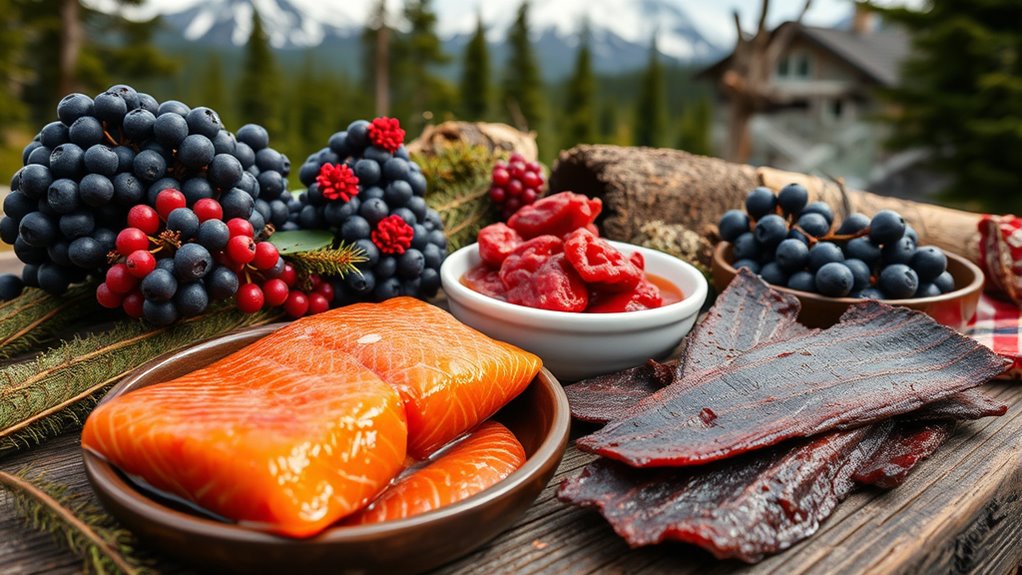
Foraged foods and land-based game form a essential part of traditional Alaskan diets, providing necessary nutrients and flavors that complement marine resources. You rely on hunting, fishing, and gathering seasonal bounty, respecting nature’s balance. Land mammals like moose and caribou supply critical protein and fats, while small game such as hares and birds fill in dietary gaps. Wild berries, roots, and greens boost vitamin intake and flavor dishes, often preserved through drying or fermenting. Every hunted animal’s part is used—meat, organs, and fats—maximizing nutrition and minimizing waste. These practices reflect a sustainable approach, rooted in cultural traditions and survival needs. Symptoms of breast cancer are not typically related to these dietary practices but awareness of health issues remains important.
Modern Food Production and Local Culinary Innovations
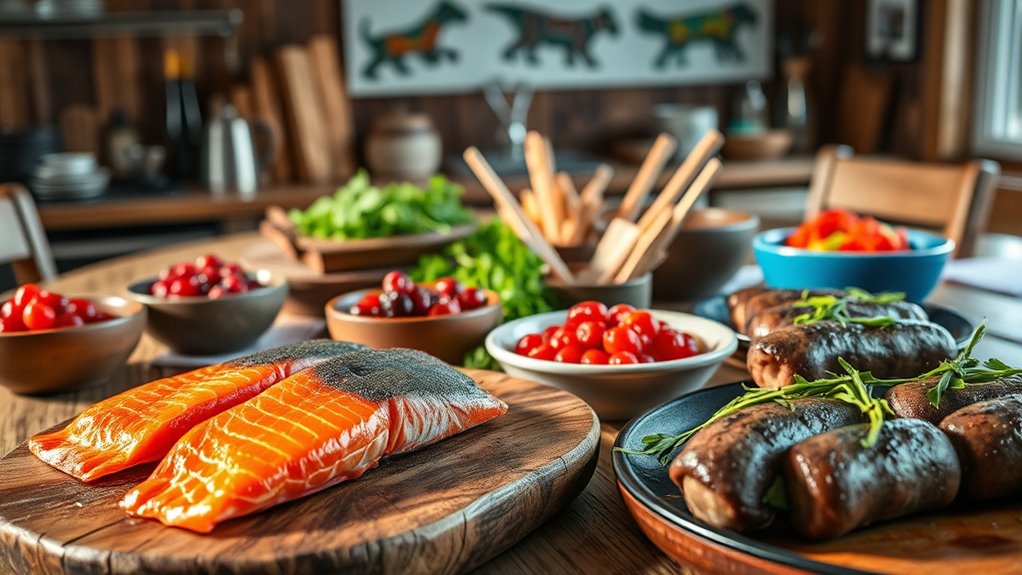
Despite being traditionally reliant on imported foods, Alaska is experiencing a resurgence in local food production, driven by innovative chefs and community initiatives. You’ll find farmers growing hardy crops like sprouts and microgreens suited to Alaska’s short growing seasons. Chefs are creatively incorporating indigenous ingredients—such as salmon, seaweed, and berries—into modern dishes, blending tradition with innovation. Local oyster farms are expanding, offering fresh, sustainable seafood directly from the coast. Community programs promote backyard gardening and fishing to boost local supplies. Restaurants highlight Alaskan flavors through farm-to-table concepts, supporting regional producers. These efforts aim to reduce dependence on imports, preserve culinary heritage, and create a distinct regional identity rooted in local resources and sustainable practices.
Traditional Preservation and Preparation Techniques

Traditional preservation and preparation techniques in Alaska are essential for ensuring year-round food security and maintaining cultural practices. You rely on methods like smoking, fermenting, drying, and freezing to keep foods fresh in harsh climates. These techniques maximize nutrient retention and flavor, allowing communities to enjoy local resources long after harvest. You might also store foods in cold water or oil to extend their shelf life. These practices are passed down through generations, strengthening cultural identity and resilience.
- Smoking and open-fire roasting enhance flavor while conserving meats and fish
- Fermentation boosts nutritional value and develops complex tastes
- Air drying and freezing ensure year-round access to seasonal foods
- Utilizing every part of hunted animals minimizes waste and honors tradition
Contemporary Culinary Scene and Heritage Revival
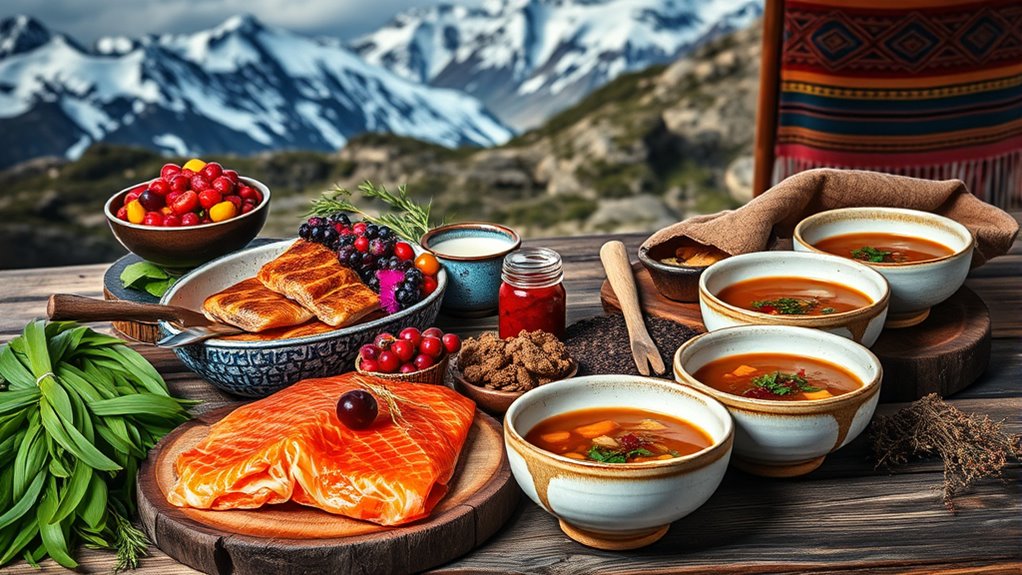
Alaska’s contemporary culinary scene is thriving as chefs and food enthusiasts embrace the rich heritage of native ingredients and cooking techniques. You’ll find innovative dishes that blend traditional foods like salmon, muktuk, and foraged berries with modern culinary styles. Local restaurants are reviving indigenous recipes, such as muktuk sushi or smoked salmon salads, to honor heritage while appealing to new tastes. Chefs like Rob Kineen focus on increasing local food production, sourcing wild and cultivated ingredients suited to short growing seasons. Food festivals and farm-to-table movements celebrate Alaska’s unique resources, fostering a sense of pride and cultural preservation. This blending of old and new creates a vibrant, evolving culinary identity that respects tradition while embracing innovation.
Frequently Asked Questions
How Do Indigenous Food Practices Influence Modern Alaskan Cuisine?
You see how indigenous food practices shape modern Alaskan cuisine by emphasizing local ingredients like salmon, marine mammals, and foraged plants. These traditions influence contemporary dishes through preservation techniques such as smoking and fermenting, and by using whole animals for nutrition. Many chefs blend traditional ingredients with modern methods, creating unique, culturally rich menus that honor heritage while embracing innovation. This connection keeps indigenous practices essential in Alaska’s evolving culinary scene.
What Role Do Traditional Preservation Methods Play Today?
Have you ever wondered how tradition keeps food fresh in harsh climates? Traditional preservation methods still play a crucial role today. You actively smoke, ferment, dry, and freeze foods to guarantee year-round availability, preserving nutrients and flavor. These techniques connect you to your ancestors, honoring cultural practices. They also support local food resilience, helping communities adapt and thrive despite challenging conditions, fostering a deep respect for nature and sustainable living.
How Has the Gold Rush Shaped Alaska’s Culinary Identity?
The Gold Rush shaped Alaska’s culinary identity by introducing hearty, durable foods like sourdough bread, preserved seafood, and wild game that helped settlers survive harsh conditions. You’ll find a blend of native ingredients and pioneer recipes, reflecting resilience and adaptation. This legacy of preservation and resourcefulness continues today, inspiring modern chefs to honor traditional practices while innovating new dishes rooted in Alaska’s rugged, resourceful spirit.
Which Local Ingredients Are Most Popular in Contemporary Dishes?
You’ll find salmon, especially sockeye and king, reigning supreme in contemporary Alaskan dishes, offering a rich taste of tradition. Berries like blueberries and salmonberries add vibrant, natural sweetness, while halibut provides a firm, delicate flavor. Wild greens, seaweed, and foraged roots lend freshness and depth. These ingredients reflect a deep respect for nature, blending traditional harvesting with modern culinary creativity to keep Alaska’s flavors alive and evolving.
How Do Land-Based Game and Foraged Foods Complement Seafood?
You can see land-based game and foraged foods perfectly complement seafood by creating balanced, nutrient-rich meals that reflect Alaska’s diverse environment. While seafood provides high-quality protein, omega-3s, and vitamins, land game and foraged plants add essential micronutrients, fibers, and flavors. Combining these ingredients showcases a sustainable approach, honoring traditional practices and enhancing the variety and nutritional value of your dishes, all rooted in respect for nature and local resources.
Conclusion
As you explore Alaska’s culinary landscape, you realize it’s a tapestry woven with tradition, resourcefulness, and innovation. From ancient recipes handed down through generations to modern twists that keep the spirit alive, Alaska’s food scene is a feast for the senses. It’s clear that these culinary traditions are the heart and soul of the land, holding steady like a lighthouse in stormy seas. Embrace this rich heritage, and you’ll taste the true flavor of Alaska.