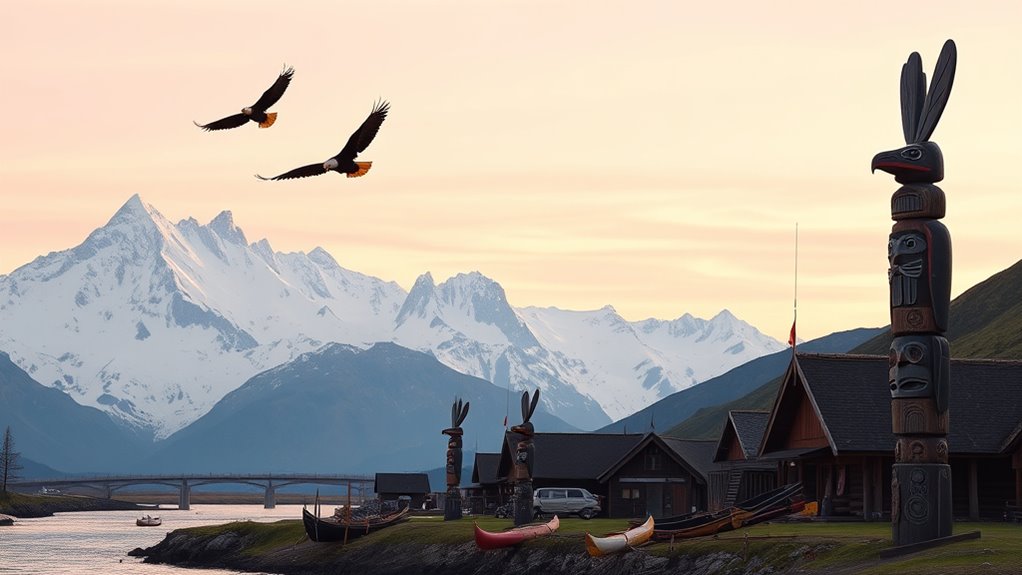

Alaska’s history and culture showcase a resilient indigenous heritage dating back over 10,000 years, with communities like the Dena’ina and Yup’ik maintaining traditions and language practices today. European contact, especially Russian influence, brought new religion, trade, and conflicts, before the U.S. took control in 1867. The gold rush, strategic military importance, and oil discoveries transformed its economy. Native efforts now focus on cultural revival and land rights—exploring these stories reveals a vibrant, complex history you won’t want to miss.
Key Takeaways
- Alaska has a rich indigenous history dating back over 10,000 years, with diverse Native cultures like Dena’ina, Tlingit, and Yup’ik.
- Russian influence introduced Orthodox Christianity and place names, shaping Alaska’s cultural and architectural heritage before U.S. acquisition.
- The gold rush era of the late 1800s and early 1900s transformed settlements into permanent communities, boosting economic development.
- Oil discoveries, notably at Prudhoe Bay, led to major infrastructure projects and Native land claims, influencing Alaska’s economy and sovereignty.
- Indigenous communities today actively work to revitalize languages, traditions, and protect cultural sites, ensuring cultural resilience and environmental conservation.
Indigenous Origins and Early Inhabitants
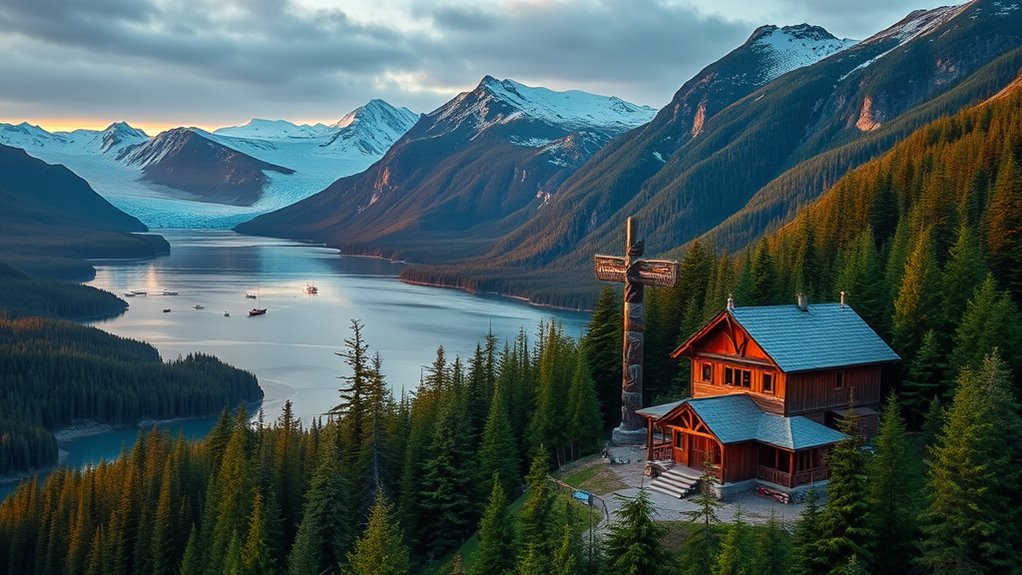
Alaska has been home to Indigenous peoples for at least 10,000 years, with their rich oral histories and archaeological evidence clearly demonstrating their long-standing presence. You can see their resilience through ancient tools, settlements, and traditions that have endured for millennia. These communities, including the Dena’ina, Tlingit, Yup’ik, and others, developed sophisticated ways of life adapted to Alaska’s diverse environments. You’ll find that their stories and customs remain essential today, shaping Alaska’s cultural landscape. Despite facing challenges like epidemics and colonization, Indigenous groups maintained sovereignty and cultural identity. Their deep connection to the land and sea remains central to their identities, underscoring their importance in Alaska’s history long before European contact. Furthermore, their use of oral traditions has been vital in preserving their histories and cultural practices across generations.
European Contact and Russian Influence
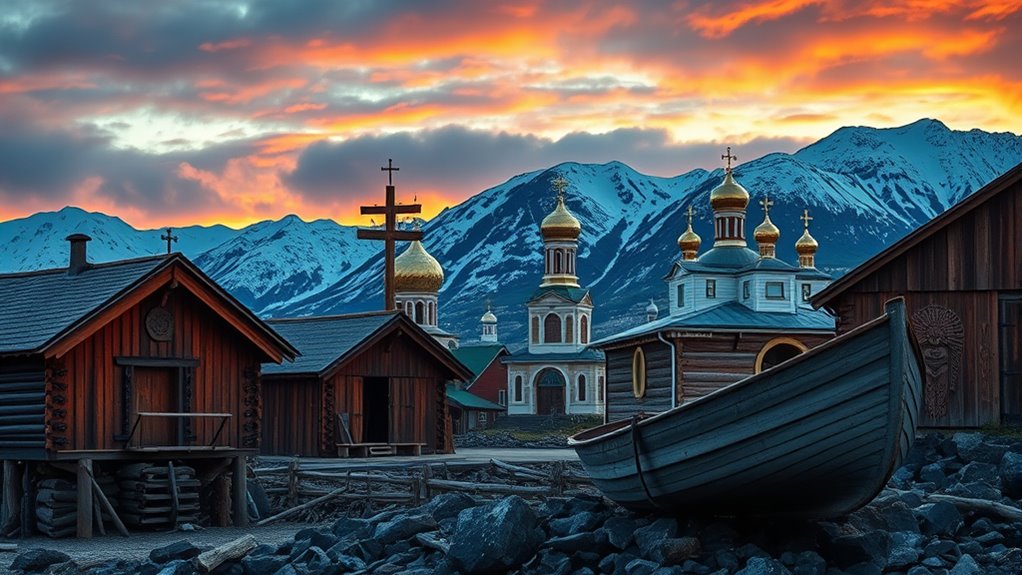
How did European contact transform the region that native peoples had inhabited for thousands of years? When Europeans arrived in the 1700s, especially Russians, they brought new trade, religion, and conflict. The Russian fur trade expanded rapidly, establishing forts and trading posts, like at Sitka. This often led to clashes, such as the Battle of Sitka in 1804, and disrupted native sovereignty. Russian influence also introduced Orthodox Christianity, which still impacts some communities today. Meanwhile, native tribes faced disease, displacement, and cultural shifts. The Russian presence left a lasting mark on Alaska’s landscape, economy, and religious practices. You’ll see this influence in place names, architecture, and cultural traditions that blend indigenous and Russian roots. The Russian expansion significantly altered the indigenous way of life and regional dynamics, leaving a legacy that persists to this day.
Transition to American Governance

When Alaska became a U.S. territory in 1912, you saw the start of formal American governance in the region. The establishment of a legal framework, including the First Organic Act of 1884, set the groundwork for law and administration. During this shift, Native sovereignty gained recognition through treaties and land claims, shaping modern Alaska’s political landscape. Additionally, the integration of appliance maintenance plans and energy-efficient practices contributed to the development of infrastructure and community services in the territory.
The shift from Russian control to American governance marked a significant turning point in Alaska’s history. When the U.S. officially took over in 1867, you saw the beginning of formal American administration, including the First Organic Act of 1884, which created a limited civil government. You might notice how Juneau became the capital in 1900, replacing Sitka, reflecting shifts in economic power. During this period, gold rushes fueled rapid settlement and infrastructure growth, transforming remote areas into bustling towns. Alaska became a U.S. territory in 1912, and World War II emphasized its strategic importance with military campaigns. The establishment of territorial government and law laid the foundation for governance and development in the region. Finally, Alaska achieved statehood in 1959, marking full integration into the United States.
Legal Framework Establishment
As Alaska shifted from Russian to American control, establishing a formal legal framework became essential to govern the region effectively. You’re now part of this progression, where U.S. authorities created laws to manage land, resources, and citizens. The 1884 Organic Act set up a limited civil government, appointing governors and judges. In 1912, Alaska officially became a U.S. territory, further solidifying American authority. This led to the development of laws addressing land rights, resource management, and native relations. These foundational laws laid the groundwork for Alaska’s future political structure, balancing federal oversight with local needs. To illustrate, here’s a snapshot of key legal milestones:
| Year | Event |
|---|---|
| 1884 | Organic Act establishes civil government |
| 1912 | Alaska becomes a U.S. territory |
| 1959 | Statehood achieved |
| 1964 | Earthquake prompts legal and urban planning |
| 1971 | Native Claims Settlement Act |
Additionally, the legal framework established during this period was crucial in shaping Alaska’s unique identity within the United States.
Native Sovereignty Recognition
Did the change from Russian to American governance fully acknowledge the sovereignty of Alaska Native tribes? Not quite. Initially, U.S. policies marginalized native authority, ignoring existing tribal sovereignty. Over time, recognition grew through legal actions and settlement acts. The Alaska Native Claims Settlement Act (ANCSA) of 1971 was a turning point, granting native groups land and compensation but establishing corporate structures rather than tribal governments. Today, 229 tribes maintain sovereignty, yet disputes over land rights and resource control persist. You should know:
- Native tribes established their own governments and legal frameworks
- ANCSA provided land and compensation but limited tribal sovereignty
- Modern efforts aim to restore full sovereignty and self-governance
- Native organizations actively protect cultural heritage and land rights
- Legal recognition continues to evolve as tribes seek to reaffirm their sovereignty and rights under U.S. law
These developments highlight ongoing struggles and progress toward recognizing Alaska Natives’ sovereignty.
The Gold Rush Era and Settlement Expansion

Gold discoveries in Alaska sparked a flood of prospectors and settlers, transforming remote wilderness into bustling communities. As you arrive, you’ll find towns like Juneau, Dawson, and Nome emerging around gold strikes, drawing thousands keen for fortune. The rush creates infrastructure—roads, supply stations, and housing—rapidly expanding the landscape. Prospectors dig into creeks and rivers, searching for nuggets, while entrepreneurs establish businesses to serve the growing population. The excitement fuels further settlement, especially in areas like Cook Inlet and the Tanana River. You’ll notice that these settlements often develop quickly, with some fading when gold runs out, but others becoming permanent towns. This era marks a pivotal shift, turning Alaska from isolated land into a hub of economic activity and settlement growth. Creativity can be cultivated by anyone, regardless of skill level, which helped many settlers adapt and thrive during this transformative period.
Alaska’s Path to Statehood

Following the rapid growth of settlements and economic activity during the gold rush era, Alaska’s future as a U.S. territory became increasingly evident. You witnessed the progression from a remote frontier to a strategically crucial region with the 1912 designation as a U.S. territory. This shift laid the groundwork for statehood by establishing U.S. governance, infrastructure, and military importance. Key moments include the strategic WWII campaigns and the 1959 admission as the 49th state, driven by political activism and economic development. Native groups also pushed for recognition and rights amid federal oversight. Your understanding of Alaska’s path to statehood reveals how resource wealth, strategic value, and native advocacy shaped its journey to full state status.
Alaska’s journey to statehood involved resource wealth, strategic military importance, and native advocacy shaping its path to full U.S. status.
- U.S. territory designation in 1912
- Strategic WWII military investments
- Native activism for rights and recognition
- Statehood achieved in 1959
Oil Discovery and Economic Transformation

You see that the discovery of oil at Prudhoe Bay in 1968 changed Alaska forever, revealing the largest U.S. oil field. The Alaska Native Claims Settlement Act of 1971 helped resolve land disputes by granting native groups millions of acres and funds, shaping their economic future. Then, the Trans-Alaska Pipeline, completed in 1977, transported oil across challenging terrain, fueling the state’s growth and resource economy. Additionally, the introduction of merchant services has played a role in supporting economic development by facilitating efficient transaction processes.
Prudhoe Bay Discovery
Did you know that the discovery of oil at Prudhoe Bay in 1968 dramatically transformed Alaska’s economy and global significance? This massive find revealed the largest U.S. oil field by recoverable reserves, shifting focus to energy extraction. The discovery led to major infrastructure projects and economic growth, positioning Alaska as a key player in national energy markets. It also spurred political debates over resource management and native land rights. The development of the Trans-Alaska Pipeline in 1977 made transporting oil over 800 miles possible despite harsh conditions. This event marked a turning point in shaping Alaska’s modern identity, blending resource wealth with native interests and environmental considerations. The development of sustainable practices has since become an important aspect of balancing resource extraction with environmental conservation.
ANCSA Land Settlement
The 1971 Alaska Native Claims Settlement Act (ANCSA) revolutionized the relationship between native communities and their land by settling long-standing land claims through an all-inclusive land and financial package. You gain 44 million acres of land and nearly $1 billion in compensation, which helps preserve your cultural heritage and promotes economic development. ANCSA also creates regional Native corporations, giving you a voice in managing your land, resources, and future. This settlement shifted power away from federal and state governments, allowing your community to control its economic destiny. You can now participate more fully in land use decisions, resource management, and business ventures. The act marked a turning point, fostering native self-determination and helping your community thrive amid Alaska’s evolving economic landscape. Additionally, the act supports cultural preservation by empowering native communities to maintain and celebrate their traditions and languages.
Trans-Alaska Pipeline
The discovery of oil at Prudhoe Bay in 1968 marked a turning point for Alaska’s economy, revealing the largest U.S. oil field by recoverable reserves. You witness how this discovery led to the construction of the Trans-Alaska Pipeline, a marvel of engineering that spans over 800 miles. This pipeline transported oil from the Arctic North to the southern coast, overcoming seismic faults, fragile tundra, and extreme weather conditions. The project transformed Alaska’s economy, creating jobs and generating revenue that funded infrastructure and native community development. You might find it impressive that the pipeline’s construction involved thousands of workers and innovative technology. Its completion in 1977 marked a new era of energy production and economic growth for the state.
- Overcame extreme environmental challenges
- Created thousands of jobs during construction
- Boosted Alaska’s economy considerably
- Raised ongoing debates on land and Native rights
Native Rights, Land Claims, and Cultural Revival
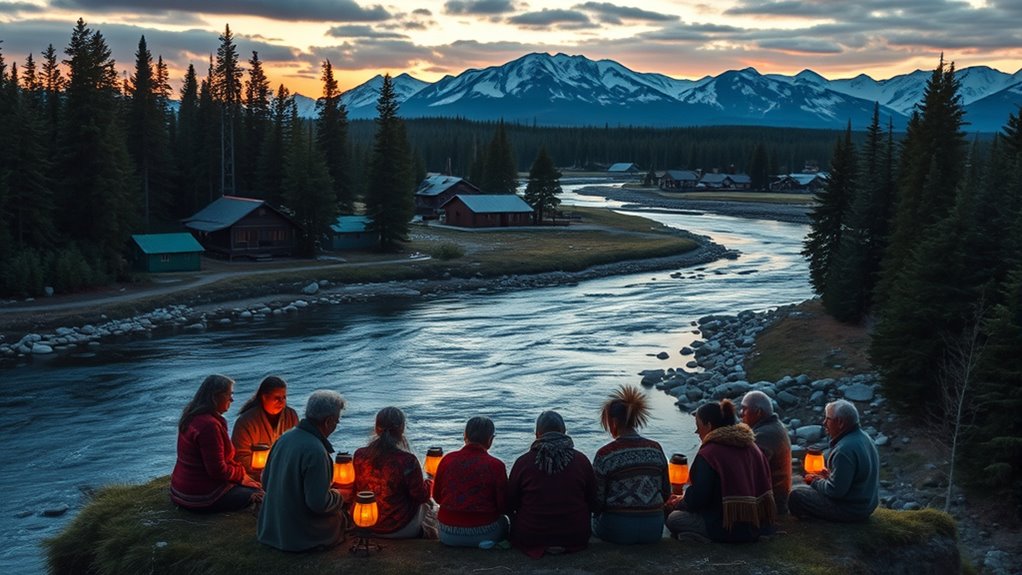
Native rights, land claims, and cultural revival are at the heart of Alaska’s ongoing efforts to preserve its indigenous heritage and sovereignty. You play a critical role in supporting native organizations that fight for tribal self-governance and protect traditional lands. The Alaska Native Claims Settlement Act (ANCSA) of 1971 was a turning point, granting tribes millions of acres and funding for cultural projects. Today, native communities continue to work toward reclaiming sovereignty, managing resources, and revitalizing languages and traditions. You can participate in cultural events, learn native languages, and advocate for policies that respect tribal rights. These efforts help ensure that Alaska’s indigenous peoples maintain their identity, protect their ancestral lands, and pass down their rich cultural heritage to future generations.
Preserving Heritage and Natural Treasures
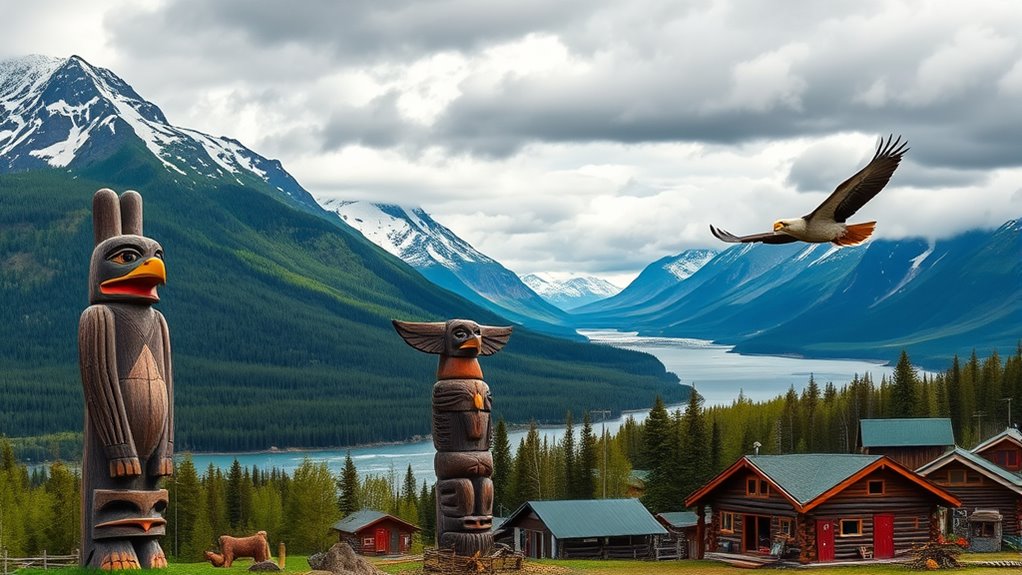
Preserving Alaska’s rich heritage and breathtaking natural treasures requires active efforts from communities, government agencies, and individuals alike. You can help protect these irreplaceable resources by supporting cultural initiatives, respecting sacred sites, and practicing sustainable tourism. Recognize the importance of indigenous languages, arts, and traditions, ensuring they thrive for future generations. Protecting Alaska’s wilderness involves conserving national parks like Denali and Tongass, which safeguard unique ecosystems and cultural history. You can also participate in local cleanups and conservation programs that maintain pristine landscapes and wildlife habitats. By staying informed and advocating for responsible policies, you contribute to the ongoing effort to preserve Alaska’s extraordinary heritage and natural beauty.
- Support local indigenous-led preservation projects
- Respect protected lands and wildlife habitats
- Promote sustainable tourism practices
- Engage in community conservation initiatives
Frequently Asked Questions
How Do Alaska Native Tribes Maintain Their Cultural Traditions Today?
You can see Alaska Native tribes maintaining their cultural traditions today through language preservation, art, and storytelling. They organize cultural events and ceremonies that honor their heritage, and many tribes establish educational programs to teach native languages to younger generations. Tribal governments and organizations also work to protect sacred sites and promote traditional practices like subsistence hunting and fishing, ensuring their cultural identity remains vibrant and relevant in modern life.
What Are the Current Challenges in Preserving Indigenous Languages in Alaska?
You’re fighting to keep a fragile flame alive, as indigenous languages in Alaska face many challenges. Limited funding, declining young speakers, and assimilation pressures threaten their survival. You must work to revitalize these languages through education, community programs, and cultural preservation efforts. By doing so, you help guarantee that these vibrant voices continue to echo through generations, safeguarding the rich tapestry of Alaska’s native heritage amidst modern change.
How Has Modern Infrastructure Impacted Native Communities and Their Lands?
Modern infrastructure has considerably impacted your native communities and lands, often leading to environmental degradation and disruption of traditional lifestyles. Construction of roads, pipelines, and urban development fragments your lands, making hunting, fishing, and gathering harder. It also introduces noise and pollution, which threaten your cultural practices. While infrastructure brings economic benefits, you must balance development with protecting your environment and cultural heritage to ensure your community’s resilience and sustainability.
What Role Do Native Organizations Play in Alaska’s Political Decisions?
Native organizations play a crucial role in Alaska’s political decisions by representing tribal interests and advocating for sovereignty. You can see them negotiating land claims, managing resources, and influencing legislation to protect cultural practices and rights. These groups work closely with government agencies, ensuring that native voices are heard in decisions about land use, development, and resource management, helping to preserve their heritage while participating in modern governance.
How Are Traditional Indigenous Practices Integrated Into Contemporary Alaskan Life?
You see traditional indigenous practices integrated into daily life through language preservation, cultural events, and arts. Many communities practice subsistence activities like fishing, hunting, and gathering, which remain essential traditions. Native organizations support these efforts by promoting cultural revitalization and education. You might also observe traditional dances, ceremonies, and crafts being celebrated alongside modern customs, ensuring that indigenous heritage continues to thrive and influence contemporary Alaskan society.
Conclusion
You might think Alaska’s wild history is all about natural beauty and untouched lands, but behind the stunning scenery lies a story of conquest, resilience, and change. Ironically, as you marvel at its pristine wilderness today, you’re also witnessing the legacy of those who fought to preserve their culture and land amid outside influences. Alaska’s story reminds you that even in the most remote places, history’s footprints are impossible to erase—sometimes in surprising ways.