
Switzerland’s cuisine reflects a blend of German, French, and Italian influences, shaped by regional ingredients like Alpine herbs, cheeses, and wines. Classic dishes such as fondue, raclette, and Rösti showcase communal eating traditions, while pastries like Zopf and Läckerli add sweet variety. Breads, cheeses, and dairy are central, with festive foods highlighting cultural pride. Modern trends emphasize sustainability and fusion, making Swiss culinary traditions diverse and dynamic—exploring further reveals even richer flavors and customs.
Key Takeaways
- Swiss cuisine is a blend of German, French, and Italian influences, reflecting regional ingredients and cultural diversity.
- Classic dishes like fondue, raclette, and rösti symbolize communal eating and regional traditions.
- Dairy products and cheeses such as Gruyère and Emmental play a central role in Swiss culinary heritage.
- Food festivals and traditional celebrations feature regional specialties, reinforcing cultural identity and community bonds.
- Modern trends include fusion cuisine, sustainability practices, and plant-based adaptations, preserving tradition while embracing innovation.
Influences Shaping Swiss Culinary Identity
Switzerland’s culinary identity is shaped by its unique geographical position and multilingual landscape, which bring together German, French, and Italian influences. You’ll find that regional ingredients and cooking styles reflect these diverse cultures, creating a rich tapestry of flavors. The German influence brings hearty, meat-based dishes like sausages and rosti, while French traditions contribute sophisticated cheeses and pastries. Italian heritage introduces pasta, olive oil, and fresh herbs. This blend results in a cuisine that’s both rustic and refined, adaptable to local ingredients and tastes. You’ll notice how Swiss chefs seamlessly combine these influences, embracing tradition while innovating. The country’s multicultural roots foster a culinary culture that’s dynamic, diverse, and deeply rooted in regional identity. Regional ingredients are carefully selected for their authenticity and freshness, highlighting the importance of quality in Swiss cuisine.
Classic Dishes That Define Swiss Food Culture

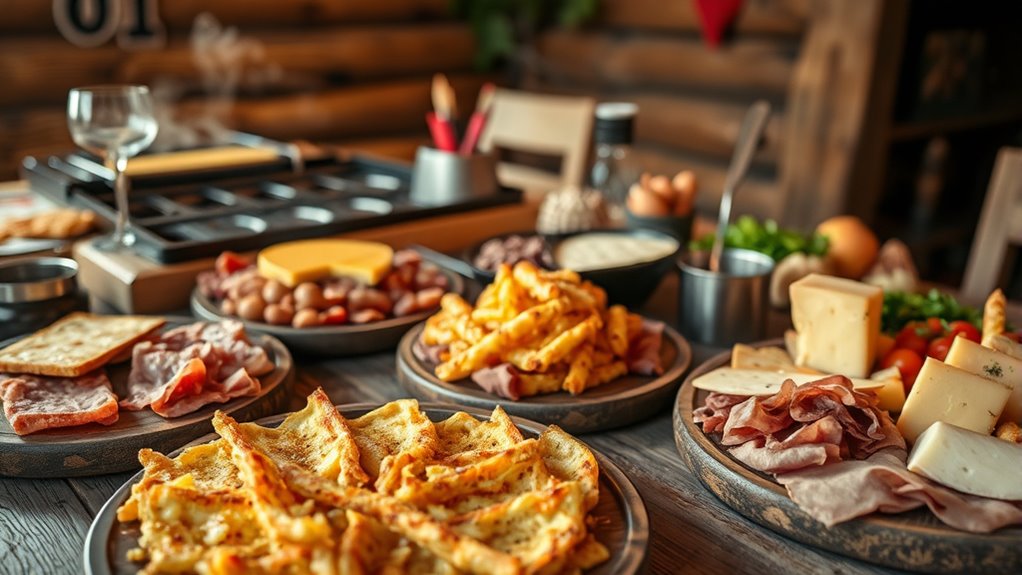
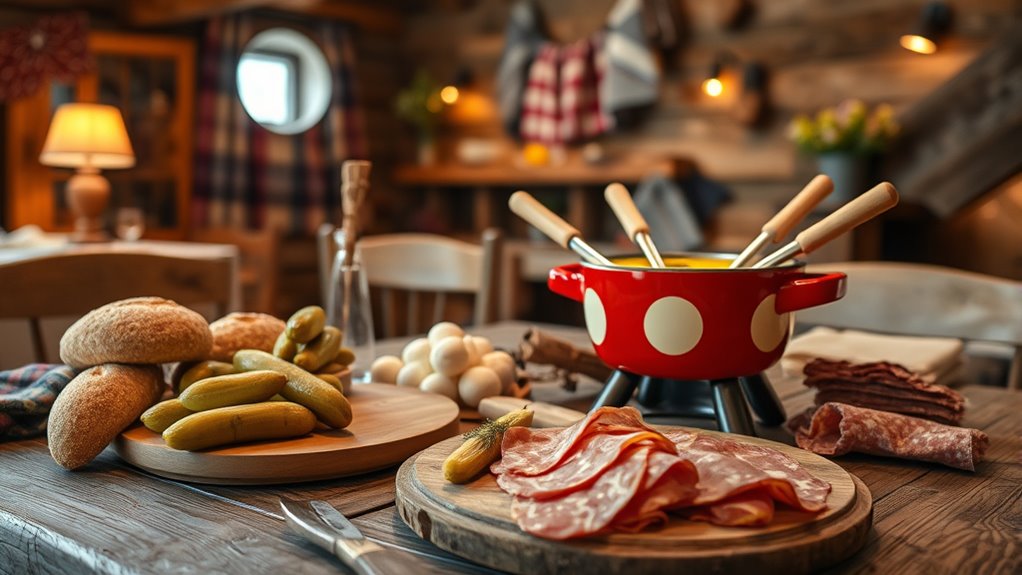
The heart of Swiss culinary tradition beats strongest in its iconic dishes that have stood the test of time. You’ll find cheese takes center stage, with fondue and raclette symbolizing communal eating and social bonds. Fondue involves melting Gruyère and Emmental cheeses, perfect for dipping bread, while raclette features melted cheese served with potatoes, pickles, and cured meats. Rösti, a crispy potato pancake, is a versatile side enjoyed across regions. Zurich’s Zürcher Geschnetzeltes offers tender veal in a creamy sauce, often paired with rösti. These dishes showcase Switzerland’s hearty, comforting flavors rooted in local ingredients. Their simplicity and shared experience make them timeless symbols of Swiss food culture, embodying traditions that continue to unite communities and define the country’s culinary identity. Discover more about Swiss cuisine and how these traditional dishes reflect the country’s rich culinary heritage.
Traditional Pastries and Sweet Treats

Traditional Swiss pastries and sweet treats are rich in history and regional variety, offering a delightful glimpse into the country’s culinary heritage. You might enjoy the Bündner Nusstorte, a nut-filled pastry from Graubünden known for its rich, caramelized flavor. Zopf, a braided bread, is a staple on Sundays and holidays, often enjoyed with butter or jam. Läckerli, spicy honey biscuits from Basel, are perfect for festive occasions. Swiss chocolates are celebrated worldwide, prized for their smooth texture and high quality, often used in desserts or enjoyed on their own. In Swiss bakeries, you’ll find artisanal pastries crafted with traditional methods, and the sweet treats reflect a blend of local ingredients and cultural influences. These confections reveal how Swiss pastry traditions honor craftsmanship and regional flavors. Additionally, the use of traditional baking techniques contributes to the unique texture and flavor profile of these desserts, emphasizing the importance of heritage in Swiss confectionery.
The Rich World of Swiss Breads and Baking Traditions
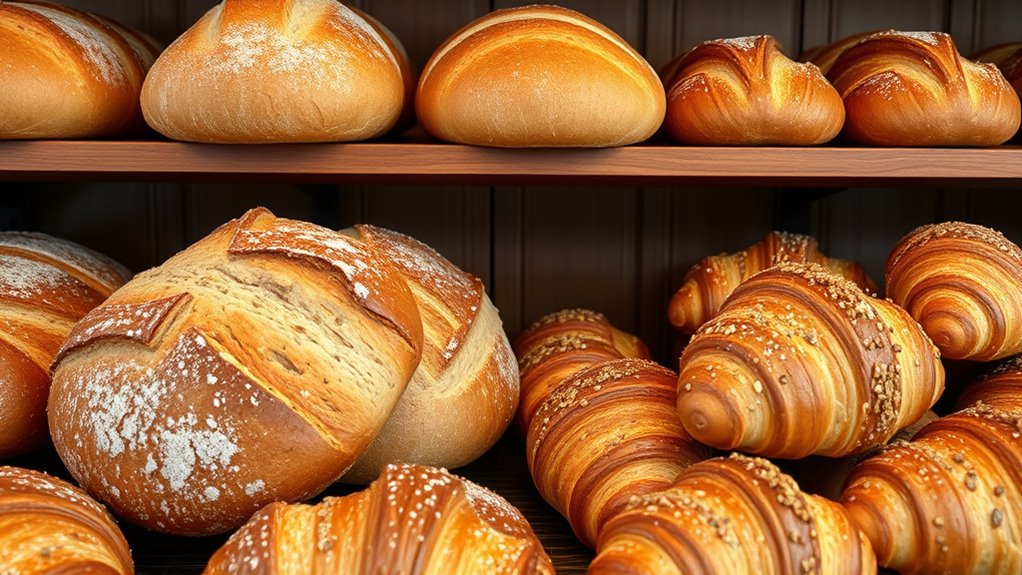
Swiss baking boasts a rich heritage rooted in regional customs and centuries-old techniques. You’ll find a variety of breads reflecting local ingredients and cultural influences. In the German-speaking regions, hearty rye and sourdough loaves are common, while French-speaking areas favor lighter, flaky pastries. Italian-speaking regions often feature focaccia and focaccia variations. The table below highlights key Swiss breads:
| Bread Type | Region | Unique Feature |
|---|---|---|
| Zopf | German-speaking | Braided, festive bread |
| Tresse | French-speaking | Slightly softer, braided variant |
| Focaccia | Italian-speaking | Olive oil-infused flatbread |
Traditional bakeries continue to use artisanal methods, preserving Swiss baking’s authenticity and diversity, which is a testament to the country’s cultural heritage.
Cheese and Dairy: The Heart of Swiss Cuisine
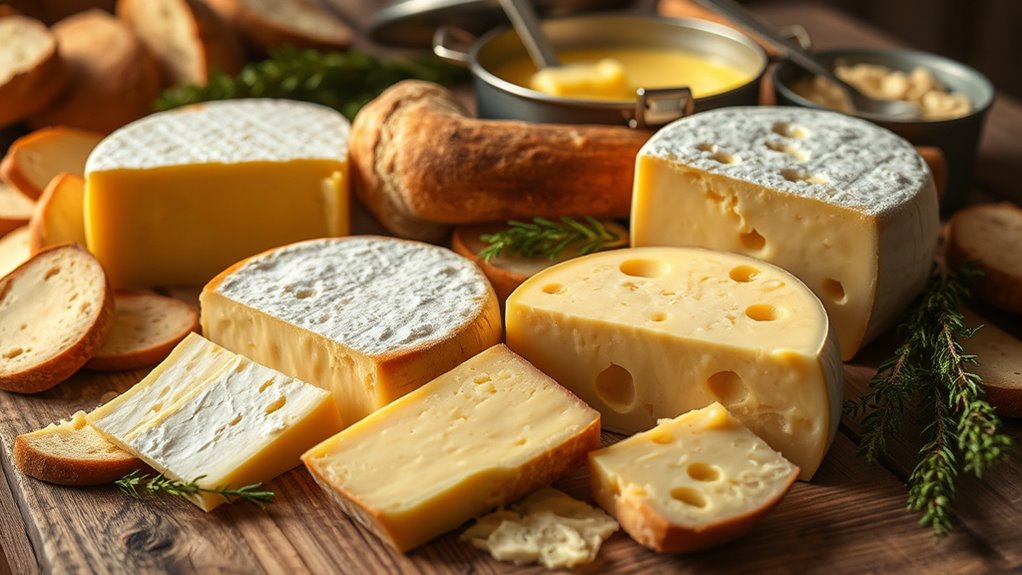
Cheese and dairy products form the backbone of Swiss cuisine, showcasing the country’s rich pastoral traditions and commitment to quality craftsmanship. You’ll find cheese used in many iconic dishes like fondue and raclette, where melted, gooey cheese brings people together around the table. Swiss cheeses such as Gruyère, Emmental, Raclette, and Appenzeller are world-famous for their distinct flavors and high standards. You might also enjoy traditional cheese-making methods that have been passed down through generations, emphasizing natural ingredients and local milk. Dairy products aren’t just ingredients; they’re a cultural cornerstone, often enjoyed fresh or in hearty meals. From breakfast with cheese and bread to festive gatherings, dairy’s role in Swiss life highlights a deep appreciation for quality, tradition, and community. Additionally, the use of traditional cheese-making methods reflects Switzerland’s dedication to preserving authentic flavors and techniques.
Regional Variations and Local Specialties
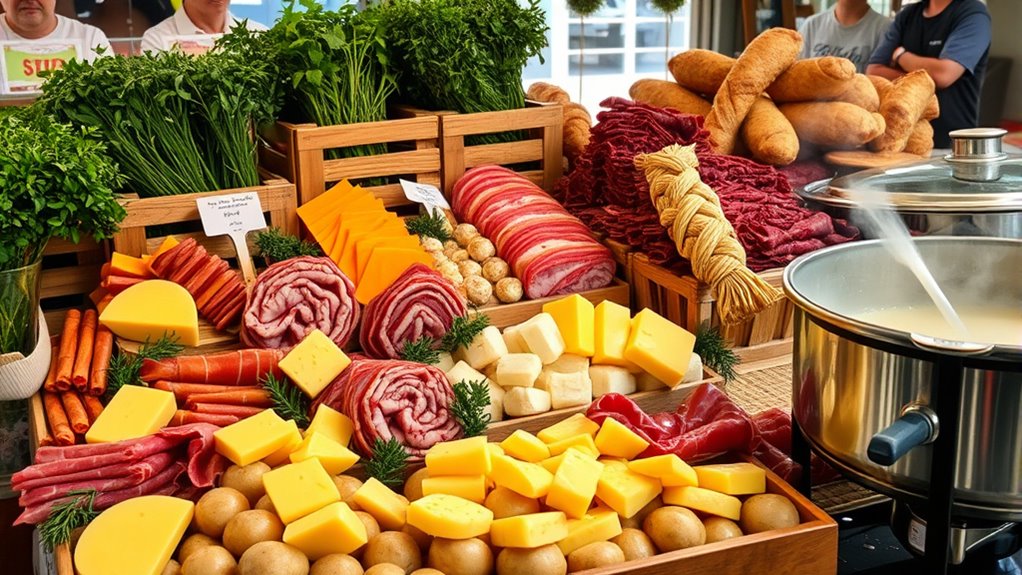
As you explore Swiss cuisine, you’ll notice how cantonal differences shape local dishes and flavors. Each region uses unique ingredients and traditional recipes that reflect its cultural heritage. These variations come together during festivals, highlighting the rich diversity of Switzerland’s culinary landscape. Sustainable transportation practices are increasingly influencing food supply chains and regional markets in Switzerland, promoting local sourcing and reduced environmental impact.
Cantonal Culinary Differences
Because Switzerland is divided into distinct regions, each canton boasts its own culinary traditions and specialties that reflect local ingredients and cultural influences. You’ll notice regional variations in dishes, ingredients, and preparation styles that make Swiss cuisine diverse and unique. For example:
- In Vaud, you’ll find dishes like papet vaudois, a leek and potato stew, highlighting local vegetables.
- Ticino’s specialties include polenta and brasato, showcasing Italian influences and hearty flavors.
- In Graubünden, you’ll enjoy Bündner Nusstorte, a nut-filled pastry, emphasizing regional nuts and sweet treats.
- The use of local ingredients significantly contributes to the unique flavors and authenticity of each canton’s dishes.
These differences aren’t just about ingredients—they reflect the cultural heritage and history of each canton. Exploring these variations gives you a richer understanding of Switzerland’s culinary landscape and regional pride.
Unique Regional Ingredients
Switzerland’s diverse landscapes and cultural influences give each canton a distinct culinary identity rooted in unique regional ingredients. In the Alps, you find hearty mountain herbs like gentian and alpine berries. The Italian-speaking Ticino offers chestnuts, olive oil, and saffron. In Graubünden, game meats and nuts like walnuts are popular. Here’s a quick look at regional ingredients:
| Canton | Key Ingredients | Specialties |
|---|---|---|
| Valais | Apples, grapes, apricots | Walliser Trockenfleisch |
| Ticino | Chestnuts, olive oil | Polenta concia |
| Graubünden | Walnuts, game meats | Bündner Nusstorte |
| Bernese Oberland | Alpine herbs, berries | Berner Platte |
| Vaud | Vineyard grapes, honey | Lavaux wine, honey |
These ingredients shape each area’s unique dishes and flavors. Regional ingredients play a crucial role in defining local culinary traditions across Switzerland.
Traditional Festive Dishes
Have you ever wondered how Swiss festive meals reflect regional pride and cultural heritage? In Switzerland, each canton has its special dishes for celebrations. You might enjoy:
- Sechseläuten in Zurich, with its traditional Böögg (snowman) parade and hearty Zürcher Geschnetzeltes.
- Carnival in Basel, featuring Läckerli biscuits and colorful masks, highlighting local flavors.
- Alpine festivals, where dishes like Älplermagronen and raclette take center stage, showcasing mountain ingredients.
These dishes are more than just food—they symbolize community, tradition, and regional identity. During holidays and festivals, locals come together to share these specialties, preserving the rich culinary legacy. Your experience of Swiss festivities isn’t complete without tasting these regional delights. Additionally, festive dishes serve as a reflection of Switzerland’s diverse cultural influences and geographic regions.
Social and Cultural Significance of Food Practices

Food practices in Switzerland serve as essential expressions of community, identity, and tradition. When you partake in dishes like fondue or raclette, you’re not just enjoying a meal—you’re engaging in social bonding and preserving cultural heritage. These communal meals foster connections, bringing families and friends together during holidays and celebrations. Regional specialties highlight local history and pride, making food a symbol of regional identity. Celebrating festivals often involves traditional foods, reinforcing shared customs and values. Sustainability efforts reflect a collective respect for the land and resources, emphasizing responsible consumption. Additionally, these food traditions often incorporate natural materials that connect culinary practices to the environment. As Swiss cuisine evolves, it maintains its core social functions, blending tradition with modern influences. Your participation in these food practices helps keep Swiss cultural identity alive and vibrant.
Modern Trends and Fusion in Swiss Cooking
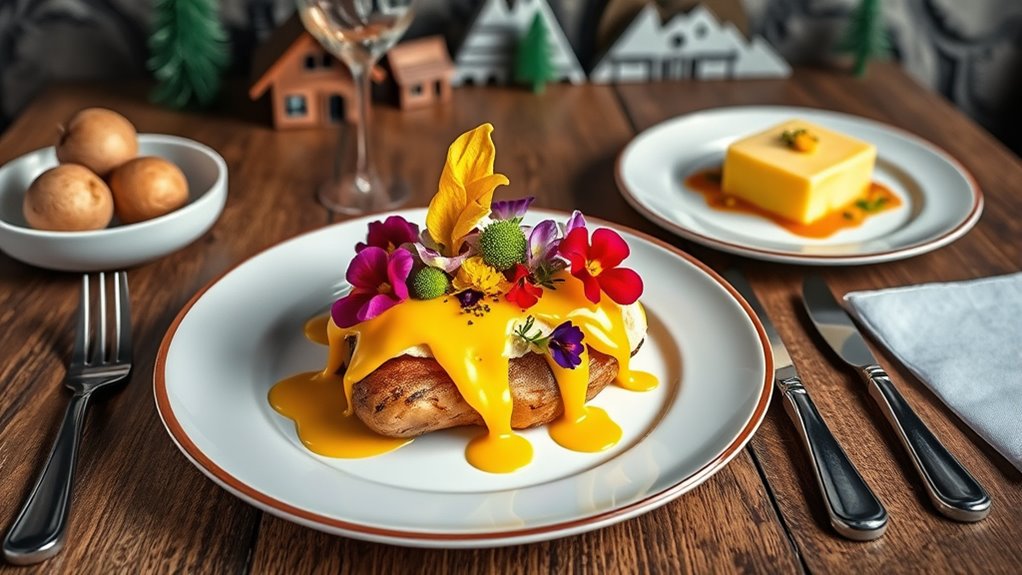
Modern Swiss cuisine is embracing innovation by blending traditional flavors with international influences, creating exciting fusion dishes. You might find sushi-inspired cheese fondues, Asian spices added to classic rösti, or Mediterranean herbs in Swiss salads. This culinary evolution encourages experimentation and cross-cultural appreciation.
To keep your palate intrigued, chefs are:
- Incorporating Asian ingredients like soy sauce and wasabi into Swiss cheese dishes
- Using Latin American flavors, such as chipotle and cilantro, in hearty stews
- Creating plant-based versions of traditional recipes, blending sustainability with flavor
These trends reflect Switzerland’s openness to global cuisines while maintaining its rich culinary heritage. As a result, modern Swiss cooking offers vibrant, inventive dishes that appeal to contemporary tastes without losing touch with tradition.
Embracing Sustainability in Swiss Culinary Arts
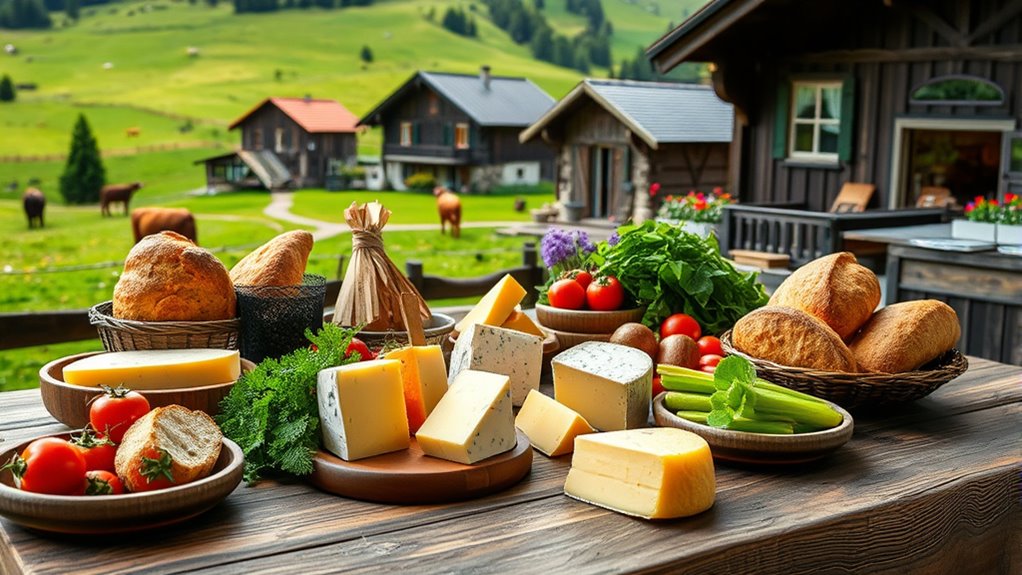
Switzerland’s culinary scene is increasingly turning toward sustainable practices, blending tradition with environmental responsibility. You can see this shift in how local ingredients are prioritized, reducing food waste and supporting regional producers. Many chefs now incorporate seasonal vegetables, locally sourced meats, and dairy, minimizing carbon footprints. You might also encounter innovative uses of lesser-known ingredients like insects or plant-based proteins, aligning with eco-friendly trends. Sustainable packaging and waste reduction are becoming standard in Swiss bakeries and restaurants. By choosing these practices, you help preserve the environment and Swiss culinary heritage. Embracing sustainability isn’t just a trend; it’s a way to honor tradition while protecting the future of Swiss cuisine for generations to come.
Frequently Asked Questions
What Are the Most Popular Swiss Dishes for Special Occasions?
For special occasions, you’ll likely enjoy Swiss classics like fondue and raclette, perfect for sharing with friends and family. Zürcher Geschnetzeltes, a creamy veal stew, also makes a festive main dish. Don’t forget sweet treats like Bündner Nusstorte or Swiss chocolates to celebrate with a touch of luxury. These dishes bring people together, emphasizing community and tradition, making your celebration truly memorable.
How Has Swiss Cuisine Evolved With Modern International Influences?
They say variety is the spice of life, and Swiss cuisine proves it. You’ll notice modern influences like Asian spices and international fusion making traditional dishes more exciting. You actively incorporate these trends into your cooking, blending hearty Swiss flavors with global ingredients. This evolution keeps Swiss cuisine fresh, innovative, and adaptable, reflecting Switzerland’s openness to new culinary ideas while honoring its rich heritage.
Which Swiss Ingredients Are Sustainable and Locally Sourced Today?
You can find sustainable, locally sourced Swiss ingredients like cheese from regional dairies, potatoes, and seasonal vegetables in markets and restaurants. Many producers prioritize organic farming and reduce food miles by using local ingredients. You might also encounter unique products like insects or wild herbs, reflecting Switzerland’s commitment to eco-friendly practices. Supporting local farms helps preserve traditional methods and guarantees fresh, environmentally responsible ingredients in your Swiss dishes.
What Role Do Regional Festivals Play in Swiss Culinary Traditions?
Regional festivals play a crucial role in Swiss culinary traditions by celebrating local ingredients and dishes, strengthening community bonds, and preserving cultural heritage. As you participate, you get to enjoy authentic recipes that highlight regional flavors, from cheese and bread to traditional desserts. These festivals also promote sustainable practices, support local producers, and encourage the continuation of age-old cooking techniques, ensuring Switzerland’s culinary richness remains vibrant.
How Do Swiss Chefs Incorporate International Flavors Into Traditional Dishes?
Swiss chefs infuse international flavors into traditional dishes, transforming them into culinary masterpieces that captivate the senses. You might find Asian spices adding a fiery kick to raclette or fusion twists with herbs from distant lands enhancing Zürcher Geschnetzeltes. By blending global ingredients with local classics, you create innovative, vibrant dishes that honor tradition while exciting modern palates, proving Swiss cuisine’s remarkable ability to evolve without losing its soul.
Conclusion
Your exploration of Swiss cuisine reveals a rich tapestry of tradition and innovation. While classic dishes and timeless pastries connect you to centuries of history, modern trends and sustainability push Swiss culinary arts forward. Like the mountains that stand firm yet evolve with the seasons, Swiss food balances heritage and progress. Embrace this culinary journey, where the past and future coexist, reminding you that true tradition adapts without losing its soul.