

Belgian cuisine blends French, German, and Dutch influences, reflecting its rich history and regional diversity. You’ll find iconic dishes like moules-frites, hearty stews, and world-famous waffles that showcase expert techniques and fresh ingredients. Coastal seafood, seasonal vegetables, and local produce play a big role in flavor. The country also boasts renowned chocolates and beers. If you keep exploring, you’ll discover how Belgium’s culinary traditions celebrate craftsmanship and regional identity in every bite.

Get travel and outdoor gear delivered free — and shop member deals
- Fast, free delivery on millions of items
- Access to Prime Big Deal Days deals on October 6–7
- Prime Video, Amazon Music and more included
Key Takeaways
- Belgian cuisine blends French, German, and Dutch influences, emphasizing regional ingredients and traditional cooking techniques.
- Iconic dishes include moules-frites, carbonade flamande, waterzooi, and Belgian waffles, showcasing mastery in preparation and presentation.
- Fresh seafood, seasonal vegetables, and high-quality local produce define regional flavors and support sustainable sourcing.
- Belgian desserts and beverages, especially chocolate and beer, highlight craftsmanship and regional diversity.
- Modern trends focus on farm-to-table practices, innovative reinterpretations, and culinary festivals celebrating Belgian food culture.
As an affiliate, we earn on qualifying purchases.
The Historical Roots of Belgian Cuisine
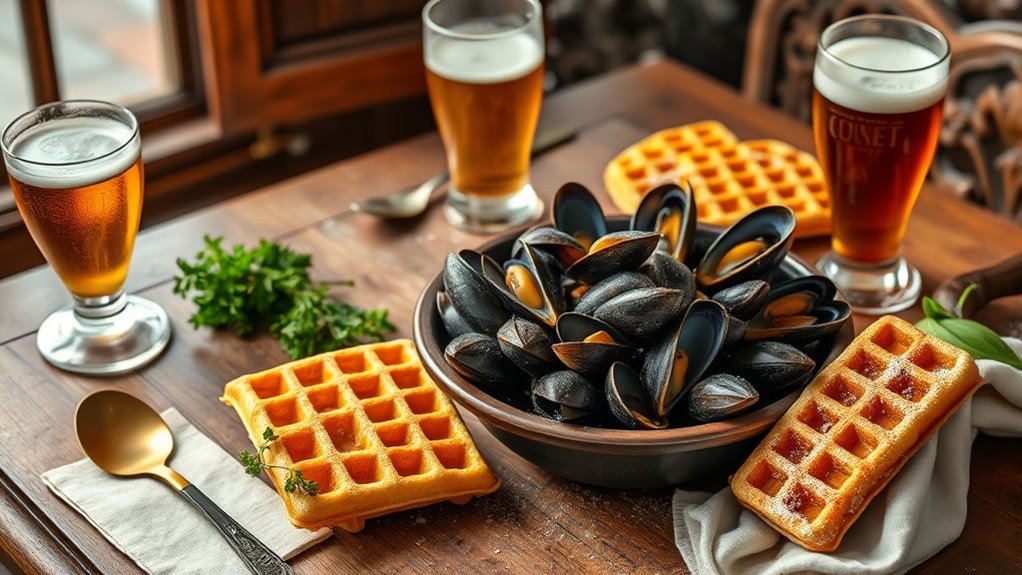
Belgian cuisine has deep historical roots shaped by its strategic location and diverse cultural influences. You’ll notice how French, German, and Dutch traditions blend seamlessly, reflecting Belgium’s position at Europe’s crossroads. The Roman Empire left its mark, introducing staples like cabbage, apples, and grapes, while establishing Belgium as a key pork supplier. From the 15th century, Antwerp’s wealth and access to American imports like potatoes and tomatoes broadened the culinary landscape. Early dishes focused on bread, beer, vegetable soups, and meats, with social status influencing ingredient choices. Over time, Belgian food developed a reputation for balancing hearty portions with refined flavors, combining German emphasis on quantity with French finesse. These historical layers shape the rich, flavorful cuisine you experience today. Additionally, the influence of European culinary traditions continues to evolve, making Belgian cuisine a vibrant fusion of flavors and techniques.
As an affiliate, we earn on qualifying purchases.
Iconic Dishes and Traditional Preparations
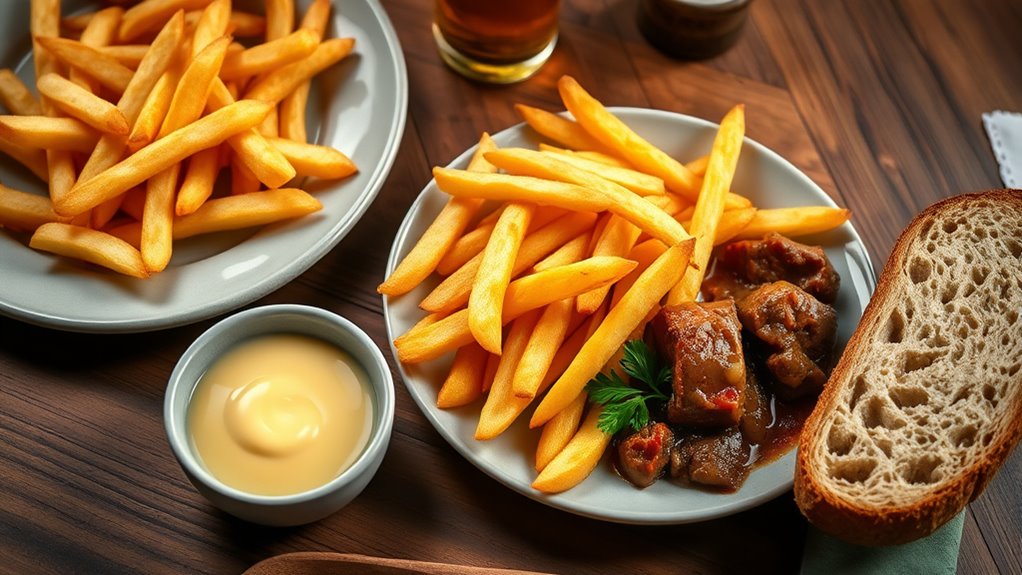
Among Belgium’s most celebrated culinary traditions, a few dishes stand out for their iconic status and authentic preparation methods. You’ll find Moules-frites at the top, where mussels are cooked in wine or beer and served with crispy fries to prevent sogginess. Carbonade flamande features slow-cooked beef in Belgian beer, flavored with onions and spices. Waterzooi is a creamy stew, originally fish-based, now often made with chicken and vegetables. Belgian waffles come in Brussels (lighter, crispier) and Liege (denser, caramelized). Fries are a staple, double-fried for extra crunch and served with mayonnaise or sauces. These dishes highlight Belgium’s rich culinary heritage and emphasis on technique and quality.
As an affiliate, we earn on qualifying purchases.
Regional Ingredients and Seasonal Focus

You’ll notice that Belgian cuisine highlights coastal seafood, like mussels and grey shrimp, especially during the season when these ingredients are freshest. Seasonal vegetables such as white asparagus and local root crops also play a key role in creating vibrant, local dishes. Additionally, Belgian meats like pork, beef, and game are favored based on what’s available throughout the year, ensuring each meal reflects the region’s seasonal bounty. The use of seasonal ingredients is fundamental to maintaining the freshness and authenticity of Belgian culinary traditions.
Coastal Seafood Specialties
Coastal regions of Belgium heavily influence the country’s seafood traditions, with fresh catches shaping local dishes and seasonal menus. You’ll find that mussels, grey shrimp, and white fish dominate coastal cuisine, especially during harvest seasons. These ingredients are often prepared simply to highlight their freshness, whether steamed, cooked in beer, or served with rich sauces. Seasonal focus means you’ll see dishes evolve with the tides, emphasizing regional ingredients. For example, spring brings white asparagus, while summer highlights fresh shellfish. Below is a quick overview of key ingredients and their seasonal availability:
| Ingredient | Season |
|---|---|
| Mussels (moules) | Year-round |
| Grey Shrimp | Spring & Summer |
| White Fish | Fall & Winter |
| Coastal Oysters | Summer |
Additionally, water quality and sustainable fishing practices play a crucial role in maintaining the freshness and flavor of these seafood ingredients.
Seasonal Vegetable Usage
Belgian cuisine places a strong emphasis on seasonal vegetables, reflecting the country’s commitment to freshness and regionality. You’ll find that ingredients like white asparagus, leeks, Brussels sprouts, and cauliflower are staples during their respective seasons, showcasing local harvests at their peak. In spring, white asparagus takes center stage, often served with hollandaise or melted butter. During late summer and fall, leeks and root vegetables like carrots and parsnips become prominent in hearty stews and soups. Winter dishes incorporate Brussels sprouts and cabbages, while spring brings fresh peas and spinach. Seasonal vegetables are often prepared simply to highlight their natural flavors, whether roasted, sautéed, or used in fresh salads. This focus on seasonal produce underscores Belgium’s dedication to quality, regional ingredients, and culinary tradition. Additionally, traditional butter making techniques are often employed to enhance the flavor of vegetable dishes, especially when using high-quality, homemade butter.
Local Meat Varieties
What makes Belgian meat dishes stand out is the country’s rich variety of regional meat options, carefully selected according to season and tradition. You’ll find pork plays a central role, especially in classics like carbonade flamande, where hearty beef is slow-cooked in Belgian beer, and waterzooi, which can feature chicken or fish. Game meats such as rabbit and venison are also popular, often prepared during hunting seasons or special occasions. Seasonal meats like veal are used in lighter dishes, while horsemeat, traditionally consumed in parts of Wallonia, remains a regional specialty. Belgian butchers emphasize quality and local sourcing, ensuring meats retain freshness and flavor. This diversity reflects Belgium’s culinary heritage, blending regional preferences with seasonal availability to create rich, flavorful dishes.
As an affiliate, we earn on qualifying purchases.
Culinary Techniques and Presentation Styles

Culinary techniques in Belgium emphasize both flavor and visual appeal, blending traditional methods with modern innovations. You’ll notice that dishes are often richly seasoned, with vibrant colors from ingredients like saffron or herbs, and garnished with greens or crumbled eggs for added visual interest. Slow braising in beer or wine ensures tenderness and deep flavor, especially in stews like carbonade flamande. Fries are double-fried to achieve a crispy exterior and fluffy interior, usually served separately with sauces. Waffles are baked to create deep pockets for toppings, balancing crispness and softness. Modern twists sometimes include serving stews over fries as Belgian poutine. Presentation highlights a harmony of textures and colors, making each dish as eye-catching as it is flavorful. Additionally, the use of culinary techniques such as slow braising and precise presentation styles enhances both the taste and appearance of traditional Belgian dishes.
Belgian Desserts and Beverage Heritage

Have you ever wondered why Belgian desserts and beverages hold such a prominent place in the country’s culinary identity? It’s because they reflect Belgium’s rich history, craftsmanship, and love for indulgence. Belgian chocolate, world-famous for its smooth texture and high-quality ingredients, is a national treasure, crafted by artisans using centuries-old techniques. Beers, from fruity lambics to robust ales, showcase Belgium’s brewing mastery and regional diversity, often used in cooking to deepen flavors. Desserts like waffles—Brussels and Liege types—highlight expert batter preparation and unique toppings, while fruit pies and regional pastries add seasonal charm. You’ll find that these sweets and drinks aren’t just treats; they embody Belgium’s dedication to refined taste, tradition, and innovative craftsmanship. To fully appreciate these culinary delights, understanding their cultural significance enhances the experience even further.
The Role of Seafood and Local Produce
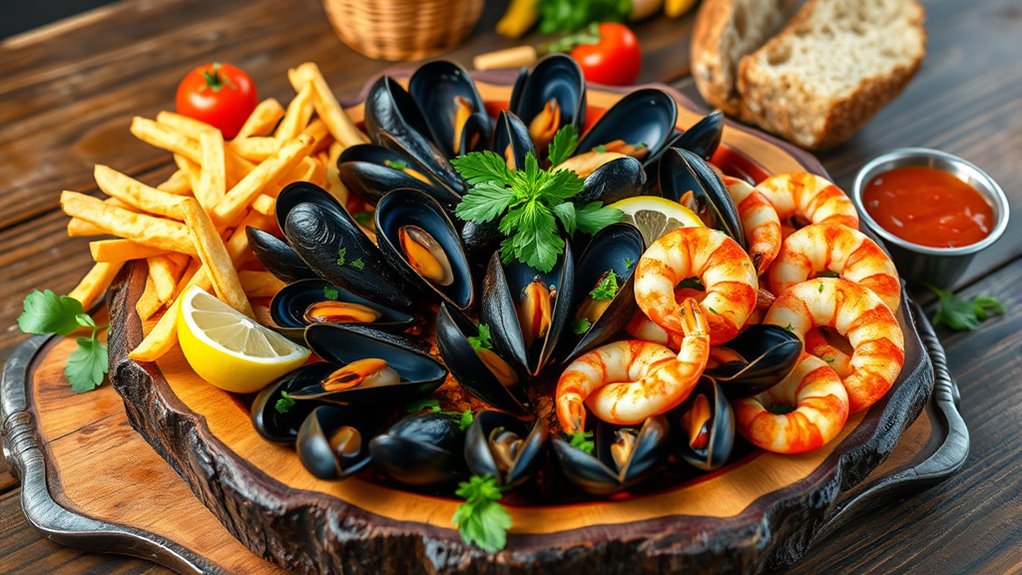
Ever wondered why seafood and local produce play such an essential role in Belgian cuisine? It’s because Belgium’s proximity to the North Sea and fertile lands provide fresh, high-quality ingredients that define its dishes. You’ll find seafood like mussels, grey shrimp, and white asparagus at the heart of many recipes. The landscape also offers seasonal vegetables and tubers, which are staples in hearty stews and sides. Belgian chefs emphasize freshness and local sourcing, ensuring vibrant flavors. Additionally, the region’s focus on AI-driven supply chain management helps maintain the availability and quality of these ingredients year-round.
Cultural Influences Shaping Belgian Flavors
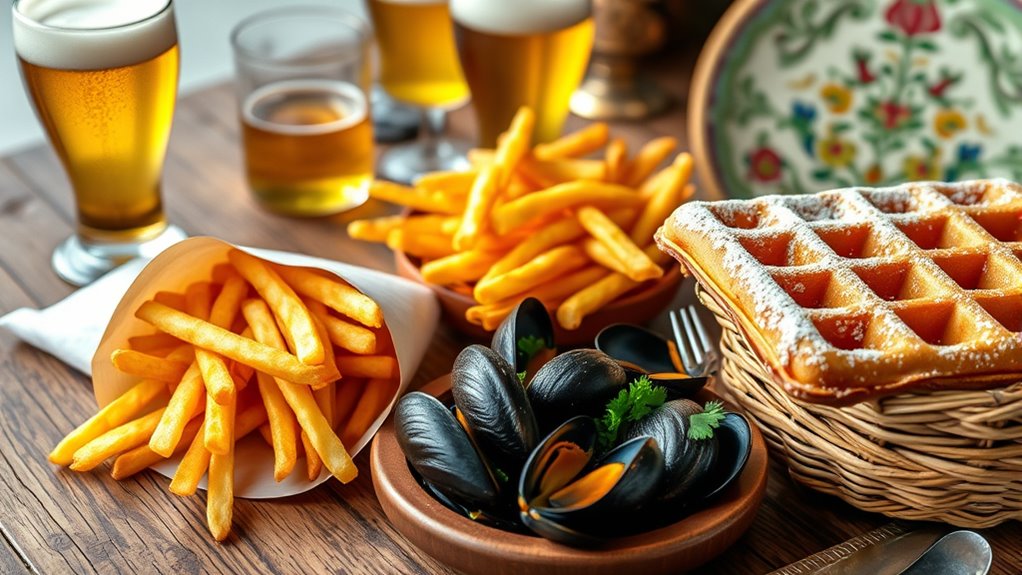
You can see how Belgium’s flavors are shaped by its border-crossing history, blending French, German, and Dutch culinary traditions. These influences introduced techniques, ingredients, and dishes that define Belgian cuisine today. Additionally, historical trade and colonization brought new ingredients like potatoes, tomatoes, and cocoa, further enriching local flavors.
Cross-Border Culinary Traditions
Belgian cuisine reflects a rich tapestry of cross-border influences, shaped by its proximity to France, Germany, and the Netherlands. You’ll notice how French refinement and culinary techniques blend seamlessly with German hearty flavors and Dutch simplicity. These cross-border ties influence everything from ingredients to cooking methods and presentation styles. For example, you might experience:
- French use of rich sauces and delicate presentation in dishes like Waterzooi
- German emphasis on hearty stews and substantial portions, seen in carbonade flamande
- Dutch traditions reflected in the use of potatoes, cheese, and seafood from coastal regions
- The integration of regional herbs, spices, and brewing techniques that create unique flavor profiles
This blend results in a diverse, vibrant cuisine that balances refinement with rustic charm, making Belgian food truly distinctive.
Historical Ingredient Influences
The rich flavors of Belgian cuisine are deeply rooted in its historical interactions with neighboring cultures and empires. You’ll notice how Roman influence introduced staples like cabbage, apples, and grapes, shaping early dishes. Later, trade routes brought American imports such as potatoes, tomatoes, and cocoa, diversifying ingredients and flavors. Dutch and French connections contributed techniques and regional ingredients, like seafood and dairy. Belgian trades and alliances also made way for beer, chocolate, and spices, enriching the culinary palette. As a result, you experience a blend of hearty, rustic elements with refined touches, reflecting Belgium’s complex history. From hearty stews to delicate waffles, these ingredients and influences create a cuisine that’s both robust and sophisticated. Incorporating culinary exchange over centuries has further enhanced Belgium’s diverse flavors and cooking traditions.
Modern Trends and Contemporary Dining Scenes

Modern Belgian dining scenes are characterized by a dynamic blend of tradition and innovation, where chefs and restaurateurs experiment with local ingredients and contemporary techniques to reinvent classic dishes. You’ll notice chefs combining traditional recipes with modern plating, seasonal ingredients, and global influences. This culinary evolution is reflected in several trends:
- Farm-to-table concepts emphasize fresh, local produce, supporting regional farmers.
- Contemporary chefs reinterpret Belgian classics like waterzooi or carbonade flamande with innovative twists.
- Fusion cuisine integrates international flavors, creating exciting new taste profiles.
- Casual dining spots and food trucks bring gourmet Belgian bites to a broader audience, emphasizing quality and accessibility.
- Incorporating antimicrobial Sugardine techniques can be a safe method for preparing certain dishes, highlighting the importance of food safety in modern culinary practices.
These trends showcase Belgium’s vibrant culinary creativity while respecting its rich heritage, making its food scene both exciting and rooted in tradition.
Celebratory Food Festivals and Culinary Events
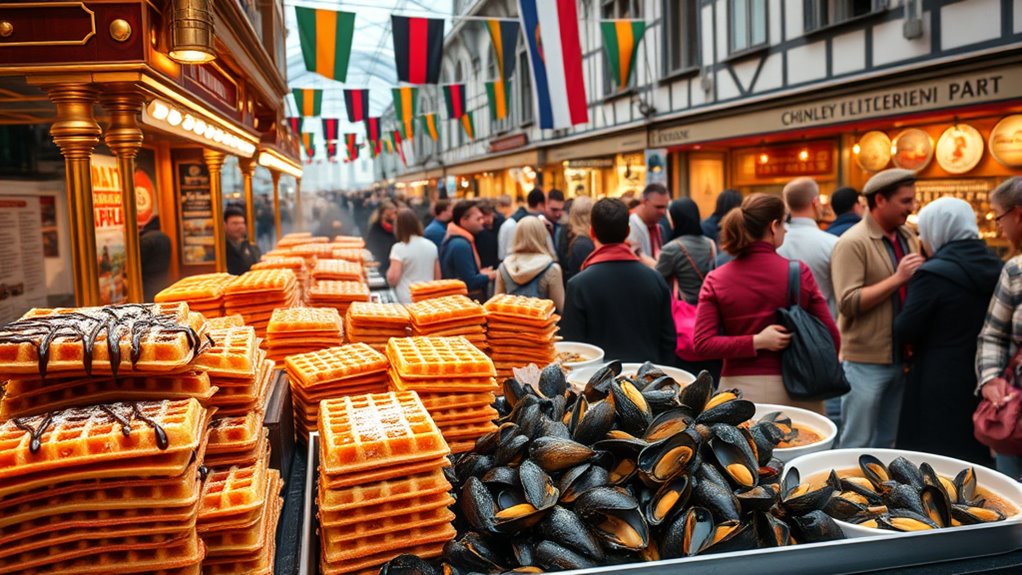
Celebratory food festivals and culinary events play a essential role in showcasing Belgium’s rich gastronomic heritage and bringing communities together. You’ll find festivals dedicated to iconic dishes like moules-frites, where vendors serve steaming mussels paired with crispy fries, and beer festivals celebrating the country’s diverse brewing traditions. Events such as the Brussels Food Festival highlight local ingredients, seasonal produce, and innovative chefs, attracting food lovers from around the world. You might also experience the Belgian Waffle Week, where bakeries showcase their best creations, or the Flanders Food Festival, emphasizing regional specialties. These festivals foster a sense of pride, preserve culinary traditions, and encourage culinary innovation, making them critical to Belgium’s vibrant food scene. Participating allows you to taste authentic flavors and connect with Belgian culture firsthand.
Frequently Asked Questions
How Has Belgium’s Colonial History Influenced Its Cuisine?
Your Belgian cuisine reflects colonial influences through ingredients like cocoa, introduced via American imports and expanded during the colonial era. You’ll notice this in Belgian chocolates and desserts, which are world-renowned. Additionally, some traditional dishes incorporate spices and cooking techniques that trace back to colonial trade routes. These influences have enriched Belgian flavors, blending local ingredients with exotic elements, creating a diverse culinary landscape that showcases a history of global connections.
What Are the Most Popular Belgian Street Foods Besides Fries?
You’ll find that Belgian street foods extend beyond fries, with notable options like waffles—both Brussels and Liege varieties—offering sweet, portable treats perfect for on-the-go enjoyment. You might also enjoy Belgian meatballs, called boulettes, served with fresh bread or sauces, and pie-like snacks such as croquettes filled with meat or seafood. These foods are popular for their flavors, portability, and the lively street food culture that’s integral to Belgian cities.
How Do Belgian Culinary Traditions Vary Across Different Regions?
You’ll notice regional variations in Belgian culinary traditions, with coastal areas emphasizing seafood like mussels and shrimp, while inland regions focus on hearty meat stews and hearty dishes. In the Flanders region, you see a preference for beer-infused recipes, whereas Wallonia favors richer, creamy dishes and game meats. Across regions, seasonal ingredients like white asparagus and local vegetables are central, reflecting local tastes, climate, and historical influences shaping diverse culinary identities.
What Role Does Beer Play in Belgian Cooking Beyond Drinking?
Beer isn’t just for drinking; it adds depth to Belgian cooking, balancing rich flavors and tenderizing meats. You might simmer a beef stew in dark ale or deglaze a pan with lambic to create complex sauces. The carbonation and bitterness enhance dishes, contrasting with savory ingredients. By incorporating beer, you bring a piece of Belgian culture into your kitchen, blending tradition and flavor in every hearty bite.
How Is Belgian Cuisine Evolving With Modern Dietary Trends?
Belgian cuisine is evolving by incorporating modern dietary trends like plant-based options, gluten-free dishes, and sustainable ingredients. You’ll find more vegetarian and vegan versions of traditional favorites, alongside innovative use of local, seasonal produce. Chefs are experimenting with healthier cooking techniques, such as steaming and grilling, while still honoring classic flavors. This blend of tradition and innovation makes Belgian food more inclusive, appealing, and aligned with contemporary health and environmental values.
Conclusion
Your journey through Belgian cuisine is like wandering through a timeless tapestry, each dish a vibrant thread woven with history, regional pride, and cultural influences. As you savor its flavors, remember that food here is more than sustenance—it’s a symbol of unity, tradition, and celebration. Embrace these culinary stories as a mirror reflecting Belgium’s soul, where every bite connects you to a rich past and a lively future, forever nourishing its cultural heartbeat.
Halloween Picks
halloween
As an affiliate, we earn on qualifying purchases.