
To spot overtourism before you commit, look for crowded streets, long lines, and overwhelmed locals, which signal too many visitors. Check for environmental damage like litter, erosion, or wear on landmarks. Notice if local culture seems diluted or overly commercialized, and if the atmosphere feels noisy or chaotic. Pay attention to community signs of frustration or tension. If you want to learn how to identify these signs early and make responsible choices, keep exploring.

Get travel and outdoor gear delivered free with Prime
- Fast, free delivery on millions of items
- Prime Video, Amazon Music and more included
- Member-only deals all year
Key Takeaways
- Observe crowded streets, long lines, and overwhelmed local residents during your initial visit or research.
- Check for environmental signs like litter, erosion, and damage to natural sites.
- Assess if local culture feels authentic or overly commercialized and altered.
- Notice noise levels, community disruption, and whether locals seem stressed or disengaged.
- Prioritize destinations with sustainable tourism efforts and community-focused initiatives.
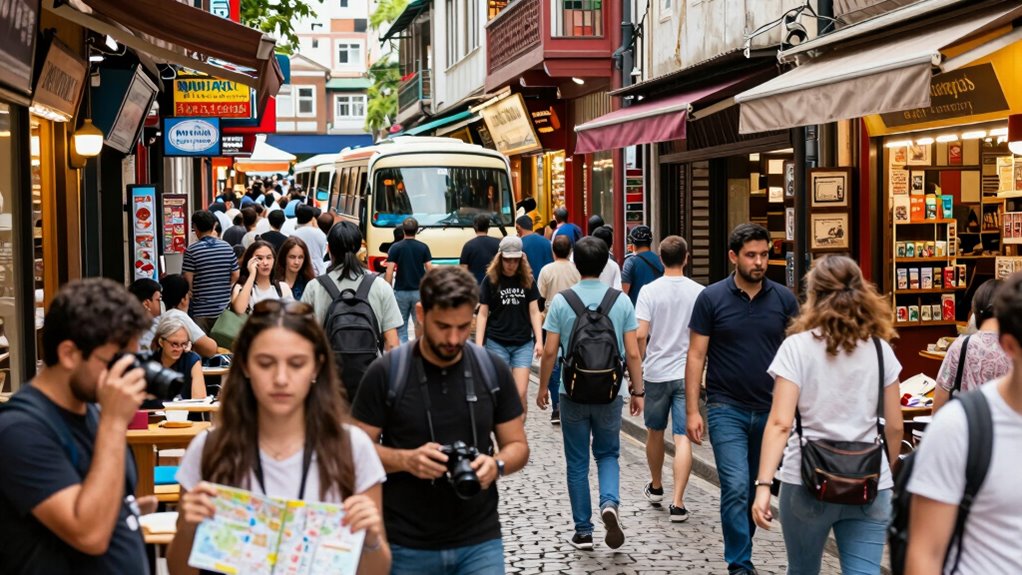
Have you ever arrived at a popular destination only to find crowded streets, long lines, and overwhelmed locals? If so, you’ve already experienced a hint of overtourism. This phenomenon isn’t just about the number of visitors; it’s about how those visitors affect the place’s fabric. When a destination becomes overwhelmed, the local community impact intensifies. Residents might feel pushed out of their neighborhoods, unable to access their favorite spots, or even face rising living costs driven by tourism. You might notice small businesses shuttered because they can’t compete with larger chains catering to tourists, or locals simply avoiding their own city’s hotspots. Recognizing these signs before planning your trip helps you avoid contributing to the problem.
Overtourism harms communities and environments—be mindful of signs before visiting popular destinations.
Environmental degradation is another clear indicator of overtourism. Overcrowded sites often suffer from litter, erosion, and damage to natural features. You might see trails destroyed by excessive foot traffic, beaches strewn with plastic waste, or iconic landmarks suffering from wear and tear. These issues aren’t just aesthetic—they threaten the very environment that makes the destination special. If you notice crowded conditions and signs of environmental stress, it’s a sign that the destination may be nearing or already in a state of overtourism. Responsible travelers look for places where tourism is managed sustainably, ensuring natural and cultural resources are preserved for future visitors. Environmental impact is a key factor to consider when choosing destinations. Additionally, overuse can lead to a loss of cultural authenticity, diminishing the unique character that attracted visitors in the first place. Being aware of sustainable tourism practices can help you make more responsible choices and support efforts that protect the destination. Recognizing these signs early can help you select destinations that prioritize preservation and community well-being.
Beyond physical signs, you can gauge overtourism by observing the atmosphere. Overcrowding often brings noise pollution and a sense of chaos that can diminish the authentic experience. Local businesses might rely heavily on tourist income, but the community’s day-to-day life could be disrupted. When locals seem frustrated or distant, it reflects a strained relationship between residents and visitors. This disconnect indicates that the destination is struggling to balance tourism with daily life. If you see signs of community tension or hear locals expressing concerns about overpopulation, it’s a clear signal to reconsider or approach with mindfulness. Paying attention to local sentiment can provide valuable insight into the true impact of tourism on a community.
In essence, spotting overtourism involves paying attention to the environment, local community, and overall vibe of a place. If a destination feels overwhelmed or shows signs of strain, it’s a sign you might want to rethink your plans. Traveling responsibly means choosing destinations that prioritize sustainable tourism, respecting local communities, and preserving natural beauty. By doing so, you help ensure that your visit doesn’t contribute further to overtourism but instead promotes a more balanced and respectful interaction with the places you explore.
As an affiliate, we earn on qualifying purchases.
Frequently Asked Questions
How Does Overtourism Impact Local Communities Economically?
Overtourism puts significant economic strain on local communities by driving up prices and property costs, making it hard for residents to afford living there. You might notice local displacement as long-term residents are forced out due to rising rents and living costs. Instead of benefiting the community, tourism can lead to economic imbalance, where profits flow to big businesses and outsiders, leaving locals struggling to maintain their livelihoods.
Are There Specific Times of Year When Overtourism Is Worse?
Sure, peak travel season is basically the grand finale of seasonal crowds, turning popular spots into sardine cans. You’ll find overtourism at its worst during holidays, summer, or spring break. If you want to dodge the chaos, plan your visit outside these peak times. That way, you enjoy the sights without battling the masses, and the locals might even thank you for the less hectic visit.
Can Small Towns Experience Overtourism Too?
Yes, small towns can definitely experience overtourism, especially if they boast small town charm and hidden local gems that attract visitors. When tourists flock to these spots, it can strain local resources and diminish their authentic appeal. You should watch out for overcrowded streets, packed accommodations, and degraded natural sites, as these signs indicate overtourism. Protecting small towns means respecting their pace and supporting sustainable tourism practices.
What Role Do Social Media Trends Play in Overtourism?
Imagine a Victorian telegram predicting today’s social media trends—pretty wild, right? Social media trends play a huge role in overtourism by boosting influencer influence and making viral destinations irresistible. When influencers share stunning photos, their followers flock to these spots, often without considering sustainability. This creates a surge of visitors, overwhelming local communities and environments. Be mindful of these trends, and always research destinations before jumping into the next viral hotspot.
How Can Travelers Help Reduce Overtourism?
You can help reduce overtourism by practicing sustainable travel and embracing responsible tourism. Opt for less crowded destinations or visit during off-peak times to lessen your impact. Respect local cultures, support eco-friendly businesses, and follow environmental guidelines. Share your experiences responsibly on social media without encouraging mass visitation. By making conscious choices, you contribute to preserving destinations’ beauty and ensuring they remain enjoyable for future travelers.
eco-friendly reusable water bottle
As an affiliate, we earn on qualifying purchases.
As an affiliate, we earn on qualifying purchases.
Conclusion
By tuning into the subtle signs of bustling crowds and overextended sites, you can gently steer clear of destinations that might feel a bit too lively. Recognizing these quiet cues allows you to choose experiences that are more authentic and less hurried. With a little awareness, you’ll find places where you can relax and enjoy without the weight of too many footsteps. In doing so, you help preserve the charm and serenity that make travel truly special.
noise-canceling travel headphones
As an affiliate, we earn on qualifying purchases.
As an affiliate, we earn on qualifying purchases.
compact backpack for responsible tourism
As an affiliate, we earn on qualifying purchases.
As an affiliate, we earn on qualifying purchases.
Halloween Picks
halloween
As an affiliate, we earn on qualifying purchases.